Loading Admission Guardian content
Loading Admission Guardian content

Selected ranking categories, with the recorded year beside each result. Open all records for the complete history.
15 published records · Lower numeric ranks are stronger
NIRF
B.Tech
#912019
IIRF
B.Tech · private
#32022
IIRF
Overall · university
#12022
Outlook
Overall · university
#122022
Find a program, read its fee details and explore the admission requirements.
Summary of the programs shown below. Fee periods can differ by program. Check the note beside each amount before comparing costs.
| Course | Stream | Fees |
|---|---|---|
| Master of Science [M.Sc] | Agriculture | 1 |
| Master of Technology [M.Tech] | Engineering | 129000 |
| Master of Design [M.Des] (Communication Design) | Design | 160000 |
| Bachelor of Technology [B.Tech] | Engineering | 172000 |
| Bachelor of Technology [B.Tech] {Hons.} (Computational Sciences) | Engineering | 172000 |
Specializations
Eligibility: Graduation with 60%
Specializations
All accepted exams
Eligibility: Graduation
Specializations
All accepted exams
Eligibility: Graduation with 55%
Specializations
All accepted exams
Eligibility: 10+2
Specializations
All accepted exams
Eligibility: 10+2
2 exams with cutoff data available
 Byju's
 Cars24.com
 Delhivery
 Deutsche Bank
 Ecom Express
 EInfochips
 Evosys
 Fidelity
 Flipkart
 Freshworks
 Goldman Sachs
 Google
 hexaview
 IBM
IBM Indeed
 InfoObjects
 Infosys
 Infrrd Private Ltd
 Juniper Networks
 KPMG
KPMG Larsen & Toubro Ltd.
 LINDE
LINDE Linked In
 MAQ Software
 MEDIA.NET
 Meesho
 Microsoft
 Mindtickle
 Morgan Stanley
 Nagarro
 NUTANIX
 OLA Cabs
 OPS Hub
 Optum
Optum Oracle
 Oyo Rooms
 PeopleStrong
 Phenom People
 PhonePe
 Pitney Bowes
 Publicis Sapient
 Salesforce
 SAS
SAS Sophos
 Sprinklr
 Square Yards
 Synopsys
 Tally
Tally Tata Consultancy Services
 Tejas Networks
 Toppr
Toppr Trilogy
 Udaan
Udaan Verse
Verse WELLS FARGO
 YUJ Designs
 Zensar
 Zeus Learning
If you're a JEE Main ranker from Gujarat, or even from outside the state, and you're looking at a tech career, Dhirubhai Ambani Institute of Information and Communication Technology (DA-IICT) is a name that comes up fast. It's not an IIT. It's not an NIT. But for over two decades, it has carved out a reputation as the undisputed tech placement powerhouse of Western India. With a B.Tech median package of ₹18 LPA and a relentless coding culture, it's a place where the academic grind is real, but the corporate outcomes are even more so. As of 2024, the institute is in transition, set to become Dhirubhai Ambani University (DAU), but its core identity—a fiercely competitive, research-oriented tech school—remains firmly intact.
This isn't a broad-based engineering college. DA-IICT's focus is sharp: Information and Communication Technology and its direct offshoots. The undergraduate lineup is lean and highly sought-after. The B.Tech in ICT is the flagship, with an intake of about 131. Then there's the more niche B.Tech in Mathematics and Computing (MnC, intake ~26) and Electronics and VLSI Design (EVD, intake ~21). A new B.Tech in Computer Science and AI is reportedly in the works. The postgraduate side is robust, with M.Tech specializations in Machine Learning and VLSI, and popular M.Sc programs in IT and Data Science that have strong placement records of their own.
The academic culture is defined by two things. First, the faculty. Nearly 100% of the ~77 permanent professors hold PhDs from top global and Indian institutes. They're accessible and actively push undergraduates toward research publications. Second, and more consequentially for daily life, is the relative grading system. Most courses are graded on a curve. That means your letter grade depends on how the entire batch performs. You could score 90% and still get a 'C' if everyone else did better. It creates a pressure-cooker environment that students consistently describe as "extremely hectic." The curriculum for ICT blends computer science with communication engineering—think more signals and networks than a pure CSE degree, though the core coding overlap is substantial.
This is where the institute's reputation is built. The numbers are compelling. For the 2024 batch, the highest B.Tech package was ₹57.78 LPA, and the average stood at ₹19.40 LPA. The median package of ₹18 LPA is perhaps the most telling figure—it indicates what a typical student in the middle of the pack can expect. That's a strong outcome by any measure. Placement percentages for B.Tech are consistently between 95% and 100%. The recruiter list is a who's who of tech and finance: Google, Microsoft, Amazon, Goldman Sachs, Morgan Stanley, Atlassian (which offered a staggering ₹82 LPA in 2024), Uber, and Walmart, among others. About 90% of roles are in software/IT.
The reality check comes in two parts. First, the grind to get these offers is intense. The competitive peer group and grading system mean you're constantly coding, preparing, and competing. Second, there's a clear tiering. The top 20-30% of the batch bag the dream offers above ₹30-40 LPA. The majority cluster around the median mark. For postgraduate programs, the numbers are more modest but solid—M.Sc IT/Data Science averages hover around ₹10-12 LPA. The mandatory 8-week summer internships are a major feeder into final placements, with stipends ranging from ₹20,000 to an exceptional ₹1.5 lakh per month at top quant firms.
Let's be direct: it's expensive. For the 2024-25 academic year, the tuition fee for B.Tech is ₹1,92,500 per semester. Add hostel rent (₹20,000-25,000/semester) and mess charges (approx. ₹5,500/month), and the total cost for a four-year B.Tech easily lands between ₹18.5 to ₹20 lakhs. The fees are subject to an annual increase of 8-10%. That's a significant investment, especially when compared to state government colleges.
The institute does offer mechanisms to offset this. The DA-IICT Merit Scholarship provides a full tuition fee waiver for top academic rankers. There's also a merit-cum-means scholarship for students with a family income below ₹3 lakhs per annum. Gujarat domicile students can also avail of the state government's MYSY scholarship. These aids help, but the upfront cost remains a barrier that students frequently mention in reviews.
Admission to the coveted B.Tech seats is split into three categories. The All India Category (35% of seats) relies solely on your JEE Main rank. The Gujarat Category (50% of seats) uses a combination of GUJCET score and board marks, managed through the state's ACPC counseling. The remaining 15% are for NRI/Foreign candidates.
The cutoffs are stiff. For the All India General category in recent years, the B.Tech in Mathematics and Computing (MnC) program closed around JEE Main ranks of 8,000-10,000. The flagship ICT program closed around ranks 15,000-18,000. In percentile terms, you're generally looking at needing above 98.5 percentile to have a realistic shot. For the Gujarat quota via GUJCET, the ICT program typically fills up within the top 200-400 state ranks. The application fee is ₹1,770. It's a process designed to filter for academically strong candidates, and it does that job effectively.
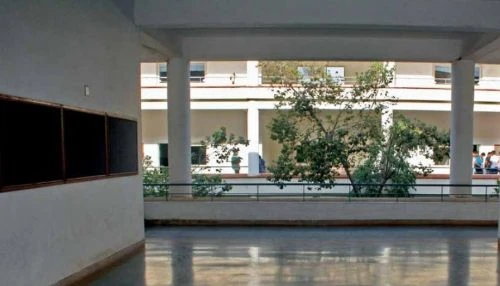
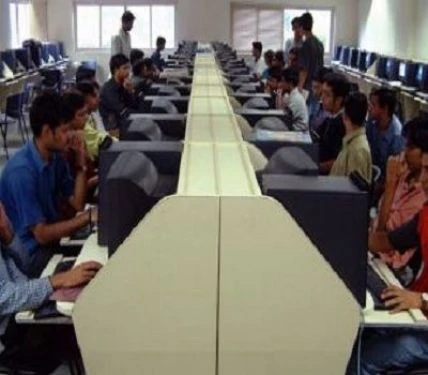
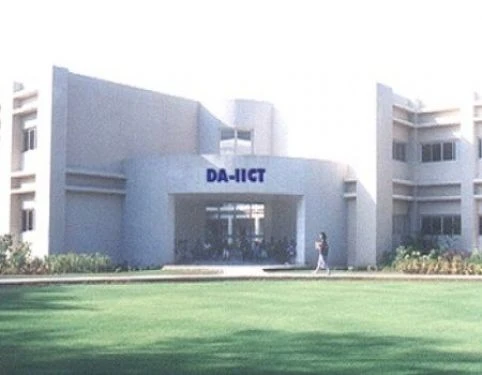
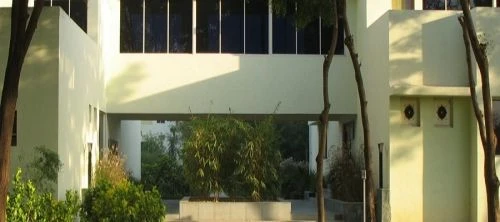
The 50-acre campus in Gandhinagar is known for being lush and green—students joke about seeing more peacocks than people in the early mornings. Infrastructure for academics and research is top-notch. The library (Resource Centre) is well-stocked and open late. Labs for VLSI and grid computing are modern. High-speed Wi-Fi blankets the campus, with a generous daily data cap of 20GB download/15GB upload.
Where opinions diverge sharply is on the hostel facilities. The halls of residence are functional but spartan. Rooms are non-AC, which is a major point of contention given Gandhinagar's heat. They are typically shared by 2-3 students, and bathrooms are common, not attached. For the fees paid, many students expect more comfortable living conditions. On the food front, it's better. There are 4-5 canteens and cafeterias, giving students choice, and the quality is generally rated above average for an engineering college. Sports facilities are adequate—cricket, football, basketball, a gym. But let's be honest, with the academic schedule here, free time is a precious commodity.
Synthesizing feedback from platforms like Reddit, Quora, and Shiksha paints a consistent picture. The positives are powerful. The coding culture is arguably the best in Gujarat, with high participation in Google Summer of Code and competitive programming. The peer group is exceptional, driven by the high cutoffs. Students value the freedom—no draconian attendance policies in most courses and no strict hostel curfews. The direct line to high-quality research with professors is a huge plus.
The negatives are just as consistently voiced. The academic pressure from relative grading is immense, often cited as a major social life killer during exam periods. The hostel facilities feel outdated for the premium fee. While the ROI is good, the high upfront cost is a burden. Some also mention bureaucratic slowdowns in the administration for non-academic issues.
One Reddit user summed it up bluntly: "If you want to code and get a 20 LPA job, come here. If you want a relaxed college life, stay away." Another on Quora noted the unique environment: "The campus is small but beautiful. You will see more peacocks than people in the morning." The consensus is clear: DA-IICT is a trade-off. You exchange comfort and a relaxed pace for a turbocharged launchpad into a tech career.
DA-IICT is a specialist institution with a very clear value proposition. It is unequivocally worth it for a specific student: one who is laser-focused on a career in software development, data science, or related tech fields, who thrives under intense academic pressure, and whose family can manage the high tuition. For this student, the median package of ₹18 LPA, the elite recruiter list, and the peer network provide a return on investment that few other private colleges in the region can match. Its upcoming transition to a full-fledged university (DAU) may broaden its scope, but its tech core will likely remain its heartbeat.
However, you should probably look elsewhere if you prioritize a balanced college life, are interested in traditional engineering branches (mechanical, civil), or are extremely sensitive to financial cost. Compared to local options like Nirma University, DA-IICT wins hands-down on pure tech placement metrics but may lose on campus life and breadth of programs. It's not a holistic university experience; it's a bootcamp for the tech industry. If that's what you're signing up for, it delivers remarkably well.

In this preview: 5 photos · 0 videos
For programs in Information and Communication Technology (ICT) or Computer Science, and for placement opportunities, DA-IICT is considered significantly ahead. However, Nirma University is the option for traditional engineering branches like Mechanical or Civil, which DA-IICT does not offer.
The ICT (Information and Communication Technology) program at DA-IICT includes a stronger focus on communication engineering, such as signals and networking, compared to a standard CSE curriculum. Approximately 80% of the course content overlaps with a typical Computer Science degree.
Admission is unlikely for candidates in the All India General category with a 95 percentile. The JEE Main cutoff for this category typically remains above 98.5 percentile.
Hostel stay is not strictly compulsory. It is generally recommended for most students due to the institute's hectic academic schedule, but local residents from Gandhinagar or Ahmedabad may choose not to stay on campus.
Placements for the M.Sc Data Science program are very strong. Most students secure positions in analytics roles, with reported annual salary packages typically ranging from 8 to 15 Lakhs Per Annum (LPA).
Share what future students should know about DAIICT.
Student voices are not rewritten by colleges. We remove spam and abuse.
Wider admission question? Community PulseWhat should future students know?
Tell us which course you're considering. We'll help you work out the next step.
Get instant Partner access after mobile verification. Your public edits are reviewed before they go live.
Claim this college
 Auditorium
 Cafeteria
 Hostel
 Medical
 Science Labs
 Sports Complex
 Study Library