Loading Admission Guardian content
Loading Admission Guardian content

Find a program, read its fee details and explore the admission requirements.
Summary of the programs shown below. Fee amounts are not listed. Contact the college for its current fee schedule.
| Course | Stream | Fees |
|---|---|---|
| Bachelor of Science [B.Sc] (Nursing) | Paramedical | |
| General Nursing and Midwifery [GNM] | Paramedical | |
| P.B.Bachelor of Science [B.Sc] (Nursing) | Paramedical | |
| Bachelor of Pharmacy [B.Pharma] | Pharmacy | |
| Diploma in Pharmacy [D.Pharm] | Pharmacy |
Specializations
Eligibility: 10+2
Specializations
Eligibility: 10+2
Eligibility: 10+2
Specializations
Eligibility: 10+2
1 exam with cutoff data available
For students from West Bengal and the North-East looking for a nursing education in Bangalore, Diana College of Nursing is a name that comes up consistently. Established in 2004 under the older Diana Group umbrella, it’s carved out a specific niche as the "First Bengali Management Nursing College in Bangalore." That’s not just a tagline—it shapes the entire student experience, from the food to the faculty's approach. The college is recognized by the Indian Nursing Council and affiliated with the Rajiv Gandhi University of Health Sciences (RGUHS). Its real strength, students say, isn't in sprawling lawns or flashy infrastructure, but in getting you into the wards of hospitals like Kidwai Memorial Institute of Oncology and Columbia Asia from early on. If your priority is clinical hands-on training in a familiar cultural environment, and you're okay with a compact, disciplined campus, this place warrants a close look.
The focus here is exclusively on nursing and paramedical sciences. The B.Sc Nursing program is the main draw, with an intake of 60 students per year. They also offer a Post Basic B.Sc for working diploma holders, a GNM diploma, and an M.Sc Nursing with five specializations—Community Health, Medical-Surgical, Pediatric, Psychiatry, and OBG Nursing. The M.Sc intake is small, just 5 seats per specialization, which suggests a more focused cohort.
Academically, the college emphasizes what they call "Theoretical Shastras" blended with bedside clinical training. It’s a practical approach. The faculty strength is around 16-20 core members, and student reviews consistently label them as cooperative and approachable. That’s a significant plus in a demanding field like nursing. The academic culture seems strict, with high attendance mandates, but the passing percentage is reportedly around 85%, which is a decent outcome.
The standout feature is the clinical rotation. Through MoUs, students get posted to a variety of hospitals, including government setups like K.C. General Hospital and major private chains like Columbia Asia. This variety is crucial—it exposes you to different patient demographics and healthcare systems. You can find more on their academic structure on the official Diana Group website.
Placement in nursing works differently than engineering. There’s no typical "placement day" with mass recruiters. Instead, it’s about the college’s hospital network and your clinical performance. The college officially claims 100% placement. Talking to student sentiment, a more realistic figure for students without backlogs seems to be 80-90%. That’s still a strong number for a private nursing college.
The average package for freshers in 2024, as reported by students on portals like CollegeDunia, sits between ₹5.0 and ₹6.0 LPA. The highest packages are rumored to reach ₹7-8 LPA for specialized roles or international opportunities, but that’s less verified. The recruiter list is solid and healthcare-focused: Apollo Hospitals, Fortis, Narayana Health, Max Healthcare, and Manipal Hospitals are the key names. Essentially, you’re looking at a clear pathway into mid-tier to major hospital chains across India.
Some older reviews mentioned a lack of formal on-campus interview drives, but more recent feedback indicates the college has become more proactive in placement assistance. Your best bet for a good offer, however, will still be the impression you make during your clinical postings.
Fees depend heavily on how you get your seat. The government quota via KCET is significantly cheaper. The management quota, where admission is based on 10+2 merit, costs more.
For the B.Sc Nursing program, the total course fee is approximately ₹5 lakhs. The first-year fee for management quota students is around ₹2.8 lakhs. The GNM diploma totals about ₹3.45 lakhs, while the M.Sc program is around ₹2.1 lakhs for the entire two years. You’ll need to budget extra for admission fees (around ₹20,000), exams, uniforms, and books.
Hostel and mess together will add roughly ₹60,000 to ₹75,000 to your annual expenses. That puts the total 4-year cost for a B.Sc student (including hostel) in the ballpark of ₹7.5 to ₹8.5 lakhs. It’s not the cheapest, but it’s competitive for a private nursing college in Bangalore.
For financial aid, the college supports state government scholarships for SC/ST/OBC and minority students. Crucially for its core demographic, they actively accept and facilitate the West Bengal Student Credit Card (WBSCC), which is a major draw for students from that state.
For the B.Sc Nursing program, you need 10+2 with at least 45% in Physics, Chemistry, Biology, and English. There are two main gates.
The first is the Karnataka Common Entrance Test (KCET). This is for the government quota seats and is mandatory for those seeking them. The KCET cutoff ranks for General/OBC candidates in 2024/25 ranged between 1,85,175 and 2,03,381. These are not highly competitive ranks, which suggests the KCET route is an accessible, cost-effective option for eligible students.
The second gate is the Management Quota. This is a direct admission based on your 10+2 marks, and it’s where the fee is higher. This quota is particularly popular among out-of-state students. For M.Sc Nursing, you need a B.Sc Nursing degree and one year of work experience. The application window typically runs from May to August.
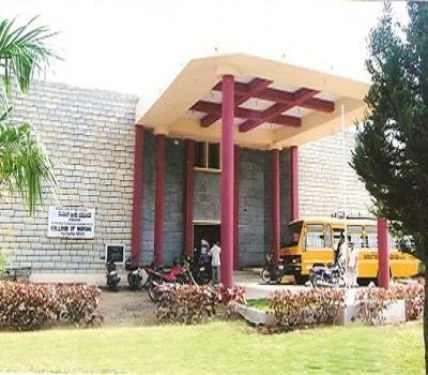
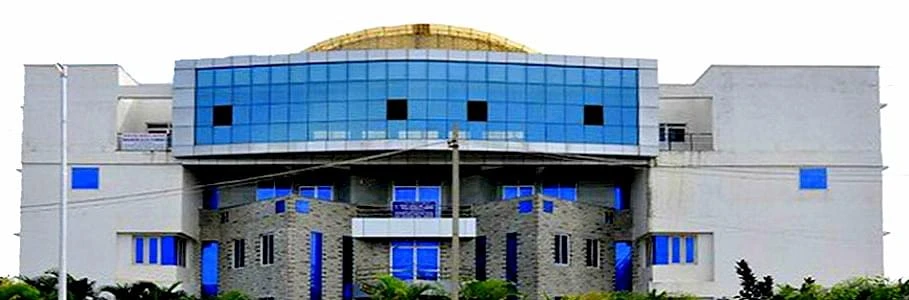
Let’s be direct: don’t come here expecting a vast, university-style campus. The campus is urban and compact, about an acre in size. It lacks large playgrounds or sprawling greens. What it has is functional infrastructure: departmental labs designed like hospital wards, a library with around 3,000 books, and reportedly good Wi-Fi.
The hostels are a central part of life. They have a capacity for 400 students—300 girls and 100 boys, in separate facilities. Rooms are non-AC but furnished with beds, tables, and wardrobes. Reviews rate them around 3.5 out of 5. The rules are strict, with firm curfews and attendance tracking. That can be a pro or a con, depending on your perspective.
Where the campus life wins is in its cultural comfort for Bengali and North-Eastern students. The food in the mess is frequently praised for being "very good" and includes North Indian, South Indian, and Bengali cuisines. That "home away from home" feeling is a genuine and recurring positive in student feedback. The college also runs its own buses for ferrying students to clinical postings.
Synthesizing feedback from CollegeDunia, Shiksha, and other forums, a clear consensus emerges. The college is seen as strong value-for-money, especially for its target demographic.
The positives are consistent: excellent clinical exposure across multiple high-profile hospitals, supportive and approachable faculty, and a comfortable, familiar cultural environment for Bengali-speaking students. One B.Sc student from the 2024 batch summed it up: "The environment is very good for studies. We have self-centered exams and the passing percentage is around 85%."
On the flip side, the negatives are just as consistent. The small campus size is a frequent mention. The strict discipline—high attendance demands and tight hostel timings—can feel restrictive. While placement outcomes are good, some alumni from a few years back felt the college could do more in terms of formal placement drive organization, though this appears to be improving.
Diana College of Nursing serves a specific student profile very well. If you are a student from West Bengal or the North-East looking for a reputable nursing college in Bangalore, this is arguably a top contender. The cultural familiarity, support for scholarships like the WBSCC, and the strong clinical rotation network make it a pragmatic and supportive choice. The placement record is solid, leading to jobs in major hospital chains.
However, if you prioritize a large, vibrant campus with extensive sports facilities and a more liberal hostel environment, you might find it lacking. The discipline is strict and the space is compact. It’s also less ideal for local Karnataka students who have access to a wider range of government colleges via KCET. Ultimately, it’s a college built on practical training and cultural community, not frills. For the right student, that’s exactly what makes it worthwhile.
In this preview: 1 photo · 0 videos
Yes, Diana College of Nursing is well-regarded for its B.Sc Nursing program. A key strength is its clinical tie-ups with top hospitals like Kidwai and Columbia Asia, which provide valuable practical experience for students.
The total estimated cost for the 4-year B.Sc Nursing program, including tuition, hostel, and mess charges, is approximately ₹7.5 to ₹8.5 Lakhs.
Yes, the college provides separate hostel facilities. There is a dedicated boys' hostel with 100 beds and a separate girls' hostel with a larger capacity of 300 beds.
Reviews indicate the hostel food is "very good." The mess caters to diverse palates by offering a variety of cuisines including North Indian, South Indian, and Bengali food.
Yes, the college does accept the West Bengal Student Credit Card. Being a Bengali-managed institution, they actively facilitate the WBSCC for eligible students from West Bengal.
Share what future students should know about Diana College of Nursing.
Student voices are not rewritten by colleges. We remove spam and abuse.
Wider admission question? Community PulseWhat should future students know?
Tell us which course you're considering. We'll help you work out the next step.
Get instant Partner access after mobile verification. Your public edits are reviewed before they go live.
Claim this college
 Auditorium
 Cafeteria
 Computer Labs
 Gym
Gym Hostel
 Medical
 Science Labs
 Sports Complex
 Study Library