 Placeholder image
Explore the available options or ask for admission guidance.
Content updated: 28 October 2026
The Diploma in Pharmacy, usually called D.Pharm, is an entry-level pharmacy qualification with a specific national education framework. The Pharmacy Council of India (PCI) Education Regulations, 2020 set a two-academic-year course, with each year comprising at least 180 working days, followed by 500 hours of practical training over at least three months. The 500-hour training is an additional requirement; it should not be folded into or mistaken for the two classroom years. The course is divided into Part I and Part II study and examinations, then Part III practical training.
That structure makes D.Pharm a different decision from a four-year B.Pharm degree. The diploma can suit a learner seeking a shorter regulated pharmacy course, but it does not mean that admission, completion, exit examination and pharmacist registration are the same event. A student should check the institution’s PCI approval for the relevant academic session, the examining authority, local admission process, total payable charges and practical-training arrangements before accepting a seat.
The ER-2020 Part I framework covers Pharmaceutics, Pharmaceutical Chemistry, Pharmacognosy, Human Anatomy and Physiology, and Social Pharmacy. It combines theory with practical work and tutorials. Part II adds Pharmacology, Community Pharmacy and Management, Biochemistry and Clinical Pathology, Pharmacotherapeutics, Hospital and Clinical Pharmacy, and Pharmacy Law and Ethics. The accompanying PCI curriculum and syllabus describes learning outcomes and course work in more detail than the short subject list.
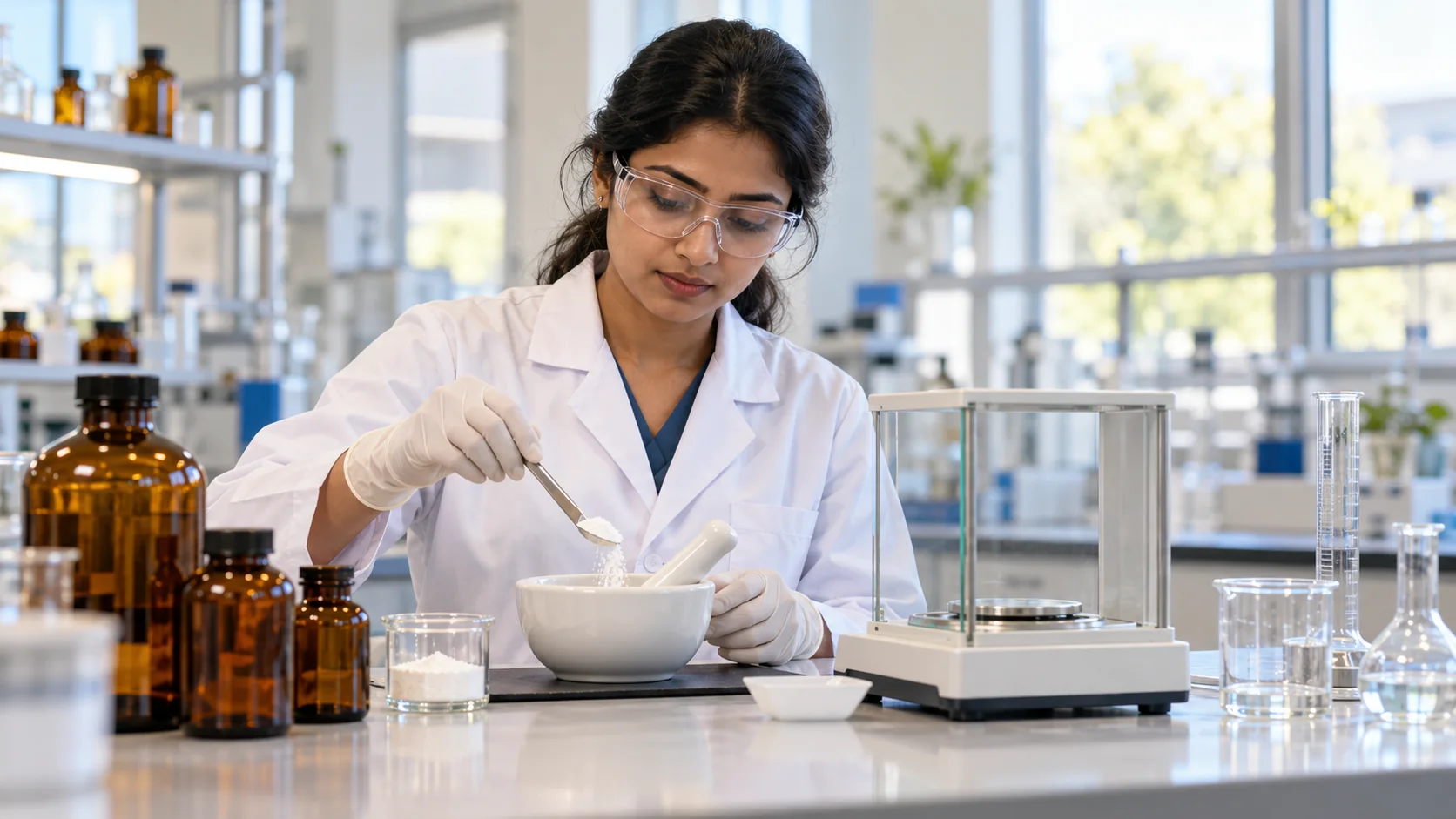
The practical-training stage connects study to routine pharmacy work. PCI’s regulations describe exposure to professional records, prescription handling, dispensing, apparatus and medicine storage. They specify at least 250 of the 500 hours for actual dispensing. Training venues must meet the prescribed conditions; the practical placement is not interchangeable with an informal internship arranged without the required supervision or documentation.
After passing Part I and Part II examinations and satisfactorily completing Part III training, the examining authority may issue the D.Pharm certificate. PCI’s separate 2022 Exit Examination Regulations created an additional registration-related examination for the batches to which they apply. The PCI FAQ identifies implementation from the 2022-23 batch and says passing the exit examination remains subject to the Pharmacy Act’s other registration conditions. Do not read the exit examination as an admission test.
The latest schedule was not established in the official source check for this evergreen guide. PCI notified in September 2024 that an examination scheduled for October 2024 had been deferred pending approval of a proposed change. That is historical context, not a current date. Candidates should confirm current examination instructions with PCI and the relevant State Pharmacy Council.
There is no single course-wide D.Pharm tuition amount in the PCI Education Regulations. Charges, admission routes, reservation implementation, counselling and additional requirements can depend on the state, institution type and current session. Compare the same academic year and distinguish tuition from admission or enrolment charges, examination fees, refundable deposits, uniforms, instruments, transport and hostel costs. Ask for the official fee circular or prospectus and a written year-wise amount before paying.
Check the precise campus and course entry in PCI’s approval information for the intake and session you plan to join, then confirm affiliation and examination authority with the institution and state authority. An online listing, a general college approval claim or an old approval notice does not itself establish current D.Pharm approval for that campus and batch.
PCI’s standard is best used as the first filter, not as a complete application guide. It describes the minimum academic qualification, course duration, curriculum, examinations, attendance and training requirements. Admission notifications then fill in the local process: the authority that receives applications, the merit formula, seat matrix, reservation rules, dates, choice-filling method and reporting procedure. Those details can differ among states and institution types, and they can change from one session to another.
A candidate should keep the course standard and the current admission rules side by side. First confirm Physics and Chemistry plus Biology or Mathematics in the qualifying science stream, or the recognised equivalent. Then check whether the specific authority adds a minimum percentage, age or domicile rule. Finally verify whether merit is based on qualifying marks or an examination and whether the seat is part of centralized counselling or direct admission. The course regulations do not establish a uniform national entrance exam for every D.Pharm seat, so a test name found in a college advertisement must be checked against the responsible authority’s current notice.
The same separation applies after admission. PCI’s Part I and II examinations measure academic progress; the 500-hour Part III stage documents practical training. The Exit Examination Regulations are a later practice-enrolment condition for applicable batches. State Pharmacy Council registration follows its own statutory and documentary requirements. Keeping these stages distinct helps a student identify exactly which authority to contact when a certificate, exam date or registration step is unclear.
The additional practical stage is not an optional placement to be completed whenever convenient. PCI’s ER-2020 rules set 500 hours over at least three months and require that a minimum of 250 hours be spent on dispensing. The regulations identify permissible settings and specify learning exposure such as maintaining professional records, reading and handling prescriptions, working with common pharmacy apparatus, dispensing and storing medicines. The practical training record and certificate form part of the qualification pathway.
Before joining, ask the college how it places students, which sites are recognised, who supervises the work, how hours are recorded and which documents the examining authority requires. Ask whether the institution arranges training or expects students to secure a site, and whether travel or accommodation costs are separate. A broad claim that “internship included” should be checked against the actual 500-hour schedule, minimum three-month period and documented completion process. A student should not assume that a short industrial visit or informal work experience satisfies the regulatory requirement.
The placement is a supervised learning stage. It gives practice in the course competencies but does not grant independent authority to diagnose, prescribe or practise as a registered pharmacist. Students should understand both the tasks they are expected to learn and the legal boundaries of their role.
A reliable comparison starts with the exact college name and campus, not just a parent institution or brand. Check PCI’s D.Pharm approval information for the relevant academic session and approved intake. Then verify the affiliating university or examining authority and ask for the prospectus, timetable, fee circular and practical-training details. The PCI list records approval information; it is not a ranking, and an older approval session should not be treated as proof for a later intake.
For cost, distinguish annual tuition from the full two-year academic bill and from the separate training stage. Ask whether examination fees, deposits, uniforms, instruments, transport, hostel or mess are included. Compare the same seat category and session across colleges. A quoted “total” that does not identify its components or refund conditions is difficult to compare. Keep the fee schedule and receipts with the admission documents.
A short pre-payment checklist is useful: current PCI D.Pharm approval for campus and session; the admission authority and seat type; examining body; minimum qualification and any local criteria; written year-wise fees and refund rules; training site and supervision; and the current State Council/exit-exam information relevant to the student’s batch. Save each official document with its publication date. If an institution’s claim conflicts with the authority’s notice, ask the responsible authority to resolve it before payment.
D.Pharm can be a reasonable fit for someone seeking a two-academic-year pharmacy qualification with structured practical training and a possible later B.Pharm lateral-entry route. It requires readiness for science subjects, laboratory and practical work, formal examinations and careful professional conduct. It may not fit a student whose intended role specifically requires a bachelor’s degree, whose priority is a longer research-oriented programme, or who wants a course with a single national admission route or fee schedule.
The best comparison is not a generic “D.Pharm versus other pharmacy courses” slogan. It is a comparison of the actual offers available to the student: the college’s regulatory status, local admission conditions, total cost, curriculum delivery, training arrangements and further-study requirements. A D.Pharm pass can be considered for B.Pharm lateral entry under PCI’s regulations if the source qualification and institution meet the stated criteria, but that route still has a receiving institution’s application and seat process. Confirm it before relying on it as a guaranteed continuation.
ER-2020 frames Part I and Part II as an integrated course rather than a collection of elective tracks. Part I places Pharmaceutics and Pharmaceutical Chemistry alongside Pharmacognosy, Human Anatomy and Physiology, and Social Pharmacy. The official table allocates theory, practical and tutorial hours to each area. Part II moves into Pharmacology and Pharmacotherapeutics, Biochemistry and Clinical Pathology, Community Pharmacy and Management, Hospital and Clinical Pharmacy, and Pharmacy Law and Ethics. These subject groupings connect medicine knowledge with laboratory practice, pharmacy operations, communication and legal responsibilities.
PCI’s curriculum document elaborates course objectives and outcomes. Students can use it to understand what each course is meant to develop, then compare it with the institution’s timetable and lab work. A subject name alone is not enough to evaluate delivery: ask what practical sessions are held, how attendance is recorded, which records students maintain and how assessment combines theory and practical components. The syllabus and examining body’s notices should be read together because the syllabus defines the framework while the authority handles the batch’s examination process.
The curriculum is designed for pharmacy education and professional competencies. It is not a medical degree and does not confer authority to diagnose or prescribe. In practical classes and training, students learn within supervision and the legal role of pharmacy personnel. This distinction should shape expectations about both course content and the work a graduate may later perform.
PCI’s regulations require 500 hours of practical training spread over at least three months after the Part II examination. At least 250 hours must be devoted to dispensing. The regulations describe exposure to professional records, prescriptions, common pharmacy apparatus and medicine storage, and identify eligible training settings subject to conditions. The stage is called Part III in the qualification pathway and satisfactory completion is needed for the diploma certificate.
Before admission, ask how the college arranges the training contract, where placements take place, who signs the hour record and what happens if a site cannot host a student. Confirm whether travel, accommodation or protective equipment creates extra costs. Ask how the training completion certificate is delivered to the examining authority. A short observation visit or an experience certificate without the prescribed hours should not be assumed to meet the requirement.
ER-2020 provides annual Part I and Part II examinations with written and practical components, including viva voce. It requires a regular record of study and at least 75% attendance separately in theory and practical classes for each subject before examination eligibility. The examining authority sets operational details such as dates and forms; those may differ by state or affiliating body.
The diploma certificate follows successful Part I and Part II examinations and satisfactory practical training. The Exit Examination Regulations, 2022 add a separate registration-related examination for applicable candidates. PCI’s FAQ identifies the 2022-23 batch as the implementation point and notes the Pharmacy Act’s additional registration conditions. Therefore, course completion and professional enrolment must be discussed as separate milestones. Verify a current exit-exam schedule before planning around it; the reviewed 2024 deferment notice is historical only.
PCI approval relates to the institution and course. Verify the exact campus and approval session, then confirm its affiliating or examining authority. An old approval, an institution brand name or an online listing does not prove that a particular intake is approved. Ask for a current prospectus, seat category, admission channel, training arrangements and written fee schedule.
The national education regulation does not supply one D.Pharm fee. A college budget should distinguish annual tuition from one-time charges, exam fees, deposits, instruments, hostel and travel. Confirm whether the amount covers both academic years and whether practical training or later registration steps incur separate charges. Keep the relevant fee order and receipts. Do not treat a course catalogue’s aggregated fee range as a quote for the specific college.
A D.Pharm pass from a PCI section 12 approved institution can meet the qualification condition for B.Pharm lateral entry to second year/third semester under PCI’s B.Pharm regulations. The receiving institution’s admission rules, seat availability and additional requirements still apply. This option may be useful for a student planning a later bachelor’s qualification, but it is neither a specialization within D.Pharm nor guaranteed progression.
The course may suit a learner seeking a focused pharmacy diploma with substantial practical work. Someone whose intended role requires a bachelor’s degree or who prefers a longer research-oriented programme should compare alternatives before enrolling. Examine the actual college and admission offer: regulatory approval, local eligibility, total charges, examining body, practical placement and any later registration requirement are what turn the national course framework into a specific student pathway.
PCI’s controlling baseline is the Education Regulations, 2020 for Diploma in Pharmacy. For learning outcomes and subject codes, use the Council’s ER-2020 Diploma in Pharmacy Curriculum and Syllabus. The PCI FAQ separately explains exit-examination and State Council registration questions; check the current notices because the FAQ is not an exam timetable.
Loading programmes and admission routes.
PCI ER-2020 minimum academic qualification: pass in 10+2 science with Physics and Chemistry and Biology or Mathematics, or an equivalent qualification approved by PCI. This is the national course minimum; check the current state/UT or institution notice for merit thresholds, age, domicile, seat category and documents.
D.Pharm competencies support pharmacy-related work such as community or hospital pharmacy operations, dispensing support and medicine inventory, subject to the role and employer requirements. Pharmacist practice requires the applicable exit-exam and State Pharmacy Council registration conditions; PCI does not recruit graduates. Course completion does not guarantee a job, placement or salary. B.Pharm lateral entry may be available to eligible D.Pharm holders from PCI-approved institutions, subject to the receiving institution rules.
Matches in checked college records.
Browse colleges offering D.Pharm by city.
Questions are moderated before they appear. Accepted answers are highlighted so future readers can find them easily.
Siddhant College of Pharmacy Sudumbare
Pune, Maharashtra

Sreekrishna College of Pharmacy and Research Centre Parassala
Thiruvananthapuram, Kerala
M.Pharm
550 reported colleges