Loading Admission Guardian content
Loading Admission Guardian content

Provisional score based on available data. It may change as more information is verified.
Find a program, read its fee details and explore the admission requirements.
Summary of the programs shown below. First-year fee. Check the note beside each amount for inclusions and exclusions.
| Course | Stream | Fees |
|---|---|---|
| Bachelor of Arts [BA] | Arts | 7590 |
| Bachelor of Arts [BA] {Hons.} | Arts | 7590 |
| Bachelor of Commerce [B.Com] | Commerce | 7590 |
| Bachelor of Commerce [B.Com] {Hons.} | Commerce | 7590 |
Specializations
Eligibility: 10+2
Specializations
Eligibility: 10+2
Specializations
Eligibility: 10+2
Specializations
Eligibility: 10+2
Dimapur Government College isn't trying to be a corporate placement factory. It's something arguably more vital for its region: a steadfast, affordable gateway to a degree for thousands in Nagaland. Established in 1966 and run by the state since 1989, DGC has built a reputation as a workhorse institution. It delivers solid undergraduate education in Arts and Commerce at a cost that's almost negligible, with a sprawling, green campus that feels like a refuge from the bustle of Dimapur. If you're looking for a college where the primary goal is to get a recognized qualification without financial strain, and where a significant chunk of the faculty holds PhDs, this is a compelling option. Just don't expect a glossy brochure experience—this is government education, with all its pragmatic strengths and occasional infrastructural wrinkles.
DGC has fully transitioned to the NEP 2020 structure, offering a Four-Year Undergraduate Programme (FYUGP). That means you can exit after three years with a basic degree, or complete four years for an Honours or Honours with Research degree. It's a flexible system, though the college's core identity remains firmly in the humanities and commerce streams.
The B.A. (Honours) program is the heart of the college, with Political Science, History, and Education each having an intake of about 70 students. English and Economics are notably competitive. For Commerce, the B.Com. (Honours) program, with specializations in Accounting & Finance and Management, is considered the premier government option in the state. They've also recently added an M.A. in Education to meet local demand for higher studies.
What stands out is the faculty profile. For a state college, having around 30-40% of the senior faculty hold PhDs is a decent strength. Departments are led by experienced Associate Professors like Dr. A. Sentiyula (English) and Smt. Anungla Aier (Economics). The academic calendar runs on a semester system under Nagaland University's CBCS, and the annual Harbinger Fest breaks up the routine. It's a traditional, syllabus-focused teaching environment, but one that gets the job done.
This is where you need a clear-eyed view. DGC has a Career Counseling & Placement Cell, not a high-stakes corporate placement office. The official average package estimate floats between ₹2.8 to ₹3.2 LPA. Some portals mention an unverified high of ₹5.5 LPA, likely for specific roles tied to their vocational courses or off-campus efforts.
The real placement story is different from an engineering college. A large number of graduates here aim for higher studies—an M.A. or a B.Ed.—or dedicate themselves to cracking state civil service exams like the NPSC and NSSB. The college has a noted success rate in these government sectors. For direct campus recruitment, partnerships drive the activity. SBI Life Insurance recruits Graduate Sales Trainees. An MoU with Eagle Crest facilitates placements in hospitality, aviation, and cruise lines. GoFlyAway Education Services also conducts interviews for service sector roles.
For the vocational diploma and certificate programs, about 60% of students secure internships locally. The takeaway? If you're in an Arts stream, don't bank on a corporate job landing in your lap. The college provides avenues and counseling, but the onus is on you to pursue higher education or government service. That's the typical path, and the college supports that mission more than it chases private sector packages.
This is DGC's undeniable advantage. The subsidy from the state government makes it one of the most affordable degree colleges in Nagaland. Your total annual cost for a UG program will likely be between ₹9,000 and ₹12,000. Break that down: it's ₹700 per semester for admission, ₹500 for tuition, and an ₹800 annual development fee. Over four years, you're looking at a total estimated cost of just ₹40,000 to ₹50,000. Hostel fees are separate at about ₹11,070 per year, excluding mess charges.
Financial aid is significant. Over 65% of students receive state or central scholarships, with the Post-Matric Scholarship for ST students being a major source. The college's own Alumni Association also chips in with merit-cum-means scholarships. The bottom line is, financial barrier to entry is extremely low. You can find the official fee structure on the college website when admissions open.
The rules changed with the national policy. Admission to all Nagaland University affiliated colleges, including DGC, is now primarily through the CUET UG score. That's step one. The selection process then involves a merit list based on those scores, followed by counseling and document verification.
For any seats remaining after the CUET-based admissions, the college falls back on a merit list using Class 12 marks. General cutoffs tend to start around 50% and above for General/OBC categories, with passing marks often sufficient for SC/ST applicants. But for sought-after Honours programs like English and Political Science, competition pushes the effective cutoff higher. The application window is typically April through June. Quotas are firmly in place: 50% Open Merit, 40% for students from Dimapur District schools, and 5% each for candidates from other states and Persons with Disabilities (PWD).
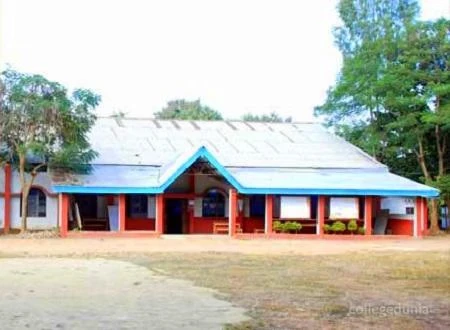
The campus is a mix of old and new, spread over a vast, green area. Students consistently praise the environment as peaceful and spacious, a genuine escape. Infrastructure, however, gets mixed reviews. There's a new Commerce Block and an upgraded central library with over 6,000 books and N-LIST digital access that are called "world-class" by some. But the old Arts block? It often draws complaints about being congested and having outdated facilities, though 2025 reports mention ongoing renovations.
Hostels are available. The boys' hostel has a 100-bed capacity after recent upgrades, and the girls' hostel capacity is around 60-80. They're rated well for safety and environment (4/5) but the food gets a more average mark (3/5). Wi-Fi is available, but selectively—in the library and admin block—not blanket coverage across campus. For sports, there's a large playground, indoor facilities, and even an open-air gym. The alumni-run canteen, "College Bites," is a popular spot noted for being both affordable and hygienic. Life here is structured; the 75% attendance rule is strictly enforced with zero flexibility within the allowed 25% leave.
Synthesizing feedback from Shiksha, CollegeDunia, and social media gives you a consistent picture. The positives are strong: Faculty quality is repeatedly highlighted. Students note that teachers are highly qualified and, importantly, regular in attendance—a noted plus for a government college. Affordability is the other huge win, with many calling it the "best value for money in the state." The campus environment is loved for being green and quiet, with active student council support.
But the negatives are just as consistent. Infrastructure gaps are the biggest gripe, specifically small classrooms and poorly maintained bathrooms in the older sections. The placement scene is clear: "No direct corporate placements for Arts students; you have to find your own path." And the strict attendance policy is a real factor—you can't skip beyond the 25% allowance. One 2024 Shiksha review summed up the academic vibe well: "The professors only focus on the syllabus, but their life experiences are very inspiring." Another from 2025 stated simply: "DGC is the best for those who want quality education without spending lakhs."
Dimapur Government College is a classic example of a institution that serves a specific, crucial purpose exceptionally well. It is absolutely worth it if you are a student from Nagaland or the surrounding region seeking a reputable, affordable bachelor's degree in Arts or Commerce. It's the ideal launchpad for those aiming to pursue higher studies (M.A., B.Ed.) or prepare for state government service exams, with a qualified faculty to guide you. The cost is almost unbeatable, and the campus provides a conducive, if somewhat spartan, environment for study.
You should probably look elsewhere if your primary goal is campus placements into corporate roles, or if you require cutting-edge, uniformly modern infrastructure. DGC doesn't pretend to be that college. It's a foundational government institution—one of the top three in Nagaland—that has educated generations. It's pragmatic, it's affordable, and for the right student, it's a very smart choice. Check the latest updates on their official site and the NAAC portal for the most current accreditation details before applying.
Yes, Dimapur Government College (DGC) is widely considered the premier government institution for Commerce in Nagaland. It features a dedicated Commerce Block and is staffed by experienced faculty, making it a strong choice for a B.Com program.
Admissions for the 2025 session are primarily based on CUET UG scores. Eligible candidates must subsequently complete an online application through the official DGC admission portal.
Yes, the college has a 100-bedded boys' hostel located on its campus to accommodate outstation male students.
Currently, DGC's primary focus is on Arts and Commerce programs. While a Science Block exists on campus, full-fledged B.Sc. programs are not the college's main offering. Prospective students should verify the current academic year's prospectus for any specific B.Sc. program intake.
The college maintains a very strict attendance policy. Students are required to have a minimum of 75% attendance to be eligible to sit for their university examinations.
Share what future students should know about Dimapur Government College.
Student voices are not rewritten by colleges. We remove spam and abuse.
Wider admission question? Community PulseWhat should future students know?
Tell us which course you're considering. We'll help you work out the next step.
Get instant Partner access after mobile verification. Your public edits are reviewed before they go live.
Claim this college Auditorium
 Cafeteria
 Computer Labs
 Medical
 Sports Complex
 Study Library