Loading Admission Guardian content
Loading Admission Guardian content

Provisional score based on available data. It may change as more information is verified.
Find a program, read its fee details and explore the admission requirements.
Summary of the programs shown below. First-year fee. Check the note beside each amount for inclusions and exclusions.
| Course | Stream | Fees |
|---|---|---|
| Bachelor of Arts [BA] | Arts | 2235 |
| Bachelor of Arts [BA] {Hons.} | Arts | 2285 |
| Bachelor of Commerce [B.Com] {Hons.} | Commerce | 2555 |
| Bachelor of Science [B.Sc] | Science | 2755 |
| Bachelor of Science [B.Sc] {Hons.} | Science | 4505 |
Specializations
Eligibility: 10+2
Specializations
Eligibility: 10+2
Specializations
Eligibility: 10+2
Specializations
Eligibility: 10+2
Specializations
Eligibility: 10+2
 ICICI Bank
 ICICI Prudential
 TCS
TCSIf you're looking at colleges in South Kolkata and your priority is a solid, affordable education from the University of Calcutta, Dinabandhu Andrews College (DAC) is a name you'll hear a lot. Established back in 1956, this government-aided institution has built a reputation, particularly in the sciences, on the back of dedicated faculty and some of the lowest tuition fees you'll find anywhere. But it's a classic case of getting what you pay for—and what you're paying for here is a degree, not a corporate launchpad. The campus is compact, there's no hostel, and the placement cell isn't exactly a powerhouse. For students aiming at higher studies or a stable government job after graduation, DAC offers incredible value. For those dreaming of high-flying corporate packages straight out of undergrad, the reality check can be harsh.
DAC operates on a two-shift system, a common feature in crowded city colleges. The morning shift handles B.A. and B.Com General courses, while the day shift is for all Honours and Science programs. Academically, it's a straight-down-the-line University of Calcutta affiliate, following the CU semester system (CBCS/CCF 2022). The syllabus, exams, and degree certificates all come from the university. That's not a bad thing—Calcutta University's framework is rigorous and well-respected, especially for postgraduate admissions.
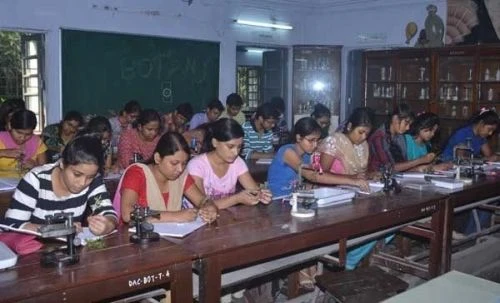
The real strength here lies in specific science departments. The Microbiology program is consistently mentioned as a top draw, with students citing well-maintained labs that are a cut above what you'd expect at this fee level. Zoology is another stronghold, supported by a dedicated faculty. A unique offering is the Major in Sericulture, which you won't find in many Kolkata colleges. The Arts and Commerce streams are more standard, providing a perfectly decent education but without the same standout departmental reputation.
Faculty quality is the college's strongest card. A significant majority of the permanent professors hold PhDs, and student reviews, particularly in science, often praise them for being accessible and genuinely invested in teaching. The flip side is the reliance on State-Aided College Teachers (SACTs)—contractual faculty who make up about a third of the teaching staff. While many are qualified, their presence points to the resource constraints of a government-aided institution.
This is where you need to manage expectations carefully. DAC is a traditional general degree college. Its primary function is to deliver an undergraduate education, not to be a feeder for multinational corporations. The official placement data, when shared, points to modest outcomes. The highest package quoted for 2024-25 hovers around ₹2.5 to ₹3 LPA, with an average between ₹1.5 and ₹1.8 LPA. Top recruiters are names like TCS (through its Smart Hire program), Wipro, Cognizant, and a few banks like ICICI.
The gap between the official "70-80% placement" claim for some departments and student sentiment is the most critical piece of information. Across forums and review sites, the consistent feedback is that on-campus placement rates for the general student body are much lower—students estimate 10-20%. Most graduates either pursue higher studies (M.Sc., MBA, government exam preparation) or find jobs off-campus through personal networks.
That's not necessarily a failure; it's a reflection of the college's role in the ecosystem. The placement cell exists, but it's not aggressive. For students in Electronics or Microbiology, there are better chances, and some secure research internships at places like the Bose Institute. But if a high-paying campus placement is your non-negotiable goal, you're likely looking at the wrong type of college.
This is DAC's unbeatable advantage. The fees are heavily subsidized, making it one of the most accessible quality education options in the region. For the 2024-25 session, a first-year B.Sc. Honours student might pay between ₹5,445 and ₹15,745, depending on the subject. A B.A. Honours student could pay as little as ₹3,285. Over a full three or four-year course, you're looking at a total cost of ₹12,000 to ₹60,000. Compare that to any private institution and the value proposition is stark.
Financial aid is robust and leverages state government schemes. The Swami Vivekananda Merit-cum-Means Scholarship (SVMCM) is widely availed. There's also strong support for Kanyashree (for female students), OASIS for SC/ST/OBC candidates, and Aikyashree for minority students. The low fee barrier, combined with these scholarships, is why DAC remains a first-choice for many academically bright students from economically modest backgrounds.
Admission to DAC's undergraduate programs is strictly merit-based, calculated on your Class 12 board exam marks. There are no separate entrance tests. The entire process is centralized through the West Bengal Centralised Admission Process (WBCAP) portal. You'll submit your preferences there, and allotments are made based on merit and seat availability.
Cutoffs are competitive, especially for the sought-after science programs. For the 2024 cycle, general category cutoffs for some key subjects were steep: Microbiology Honours demanded scores above 92%, English Honours hovered around 90%, and Zoology was close to 88%. B.Com Honours was relatively more accessible at around 80%. These numbers shift slightly each year but indicate that getting into a popular major requires top-tier board exam performance. The application fee is typically nominal or even waived, keeping the process accessible.
For postgraduate M.Sc. programs in Zoology and Electronic Science, admissions are handled by Calcutta University and are based on university-level entrance exams or merit.
The campus is compact, covering about 2 acres. It's a commuter college—there are no hostel facilities on campus. Students from outside Kolkata typically rent paying guest (PG) accommodations in the densely populated residential areas of Garia, Baghajatin, or surrounding neighborhoods. This is a crucial factor for out-of-town students to plan for.
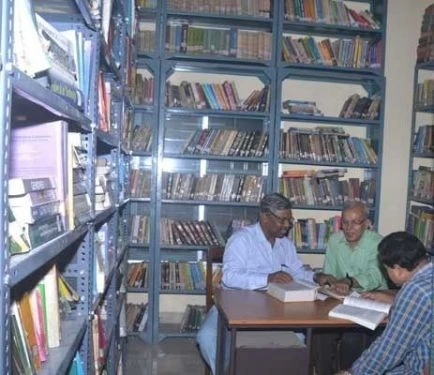
Infrastructure is a mixed bag. The library is a positive, digitized with over 21,000 books and providing access to the N-LIST e-journal database. The science labs, especially for Microbiology and Zoology, are well-regarded and a point of pride. However, maintenance in other areas is a common complaint. Students mention outdated furniture in some of the older buildings and issues with washroom cleanliness. Wi-Fi is available but spotty, mostly confined to labs and the library.
There's a canteen that serves basic, subsidized meals—think rice, fish curry, eggs—and the standard array of snacks and tea. For sports, the college has access to a large adjacent playground used for annual events. The location is arguably one of the biggest practical perks: the Kavi Nazrul Metro station is just a 650-meter walk away, connecting students to the entire city.
Synthesizing feedback from platforms like Shiksha, CollegeDunia, and Google reviews paints a consistent picture. The praise is almost universally directed at the teaching faculty, particularly in the science departments. Phrases like "teachers treat us like their own children" and "exceptionally helpful professors" appear repeatedly. The low fee structure is the other major highlight, with students feeling they receive a quality Calcutta University education without the financial burden.
The criticisms are just as consistent. Student political activity is described as high, and while the campus is reported as ragging-free, political rallies and union activities can sometimes disrupt academic schedules. A frequent pain point is the administrative office staff, who are often described as uncooperative or rude. The placement scenario, as discussed, is viewed with realism—students know they're here for the degree, not the job fair. The infrastructure, outside of key labs, is seen as aging and in need of better upkeep.
Dinabandhu Andrews College serves a specific student profile exceptionally well. If you are a academically inclined student, especially in the sciences, looking for a reputable University of Calcutta degree at an almost symbolic cost, DAC is an outstanding choice. Its value for money is virtually unmatched in the region. It's an ideal launchpad for students targeting postgraduate studies (M.Sc., research), government service exams, or professional courses like MBA where the undergraduate brand matters less.
However, you should probably look elsewhere if your primary goal is a vibrant residential campus life, state-of-the-art infrastructure, or a strong corporate placement track record straight after your B.A., B.Sc., or B.Com. The college makes no pretenses about these areas. It's a commuter college focused on delivering affordable, quality undergraduate education. For the right student, that’s more than enough. For others, the trade-offs might be too significant. It’s a classic, no-frills workhorse of an institution, and judging it on its own terms is key.
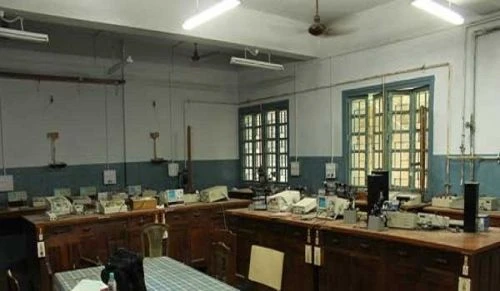

In this preview: 5 photos · 0 videos
Yes, Dinabandhu Andrews College is considered one of the top five colleges under Calcutta University for its B.Sc. Microbiology program, largely due to its well-equipped laboratory facilities.
No, Dinabandhu Andrews College does not provide on-campus hostel facilities for students. Students typically arrange accommodation in local paying guest (PG) accommodations.
Dinabandhu Andrews College (DAC) is a government-aided general degree college offering traditional B.A., B.Sc., and B.Com programs. Dinabandhu Andrews Institute of Technology & Management (DAITM) is a private, self-financing institute located nearby, offering professional courses like BCA and BBA.
Officially, the college follows Calcutta University's norm of requiring 75% attendance. However, the enforcement of this policy varies by department, with science departments generally being stricter about attendance.
According to consistent student reviews, the campus of Dinabandhu Andrews College is reported to be "Ragging-Free." It is noted, however, that political influence on campus is high.
Share what future students should know about Dinabandhu Andrews College.
Student voices are not rewritten by colleges. We remove spam and abuse.
Wider admission question? Community PulseWhat should future students know?
Tell us which course you're considering. We'll help you work out the next step.
Get instant Partner access after mobile verification. Your public edits are reviewed before they go live.
Claim this college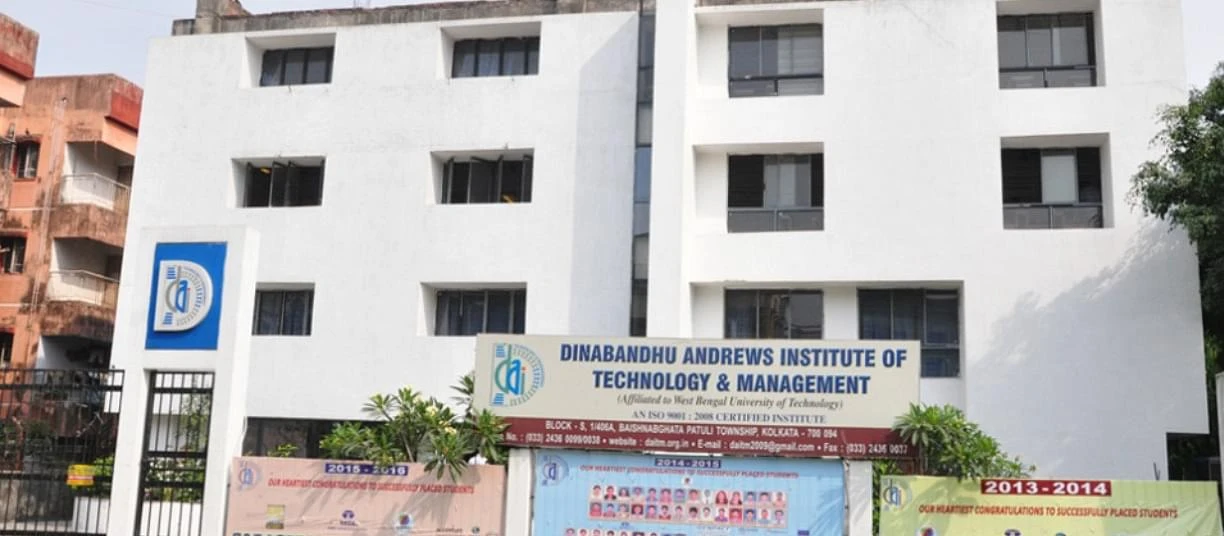

 Auditorium
 Cafeteria
 Computer Labs
 Medical
 Science Labs
 Sports Complex
 Study Library