Loading Admission Guardian content
Loading Admission Guardian content
Provisional score based on available data. It may change as more information is verified.
Find a program, read its fee details and explore the admission requirements.
Summary of the programs shown below. First-year fee. Check the note beside each amount for inclusions and exclusions.
| Course | Stream | Fees |
|---|---|---|
| Bachelor of Science [B.Sc] | Science | 3080 |
| Master of Arts [MA] | Arts | 5928 |
| Bachelors of Computer Science [BCS] | Computer Applications | 17943 |
| Master of Science [M.Sc] | Science | 19618 |
| Master of Computer Applications [M.C.A] | Computer Applications |
Specializations
Eligibility: 10+2
Specializations
Eligibility: Graduation
Specializations
Eligibility: 10+2
Specializations
Eligibility: Graduation
All accepted exams
Eligibility: Graduation
1 exam with cutoff data available
If you're looking at colleges in the Marathwada region, Dnyanopasak Shikshan Mandal's College of Arts, Commerce and Science (DSM-CACS) in Parbhani is a name that comes up consistently. It's not a flashy metro college, but it's built a solid, decades-long reputation as a workhorse institution. For students from Parbhani and surrounding districts, it represents a reliable, affordable option for foundational degrees. The college's recent NAAC re-accreditation with a 'B+' grade in 2024—a step down from its previous 'A'—tells a story of its own. It suggests an institution that's established and recognized, but perhaps facing the infrastructural and funding challenges common to many government-aided colleges. Where DSM-CACS really shines, according to its students, isn't in glossy brochures but in its rigorous academic discipline and a library that's genuinely considered the heart of the campus.
DSM-CACS runs on two parallel tracks: the traditional, grant-in-aid side and the more contemporary, self-financed professional wing. The aided side offers the staples—BA, B.Com, and B.Sc. in general sciences—with massive intakes (up to 360 for BA). These are the bedrock programs, incredibly affordable and designed to serve the local population. Then there's the professional track, which is where the college has invested to stay relevant. The B.C.S. (Bachelor of Computer Science) and B.C.A. are the sought-after UG programs here, with intakes of 120 and 60 respectively.
At the postgraduate level, the scope is surprisingly wide, with 21 Master's disciplines. It was the first in the region to offer M.Sc. in Microbiology and Environmental Technology, which still gives it an edge. The M.C.A. program, with an intake of 60, is a key offering. Faculty strength is a plus point; with over 100 permanent teachers, a significant majority (around 60% or more) hold Ph.D.s. This isn't a college run by temporary staff. You'll find dedicated subject experts, particularly in the science and IT departments, who students consistently praise for being supportive and knowledgeable. The college also fosters a research culture, with 13 departments recognized as Ph.D. research centers by SRTMU.
This is where you need a sharp reality check. The college's placement story is a tale of two worlds, and confusing them leads to disappointment.
For professional courses like M.C.A., M.Sc. (Computer Science, Microbiology), and B.C.S., there is a functional placement cell. The highest package reported in recent years touched ₹9.0 LPA for an M.C.A. graduate in 2023. That's a decent outcome for a regional college. Average packages for these streams hover between ₹1.5 to ₹3 LPA. Recruiters are a mix of IT service firms (like TCS, Infosys often through off-campus drives) and pharmaceutical companies (Cipla, Mankind Pharma) for the microbiology grads.
And then there's the other world—the large, traditional BA, B.Com, and B.Sc. (General) programs. The official placement claim for the college overall is a modest 20-30%, but student reviews are far more blunt. They suggest that for these streams, genuine on-campus placement is almost negligible, perhaps 1-5%. The college's own data seems to back this bifurcated reality. Most students from these courses don't expect a job from campus. Their path is different: they use the college's strong academic base and excellent library to prepare for competitive government exams (MPSC/UPSC) or pursue higher studies. The college supports this with a dedicated Competitive Exam Cell.
So, the verdict? If you're joining for B.C.S. or M.C.A., approach placements with cautious optimism. If you're joining for a traditional degree, see the college as a rigorous academic launchpad for your own exam prep, not a placement gateway.
The fee structure is a major draw and reflects its government-aided status. For aided courses, the costs are strikingly low. A three-year B.A. or B.Com degree can cost a total of ₹10,000 to ₹15,000. A B.Sc. might run ₹20,000 to ₹30,000 for the full program. That's affordability few can match.
The self-financed professional courses cost more, as expected. B.C.S. or B.C.A. totals around ₹60,000 to ₹75,000 for three years. M.Sc. programs are in the ₹55,000 to ₹75,000 range for two years.
Hostel facilities are limited and a known pain point. There's only a girls' hostel (annual fees: ₹3,000–₹5,000), with a capacity for just 30-50 students. There is no functional boys' hostel on campus, a frequently cited drawback that forces out-of-town male students into private PGs or rentals in Parbhani city.
Where the college excels is in facilitating scholarships. Being a government-aided institution, it actively processes a wide array of Government of India scholarships for SC, ST, OBC, and VJNT categories. For students from the open category, the EBC (Economically Backward Class) scholarship, which offers a 50% fee concession, is a significant support.
Admissions follow the standard SRTMU, Nanded process and depend entirely on the program.
For the vast majority of UG seats in BA, B.Com, and B.Sc. (General), admission is directly based on Class 12th merit marks. There's no entrance exam. Selection happens through an online merit list published by the university after the application window (typically June-July).
For professional UG courses like B.C.A. and B.C.S., the National Education Policy (NEP) 2020 has introduced a change. Admission now requires a score from the MAH-BCA-CET entrance exam.
For the M.C.A. program, the gateway is the MAH-MCA-CET. The cutoffs aren't fiercely high. For the 2025 cycle, the percentile range was between 29.9 and 80, making it accessible for many. Admission for most PG science and arts programs is also based on the merit of the qualifying undergraduate degree.
The campus spans about 6 acres. It's functional rather than luxurious. The infrastructure is a mix—some well-maintained buildings housing modern computer labs (with 150+ PCs) and specialized microbiology labs, alongside older blocks where students note maintenance is needed, particularly for washrooms.
The library is the undisputed crown jewel. Holding over 34,000 books and 150+ journals, with digital access via INFLIBNET's N-LIST, it's a serious academic resource. Students preparing for competitive exams spend countless hours here. Wi-Fi is available, but mainly in specific zones like the IT department and library.
Student life is active in a traditional sense. The annual gathering and the Science Festival are well-organized and popular. There's a large playground for cricket and football, and facilities for indoor games. The canteen is rated as average. The social scene is what you'd expect in a semi-urban setting—quiet, focused on academics and college events rather than a metropolitan buzz.
Synthesizing dozens of reviews from platforms like CollegeDunia and Shiksha gives a consistent, grounded picture.
The praise is usually for:
The criticisms are equally consistent:
DSM-CACS is a classic example of a college whose value depends entirely on your goals and context. It's not a one-size-fits-all institution.
It's an excellent, cost-effective choice for:
You should probably look elsewhere if:
In essence, DSM-CACS is a workmanlike, respected institution that does the fundamentals well for its community. It provides a solid education at a remarkably low cost, but it doesn't sugarcoat the realities of the regional job market. Your success here will be defined more by your own drive than by the college's brand name.
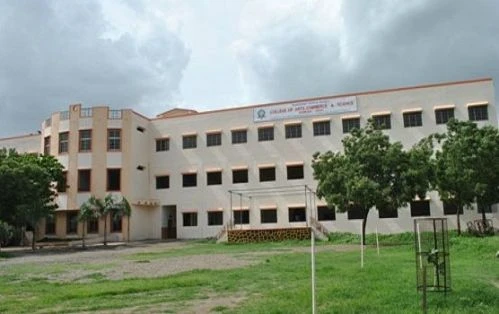
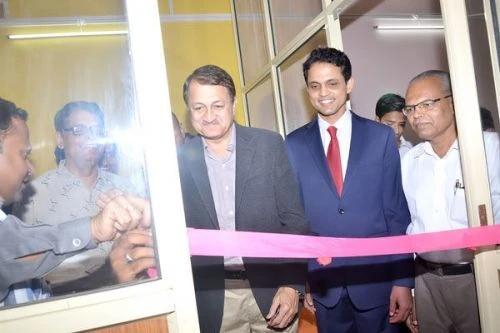
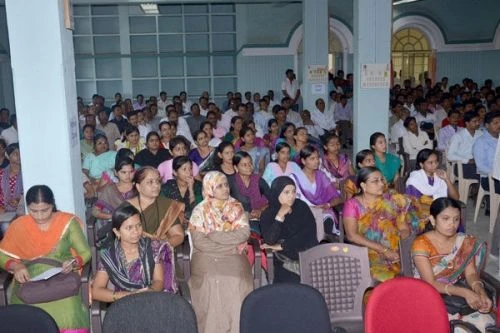
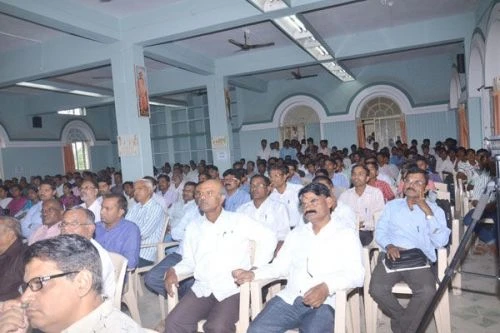
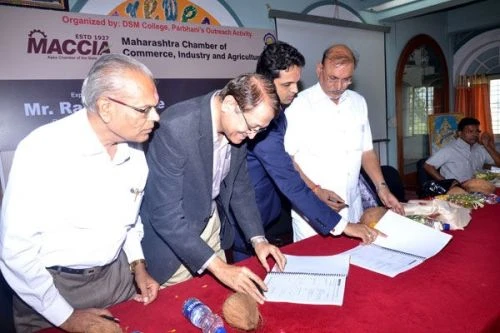
In this preview: 5 photos · 0 videos
Yes, Dnyanopasak Shikshan Mandal's College of Arts Commerce and Science (DSM-CACS) is considered the best in the district for Computer Science programs like BCS/BCA. This reputation is based on its well-equipped labs and experienced faculty. It is important to note that most placement opportunities for these courses are off-campus.
No, there is currently no functional boys' hostel on the main campus of DSM-CACS. Male students typically arrange for accommodation in private hostels or paying guest facilities located near the college.
The cutoff percentile for the MCA program at DSM-CACS varies by student category. Based on typical trends, the MAH-MCA-CET cutoff generally ranges from 30 to 70 percentile.
Yes, open-category students at DSM-CACS are eligible to apply for scholarships. Specifically, they can apply for the EBC (Rajarshi Shahu Maharaj) scholarship, which provides a 50% waiver on tuition fees.
Placements for M.Sc. Microbiology at DSM-CACS are decent, with opportunities in pharmaceutical companies such as Cipla and Mankind. Students often participate in pool campus drives held in larger cities to access these placement opportunities.
Share what future students should know about DSM-CACS.
Student voices are not rewritten by colleges. We remove spam and abuse.
Wider admission question? Community PulseWhat should future students know?
Tell us which course you're considering. We'll help you work out the next step.
Get instant Partner access after mobile verification. Your public edits are reviewed before they go live.
Claim this college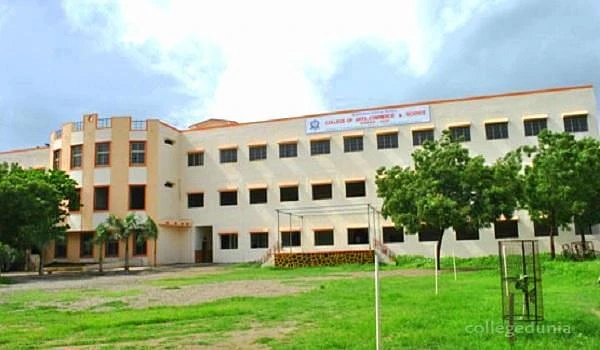
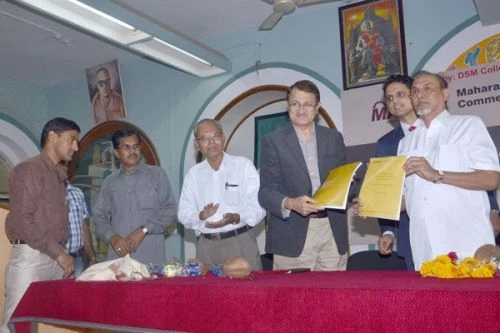
 Auditorium
 Cafeteria
 Computer Labs
 Medical
 Science Labs
 Sports Complex
 Study Library