Loading Admission Guardian content
Loading Admission Guardian content

Provisional score based on available data. It may change as more information is verified.
Find a program, read its fee details and explore the admission requirements.
Summary of the programs shown below. First-year fee. Check the note beside each amount for inclusions and exclusions.
| Course | Stream | Fees |
|---|---|---|
| Master of Technology [M.Tech] | Engineering | 78150 |
| Bachelor of Technology [B.Tech] | Engineering | 80750 |
| Bachelor of Technology [B.Tech] {Lateral} | Engineering | 80750 |
| Master of Business Administration [MBA] | Management | 80750 |
Specializations
All accepted exams
Eligibility: Pass in Graduation + GATE
Specializations
Eligibility: 10+2 with 75% + JEE Main
Specializations
Eligibility: 10+3 with 75% + JEE Main
Specializations
All accepted exams
Eligibility: Graduation with 50% + CMAT
Doaba Institute of Engineering and Technology (DIET) in Mohali is, for many students, the definition of a pragmatic choice. It’s not the flashiest or most competitive engineering college in Punjab’s bustling education belt, but it serves a clear purpose: delivering an AICTE-approved B.Tech degree at a price point that doesn’t break the bank. Nestled on the Chandigarh-Ropar highway, this private institute under I.K. Gujral Punjab Technical University (IKGPTU) has built a reputation over nearly two decades as a viable option for students with average scores. The trade-off, as you’ll hear repeatedly from alumni, is that you get what you pay for—especially when it comes to campus placements. If you’re self-motivated and see the degree as a stepping stone, DIET might work. If you’re expecting a high-flying corporate recruitment drive to land at your doorstep, you’ll likely be disappointed.
DIET’s academic portfolio is standard for a PTU-affiliated college, centered on core engineering disciplines. The B.Tech program in Computer Science and Engineering has the largest intake (around 120 seats), making it the most popular choice. Mechanical and Civil Engineering follow with 60 seats each, while Electronics & Communication and Information Technology have smaller batches of 30. That smaller batch size in ECE and IT can sometimes mean more direct faculty interaction, a point some students appreciate. Postgraduate options include M.Tech in CSE and ECE, and an MBA program with specializations in HR, Finance, Marketing, and Operations.
The academic rhythm is dictated entirely by IKGPTU’s calendar and curriculum. You’ll follow the standard semester system, use the 10-point CGPA scale, and take university-conducted exams. Faculty-wise, the institute lists around 79 teaching staff for engineering. Don’t expect a high density of PhDs; most instructors are Assistant Professors with M.Tech qualifications. The feedback on them is mixed but leans positive on accessibility—they’re often described as approachable and supportive, which counts for something in a system that can feel impersonal. Academically, the college supplements lectures with mandatory industrial visits to local hubs like the Mohali IT Park or Baddi, and promotes project-based learning. It’s a decent, no-frills academic setup that covers the bases.
This is the section where you need to read between the lines. The official placement data and the consensus from student reviews across platforms like Shiksha and CollegeDunia tell two different stories.
The college’s published figures, such as those reported to AICTE, show a placement rate of around 61% for CSE in 2023-24, with claims of 100% for tiny ECE batches. The highest package touted in brochures sometimes reaches a historical ₹8.5-12 LPA, but that’s largely unverified. The ground reality, as per recent graduate accounts from 2024-25, is more modest. The highest verified offers tend to cluster between ₹4.5 and ₹6 LPA. The average package? Students consistently report figures between ₹1.8 and ₹2.4 LPA, which often translates to a starting monthly salary of ₹15,000-20,000.
Recruiters like Accenture, HCL, and Honeywell do visit, but the roles are frequently in IT support, sales, or junior developer positions. A significant portion of the student body seeks off-campus opportunities. The gap between the official claim and the alumni-reported number is notable. The verdict from reviews is blunt: "Don't rely on the college for a high-paying job." Placement support exists, but it’s not a strength. For a true picture of graduate outcomes, it’s worth checking the NIRF Rankings data for the broader university, as DIET itself does not feature in the top tiers.
Affordability is DIET’s strongest selling point. For the 2025-27 cycle, the annual tuition fee for B.Tech programs (CSE, ME, CE) is estimated between ₹90,000 and ₹1,00,200. Over four years, you’re looking at a total tuition cost of roughly ₹3.6 to ₹4 lakhs. Add to that hostel and mess charges, which range from ₹50,000 to ₹65,000 per year. There are additional one-time and periodic fees like a refundable security deposit (around ₹8,000) and semester exam fees (approx. ₹1,500).
Compared to neighboring giants like Chandigarh University or Lovely Professional University, this fee structure is undeniably lighter. The college offers several scholarships to ease the burden further. These include standard Punjab Government Post-Matric scholarships for SC/ST/OBC students. For high achievers, there are merit-based cash awards (₹5,000 - ₹21,000) for university rank holders and the DGC Scholarship, which can grant up to a 50% tuition waiver based on 10+2 marks. It’s a financially accessible setup, which explains its appeal.
Getting into DIET is generally not a fiercely competitive process. For B.Tech, the primary gateway is a valid JEE Main score, through which admissions are made via the state counseling process. However, the published cutoffs are not high—often, any valid score combined with decent 10+2 marks is sufficient. If seats remain vacant after counseling, which they often do, the college opens direct admissions based purely on 10+2 merit (minimum 45-50% aggregate).
This is a key detail. A significant number of students enter through this direct or management quota, which accounts for roughly 33% of seats. The application fee is nominal, typically between ₹500 and ₹1,000. For MBA, the process is similar, with CMAT scores being the preferred entrance metric, but direct admission on merit is also common. The overall message is clear: the barrier to entry is manageable, making it an option for a wide range of students.
The campus, part of a larger 30-acre group estate, is often described as lush green and peaceful—a pro for some, a con for those seeking a more urban, connected student life. It’s situated directly on the highway, which provides good transport links but also means you’re a bit isolated. The college runs a bus fleet for day scholars commuting from Chandigarh and nearby towns.
Infrastructure is functional. Classrooms are smart but basic, with air conditioning not being standard—a genuine concern during Punjab’s peak summer. Labs are equipped to meet curriculum requirements, but students note that for ambitious projects, personal laptops and initiative are necessary. The library is adequate, with over 10,000 books and digital access via DELNET. Wi-Fi covers the campus, though speeds are reported to be modest (8-10 Mbps) and often restricted in hostels.
Hostel life is a major part of the experience. There are separate facilities for boys (1000 beds) and girls (700 beds), mostly with double-occupancy rooms. Reviews rate them a 3 out of 5. The common complaints revolve around maintenance and, most persistently, the mess food. The word "average" is used generously here; many students opt for the canteen or outside eateries. On the positive side, the environment is reported to be safe with a strict anti-ragging policy. Amenities like a gym, medical dispensary, and sports grounds are present and operational.
Synthesizing the chatter from CollegeDunia, Shiksha, Reddit, and Quora gives you the real pulse of the institute. The median consensus is that DIET is a "budget-friendly alternative."
The positives are consistent: the low fee structure is the biggest draw. Students also repeatedly praise the faculty for being accessible and supportive, a trait sometimes lost in larger colleges. The green, quiet campus is also a liked feature.
But the negatives are just as consistent and serious. Placement reality tops the list, with most advising you to plan for off-campus job searches from day one. Infrastructure maintenance and the lack of air-conditioned learning spaces are frequent grievances. There’s also criticism about administrative lethargy—"Getting a simple document signed can take days," as one Reddit user put it. The mess food quality is a perennial complaint. The takeaway from reviews is a balanced, somewhat cautious endorsement. As one Quora reviewer summarized: "If you want a degree and are ready to work hard on your own for a job, join DIET. If you want a placement on a silver platter, look elsewhere."
DIET Mohali occupies a specific, necessary niche in Punjab’s engineering education landscape. It’s worth serious consideration if you are a cost-conscious student with average academic scores, for whom an AICTE-approved B.Tech degree is the primary immediate goal. Its affordability and decent, approachable teaching staff make it a viable platform if you are disciplined and proactive about your own skill development and job search. You can get the degree without a crushing financial burden.
However, you should probably look elsewhere if your priority is strong campus placements, cutting-edge research infrastructure, or a vibrant, resource-rich campus life. The placement record is its weakest link, and the infrastructure is strictly functional. DIET is best understood as a launchpad for self-starters, not a destination that guarantees corporate success. It’s a college that meets you where you are, financially and academically, but expects you to do a lot of the heavy lifting yourself to get where you want to go.
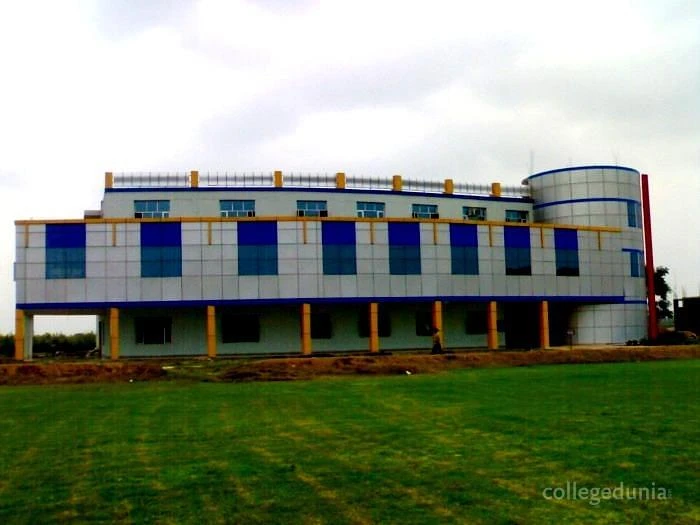
In this preview: 1 photo · 0 videos
The institute is considered average for CSE. It follows the standard PTU curriculum, but students aiming for high-end placements typically need to rely on off-campus recruitment drives.
CGC Landran generally has better placement records and more recruiting partners. DIET Mohali is more affordable but has fewer companies visiting for campus placements.
No, recent reviews indicate a strict anti-ragging policy is enforced, creating a generally safe environment for first-year students.
Yes, direct admission is possible based on your 10+2 marks, typically for seats that remain available after the centralized JEE counseling process.
Hostel life is basic. While facilities like Wi-Fi and laundry are available, residents frequently criticize the quality of the food and the maintenance of the rooms.
Share what future students should know about DIET.
Student voices are not rewritten by colleges. We remove spam and abuse.
Wider admission question? Community PulseWhat should future students know?
Tell us which course you're considering. We'll help you work out the next step.
Get instant Partner access after mobile verification. Your public edits are reviewed before they go live.
Claim this college
 Auditorium
 Cafeteria
 Computer Labs
 Gym
Gym Hostel
 Medical
 Science Labs
 Sports Complex
 Study Library