Loading Admission Guardian content
Loading Admission Guardian content
Provisional score based on available data. It may change as more information is verified.
Find a program, read its fee details and explore the admission requirements.
Summary of the programs shown below. First-year fee. Check the note beside each amount for inclusions and exclusions.
| Course | Stream | Fees |
|---|---|---|
| Bachelor of Technology [B.Tech] | Engineering | 88000 |
| Diploma in Engineering (Polytechnic) | Engineering |
Specializations
Eligibility: 10+2
Specializations
Eligibility: 10+2
3 exams with cutoff data available
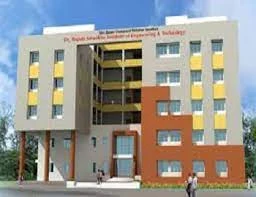
If you're looking at engineering colleges in Kolhapur and your MHT-CET score isn't sky-high, Dr. Bapuji Salunkhe Institute of Engineering and Technology (BSIET) will likely appear on your list. Established in 2009 under a well-regarded local trust, it's a private, non-autonomous institute that offers a pragmatic, no-frills path to a B.Tech or Diploma. Its biggest selling point isn't prestige, but location and accessibility. Sitting right in Tarabai Park, the heart of the city, it's a short ride from the railway station and bus stand. That urban convenience, combined with fees that are notably lower than many competitors, makes it a practical choice for many students from the region. The academic experience is straightforward, following the curriculum of its affiliating university, Dr. Babasaheb Ambedkar Technological University (DBATU). You won't find the cutting-edge research or sprawling campus of a top-tier institute here. What you will find is a disciplined environment focused on getting students through their degree and into the workforce, with a particular emphasis on connecting with Kolhapur's robust industrial belt.
BSIET runs two parallel streams: a four-year B.Tech degree and a three-year Diploma (Polytechnic). The B.Tech program offers the standard suite of branches—Computer Science, Civil, Mechanical, Electrical, and Electronics & Telecommunication. They've also added Artificial Intelligence and Machine Learning recently, a move to keep pace with market trends. Diploma specializations mirror these, plus Automobile Engineering. Intake is typically 60 students per branch for both streams.
The academic culture is what you'd expect from a non-autonomous college. The syllabus, exam patterns, and calendar are dictated by DBATU for degree students and MSBTE for diploma seekers. That means less flexibility but also a clear, structured path. Faculty are often described in student reviews as accessible and supportive, especially when it comes to guiding final-year projects. Where BSIET tries to add value is through its industry linkages. The institute has MoUs with several companies in the nearby Gokul Shirgaon and Shiroli MIDC areas. These connections facilitate compulsory industrial visits and internships, particularly for diploma students after their second year. It's a practical approach that leverages the college's location in an industrial city.
This is where you need to read between the lines of the official brochure. The college promotes "100% placement assistance," which is very different from 100% placement. The actual on-campus placement rate, as pieced together from student testimonials, fluctuates between 50% and 65%, with a heavy skew towards Computer Science and Electronics branches.
The highest packages advertised officially range from 3.5 to 5.5 LPA, typically from core engineering recruiters like Force Motors or Tata Power. You'll see ambitious claims of 10 LPA or even 22 LPA floating around on forums—these are almost always exceptional off-campus achievements or international offers that shouldn't be considered the norm. The realistic average package for a student securing a job through campus drives is in the ₹2.0 to ₹2.5 LPA range. That's a modest start, but it's also a reflection of the local industrial salary scales and the college's tier.
Recruiters are a mix of national names and strong regional players. You'll see IT service giants like Infosys and Tech Mahindra for CS/IT roles. The core engineering placement is dominated by Kolhapur's automotive and manufacturing strength: Bajaj Auto, John Deere, Bosch Chassis Systems, Bharat Forge, and Cummins India are regulars. For many mechanical or civil graduates, landing a role at one of these local MIDC companies is the expected outcome. The placement story here is about reliability, not high finance. If you're in CS, you have a decent shot at an IT services role. If you're in a core branch, you're being funneled towards the industries that power the Kolhapur economy.
The affordability of BSIET is one of its most compelling features. For the B.Tech program, annual tuition fees are estimated between ₹60,000 and ₹90,000. Over four years, you're looking at a total tuition cost of roughly ₹3.6 lakhs. Diploma fees are even lower, ranging from about ₹25,000 to ₹51,130 per year. Hostel fees add another ₹20,000 to ₹23,000 annually, excluding mess charges.
To help with costs, the college facilitates several government scholarship schemes available through the Maharashtra DBT portal, including those for EBC and SC/ST/OBC students. They also offer their own Dr. Bapuji Salunkhe Merit Scholarship for top academic performers. It's not a huge amount, but it's a gesture that aligns with the institute's community-oriented ethos. When you compare the total cost of attendance here to an autonomous private college, the value proposition for a budget-conscious family becomes clear.
Admission to the B.Tech program is primarily through the Maharashtra Common Entrance Test (MHT-CET). JEE Main scores are also accepted but are less common. The process is centralized, managed by the DTE Maharashtra through its CAP rounds, which usually run from June to August.
The cutoffs tell a story of demand. For the 2024 cycle, the Computer Science and Engineering branch had a cutoff percentile ranging from 45% to 78% for the General Home University category. That's not intensely competitive, but it shows CS is the sought-after branch. For Civil and Mechanical Engineering, cutoffs can be dramatically lower, sometimes dipping to just 0.16%, primarily due to higher vacancy rates. If you have a moderate CET score and are flexible on branch, getting a seat here is very feasible.
Diploma admissions are simpler: they're based purely on merit from your 10th-standard (SSC) marks, also processed through the DTE CAP system.
The campus is compact, spanning about 5-6 acres in the middle of the city. This urban integration is a double-edged sword. The convenience is unmatched—everything in Kolhapur is nearby. But you shouldn't expect a sprawling, residential university vibe. Infrastructure is functional. There are over 37 labs, including a dedicated AI/ML lab, though students sometimes note that equipment in older core engineering labs can feel dated. The library has a solid collection of over 22,000 books. Wi-Fi is available but is often described in reviews as "average" at best.
Hostel life is structured. The Shrimati Sudhiladevi Salunkhe Girls Hostel is on-campus and can house about 200 students. The boys' hostel has a capacity of around 130. Rooms are typically 3-4 sharing. Cleanliness, particularly of common washrooms, is a recurring point of criticism in student feedback. The canteen serves basic vegetarian fare. The college doesn't run daily transport buses; students rely on city buses or private vehicles.
Social life is quiet. The college maintains a strict 75% attendance policy, which students say limits their ability to participate in external events or hackathons. Major inter-college fests are less common here than at larger institutes like KIT. Student life revolves more around academics, projects, and the city itself.
Synthesizing feedback from education portals and forums, a clear consensus emerges. Students consistently praise the location and the supportiveness of the faculty. Many mention teachers going the extra mile to help with practical sessions and project work. The disciplined environment is also valued, especially by parents who want a focused college experience for their children.
But the criticisms are just as consistent. Infrastructure maintenance is a sore point, with specific complaints about washroom hygiene and some ageing facilities. The strict attendance policy is frequently cited as overly rigid, preventing students from pursuing valuable off-campus learning opportunities. The most significant gap between expectation and reality is in placements. While the college provides assistance, students in Civil and Mechanical branches often report that on-campus opportunities are scarce, pushing them to hunt for jobs in the local industrial area on their own. The social scene is described as limited.
BSIET is a college defined by context. It's not a national-level performer, and it doesn't pretend to be. Its value is intensely local and practical. It's a solid, affordable option for a student from the Kolhapur region or Western Maharashtra with a mid-range MHT-CET score, particularly if you're aiming for Computer Science. The location in the city center is a major logistical advantage, and the connection to local industry is a real benefit for core engineering branches, even if the on-campus placement numbers for those branches are soft.
You should look elsewhere if you're seeking a vibrant campus life, cutting-edge research opportunities, or a direct ticket to high-paying MNC jobs. The strict rules and functional infrastructure won't suit everyone. But if you're a pragmatic student (or parent) looking for a disciplined, cost-effective engineering education with a direct pipeline to the industrial job market of Kolhapur, BSIET makes a lot of sense. It serves its specific niche competently. Just go in with clear, realistic expectations about what the next four years will—and won't—provide.
BSIET is considered a decent mid-tier choice in Kolhapur for Computer Science and Engineering (CSE). It is noted for having a good placement record specifically for the CSE branch compared to other engineering disciplines offered at the institute.
The key differences lie in autonomy and admissions. KIT Kolhapur is an autonomous institute with generally higher admission cutoffs and better placement packages. BSIET is a non-autonomous college and is typically a more affordable option for engineering education in the region.
Yes, Dr Bapuji Salunkhe Institute of Engineering and Technology provides a boys' hostel. The facility has a capacity to accommodate approximately 130 students.
No, the engineering degree programs at BSIET are not affiliated with Shivaji University. The institute's engineering courses are affiliated with Dr. Babasaheb Ambedkar Technological University (DBATU). The parent trust does run other colleges that are affiliated with Shivaji University.
Admission to the diploma programs at BSIET is based strictly on merit from the 10th-grade (SSC) marks. The selection process is conducted through the Centralized Admission Process (CAP) rounds.
Share what future students should know about BSIET.
Student voices are not rewritten by colleges. We remove spam and abuse.
Wider admission question? Community PulseWhat should future students know?
Tell us which course you're considering. We'll help you work out the next step.
Get instant Partner access after mobile verification. Your public edits are reviewed before they go live.
Claim this college
 Auditorium
 Cafeteria
 Computer Labs
 Gym
Gym Hostel
 Sports Complex
 Study Library