Loading Admission Guardian content
Loading Admission Guardian content

Provisional score based on available data. It may change as more information is verified.
Find a program, read its fee details and explore the admission requirements.
Summary of the programs shown below. Programs record different fee periods. Compare the individual amounts and their notes below.
| Course | Stream | Fees |
|---|---|---|
| Bachelor of Science [B.Sc] | Science | 7000 |
| Bachelor of Law [L.L.B] | Law | 16000 |
| Diploma | Mass Communications | 24000 |
| Master of Science [M.Sc] | Science | 30000 |
| Bachelor of Computer Applications [BCA] + Master of Computer Applications [MCA] | Computer Applications | 33000 |
Specializations
Eligibility: 10+2
Eligibility: Graduation with 45% + CLAT
Specializations
Specializations
Eligibility: Graduation
Eligibility: 10+2
Dr. Harivansh Rai Bachchan Mahavidyalaya in Unnao is a study in contrasts. It’s a private college that’s built a solid reputation locally for affordable, accessible education, particularly for students from the surrounding districts who can’t relocate to bigger cities. With fees for a BA starting under ₹4,000 a year, it delivers exactly what it promises for many: a recognized degree from Chhatrapati Shahu Ji Maharaj University (CSJMU), Kanpur. But you have to look past the portal claims. The college’s own website, dhrbm.com, paints a broad picture, but student reviews tell a more nuanced story. Placement figures tout online often don’t match the ground reality for students in traditional arts and science streams. For them, this is a launchpad for further studies or government exams, not a direct ticket to corporate jobs. That’s the essential truth of DHRBM—it serves a specific, important need without the frills.
The academic portfolio is broad, covering everything from traditional liberal arts to professional degrees. It’s a classic setup for a district-level college aiming to be a one-stop shop. The BA, BSc, and BCom programs have large intakes (400+, 200+, and 120+ respectively), which tells you where the bulk of the student body is. These are straightforward, syllabus-driven courses following the CSJMU calendar.
The professional side includes BBA, BCA, and a B.Ed program with an intake of 100. The B.Ed is a notable draw, as it’s a state-mandated course with fixed fees. At the postgraduate level, you’ll find standard MA, MSc, and MCom programs, along with an MBA. The faculty count sits around 40-50, with about 30% holding PhDs. The teaching style is consistently described as traditional and lecture-focused. The goal is clear: cover the university syllabus effectively. Don’t expect a lot of experimental pedagogy or heavy industry interaction here. It’s a system that works for students who want a clear, structured path to a degree.
This is where you need to separate the official narrative from student experience. Portals and the college may cite a placement percentage of 60-70% and even mention a highest package of 9 LPA. You have to take that with a grain of salt. The consensus from students, especially those in BA, BSc, and BCom, is far more blunt. Many state that placements for these traditional courses are virtually non-existent. One recurring student sentiment sums it up: "They only give you a degree, nothing else like placement or a job."
The placement activity that does exist is concentrated in the BCA, BBA, and MBA streams. Recruiters are typically local firms, private schools (hiring B.Ed graduates), and some small-scale IT companies. While names like TCS and Wipro might appear on lists, these are often through participation in pooled drives or off-campus opportunities, not dedicated, on-campus recruitment events. The average package range of ₹2-3 LPA is a decent estimate for the handful who get placed through the college. For most students, the strategy is to use the degree to sit for government exams (UPPSC, SSC) or pursue an MSc or MA. The college is a degree provider, not a career launchpad—and that’s a crucial distinction for prospective students to understand.
Affordability is the undisputed flagship feature here. The fee structure is layered, reflecting the nature of the courses. Traditional degrees are exceptionally low-cost: a BA can run from ₹3,500 to ₹10,500 per year, and a BSc from ₹7,000 to ₹21,000. Professional courses cost more, with BBA/BCA around ₹20,000-30,000 annually and the MBA program going up to ₹70,000. The B.Ed fee is state-fixed at about ₹51,250 for the first year.
Hostel fees are an additional ₹40,000 to ₹55,000 per year, which includes mess charges. The key financial aid mechanism is the UP State Scholarship (Saksham) for SC/ST/OBC and EWS students. For eligible candidates, this scholarship can cover a significant portion, if not all, of the tuition fee. It’s a major reason why the college is accessible to a wide socioeconomic range of students from the region. There’s no mention of extensive merit-based scholarships, which aligns with its role as a provider of mass, affordable higher education.
The admission process is straightforward and mirrors what you’d expect from an affiliated college. For the vast majority of UG programs—BA, BSc, BCom—admission is direct, based on your 10+2 marks. There’s no entrance exam; they prepare a merit list and call students for document verification. The application window typically opens in May and runs through August.
There are two main exceptions that require entrance exams:
For professional courses like BBA and BCA, while admission is technically merit-based, there is a noted management quota available. This is a common pathway for students whose marks might not make the direct merit cut-off. The overall vibe is low-pressure. You won’t be dealing with sky-high cutoffs or complex counseling rounds like JoSAA. It’s a local college serving local students with a simple, accessible process.
The campus is compact, spread over an estimated 1-2 acres. It’s functional. You won’t find sprawling lawns or architecturally stunning buildings. Classrooms are basic—fans, lights, with some having projectors. The infrastructure gets a common rating of about 3.5 out of 5 from students. It covers the necessities without any flash.
The library reportedly holds between 5,000 to 74,000 books (with 5,000 being the more credible figure for the main collection). There are standard labs for science subjects and a computer lab with 30-50 systems. Sports facilities exist for cricket, volleyball, and indoor games like carrom. There’s a canteen for basic meals, a first-aid room, and an auditorium for events.
Hostel life is a big part of the experience for out-of-area students. The boys' hostel has a capacity of about 145 and offers Wi-Fi, a common room, and a basic gym. The girls' hostel is on-campus and is consistently described as secure, though capacity is limited. Social life is quiet. There are occasional cultural fests and sports meets, but there’s no vibrant club culture or major annual festival that defines the campus calendar. It’s a place where you come to study, live affordably, and focus on your next step.
Synthesizing feedback from portals like CollegeDunia and Shiksha gives you a clear, consistent picture. The positives are strong but specific. Students overwhelmingly praise the faculty as cooperative, friendly, and experienced. Many teachers have been there for 15+ years. They’re seen as helpful and focused on getting students through the syllabus. The fee structure is the other major win, repeatedly cited as the primary reason for choosing this college.
But the negatives are equally stark and focused. The lack of placements for non-professional courses is the biggest complaint. Students in BA and BSc feel the college provides zero career support. The infrastructure, while functional, is dated. No AC in most rooms, limited digital resources, and a general lack of a "high-tech" environment. Social and extracurricular life is minimal. Attendance is said to be moderately strict for B.Ed or BCA, but pretty flexible for arts and science students.
The median consensus? It’s a good, affordable option for getting a degree if you’re from the Unnao/Kanpur region and have limited options. It’s not a place to go for campus life, modern amenities, or a direct path to a corporate job.
It depends entirely on what you’re looking for. If you are a student from Unnao or a nearby district, need an affordable BA, BSc, or BCom degree from a recognized university to qualify for government exams or higher studies, and want to live at home or in a low-cost hostel, then DHRBM makes perfect sense. It’s a pragmatic, no-frills choice. The helpful faculty and rock-bottom fees are genuine advantages.
However, if you are seeking active campus recruitment, modern infrastructure, a vibrant social scene, or a degree that carries weight with national corporate recruiters, you should look elsewhere. This college does not provide those things. The B.Ed program, given its state affiliation and fixed fee, is a solid option for aspiring teachers in Uttar Pradesh. For BBA and BCA students, manage your expectations—placements exist but are modest and localized. In essence, Dr. Harivansh Rai Bachchan Mahavidyalaya fulfills a critical, local educational need effectively. It’s a stepping stone, not a destination.
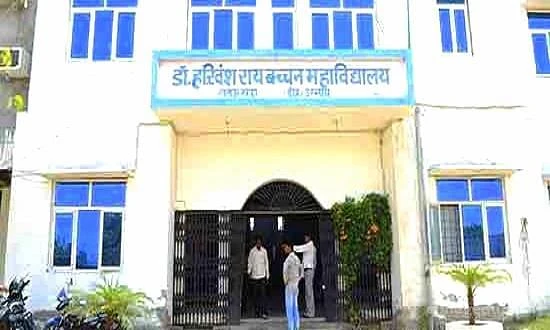
In this preview: 1 photo · 0 videos
No, Dr. Harivansh Rai Bachchan Mahavidyalaya is not a government college. It is a private, self-financed institution that is affiliated with Chhatrapati Shahu Ji Maharaj University (CSJMU) in Kanpur.
No, the college does not offer professional degrees like B.Tech or MBBS. It focuses on undergraduate and postgraduate programs in Arts, Science, Commerce, and Management, such as BA, BSc, BCom, BBA, BCA, and B.Ed.
Yes, the college provides a separate and secure girls' hostel facility on its campus for the convenience and safety of its female students.
Placement opportunities for BSc students at the college are minimal. Most graduates from the BSc programs typically pursue higher studies like an MSc or prepare for competitive government job examinations such as SSC and UPPSC.
The B.Ed course fee follows the Uttar Pradesh State Government mandate. The current fee is approximately ₹51,250 for the first year and ₹30,000 for the second year of the program.
Share what future students should know about Dr Harivansh Rai Bachchan Mahavidyalaya.
Student voices are not rewritten by colleges. We remove spam and abuse.
Wider admission question? Community PulseWhat should future students know?
Tell us which course you're considering. We'll help you work out the next step.
Get instant Partner access after mobile verification. Your public edits are reviewed before they go live.
Claim this college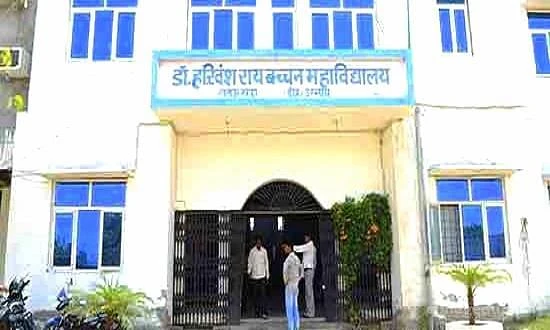
 Auditorium
 Cafeteria
 Computer Labs
 Medical
 Study Library