Loading Admission Guardian content
Loading Admission Guardian content

Provisional score based on available data. It may change as more information is verified.
Find a program, read its fee details and explore the admission requirements.
Summary of the programs shown below. Fee amounts are not listed. Contact the college for its current fee schedule.
| Course | Stream | Fees |
|---|---|---|
| Bachelor of Arts [BA] | Arts | |
| Bachelor of Arts [BA] {Hons.} (Economics) | Arts | |
| Bachelor of Commerce [B.Com] | Commerce | |
| Bachelor of Science [B.Sc] | Science |
Specializations
Eligibility: 10+2
Specializations
Eligibility: 10+2
Specializations
Eligibility: 10+2
Specializations
Eligibility: 10+2
If you're looking at colleges in Kanpur and your budget is tight, Dr. Rammanohar Lohiya Mahavidyalaya will almost certainly come up. It's not a name that dominates national rankings, but for thousands of students in and around the city, it serves a very specific purpose. Established in 2003, this private degree college affiliated with Chhatrapati Shahu Ji Maharaj University (CSJMU) operates on a simple premise: provide affordable, accessible higher education with minimal fuss. Its biggest selling point isn't sprawling lawns or corporate tie-ups. It's location. Situated directly opposite the Kalyanpur Metro Station on the bustling G.T. Road, the college is arguably one of the most transit-friendly campuses in Uttar Pradesh. For students who see a degree as a necessary credential while they prepare for government exams or seek local employment, RML Mahavidyalaya is a pragmatic, no-frills choice. Just don't expect the "college experience" you see in movies.
The academic portfolio here is broad, covering the traditional arts and sciences alongside a handful of professional courses. It's a classic CSJMU-affiliated college model. For undergraduate studies, you can opt for a BA with specializations like English, Sociology, or Economics, a B.Sc in subjects from Physics to IT, or a standard B.Com. The professional UG offerings include BCA, BBA, and BSW. Where the college carves out a specific reputation, however, is in teacher education. Its B.Ed program (100 seats) and the two-year D.El.Ed diploma are NCTE-approved, making them a draw for students aiming for teaching careers. At the PG level, MA, M.Com, MSW, MBA, and MCA are available. They also offer a Ph.D. in Education through the university's framework.
Faculty strength is around 35-45 members. You'll find PhD holders concentrated in the Education and Arts departments, while other departments are staffed primarily by faculty with Master's and NET/SET qualifications. The teaching approach, as per student accounts, is traditional and syllabus-focused. The goal is to get you through the CSJMU exams, which follow the university's CBCS pattern. It's functional. If you're a self-starter who needs a degree certificate and a base of operation, it works. If you're looking for cutting-edge pedagogy or intense research mentorship, you'll likely find it lacking.
This is where you need to separate official claims from ground reality. The college's placement cell exists, but its reach is limited. For professional courses like BCA and BBA, the college claims a 70-80% placement rate, with an average package hovering around ₹3.4 to ₹4 lakhs per annum (LPA). The highest package cited in student circles is between ₹5-7 LPA, though that's an unverified claim. Recruiters are mostly the usual suspects for bulk IT and services hiring—think Tech Mahindra, TCS, Wipro, and Capgemini, usually through pooled drives organized by the university. Local banks like ICICI and HDFC also recruit for front-end roles.
But here's the critical nuance. Those numbers don't tell the whole story for the majority of students enrolled in traditional BA or B.Sc programs. For them, formal on-campus placement is rare. Student reviews consistently suggest the actual placement rate for these streams is closer to 30-40%, and many of those "placements" are off-campus jobs found by the students themselves. A significant portion of the student body isn't even looking for campus placements. They're using the college's affordable structure and flexible schedule to prepare for UP PCS, SSC, and other government exams. The placement story, then, is really two stories: one for the professional courses that get some attention, and a very different one for the arts and science students who are largely on their own.
Affordability is the undisputed champion here. The fee structure is a major reason families choose this college. For the 2025-2027 cycle, a BA or B.Com will cost you about ₹15,000 per year, totaling roughly ₹45,000 for the three-year degree. B.Sc programs are slightly higher, ranging from ₹18,000 to ₹22,000 annually. The B.Ed program, being professional, has a first-year fee of about ₹51,250. PG courses like an MA are remarkably cheap, at ₹10,000-₹15,000 per year.
Hostel fees are extra, running between ₹10,000 to ₹20,000 annually for accommodation, with mess charges separate. Reviews on hostel quality are mixed, often described as basic with average food, which is why many students opt for private PGs in the Kalyanpur area. The key financial aid comes from the UP Government's scholarship and fee reimbursement schemes, like the Dashmottar Scholarship, for SC/ST/OBC and EWS students. If you're eligible, these can significantly reduce the already low cost. You can find more details on the college's official website.
The admission process is straightforward and mirrors most state-affiliated colleges. For the bulk of UG programs—BA, B.Sc, B.Com, BBA, BCA—admission is direct, based on your 10+2 marks. There's no entrance exam for these. You just need to meet the minimum eligibility criteria (usually 45-50% aggregate), apply during the window from April to July, and secure a spot in the merit list.
The process changes for specialized programs. Admission to the B.Ed course requires a valid score in the UP B.Ed JEE, the state-level entrance exam. The D.El.Ed diploma selection is merit-based on your 10th, 12th, and graduation marks. For PG courses like MBA and MCA, selection can be through CUET-PG scores or via a management quota. Speaking of which, a management quota exists for about 15% of seats in professional courses, offering a route for those who may not make the strict merit cut.
Let's be direct: the infrastructure is modest. The campus spans just 2-3 acres, and students often remark it feels more like a school compound than a college. Facilities are functional. The library houses over 5,000 books but is heavily tilted towards curriculum-prescribed texts with limited digital resources. Science and computer labs have the essentials but aren't equipped for advanced research. There's a small playground for volleyball and badminton, but no large fields for cricket or football.
The hostels, separate for boys and girls, are typically described as a 2.5 out of 5. Rooms are basic, and feedback on mess food is lukewarm at best—"edible" is a common descriptor. This pushes many students towards the plethora of private PG accommodations in Kalyanpur. Where the campus shines undeniably is connectivity. Being right on G.T. Road and opposite the Kalyanpur Metro and Railway Stations means you're never stuck. Social and cultural life is quiet. There are few major fests or active clubs. The atmosphere is academic and utilitarian, ideal for someone who wants to attend class and then focus on their own study or job search.
Scouring platforms like CollegeDunia and Shiksha reveals a clear, consistent consensus. This college is seen as "value for money." The praise is almost always anchored to two things: cost and location. "The fee structure is the best part for a middle-class family," is a repeated sentiment. And the convenience of the metro station is a huge daily win.
But the critiques are just as consistent. The small campus and aging infrastructure are frequent complaints. "The washrooms and canteen need serious improvement," one review notes. The most echoed caution concerns placements. Multiple alumni stress, "If you are doing a BA or B.Sc here, don't expect the college to get you a job. You have to find your own path." Teaching is described as adequate for passing exams but not particularly inspiring. The office staff, however, gets positive marks for being more cooperative than at other government colleges. Overall, the student verdict paints a picture of a transactional institution. It gives you an affordable degree and a convenient location. Everything else—networking, placements, campus life—is largely your responsibility.
It depends entirely on what you're looking for. Dr. Rammanohar Lohiya Mahavidyalaya is an excellent, pragmatic choice for a specific type of student. If you are from Kanpur or nearby, have a limited budget, and need a recognized UG or B.Ed degree primarily as a credential, it's hard to beat on cost and convenience. It's particularly sensible for students who are simultaneously preparing for competitive government exams like UPSC or SSC, as the low fees and flexible environment reduce financial pressure. The B.Ed program, given its NCTE approval and lower cost relative to private competitors, is arguably its strongest offering.
However, if your priority is a vibrant campus life, modern infrastructure, strong industry connections, or assured campus placements, you will likely be disappointed. This is not a college that will hand you opportunities on a platter. It's a launchpad for the self-directed. You should choose RML Mahavidyalaya with your eyes open: you're paying for the degree and the location, not for a curated college experience. For the right student, that's a perfectly fair trade.
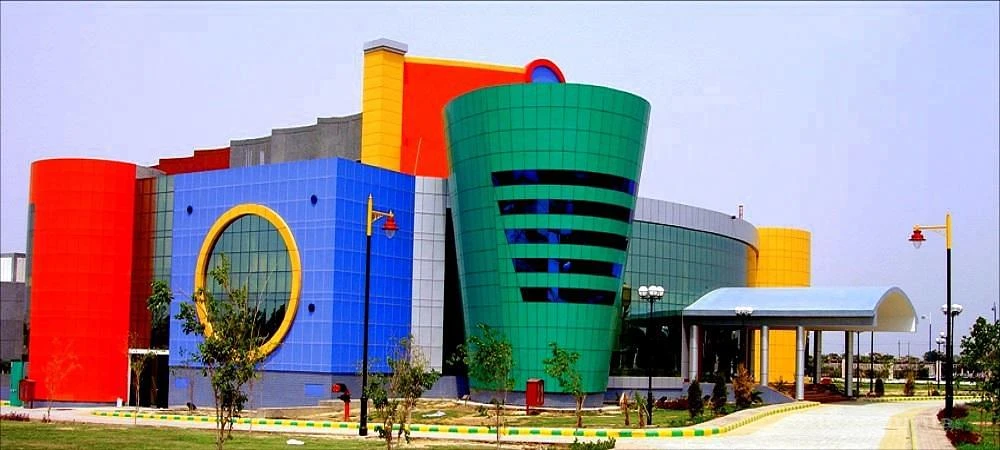
In this preview: 1 photo · 0 videos
Yes, Dr. Rammanohar Lohiya Mahavidyalaya is considered a popular choice for B.Ed in Kanpur. The college is approved by the NCTE and is noted for having relatively lower fees compared to other private B.Ed colleges in the area.
The college is located in Kalyanpur, Kanpur. Its exact location is directly opposite the Kalyanpur Metro Station on G.T. Road, making it easily accessible.
Formal campus placements for BA students are rare at the college. Typically, BA students participate in broader job fairs like the "Rojgar Melas" organized by CSJM University to seek employment opportunities.
Yes, Dr. Rammanohar Lohiya Mahavidyalaya provides a separate hostel facility for girls. However, many students often opt for private paying guest (PG) accommodations in the Kalyanpur area, citing preferences for better food and more freedom.
Yes, direct admission to the BCA program is usually available. Admission is typically based on your 10+2 marks, provided you meet the minimum eligibility criteria, which is usually securing 45-50% in subjects like Mathematics or Computer Science.
Share what future students should know about Dr Rammanohar Lohiya Mahavidyalaya.
Student voices are not rewritten by colleges. We remove spam and abuse.
Wider admission question? Community PulseWhat should future students know?
Tell us which course you're considering. We'll help you work out the next step.
Get instant Partner access after mobile verification. Your public edits are reviewed before they go live.
Claim this college
 Auditorium
 Cafeteria
 Computer Labs
 Science Labs
 Study Library