Loading Admission Guardian content
Loading Admission Guardian content

Provisional score based on available data. It may change as more information is verified.
Find a program, read its fee details and explore the admission requirements.
Summary of the programs shown below. Fee amounts are not listed. Contact the college for its current fee schedule.
| Course | Stream | Fees |
|---|---|---|
| Bachelor of Engineering [BE] | Engineering | |
| Master of Engineering [ME] | Engineering |
Specializations
All accepted exams
Eligibility: 10+2 with 75% + JEE Main
Specializations
All accepted exams
Eligibility: Pass in Graduation + GATE
Dr. Seema Quadri Institute of Engineering and Technology (DSQIET) is a name you'll hear when talking about affordable engineering in Aurangabad. It's a private, Muslim minority institution that's been around since 2008, affiliated with Dr. Babasaheb Ambedkar Technological University (DBATU). With an annual tuition fee hovering around ₹60,000–75,000, it's a budget-conscious choice for students with modest MHT-CET scores. The campus is green and quiet, set a bit outside the city. But the trade-off is clear: you're paying less, and the placement outcomes, especially for core branches like Civil or Electrical, reflect that. The institute's real strength lies in its support for scholarship applications and its practical workshop for Mechanical students. For many, it's a stepping stone—a place to get the degree without crippling debt, while the real job hunt happens off-campus.
The academic offering is straightforward, centered on a handful of undergraduate engineering programs. The shift from the older BAMU affiliation to DBATU is seen as a positive by faculty—the curriculum is supposed to be more industry-relevant now. The intake numbers tell you where the focus is: CSE, AI&ML, and AI&DS have the highest seats (90, 60, and 60 respectively). Mechanical Engineering holds steady at 60, while Civil and Electrical have smaller intakes of 30 each. That's a clear market signal.
Postgraduate options include M.E. programs in Computer Science and Manufacturing Engineering (18 seats each), and an MBA through the affiliated Maroof Khan MBA College.
Faculty strength is around 40-50 for engineering. You'll find experienced professors like Principal Dr. Deepak K. Gupta, but the proportion of PhD holders among the core faculty is estimated at a modest 15-20%. The academic schedule is rigid, following the DBATU calendar to the letter. Some students mention this rigidity extends to attendance policies, which can be strict.
This is where you need to separate the brochure from the ground report. The institute's official placement claims can cite figures up to ₹9 LPA, but that's typically for an exceptional off-campus offer. The on-campus reality is more grounded.
The highest package secured through campus drives in recent cycles is more likely in the ₹4.5 LPA range. The average package for placed students sits between ₹2.5 and ₹3.2 LPA. The gap between the official placement percentage (70-80%) and what alumni describe is the most critical data point. Reviews consistently point to a realistic placement rate of 30-40% for core branches. CSE and the AI programs fare better, but even there, major IT service companies like TCS and Wipro often recruit through off-campus channels, not regular on-campus visits.
The recruiter list is dominated by the Aurangabad industrial belt. You'll see names like Rucha Industries, Nahar Engineering, Endurance Technologies, and Varroc for Mechanical. For IT, placements are often with regional firms like Datamatics or Qoulsoft. The silver lining is internships—students in Mechanical and Civil frequently land practical stints in the local Waluj and Shendra MIDC areas, which is valuable experience.
If you're coming here, the consensus is to treat the degree as a base credential. Your job search will be largely self-driven.
Affordability is the undisputed headline. With annual tuition fees between ₹60,000 and ₹75,000, the total four-year cost for a B.E., including hostel and other charges, can be as low as ₹2.8 lakhs. That's exceptionally low for a private engineering college.
Where DSQIET stands out is its administrative machinery for scholarships. As a declared minority institution, it actively facilitates applications for state and central minority scholarships, which cover a significant portion of costs for eligible Muslim students. For others, the Economically Backward Class (EBC) scheme provides a 50% tuition fee waiver. The Tuition Fee Waiver Scheme (TFWS) is also available for eligible students across categories. They know their audience, and they work the system well for financial aid.
Admission is through the Maharashtra state system. You need a valid score in MHT-CET; JEE Main scores are also accepted but less commonly used here.
The cutoffs are accessible, which aligns with the college's positioning. For the 2024 cycle, the General category cutoff for CSE was in the 45-60 percentile range for MHT-CET. For the newer AI & ML and AI & DS programs, it was around 40-55 percentile. For branches like Civil, Mechanical, and Electrical, seats have been available at much lower percentiles, sometimes even in the 5-20 range or through spot admission rounds.
The process is centralized via the DTE Maharashtra CAP rounds. About 20% of seats are reserved for the management quota, which operates at the institutional level.
The campus is spread over 10-15 acres shared with other society institutes. It's repeatedly described as peaceful and green—a place away from the city's hustle. The infrastructure is a mix. The 9,000 sq. meter workshop for Mechanical engineering is a genuine highlight and gets consistent praise for its practical utility.
Labs for CSE are well-equipped for foundational work. The library has a collection of over 7,000 books and digital journal access. Wi-Fi is there in academic blocks, but don't expect blazing speeds, especially in the hostels.
Hostel facilities are separate for boys and girls, with basic 3-sharing rooms. Student reviews rate them a 3 out of 5. The canteen food is often labeled average or monotonous. A college bus service ferries day scholars from across Aurangabad. There's a large playground for cricket and football, plus indoor game facilities. It's a self-contained, no-frills environment.
Sifting through forums like CollegeDunia, Shiksha, and local discussions gives you a balanced, if pragmatic, view.
The positives are clear: Affordability and scholarship support are the top draws. The campus environment is considered conducive for studying. Mechanical students love the workshop. There's a sense that the administration is genuinely supportive in navigating government scholarship paperwork, a big deal for many families.
The negatives are just as consistent. Placement quality is the biggest gripe—the promise of top recruiters doesn't match the reality of local industrial visits. Strict attendance policies in some departments can feel restrictive. Administrative processes for documents and university submissions can be slow. And yes, the canteen food gets repetitive.
The alumni consensus is perfectly captured in this common refrain: "If you have a low CET score and want to do CSE at a low cost, this is a safe bet. But don't expect a 10 LPA job on a platter." It's a college chosen with clear-eyed calculation.
It depends entirely on your priorities and resources. DSQIET is a classic Tier-3 private engineering college that serves a specific need very well. It's worth serious consideration if: you have a limited budget (especially if you qualify for minority or EBC scholarships), your MHT-CET score is in the 40-60 percentile range, and your primary goal is to secure an accredited B.E. degree with minimal financial strain. It's a practical choice for students from the region who want to stay local or for whom a low-cost degree is the only viable gateway.
You should probably look elsewhere if: your primary criterion is high-campus placement packages, you're aiming for top-tier IT product companies, or you want a vibrant, metropolitan campus life with elite infrastructure. Here, you are fundamentally investing in the degree itself, not the placement cell. Success will require significant self-initiative in learning modern tech stacks and hunting for opportunities beyond the campus gates. For the right student, with managed expectations, it's a perfectly valid and financially sensible launchpad.
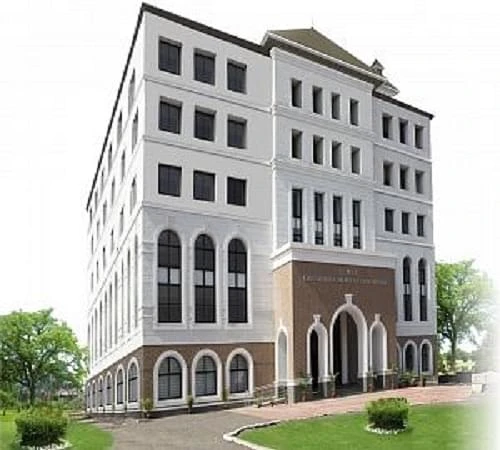
In this preview: 1 photo · 0 videos
The institute provides a decent foundation for a CSE degree with basic coding labs. However, students are advised to independently learn advanced technologies like MERN stack, AI, and Cloud computing to improve their chances of securing good placements.
There is no difference; they refer to the same institution. The engineering college is formally named Dr. Seema Quadri Institute of Engineering and Technology, but it operates within the campus widely known as the Everest Educational Society.
Yes, the college provides scholarships such as the Economically Backward Class (EBC) and Tuition Fee Waiver Scheme (TFWS) for all eligible students, regardless of their religion.
No, hostel stay is not compulsory. Many students commute from Aurangabad city using the college bus service or private transport.
For the 2024 admissions cycle, the approximate cutoff range for the AI & Data Science program was between 42 and 50 percentile in the MHT-CET.
Share what future students should know about Dr Seema Quadri Institute of Engineering and Technology.
Student voices are not rewritten by colleges. We remove spam and abuse.
Wider admission question? Community PulseWhat should future students know?
Tell us which course you're considering. We'll help you work out the next step.
Get instant Partner access after mobile verification. Your public edits are reviewed before they go live.
Claim this college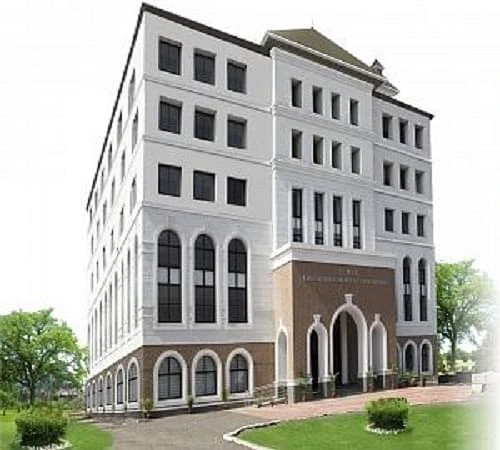
 Auditorium
 Cafeteria
 Computer Labs
 Hostel
 Medical
 Science Labs
 Sports Complex
 Study Library