Loading Admission Guardian content
Loading Admission Guardian content

Provisional score based on available data. It may change as more information is verified.
Find a program, read its fee details and explore the admission requirements.
Summary of the programs shown below. First-year fee. Check the note beside each amount for inclusions and exclusions.
| Course | Stream | Fees |
|---|---|---|
| Aircraft Maintenance Engineering [AME] | Aviation | 210000 |
Specializations
Eligibility: 10+2
1 exam with cutoff data available
If you're looking at Aircraft Maintenance Engineering (AME) colleges in India, the Institute of Aircraft Maintenance Engineering (IAME) in Aurangabad is a name that comes up with a specific, no-frills reputation. It's not a university campus. It doesn't offer a traditional B.Tech degree. What it does offer, and what students consistently praise, is direct, hands-on access to a real jet for training—a Learjet 24—and a curriculum laser-focused on getting you through the rigorous DGCA licensing modules. For a student who wants to be an aircraft engineer, not just a graduate, that's the core appeal. Located within the Government Polytechnic campus, it’s a private institute with a public-sector feel, offering a path into aviation that’s often more affordable than its metro-based competitors.
IAME is a specialist. It doesn't run a broad engineering portfolio. Its entire academic structure is built around the DGCA's licensing system for Aircraft Maintenance Engineers. You have two main streams: the B1.1 (Mechanical, for Aeroplane Turbine) with an intake of 60, and the B2 (Avionics) with 30 seats. The program is a 2+2 year model: two years of academic modules followed by two years of On-Job Training (OJT).
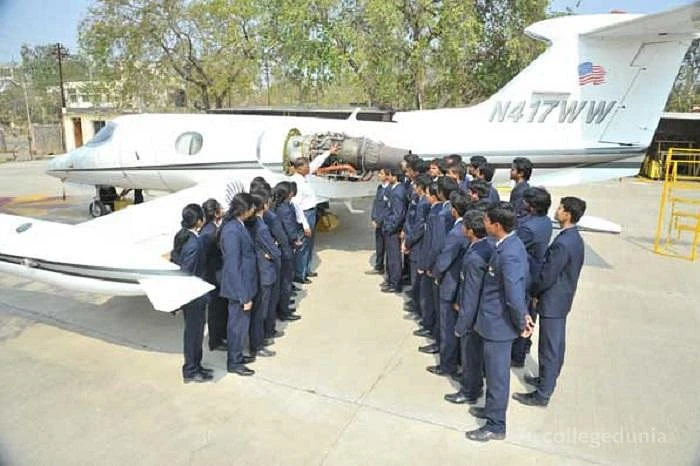
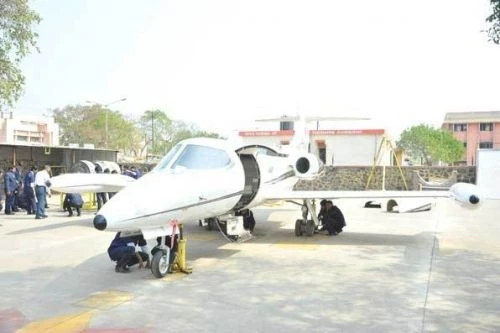
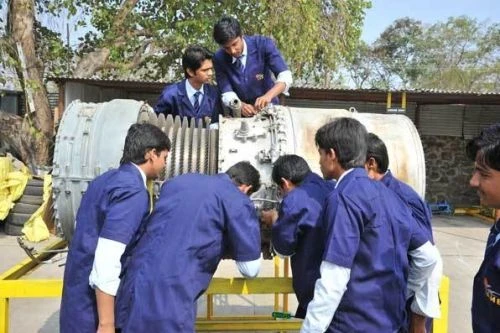
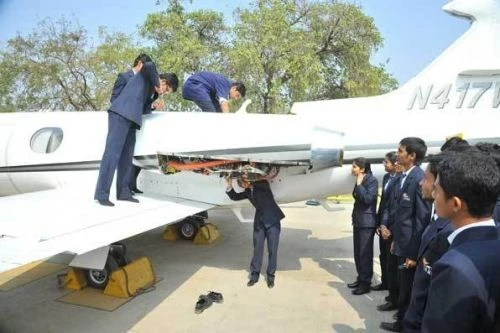
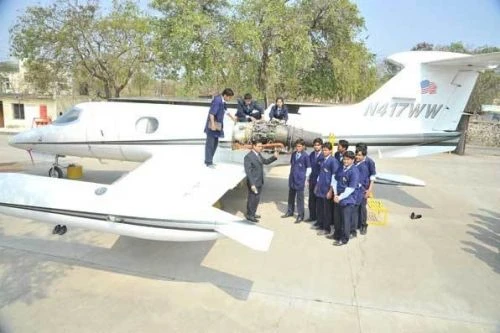
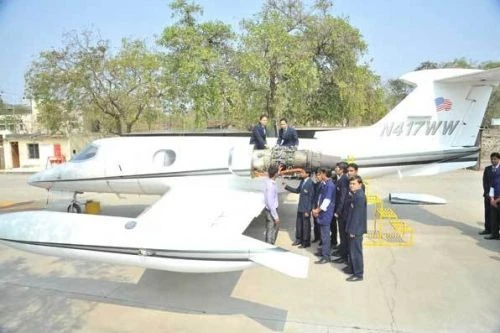
The curriculum is the standardized DGCA modular system—students must clear 11 to 13 modules to be eligible for the license. About 30% of the coursework is mandated to be practical training. That's where IAME's industry tie-ups, like those with Air India Engineering Services Ltd (AIESL) and Indamer Aviation, come into play for heavy aircraft exposure. But the real on-campus differentiator is the Learjet 24, a twin-engine corporate jet used for hands-on B1.1 training. Having that on-site is a significant advantage over institutes that only have component labs.
Faculty here are typically experienced AMEs or retired Air Force technical personnel, not necessarily PhD holders. That's actually a plus in this field; instruction is about regulatory knowledge and practical skill, not theoretical research. You can also opt for an integrated AME + BBA (Aviation) track if you want a formal degree alongside your license training.
Placement in AME is a different beast compared to software or core engineering. Your starting role is often a technician or trainee position, with salary and progression tightly linked to how many DGCA modules you've cleared. The path leads to becoming a Licensed Aircraft Engineer, which is where the real earning potential kicks in.
The institute claims 100% placement assistance. Talking to alumni and scanning reviews suggests the actual placement rate into airlines or MROs is closer to 70-80%, which is still a decent outcome for this niche sector. Packages vary wildly. The highest package cited for 2024-2025 is 12.45 LPA, but that's for graduates landing roles in international MROs or senior licensed positions. The average range is broad: ₹4.0 to 9.0 LPA. Your starting salary will likely be at the lower end of that spectrum during OJT.
Recruiters are a who's who of aviation. Airlines like IndiGo, Air India, SpiceJet, and Vistara recruit, as do major MROs like Airworks India and GMR Aero Technic. There's also a track record of placements with international carriers such as Emirates and Qatar Airways. It's a 100% aviation-focused recruitment pool, which is a strength if you're certain about the industry.
The total course cost for the full AME program is estimated between ₹4.61 lakhs and ₹5.71 lakhs, depending on the stream (B1.1 or B2). This covers tuition, a significant practical training fee (outsourced to partner MROs), and other development charges. There's an upfront admission fee of ₹45,000.
On top of that, hostel fees are about ₹2,000 per month, with mess charges around ₹13,000 per semester. All-in, it's a more affordable proposition than many private AME colleges in cities like Mumbai or Pune, which can charge double. Scholarships are available based on performance in the AME CET entrance exam, and there are concessions for reserved categories as per Maharashtra state norms.
Admission is primarily through the national AME CET entrance exam. Eligibility requires 10+2 with Physics, Chemistry, and Mathematics (PCM) and at least 50% aggregate, or a 3-year Diploma in a relevant field.
The selection process is a three-step filter: your AME CET score (or 10+2 marks for the management quota), a mandatory medical examination to DGCA standards (color blindness is a disqualifier), and a personal interview. The application window typically opens in December/January for the July intake.
It's important to note that 30% of seats are under a management quota, filled via direct admission based on 10+2 merit. So, if you miss the AME CET window or score, that's an alternate route, though it may not come with scholarship benefits.
Don't picture a sprawling university campus. IAME operates within the premises of Government Polytechnic, Aurangabad. This means you get a disciplined, academic environment and share some infrastructure, but the 'campus life' is limited. There's no traditional college fest scene. As one student put it, it's more of a technical training center.
Infrastructure is functional and geared towards the trade. Beyond the prized Learjet, there's a Zenith CH 2000 for light aircraft training and specialized labs for Airframe, Engine, and Avionics systems. The library is well-stocked with over 20,000 aviation-specific texts and digital access to critical DGCA publications. The campus is Wi-Fi enabled, which is essential for accessing digital manuals and mock tests.
Hostels are separate for boys and girls, with a consensus rating of about 3.5 out of 5. Rooms are basic but functional. The location in central Aurangabad is a practical advantage—it's affordable and well-connected to the railway station (~2.5 km) and airport (~8 km).
The student sentiment forms a clear, consistent picture. The positives are strong and specific. The hands-on access to the Learjet is the biggest draw, repeatedly mentioned as superior to just studying components. The central location and lower cost make it a viable, middle-class-friendly option. The faculty's focus on the DGCA syllabus is seen as a major plus for actually clearing the tough modules.
But the negatives are just as clear. The most common gripe is that it's a license course, not a degree. This creates anxiety; if you don't clear the DGCA exams, you're left with a certificate that has limited value outside aviation. The lack of a typical college social life is a trade-off many note. And the regime is strict—80%+ attendance is enforced, and the internal module exams are rigorous.
A verbatim quote from a review sums it up well: "The college is great for clearing modules because the faculty focuses on the DGCA syllabus, but don't expect a 'university life' with fests and parties. It's a technical training center."* That's the authentic IAME experience.
IAME Aurangabad is a focused, pragmatic choice for a specific type of student. It's best for someone who is certain about a hands-on career in aircraft maintenance and values practical training and DGCA module preparation over a broad university experience. The access to a real jet and the industry tie-ups provide genuine value for the fee, which is reasonable for this field. If your goal is to get your AME license and start working in an airline hangar or MRO, this institute provides a direct, no-distractions path.
You should probably look elsewhere if you want a traditional engineering degree, a vibrant campus social life, or are unsure about committing to the aviation sector. The risk of the license-only path is real. But for the student who walks in knowing they want to be a Licensed Aircraft Engineer, IAME offers a solid, grounded training program that gets the job done. You can find more details on their official website at www.iameaurangabad.com.
In this preview: 5 photos · 0 videos
No, the Institute of Aircraft Maintenance Engineering (IAME) in Aurangabad is a private institute. It operates within the campus of Government Polytechnic Aurangabad through a Memorandum of Understanding (MOU).
No, IAME does not offer a B.Tech degree. The core program provides an Aircraft Maintenance Engineer (AME) License training certificate. However, students have the option to enroll in an integrated BBA or B.Sc program to earn a university degree simultaneously alongside their AME training.
The B1.1 license stream focuses on Mechanical systems, covering aircraft engines and airframes. The B2 license stream focuses on Avionics systems, which include electronics, radar, and navigation equipment.
The AME CET exam is the preferred route for admission to approximately 70% of seats and is crucial for scholarship consideration. However, 30% of seats are filled through a Management Quota based on a candidate's 10+2 marks, for which the exam is not mandatory.
If you do not clear the independent DGCA module exams, you will receive a course completion certificate from the institute. However, you cannot work as a licensed Aircraft Maintenance Engineer until you successfully pass all required DGCA modules.
Share what future students should know about IAME.
Student voices are not rewritten by colleges. We remove spam and abuse.
Wider admission question? Community PulseWhat should future students know?
Tell us which course you're considering. We'll help you work out the next step.
Get instant Partner access after mobile verification. Your public edits are reviewed before they go live.
Claim this college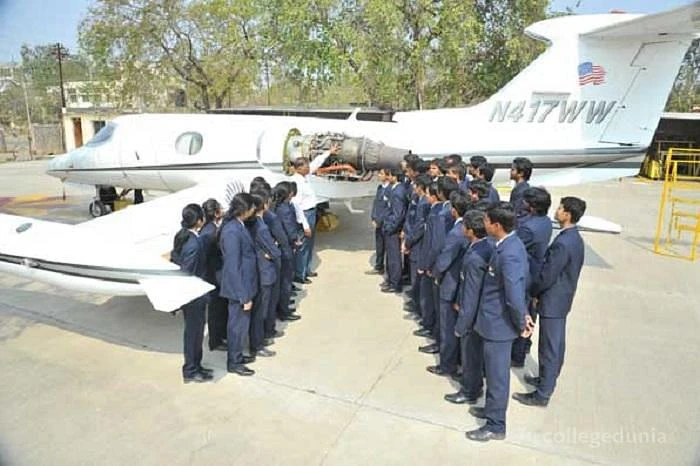
 Auditorium
 Cafeteria
 Computer Labs
 Gym
Gym Hostel
 Medical
 Science Labs
 Sports Complex
 Study Library