Loading Admission Guardian content
Loading Admission Guardian content

Provisional score based on available data. It may change as more information is verified.
Find a program, read its fee details and explore the admission requirements.
Summary of the programs shown below. Fee amounts are not listed. Contact the college for its current fee schedule.
| Course | Stream | Fees |
|---|---|---|
| Bachelor of Arts [BA] | Arts | |
| Bachelor of Computer Applications [BCA] | Computer Applications | |
| Bachelor of Education [B.Ed] | Education | |
| Bachelor of Science [B.Sc] | Science | |
| Master of Science [M.Sc] | Science |
Specializations
Eligibility: 10+2
Specializations
Eligibility: 10+2
Specializations
Eligibility: Graduation
Specializations
Eligibility: 10+2
Specializations
Eligibility: Graduation
If you're looking for a no-frills, affordable college in Western Uttar Pradesh to get a degree or a teaching qualification, Dr. ZH Post Graduate College comes up on the radar. It's a private, minority institution that's been around since 2000, offering a wide range of courses from B.A. to B.Sc. Agriculture. But there's a catch right from the start—even finding its location is confusing. While its official website and university affiliation place it firmly in Etah, major education portals persistently list it in Shahjahanpur. That's a small but telling detail about this college's profile: it serves a specific regional audience, operates under a well-known university umbrella, and doesn't always get the national spotlight right. For students from Etah, Shahjahanpur, and nearby districts, it's a practical, budget-conscious choice, especially for its B.Ed. and BTC programs. You won't find cutting-edge labs or big corporate recruiters here. What you will find is a functional campus focused on delivering traditional and teacher education degrees at a cost that won't break the bank.
The academic portfolio here is broad and traditional, heavily weighted towards arts, sciences, commerce, and teacher education. It's the kind of lineup you'd expect from a regional college affiliated with a large state university like DBRAU Agra. The intake numbers are substantial, especially for B.Sc. Agriculture (420 seats) and the general B.A./B.Sc. programs (360 seats each), indicating its role as a significant degree-granting institution in the area.
The B.Ed. (100 seats) and BTC, or D.El.Ed (50 seats), are arguably the college's most structured professional offerings. These programs are approved by the National Council for Teacher Education (NCTE), which is a crucial stamp of legitimacy for anyone aiming to enter the UP teaching system. Postgraduate options in M.Sc. (Botany, Chemistry, etc.) and M.Com. exist, but with smaller intakes of 30-60 students, suggesting a more focused academic environment at that level.
Faculty-wise, it's led by Principal Dr. Jagdish Prasad Mishra, and several department heads hold PhDs. The teaching staff count for this specific campus isn't crystal clear from public data—a total of 1,250 is claimed for the wider RB Group it belongs to, but the on-ground faculty for ZH College is a smaller, dedicated team. The academic rhythm follows the DBRAU Agra calendar, which means annual or semester exams typically held in the March-May period. It's a standard state-university schedule, sometimes prone to delays, which is a common gripe across many such affiliations.
Let's be direct: if you're coming here dreaming of campus recruitment drives from multinational corporations, you'll likely be disappointed. The placement ecosystem at Dr. ZH PG College is modest and hyper-local. The college has a Placement and Career Development (PCD) Cell, but its primary success is in channeling B.Ed. and BTC graduates into the local education system.
Top recruiters are exactly who you'd expect: local private and government schools in the Etah/Shahjahanpur region, some regional agricultural input companies (for B.Sc. Ag graduates), and perhaps small-scale IT or retail firms for BBA/BCA students. The placement sector is dominated by education, followed by agriculture, banking, and retail.
You'll see unverified claims online, like "90% placement in 2020," but these rarely come with company names or verifiable salary data. Based on the profile of similar tier-3 private colleges in Uttar Pradesh, a realistic average starting package for graduates who secure employment through college channels is estimated to be in the INR 1.5 – 2.5 LPA range. For B.Ed. graduates landing a government teacher job through state exams, the long-term prospects are better, but that's a result of their own exam clearance, not a college placement.
The reality check from student sentiment is clear: on-campus placements for general BA, BSc, or BCom students are rare. Most find jobs independently or continue their studies. The college's role is to provide the degree and, for teacher trainees, the mandatory internship in local schools. Managing expectations is key.
Affordability is this college's strongest selling point. The fees are regulated by the UP State Government and DBRAU Agra norms, keeping them accessible for students from rural and lower-middle-class backgrounds.
Here’s the breakdown for 2024-2024 estimates:
There's also a small application or brochure fee of ₹500 (₹550 by post). For financial aid, eligible students should actively apply for the UP State Scholarship (Saksham), which is available based on family income and category (SC/ST/OBC/Minority). The college administration should be able to guide students through that process.
The admission process varies significantly by program, splitting into two main tracks: entrance-based for professional courses and merit-based for general degrees.
For the flagship B.Ed. program, you must appear for and clear the UP B.Ed. Joint Entrance Examination (JEE). Admission is then through the state counseling process based on your rank. For the BTC (D.El.Ed) program, selection is merit-based, considering your marks in 10th, 12th, and graduation.
For almost everything else—B.A., B.Sc., B.Com., BBA, BCA, and the postgraduate programs—admission is typically direct. It's based on the merit of your qualifying exam (like 12th marks for UG, graduation marks for PG). There's no complex national entrance; you apply, submit your marksheets, and if you meet the cutoff (which is not highly competitive), you get in. The application window is usually from July to September.
As a minority institution, the college does have a quota for minority candidates under its management guidelines. The official source for all admission notifications is the college's website: zhpgcollege.com.
The campus spans about 7 acres and is consistently described in student snippets as "lush green" and "pollution-free," which is a definite plus for a college town in this region. Infrastructure is basic but covers the essentials.
There are separate hostels for boys and girls, though the capacity and exact condition aren't detailed officially. Student reviews rate hostel quality as moderate, around a 2.5 out of 5. It provides affordable accommodation, which is the main requirement for most students. Academically, you'll find a central library, departmental labs for science and agriculture subjects, and a computer lab for BCA/BBA students. Reviews note that while these labs exist, some equipment can feel dated.
For extracurriculars, there's a sports ground for cricket and football, facilities for indoor games, an auditorium for cultural events, a canteen, and basic medical support. It's not a bustling, activity-packed campus, but it has the facilities to support a decent student life. The social scene is likely very local and community-oriented.
Synthesizing feedback from platforms like CollegeDunia and Shiksha, a clear consensus emerges.
On the positive side, three things stand out. First, affordability is the number one praise. Students call it a "budget-friendly" option that gets the job done. Second, the B.Ed. and BTC programs are recognized as the college's strength, with decent faculty support for aspiring teachers. Third, many appreciate the campus environment, highlighting its green, open space as a good place to study.
The negatives are practical concerns. The placement reality is the biggest gap between expectation and experience. Students are candid that on-campus recruitment for non-teaching roles is minimal. Infrastructure maintenance is another point; labs and facilities are there but aren't always state-of-the-art. Administrative delays, especially with university-related paperwork, are a common complaint—though this is often a DBRAU-wide issue, not unique to this college. Interestingly, attendance rules are described as moderate, not overly strict. That's seen as a positive by some who want flexibility to prepare for government job exams, but a negative by those wanting a more disciplined environment.
It depends entirely on what you're looking for. Dr. ZH Post Graduate College is not a nationally ranked institution. It won't provide a glossy, corporate-linked college experience. If that's your goal, look elsewhere.
However, for a specific student profile, it makes solid sense. This college is a practical, cost-effective choice for students from Etah, Shahjahanpur, and surrounding districts who want to:
Its value is in its accessibility and its function as a stepping stone. For teacher training, it's a legitimate option. For general degrees, it provides a recognized credential from a UGC-recognized, DBRAU-affiliated college without financial strain. Just go in with eyes open: you'll need to be proactive about your career plans, as the college's placement cell will only take you so far. For the right student with aligned expectations, it's a worthwhile, no-nonsense option.

In this preview: 1 photo · 0 videos
Dr. ZH Post Graduate College is physically located in Etah on Agra Road. It is important to note that while the campus is in Etah, the college is often listed under Shahjahanpur on various education portals and online directories.
The B.Ed. program at Dr. ZH Post Graduate College follows the Uttar Pradesh government's self-finance fee structure. The approximate fee for the first year of the B.Ed. course is ₹51,250.
Dr. ZH Post Graduate College is affiliated with Dr. Bhimrao Ambedkar University (DBRAU), Agra. It is not affiliated with MJP Rohilkhand University.
Yes, the college offers direct admission for most of its undergraduate courses like BA, BSc, and BCom. Admission to these programs is typically granted based on merit in the 12th-grade examinations. However, admission to the B.Ed. program requires qualifying the UP B.Ed JEE entrance exam.
Yes, Dr. ZH Post Graduate College provides separate hostel facilities specifically for its female students.
Share what future students should know about Dr ZH Post Graduate College.
Student voices are not rewritten by colleges. We remove spam and abuse.
Wider admission question? Community PulseWhat should future students know?
Tell us which course you're considering. We'll help you work out the next step.
Get instant Partner access after mobile verification. Your public edits are reviewed before they go live.
Claim this college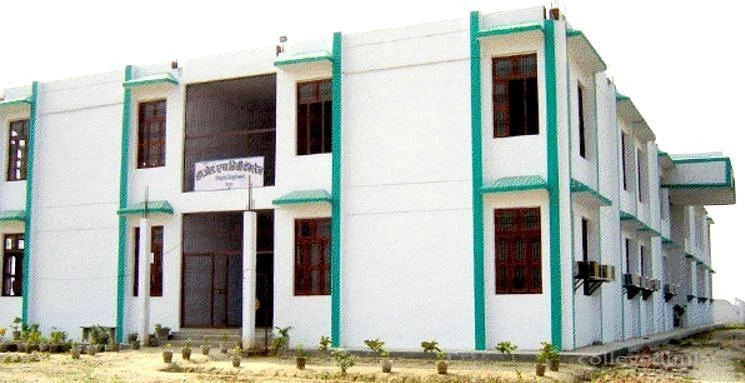
 Auditorium
 Cafeteria
 Computer Labs
 Hostel
 Medical
 Study Library