Loading Admission Guardian content
Loading Admission Guardian content
Provisional score based on available data. It may change as more information is verified.
Find a program, read its fee details and explore the admission requirements.
Summary of the programs shown below. First-year fee. Check the note beside each amount for inclusions and exclusions.
| Course | Stream | Fees |
|---|---|---|
| Bachelor of Arts [BA] | Arts | 1679 |
| Bachelor of Science [B.Sc] | Science | 2015 |
| Bachelor of Commerce [B.Com] | Commerce | 9425 |
| Master of Science [M.Sc] (Chemistry) | Science | 13777 |
| Bachelor of Computer Applications [BCA] | Computer Applications | 30925 |
Specializations
Eligibility: 10+2
Specializations
Eligibility: 10+2
Specializations
Eligibility: 10+2
Specializations
Eligibility: Graduation
Specializations
Eligibility: 10+2
Durga Prasad Baljeet Singh Post Graduate College in Anoopshahr is a study in contrasts. It's a private, government-aided institution that's been serving the rural and semi-urban communities of Bulandshahr since 1965. With annual fees for a B.A. hovering around ₹4,500, it provides an accessible, no-frills higher education pathway for students who might otherwise be priced out. But don't mistake affordability for a lack of ambition. The college has a digital library, submits itself for NIRF ranking, and boasts an alumni list with directors at HCL and scientists at BARC. It's a local institution with a quiet, persistent impact, anchored firmly to the academic calendar of Chaudhary Charan Singh University (CCSU), Meerut.
The academic offering here is classic for a U.P. degree college, split between heavily subsidized 'Aided' programs and full-cost 'Self-Finance' ones. That's the key economic model. For traditional streams, you've got B.A. and B.Sc. with intakes of 186 and 133 seats respectively, costing a fraction of the private sector. Then there are the professional courses—B.C.A. (120 seats), B.Com. (160 seats), and B.Ed. (100 seats)—which fund the institution at fees between ₹26,000 and ₹51,000 per year.
At the postgraduate level, M.A. in Sanskrit is a long-standing offering, with new programs in History, Political Science, and Sociology rolling out. M.Sc. in Physics and Chemistry, along with a new M.Com., round out the options. They've also started Ph.D. programs in subjects like Chemistry and Commerce, adhering to CCSU's guidelines.
The faculty strength is around 31-35, and a solid 70%+ hold PhDs. Students consistently describe them as friendly and supportive. But there's a caveat in the reviews: the teaching methods can lean traditional. The college is trying to modernize, though. They signed an MoU with A.K.P. Degree College in Khurja in August 2024 for faculty exchange and joint research, a direct nod to the NEP-2020 framework. You can check their active academic calendar for the 2025-26 session on their official portal.
Let's be direct. If you're coming here for a B.A. in History, you're not coming for campus placements. You're here for a cheap, recognized degree to pursue government exams or further studies. The placement narrative is almost entirely driven by the Self-Finance courses, particularly B.C.A. and B.Com.
The college has a placement cell and names like HCL, Tata, and IBM appear on recruiter lists. There's even an unverified student claim from 2024/25 about a BCA grad landing a 12 LPA package. That's an outlier. The more consistent figure for a "high" package is 7-8 LPA. The average package, based on available data, sits firmly in the ₹2.75 to 3.0 LPA range.
The real metric students talk about is placement percentage. The official number isn't publicly advertised, but the consensus from student reviews on portals like Shiksha and CollegeDunia is sobering: about 40-45% for BCA students. For others, it's lower. Many companies visit, but the number of offers is limited. Most students in professional courses end up securing jobs through off-campus drives or personal networks after graduation. It's not a placement powerhouse, but it does provide a platform and some opportunity, especially considering the low fee structure.
The fee structure is the college's most defining feature. It creates two distinct student experiences under one roof.
For Aided courses (B.A., B.Sc., some M.A.), the government subsidy makes education incredibly affordable. A three-year B.A. might cost you a total of ₹14,000. A B.Sc. around ₹17,000. That's less than many people spend on a single month's rent. The Self-Finance courses are a different story, though still reasonable by market standards: B.C.A. totals about ₹90,000 for three years, B.Com. around ₹80,000, and the two-year B.Ed. program approximately ₹82,000.
Hostel fees aren't explicitly listed but are estimated at ₹15,000–₹25,000 per year, excluding food. And that's a common complaint—some hostel wings lack a proper mess, forcing students to arrange tiffins or use local PG services. Financial aid comes primarily through UP State Government post-matric scholarships, for which a large portion of the student body is eligible.
The process is straightforward and centralized through the affiliating university. For most UG and PG courses (B.A., B.Sc., B.Com., B.C.A., M.A., M.Sc., M.Com.), admission is merit-based. You need to apply online through the CCSU admission portal when the window opens (typically May to July). Selection is based on your qualifying exam marks (10+2 for UG, graduation for PG), and the college releases its own merit lists.
The exception is the B.Ed. program. Admission here is strictly through the UP B.Ed. JEE entrance exam. You can't walk into the B.Ed. program with just your graduation marks; you need that state-level entrance score. It's a crucial distinction for aspiring teachers.
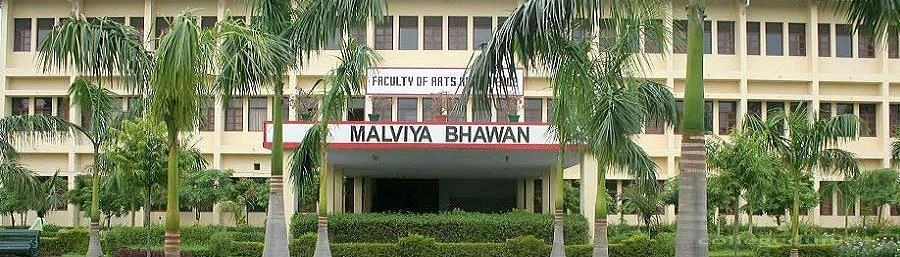
Spread over 7.33 acres on Mahashay Durga Prasad Marg, the campus is repeatedly described by students as "calm and cool." Its location near the Ganges in an area known as Choti Kashi contributes to a peaceful, if somewhat remote, atmosphere. The infrastructure is a mix of the adequate and the aging.
On the plus side: there's a well-stocked library with a digital section and OPAC, modernized labs for science and computer students, a gymnasium, and facilities for NCC/NSS. The campus is Wi-Fi enabled, though students call the speed "average." There's an auditorium, a canteen, and a medical cell with a visiting doctor.
The hostels, while separate for boys and girls, get a middling 3/5 rating in reviews. The lack of a reliable, in-house mess service is the most frequent gripe. Safety equipment in buildings has also been flagged by students as needing attention. Social life is what you make it—it's not a bustling metropolitan campus, but it provides the basic frameworks for sports and extracurricular activities.
Synthesizing feedback from across platforms gives you a clear, consistent picture.
The Good: The value-for-money proposition is unbeatable for aided courses. Students are almost universal in praising the faculty's qualifications and supportive attitude. The peaceful campus environment and the availability of digital library resources are big pluses. For many from surrounding rural areas, it's the only feasible gateway to a university degree.
The Not-So-Good: Placement promises should be taken with a grain of salt. The gap between the recruiter list and the actual number of on-campus jobs is a common theme. Infrastructure, while having key elements, needs maintenance and modernization—especially regarding hostel food and safety. Some feel the teaching, though delivered by experts, hasn't fully embraced interactive, modern techniques.
DPBS College Anoopshahr serves a specific need exceptionally well, and a different need only adequately. If you are a student from a middle-class or rural background in Bulandshahr or nearby districts looking for an affordable, recognized BA, B.Sc., or B.Com degree to build a foundation for government exams or further studies, this college is an outstanding choice. The cost is minimal, the faculty is qualified, and the degree is valid. It's a solid, no-debt launchpad.
If you are specifically investing in the Self-Finance B.C.A. or B.Ed. programs with dreams of high-flying corporate placements directly from campus, you need to temper expectations. The education is decent for the price, and the alumni network shows long-term potential, but the immediate placement support is moderate. You'll need to be proactive. Ultimately, DPBS isn't trying to be a national powerhouse. It's a committed, local institution providing essential educational access. For its core constituency, that's enough, and it does that job with respect.
In this preview: 1 photo · 0 videos
Durga Prasad Baljeet Singh Post Graduate College (DPBS College) in Anoopshahr is a Private Aided college. This means it is privately managed but receives government funding for many of its programs, which helps keep fees low for aided courses.
Yes, DPBS College offers both a BCA (Bachelor of Computer Applications) and a B.Ed. (Bachelor of Education) program. Both courses are offered under the Self-Finance scheme. Admission to the B.Ed. program requires qualifying the UP B.Ed. JEE entrance examination.
Placements for BCA students at DPBS College are considered moderate. While the college claims some individuals have received packages as high as 12 LPA (Lakhs Per Annum), the median or average placement package is closer to 3 LPA.
Yes, DPBS College provides on-campus hostel facilities. There are separate hostels for both male and female students, ensuring accommodation for out-of-town students.
No, DPBS College is not affiliated with Jaypee University. Although both institutions are located in Anoopshahr, they are separate entities. Durga Prasad Baljeet Singh Post Graduate College is affiliated with Chaudhary Charan Singh University (CCSU) in Meerut, while Jaypee University Anoopshahr is a private university.
Share what future students should know about Durga Prasad Baljeet Singh Post Graduate College.
Student voices are not rewritten by colleges. We remove spam and abuse.
Wider admission question? Community PulseWhat should future students know?
Tell us which course you're considering. We'll help you work out the next step.
Get instant Partner access after mobile verification. Your public edits are reviewed before they go live.
Claim this college
 Auditorium
 Cafeteria
 Computer Labs
 Gym
Gym Hostel
 Medical
 Science Labs
 Sports Complex
 Study Library