Loading Admission Guardian content
Loading Admission Guardian content

Provisional score based on available data. It may change as more information is verified.
Find a program, read its fee details and explore the admission requirements.
Summary of the programs shown below. First-year fee. Check the note beside each amount for inclusions and exclusions.
| Course | Stream | Fees |
|---|---|---|
| Bachelor of Arts [BA] | Arts | 2992 |
| Bachelor of Commerce [B.Com] | Commerce | 3872 |
| Bachelor of Arts [BA] {Hons.} | Arts | 3922 |
Specializations
Eligibility: 10+2
Specializations
Eligibility: 10+2
Specializations
Eligibility: 10+2
Emarti Devi Women's College in Cuttack is a private, government-aided institution that has been quietly educating women in the arts and commerce for over four decades. Founded in 1980, its core proposition is straightforward: affordable, value-based education in a safe, women-only environment. With a NAAC 'B' grade from its first cycle back in 2006 and affiliation to the well-regarded Utkal University, it offers a legitimate degree path for students in Odisha. The college's official placement claims—a 12 LPA highest package and a 4.5 LPA average—are ambitious for a liberal arts focus, and that gap between brochure promise and ground reality is a key point any prospective student needs to weigh. Ultimately, this is a college defined by its mission and its modest fees, not by national rankings or flashy infrastructure.
This is, first and foremost, a college for the humanities and commerce. Don't come looking for engineering or cutting-edge tech programs. The academic offering is traditional, centered on a Bachelor of Arts and a Bachelor of Commerce. The B.A. program is the main event, with a significant intake of 192 seats for the general stream and a range of Honours specializations. The Honours seats are limited, creating a tiered system within the college itself. Home Science leads with 32 seats, followed by Political Science, Odia, and Hindi at 24 each. Smaller departments like Sociology, Economics, English, and History have 16 seats, while Philosophy has just 8. That's a tight cohort.
The faculty list shows about 30 teaching staff, including a Demonstrator for Home Science and a Physical Education Trainer. The principal and several lecturers hold doctoral degrees, which is a positive signal for a college at this tier. You'll find Dr. Shashwati Saumya Sahu (Principal, Odia), Dr. Pragyanashree Acharya (Economics), and Dr. Pramodini Sahoo (Hindi Literature) on the roster. The academic culture is described as focusing on "value-based and need-based education," which in practice often means a structured, lecture-driven approach with an emphasis on foundational knowledge. There's no mention of a CGPA system or major industry MoUs, which aligns with its classic liberal arts model. Postgraduate and doctoral programs are noted as "available," but specifics are absent, suggesting they are likely limited or offered through the affiliating university.
Here's where you need to read between the lines. The college states a highest package of 12 LPA and an average package of 4.5 LPA. They also claim "200+ Top Recruiters" including "Various MNCs, Top Corporates, Leading Startups, Global Brands." For a college offering primarily B.A. and B.Com degrees, those are strong numbers. Almost suspiciously strong.
And that's the critical caveat: there are no available student reviews or alumni testimonials from platforms like CollegeDunia, Shiksha, or Reddit to verify these figures. No median package is provided, and the placement percentage is conspicuously absent. In the absence of firsthand accounts, it's prudent to treat these as aspirational benchmarks rather than guaranteed outcomes for the average student. The 4.5 LPA average, if accurate, would be a decent result for arts and commerce graduates from a state university-affiliated college, but the lack of named recruiters (no specific company is listed) makes it hard to assess the quality of opportunities.
The college does mention offering comprehensive support for internships and research projects. For students here, the strategy should likely be to leverage the low-cost education to build a strong academic record and actively seek out external internship and networking opportunities, rather than relying solely on campus placement drives.
The most compelling argument for Emarti Devi Women's College is its affordability. For the 2026-27 academic year, tuition fees are remarkably low. A general B.A. is estimated at ₹8,976, while B.A. Honours specializations and B.Com range between ₹11,616 and ₹12,321. That's for a full year.
However, the complete cost picture includes a host of other mandatory fees. Based on a fee structure for the +2 level (which may be similar for UG), students should budget for development fees (₹4,250-₹4,800), library fees, examination fees, insurance, and cultural association fees, which can add another few thousand rupees annually.
The real financial consideration is the hostel. The college provides separate accommodation for girls with basic amenities—study table, bed, almirah, fan—and free Wi-Fi. The estimated annual hostel fee, however, is listed at a wide range of INR 80,000 to 2,50,000, with mess fees excluded. That's a massive spread, and if the upper end is accurate, it completely dwarfs the academic fee, making the total cost of attendance significantly higher. Prospective hostel residents must seek clarity on this exact cost.
On the support side, the college offers scholarships based on merit, reserved category, and financial need. They also maintain a book bank for students from poor and backward classes, which is a practical form of aid.
Admission is refreshingly (or worryingly, depending on your perspective) straightforward. For the UG Arts and Commerce programs, there is no mention of national or state-level entrance exams like CUET. Selection is merit-based, purely on the marks obtained in the 12th standard examination.
The college also states it gives special consideration to students with exceptional achievements in extracurricular activities. This suggests that after the merit list, there might be a component for sports or cultural accolades.
Interested applicants need to monitor the official college website for admission notifications. The process involves downloading the application form, filling it out, and submitting it with the required documents and an application fee. There's no mention of an NRI or management quota, which keeps the process focused on academic merit.
Specific cutoff percentages or ranks for previous years are not available in the data. This is common for colleges where admission is hyper-localized and based on the annual applicant pool's Class 12 scores. Your best bet is to contact the college administration directly for a sense of the previous year's closing marks for your desired specialization.
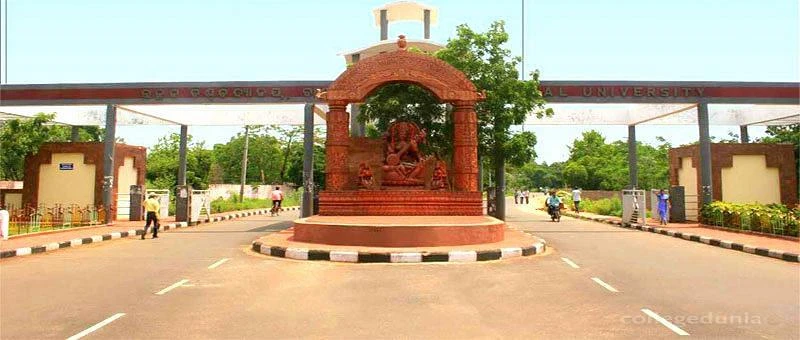
The campus is described as pollution-free with panoramic green surroundings, landscaping, and flower beds—a pleasant, if somewhat generic, description. Infrastructure includes the essentials: an auditorium, seminar halls, a well-stocked library with a reading room, and "state-of-the-art" academic and computer labs. Sports facilities cover both indoor and outdoor activities, with an annual athletic club fee part of the structure.
For a women's college, the support systems are a key feature. There's an active Women Cell and a special complaint cell for female students, alongside a stated anti-ragging policy. These institutional structures are important for student welfare.
Hostel life, as noted, comes with a significant and variable cost. The facilities are basic but adequate, with separated washrooms and daily cleaning staff. The on-campus cafeteria promises hygienic, multi-cuisine food. A medical facility with a pharmacy is available, and medical examinations are covered in the fees. The college lacks dedicated transport and banking facilities on-site, which is typical for city colleges where students are expected to use urban amenities.
Social life revolves around college-organized events: annual festivals, tech fests, and cultural activities. It's a structured vibrancy, encouraging participation within the campus ecosystem.
This is the biggest gap in the profile. Detailed, qualitative student reviews from platforms like Reddit, Quora, CollegeDunia, or Shiksha are largely absent. Some aggregator sites show a rating (like 4.5/5) but without the accompanying detailed feedback that explains why. This lack of a vocal online alumni presence isn't uncommon for smaller, regional, non-engineering colleges, but it does mean prospective students have less crowd-sourced intelligence.
The positives, gleaned from the college's own descriptions and likely student sentiments, include a focus on women's empowerment, a dedicated faculty, and good infrastructure for its tier. The negatives are simply unknown—there's no data on teaching style rigidity, administrative responsiveness, hostel food quality, or the true pressure of placements. The only way to get this information is to visit the campus, if possible, and speak to current students directly.
It depends entirely on what you're looking for. If you are a student in or around Cuttack seeking an affordable, recognized Bachelor's degree in Arts or Commerce from Utkal University in a safe, women-only environment, Emarti Devi Women's College is a rational choice. Its low tuition fees are a major advantage, allowing for a low-risk investment in higher education. The reported placement packages should be viewed with healthy skepticism; plan your career independently.
However, if you are aiming for nationally competitive programs, a vibrant inter-college social scene, or guaranteed high-paying campus placements, this is not the institution for you. The lack of detailed student reviews also means going in somewhat blind on the day-to-day experience. Your decision should hinge on cost, location, and the specific Honours specialization you want. It's a practical option for a specific educational need, not a gateway to elite opportunities.
In this preview: 1 photo · 0 videos
Emarti Devi Women's College primarily offers Bachelor of Arts (B.A.) and Bachelor of Commerce (B.Com) programs. The B.A. includes Honours specializations in subjects like Home Science, Political Science, Odia, Hindi, Sociology, Economics, English, History, Philosophy, and Sanskrit. For the 2026-27 academic year, estimated annual tuition fees range from about ₹8,976 for a general B.A. to ₹12,321 for B.A. Honours specializations. The B.Com program fee is approximately ₹11,616. These are tuition fees only; additional mandatory charges and separate hostel costs apply.
Admission to UG courses is merit-based and relies on your Class 12 marks. There's no entrance exam like CUET mentioned for their Arts and Commerce programs. You need to download the application form from the official college website, submit it with the required documents and fee before the deadline. The college also states it considers exceptional extracurricular achievements, so highlighting those could be beneficial.
Yes, it offers separate hostel accommodation for girls with basic amenities like a bed, study table, almirah, and fan. The hostel has free Wi-Fi and daily cleaning services. However, the cost is a significant factor. The estimated annual hostel fee is between INR 80,000 and 2,50,000, and this does not include mess fees for food. This wide range means you must confirm the exact current charges with the college administration.
The college reports a highest package of 12 LPA and an average package of 4.5 LPA, though the year for these figures is not specified. They claim associations with over 200 recruiters, including MNCs, corporates, and startups. It's important to note that these are official claims; detailed student reviews verifying these statistics or naming specific recruiters are not readily available. Students should view these as potential outcomes and proactively seek internship support offered by the college.
The campus features academic and computer labs, a library with digital and physical resources, and indoor/outdoor sports facilities. There's 24/7 Wi-Fi, a cafeteria, and an on-campus medical facility with a pharmacy. As a women's college, it has specific support systems like a Women Cell and an anti-ragging policy. The hostel provides basic living amenities. The college lacks its own transport and banking facilities.
Share what future students should know about Emarti Devi Women's College.
Student voices are not rewritten by colleges. We remove spam and abuse.
Wider admission question? Community PulseWhat should future students know?
Tell us which course you're considering. We'll help you work out the next step.
Get instant Partner access after mobile verification. Your public edits are reviewed before they go live.
Claim this college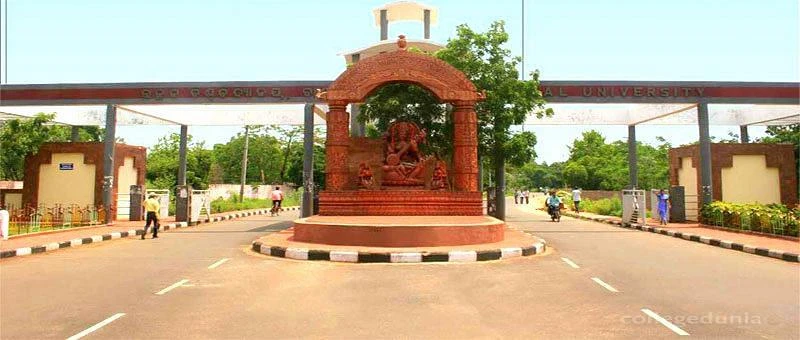
 Auditorium
 Cafeteria
 Computer Labs
 Medical
 Science Labs
 Sports Complex
 Study Library