Loading Admission Guardian content
Loading Admission Guardian content
Find a program, read its fee details and explore the admission requirements.
Summary of the programs shown below. Fee amounts are not listed. Contact the college for its current fee schedule.
| Course | Stream | Fees |
|---|---|---|
| Doctorate of Medicine [MD] | Medical | |
| M.B.B.S. | Medical | |
| Master of Surgery [MS] (General Surgery) | Medical | |
| Master of Surgery [MS] (Obstetrics & Gynaecology) | Medical |
Specializations
Eligibility: MBBS
All accepted exams
Eligibility: 10+2
Specializations
Eligibility: MBBS
Specializations
Eligibility: MBBS
1 exam with cutoff data available
Fathima Institute of Medical Sciences (FIMS) in Kadapa is a private medical college that presents a stark, almost paradoxical, choice for aspiring doctors. On one hand, it offers a modern campus and, crucially, significant clinical exposure through its 500+ bed teaching hospital—a genuine asset for learning. On the other, its reputation is permanently shadowed by a severe past crisis and persistent student grievances about financial transparency. Established in 2010, the college is currently recognized by the National Medical Commission (NMC) and affiliated with Dr. YSR University of Health Sciences. But its story is a cautionary tale about the importance of due diligence in medical education, where the promise of a degree must be weighed against institutional history and student-reported realities.
The academic offering is standard for a medical college, centered on the MBBS program. The 5.5-year course, including a one-year internship, follows the NMC's Competency-Based Medical Education (CBME) curriculum. The real academic draw here isn't a unique syllabus—it's the patient volume. The attached hospital serves a large rural population from the Kadapa region, which translates to hands-on experience from the early years. That's a tangible benefit you won't get from textbooks alone.
For postgraduates, FIMS offers MD/MS programs with an intake of roughly 25-30 seats across specialties like General Medicine, Pediatrics, Surgery, and Obstetrics & Gynaecology. The faculty includes several senior professors and HODs who are retired from government colleges like RIMS Kadapa, bringing experience to the table. But student reviews hint at a gap between individual faculty expertise and the overall academic support system, with some complaining about internal assessment fairness and a lack of preparatory tests.
Let's be clear: medical colleges don't have placements in the engineering sense. There is no campus recruitment drive. Your career path post-MBBS is determined by your performance in the NEET-PG exam for specialization or by applying directly to hospital chains and government services.
The college provides the mandatory rotatory internship. However, a consistent and serious complaint across student forums like MouthShut and JustDial is that FIMS does not pay a stipend to its interns, contrary to common practice and NMC guidelines. This is a significant financial and ethical red flag for many.
After graduation, typical career trajectories for FIMS graduates include roles as Medical Officers in the Andhra Pradesh Vaidya Vidhana Parishad (APVVP) or private hospitals like Apollo or KIMS, with estimated packages ranging from ₹6.5 to ₹9 LPA. Specialists post-MD/MS can command ₹12 to ₹18 LPA. The value of an FIMS degree, therefore, is purely in the license to practice and the clinical hours logged—not in any institutional placement support.
Fees are regulated by the state's APHERMC and are split into quotas. The disparity is massive. The Convenor Quota (Category A), filled through state counseling, costs a mere ₹15,000-₹16,500 per year. The Management Quota (Category B), however, will set you back ₹12-13.2 lakhs annually just for tuition.
Add to that hostel and mess fees (₹80,000 – ₹1,20,000 per year) and other mandatory university charges (~₹22,655), and the total 5-year cost for a Management Quota student balloons to an estimated ₹65-70 lakhs. There is no mention of substantial merit-based scholarships from the institute. The financial conversation doesn't end at admission, though. Multiple student reviews allege requests for additional, unexplained payments during the course, especially for document release at graduation.
Admission is strictly through the National Eligibility cum Entrance Test (NEET). For MBBS, selection is via centralized counseling conducted by Dr. YSR University of Health Sciences (YSRUHS). As a Muslim Minority institution, 50% of seats are reserved for candidates from that community.
The 2024 cutoff ranks for the General HS Quota in Round 3 give a sense of the demand: the closing rank was around 146,043. For the Management Quota (B-Category), cutoffs are much more lenient, often extending to ranks beyond 600,000. That wide gap tells its own story about perceived value. Always verify the latest seat matrix and counseling circulars on the university website directly.
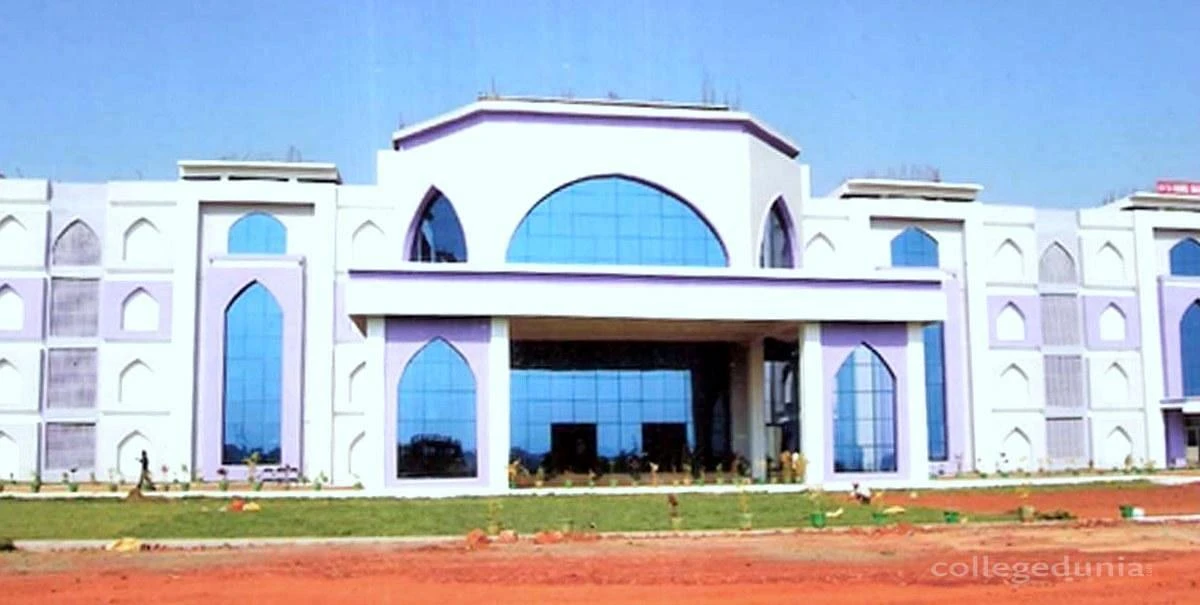
The campus, spread over 44-60 acres, is frequently described as modern and aesthetically pleasing, with a notable glass-fronted main building. Infrastructure includes a well-stocked, air-conditioned library with digital access, and grounds for cricket, football, basketball, and badminton.
The attached hospital, with 620 active teaching beds, ICUs, and modular operation theatres, is the functional heart of the college. The hostel accommodation is basic. There are separate blocks for boys (226 capacity) and girls (324 capacity), but reviews rate them a middling 3/5. Wi-Fi is typically restricted to the library. The canteen serves average-quality North and South Indian food. It's a self-contained campus, but Kadapa town is a short drive away for other necessities.
This is where the rubber meets the road. Student sentiment is sharply divided between appreciating the clinical opportunity and condemning management practices.
First, the critical history is inescapable. The 2015-16 batch admission crisis, where 100 students had their admissions cancelled due to recognition issues, is a permanent blot. While the college is now NMC-recognized, that event shapes all online discussion and serves as a major warning.
Current positives are straightforward: good clinical exposure due to high hospital patient flow, and experienced senior faculty. The negatives are more systemic. Reviews consistently cite a lack of transparency and "mental torture for money," including allegations of hidden charges and demands for extra fees to release degree certificates. The internship stipend issue is a near-universal grievance. The academic environment is seen as adequate for passing, but not particularly supportive for competitive NEET-PG preparation.
The consensus? The college provides the essential clinical platform and the degree, but you are entirely on your own for future advancement. And you may have to navigate frustrating financial demands along the way.
The answer depends entirely on your quota and your tolerance for risk. For a student securing a Convenor Quota seat at ~₹16,000 per year, FIMS represents a phenomenal value. You get a recognized MBBS degree with solid clinical training at a near-nominal cost. The management's financial practices are less relevant at that price point. For these students, it can be a smart choice.
For anyone considering the Management Quota at over ₹12 lakhs per year, the calculation changes dramatically. At that premium price, you expect professionalism and support. The persistent allegations of financial opacity, withheld stipends, and the college's troubled past are serious deterrents. In this fee bracket, you likely have other, more stable private college options. For an NRI or management quota candidate, the risks associated with FIMS likely outweigh the benefits of its clinical exposure. Always, always check the latest NMC recognition status on the official NMC website before any commitment.
In this preview: 1 photo · 0 videos
Yes, Fathima Institute of Medical Sciences in Kadapa is recognized by the National Medical Commission (NMC). It currently holds permission for 100 MBBS seats. It is important to note that the college has a history of temporary derecognition in the past.
For the Management Quota (B-Category), the annual tuition fee at FIMS Kadapa is approximately ₹12 lakh to ₹13.2 lakh. This fee does not include additional costs for hostel accommodation and mess charges.
Yes, Fathima Institute of Medical Sciences offers a Muslim Minority reservation. Specifically, 50% of the MBBS seats are reserved for eligible Muslim Minority candidates. These seats are filled based on NEET merit through the state counseling process.
The clinical exposure at FIMS Kadapa is considered good to very good. This is primarily due to its attached teaching hospital, which has over 500 beds and serves the large rural population of the Kadapa region, providing students with substantial hands-on experience.
According to consistent student reviews, Fathima Institute of Medical Sciences does not pay a stipend to students during their compulsory rotating internship. This is reported despite the guidelines set by the National Medical Commission (NMC). The official college stance on this matter remains unverified.
Share what future students should know about Fathima Institute of Medical Sciences.
Student voices are not rewritten by colleges. We remove spam and abuse.
Wider admission question? Community PulseWhat should future students know?
Tell us which course you're considering. We'll help you work out the next step.
Get instant Partner access after mobile verification. Your public edits are reviewed before they go live.
Claim this college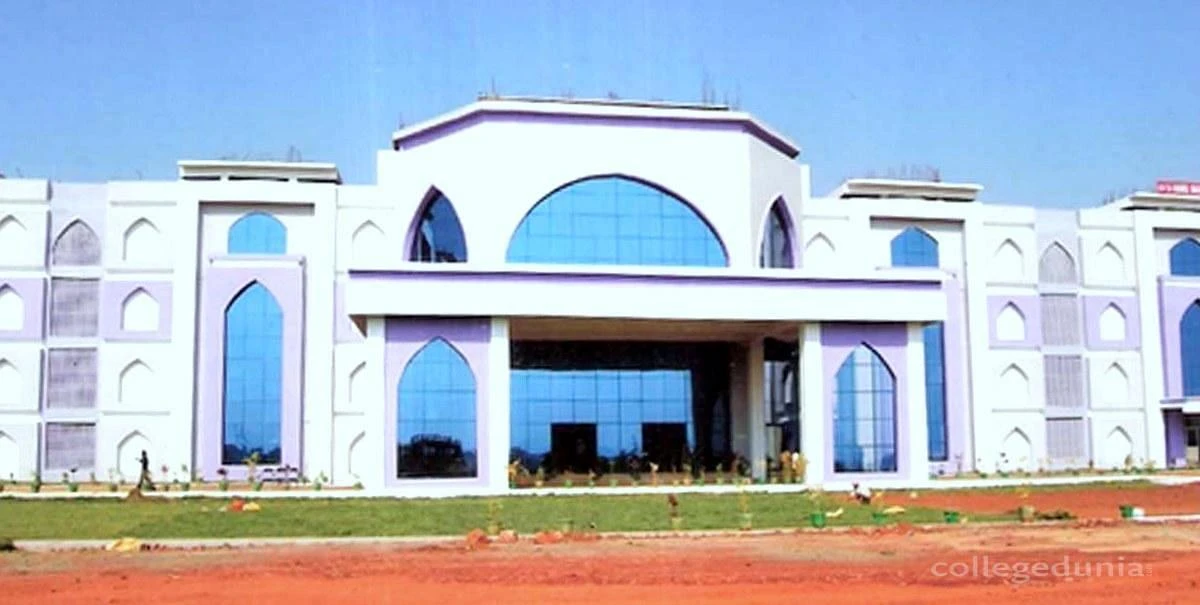
 Auditorium
 Cafeteria
 Computer Labs
 Science Labs
 Sports Complex
 Study Library