Loading Admission Guardian content
Loading Admission Guardian content

Find a program, read its fee details and explore the admission requirements.
Summary of the programs shown below. Fee periods can differ by program. Check the note beside each amount before comparing costs.
| Course | Stream | Fees |
|---|---|---|
| M.B.B.S. | Medical | 1483000 |
| Doctorate of Medicine [MD] | Medical | 1795000 |
| Master of Surgery [MS] | Medical | 5820000 |
| Post Graduate Diploma in Clinical Pathology | Medical |
All accepted exams
Eligibility: 10+2 with 50% + NEET
Specializations
Eligibility: Post Graduation
Specializations
Eligibility: Graduation
Specializations
2 exams with cutoff data available
If you're looking at private medical colleges in Andhra Pradesh, Alluri Sitarama Raju Academy of Medical Sciences (ASRAM) in Eluru is a name that comes up fast. And for good reason. Established in 1999, it's built a solid reputation not on glamour, but on a foundation of serious clinical work. The patient load here is what you'd expect from a major government hospital, which is the single biggest draw for students who prioritize hands-on learning over campus luxury. It's an institution that feels more like a rigorous training ground than a typical private college, a fact echoed in student reviews and its consistent ranking among the top three private med schools in the state. With an NAAC 'A' grade and NABH/NABL accreditations for its hospital, the institutional credentials are strong. But the real story is in the daily grind of its 1000-bed teaching hospital, where the learning curve is steep and the rules are strict.
ASRAM is primarily a medical college, and its academic structure reflects that core focus. The MBBS program, with 250 seats, is the heart of the institution. It follows the NMC's Competency-Based Medical Education (CBME) curriculum, and the academic calendar strictly adheres to the Dr. YSRUHS schedule. Internal assessments are frequent—monthly or quarterly—with a strong emphasis on formative evaluations. The faculty strength is around 230-250, and students generally describe professors as knowledgeable and committed, if sometimes rigid.
The postgraduate offerings are substantial, with 158-160 MD/MS seats across more than 20 specialties. Departments like General Medicine (20 seats), Radio Diagnosis (18), and General Surgery (20) are particularly sought after. The college also has over 17 verified PhD guides, indicating a growing research culture in basic science departments like Biochemistry and Pathology. Beyond medicine, ASRAM runs a full suite of nursing programs (B.Sc, GNM, M.Sc) and paramedical diplomas (DMLT, Dialysis Tech), creating a comprehensive health sciences ecosystem on its 100-acre campus.
Let's be clear: medical colleges don't have "campus placements" like engineering schools. Career trajectory is determined by your performance in the compulsory internship, success in PG entrance exams like NEET-PG, and subsequent specialisation.
That said, ASRAM provides the crucial one-year rotatory internship at its own teaching hospital. The stipend for MBBS interns, however, is a consistent pain point. While the official figure is unverified, student reports peg it between ₹5,000 to ₹10,000 per month, which is considered low compared to many government colleges and is often cited as being delayed.
For postgraduates, the picture is better. PG residents receive a structured stipend: ₹50,000/month in the first year, scaling to ₹60,000/month by the third year. The college's NIRF reports cite a median package of ₹12 LPA for MD and ₹8.5 LPA for MS degrees. Alumni typically find positions in major hospital chains like Apollo and Yashoda, secure government service jobs, or pursue further super-specialisation at institutes like AIIMS via the INI-CET. The high patient volume is the real career currency here, giving graduates a practical confidence that serves them well in interviews and practice.
The fee structure at ASRAM is a classic study in contrasts, dictated by the Andhra Pradesh Fee Regulatory Commission (AFRC). For the 2024-25 academic year, the annual tuition fee breaks down as follows:
On top of tuition, living costs are significant. Hostel fees for A/C rooms range from ₹1,40,000 (triple sharing) to ₹1,65,000 (double sharing) per year, plus a ₹25,000 refundable caution deposit. Mess charges are around ₹4,200 per month. Add in one-time university fees (~₹25,000) and other annual charges, and the total cost for a 5.5-year MBBS program under the Management Quota can easily reach ₹75 to ₹85 lakhs. There's no widely advertised institutional scholarship program for MBBS; financial aid is largely limited to government schemes for which students must apply independently.
Admission to any seat at ASRAM is gatekept by the NEET exam. For MBBS, you need a qualifying score in NEET-UG. For MD/MS, it's NEET-PG. The selection is entirely through centralized state counseling conducted by the Dr. YSR University of Health Sciences.
The cutoffs for the coveted Category A (low-fee) seats are competitive. For the 2024-25 cycle, the closing rank for the general category in the first round was around 34,856, with the opening rank near 21,595. For the state quota seats, the cutoff typically settles between 40,000 to 45,000. Management Quota seats are filled based on the same NEET-UG rank, but at the significantly higher fee. The application window opens shortly after NEET results are declared, usually in June or July.
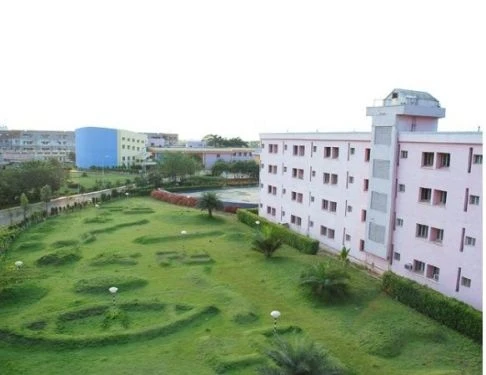
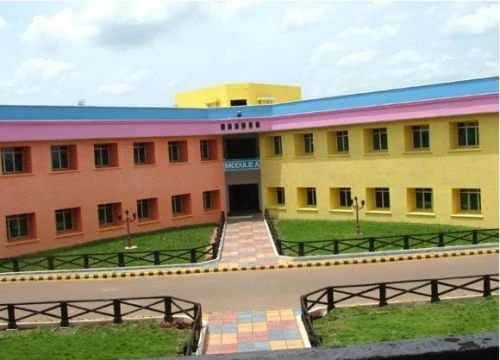
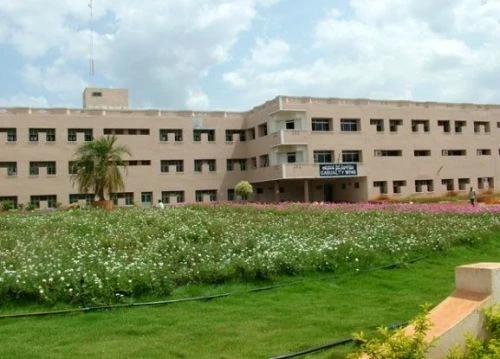
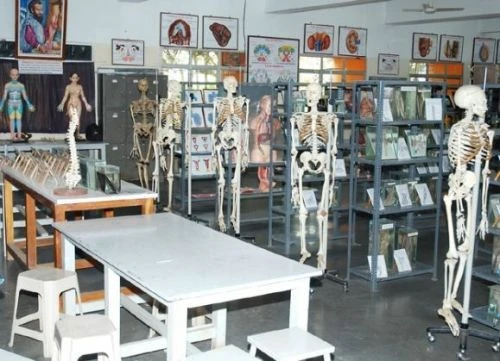
The 100-acre campus is spacious and well-maintained, with the infrastructure heavily geared towards academics and clinical training. The 1000+ bed teaching hospital is the central hub, with 17+ operation theaters and a daily OPD footfall exceeding 2,000 patients. The library is legendary among students—a massive, four-floor, centrally air-conditioned facility stocked with over 26,000 books and providing access to hundreds of e-journals. Digital lecture halls with smartboards are standard.
Hostel life is where opinions diverge. The blocks are separate for genders, and rooms are generally reported as spacious and secure, with ample security. But the cost rubs many the wrong way. Paying over ₹1.4 lakh a year for hostel leads to high expectations, which the mess often fails to meet. Complaints about repetitive menus and hygiene issues related to the "open kitchen" design (think flies and cockroaches) are rampant on review forums. On the recreation side, there's a cricket stadium, courts for basketball and tennis, and a swimming pool that's been under construction. A 24-hour cafeteria and on-campus bank add convenience. The 100 Mbps Wi-Fi exists, but don't expect flawless coverage in every hostel room corner.
Sifting through conversations on Reddit (like r/telugumedschool), Quora, and sites like CollegeDunia reveals a very clear, almost unanimous consensus. ASRAM is viewed as a "top-tier private college with a government-college-like patient load." That phrase captures the essential trade-off.
The positives are powerful. The clinical exposure is repeatedly called "incredible" and "the best thing about ASRAM." The library is adored. The campus is considered very safe, especially for women. Academics are taken seriously by faculty.
But the negatives are consistent too. The management is described as overly strict, with rigid attendance tracking and a cumbersome process for leaving campus. The hostel food, as one review bluntly put it, "is bad... truly bad." The low MBBS intern stipend is a major grievance. Some postgraduate departments, notably General Surgery and OBG, have reputations for a "toxic" work culture with intense pressure on residents.
One paraphrased quote from Careers360 sums up the student verdict: If you want a cinematic college life, don't come here. If you want to be a good doctor, it's one of the best in AP.
ASRAM is a very specific kind of institution. It's not the place for a relaxed, fun-filled college experience. It's a disciplined, demanding environment where the primary—almost singular—focus is on turning out competent clinicians. The value proposition is straightforward: you pay a high price (if you're in the Management Quota) for access to an exceptional volume and variety of clinical cases that few private colleges can match.
It's best for dead-serious students who prioritize becoming a skilled doctor above all else and are willing to tolerate administrative strictness and mediocre hostel conditions to get that training. If your NEET rank gets you a Category A seat, it's an outstanding deal. For Management Quota candidates, it's a significant financial investment that buys top-tier clinical exposure, but you must go in with eyes wide open about the lifestyle compromises. If campus culture, food, and freedom are high on your list, you might find better-balanced options elsewhere. But for pure, unvarnished medical training in Andhra Pradesh, ASRAM's reputation is well-earned.
In this preview: 5 photos · 0 videos
Alluri Sitarama Raju Academy of Medical Sciences (ASRAM) is a private, trust-run medical college. It is affiliated with Dr. YSR University of Health Sciences.
For the Management Quota (Category B), the annual tuition fee at ASRAM is approximately ₹12,00,000. This amount is exclusive of additional hostel and mess charges.
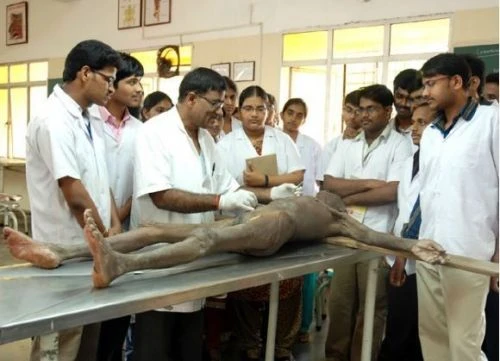
The patient flow at ASRAM Hospital is excellent. It is reported to be one of the busiest hospitals in the West Godavari district, providing medical students with extensive hands-on clinical experience.
ASRAM maintains a very strict anti-ragging policy. The management actively limits senior-junior interaction to prevent bullying, and students report this as an effective measure.
For the 2024 admission cycle, the expected closing NEET rank for general category candidates under the State Quota (Category A) at ASRAM is around 35,000 to 40,000.
Share what future students should know about ASRAM.
Student voices are not rewritten by colleges. We remove spam and abuse.
Wider admission question? Community PulseWhat should future students know?
Tell us which course you're considering. We'll help you work out the next step.
Get instant Partner access after mobile verification. Your public edits are reviewed before they go live.
Claim this college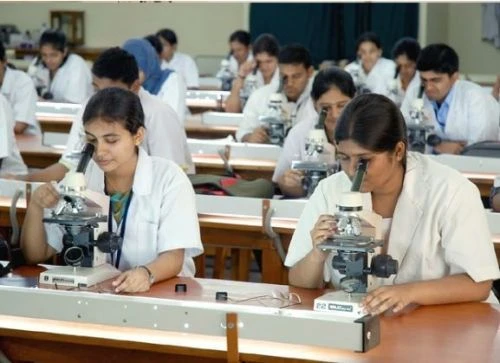
 Auditorium
 Cafeteria
 Computer Labs
 Gym
Gym Hostel
 Medical
 Science Labs
 Sports Complex
 Study Library