Loading Admission Guardian content
Loading Admission Guardian content
Provisional score based on available data. It may change as more information is verified.
Selected ranking categories, with the recorded year beside each result. Open all records for the complete history.
5 published records · Lower numeric ranks are stronger
Indiatoday
Medical
#162019
Find a program, read its fee details and explore the admission requirements.
Summary of the programs shown below. Fee amounts are not listed. Contact the college for its current fee schedule.
| Course | Stream | Fees |
|---|---|---|
| Doctorate of Medicine [MD] | Medical | |
| M.B.B.S. | Medical | |
| Master of Surgery [MS] | Medical | |
| Post Graduate Diploma in Anaesthesiology | Medical | |
| Diploma | Paramedical |
Specializations
All accepted exams
Eligibility: Post Graduation
All accepted exams
Eligibility: 10+2 with 50% + NEET
Specializations
All accepted exams
Eligibility: Graduation
Specializations
Eligibility: Graduation
Specializations
3 exams with cutoff data available - showing recent entries
If you want to understand Gandhi Medical College, Secunderabad, you need to start with Gandhi Hospital. It’s not just attached; it’s the engine. With over 2,000 beds, it’s the state’s primary referral center. That translates to a clinical exposure students describe as "unmatched"—you’re not just observing, you’re managing a relentless flow of complex cases from day one. Established in 1954 and now affiliated with Kaloji Narayana Rao University of Health Sciences (KNRUHS), this government college attracts Telangana's top NEET rankers. The trade-off is clear: you get world-class, hands-on medical training in a high-pressure, sometimes chaotic, public hospital environment. The infrastructure shows its age in places, and the workload is legendary. But for a student who wants to learn medicine by doing it, not just reading it, GMC remains a formidable choice.
GMC runs the full spectrum of medical education, from undergraduate to super-specialty. The MBBS program, with an intake of 250, is the cornerstone. It follows the NMC-mandated curriculum with annual professional exams. The academic culture is intense, driven by a faculty of over 300 and a peer group comprised of the state's highest NEET scorers. That creates a competitive but intellectually charged atmosphere. Students also organize "AEGIS," a national-level medical conference, which adds a layer of academic prestige beyond the routine.
The postgraduate offerings are extensive. There are roughly 217 MD/MS seats across more than 21 specializations, with large batches in General Medicine, General Surgery, and Obstetrics & Gynaecology. For those looking further, the college offers around 28 DM/MCh seats in coveted super-specialties like Cardiology, Neurosurgery, and Gastroenterology. The academic model is pure apprenticeship: theory learned in lectures is immediately applied on the wards of the massive attached hospital. It’s a learn-by-fire approach that produces resilient clinicians.
Let’s be clear: medical colleges don’t have corporate placements. Career progression is via mandated internships and competitive post-graduate entrance exams. At GMC, 100% of MBBS graduates complete their one-year rotating internship in-house. The stipend for these house surgeons is a decent ₹25,906 per month, as per the Telangana government norms.
Post-MBBS, the vast majority of students sit for NEET PG to secure a residency seat. That’s the primary career path. For those who enter the job market directly as Junior Residents (JRs), the college's reputation opens doors. Graduates are actively recruited by major private hospital chains in Hyderabad like Apollo, Yashoda, and CARE Hospitals. Starting salaries for JRs typically range from ₹50,000 to ₹90,000 per month, depending on the hospital and the state of employment.
For PG residents at GMC, the stipend scales up: starting around ₹58,289 for first-year MD/MS residents and going up to over ₹92,575 for those in DM/MCh programs. The placement reality isn't about a placement cell; it's about the brand value of a GMC degree in the medical community, which remains strong.
This is where government colleges shine. The cost of a medical education at GMC is a fraction of what private institutions charge. For the 2024-25 academic year, the annual tuition fee for MBBS under the government quota is just ₹10,000. The total first-year fee, including library, development, and university charges, is approximately ₹29,000 for OC/BC students and ₹27,000 for SC/ST students.
Hostel fees are separate, running between ₹23,000 to ₹25,000 per annum for rent and electricity. Mess fees, managed by student committees, are extra and usually cost between ₹2,500 to ₹3,500 per month. All in, a rough estimate for the entire 5.5-year MBBS course (including internship) is between ₹1.5 to ₹2 lakhs, excluding personal expenses. That’s almost unheard of in modern medical education.
Financial aid is available through the Telangana state government's "E-pass" scholarship scheme for SC, ST, OBC, and EBC students, which can cover tuition and maintenance costs. Since there is no management or NRI quota, every seat is merit-based, keeping the system transparent and affordable.
Admission is 100% merit-based through the National Eligibility cum Entrance Test (NEET). For MBBS, candidates must qualify in NEET UG. The selection is then processed through centralized counseling: 15% of seats go through the Medical Counseling Committee (MCC) for the All India Quota (AIQ), and the remaining 85% are filled by KNRUHS for Telangana state quota candidates.
The cutoffs are consistently high, reflecting the college's reputation. For the 2024 admission cycle under AIQ (Round 1), the closing ranks were approximately 2,500-3,000 for the General category, 3,500-4,500 for OBC, around 34,000 for SC, and 45,000 for ST. These numbers shift slightly each year but give a solid benchmark. A General category candidate with a rank above 3,000 in AIQ should likely look at other options. For MD/MS and super-specialty courses, admissions are via NEET PG and NEET SS, respectively, followed by state-level counseling.
The campus is a mix of the old and the new. The college moved to its current 27-acre integrated campus in Musheerabad in 2003, so it’s not the crumbling heritage structure some old medical colleges are. But it’s also not a plush private institute. Lecture halls are functional but lack air conditioning—a notable point in Hyderabad's heat. The central library is a strong point, with 24/7 reading rooms and digital access.
The hostels are separate for boys and girls. First-years usually get triple-sharing rooms, moving to doubles or singles later. The common complaints here are practical: occasional water supply issues, lift failures, and basic amenities. The food in the student-run mess is described as average and variable. A significant point of contention, often highlighted in reviews, is the stricter hostel rules for girls, including enforced curfews, which many find outdated.
Where the campus truly excels is in location and connectivity. Having the Musheerabad Metro Station (Green Line) right at the gate is a massive advantage for exploring Secunderabad and Hyderabad. Sports facilities for basketball, volleyball, cricket, and badminton are available and well-utilized. The 2,000-capacity auditorium is a modern facility used for events like AEGIS.
Student sentiment paints a vivid, dual picture. The overwhelming positive is the clinical exposure. Reviews on forums like Quora and Reddit are unanimous: the patient load at Gandhi Hospital is immense and diverse. You see textbook-rare cases regularly. This practical training is considered the college's greatest asset.
The location in central Secunderabad is another big plus, offering a real city life outside the hospital walls. The peer group, being high-achievers, is seen as stimulating. The annual fest and the AEGIS conference are well-regarded, and the senior-junior culture is often described as supportive rather than toxic.
But the negatives are consistent and tangible. The workload is brutal, especially for postgraduate residents in departments like Surgery and OBG, where 36-hour shifts are rumored to be routine. Infrastructure, while better than many government colleges, has persistent maintenance issues. The administration is frequently called out as bureaucratic, making simple tasks like obtaining certificates or timely stipend releases frustratingly difficult. The disparity in hostel rules between genders is a recurring point of criticism among students.
Gandhi Medical College is for a specific type of student. If your primary goal is to become a clinically excellent, resilient doctor and you learn best by being thrown into the deep end, GMC is arguably one of the best places in South India to do it. The cost-to-education value is phenomenal, and the brand holds weight in the medical community. You’ll graduate with experience many of your peers from quieter colleges simply won’t have.
But you have to want that environment. The trade-offs are real: high pressure, basic living conditions, and an administrative system that can feel indifferent. If you prioritize a more balanced lifestyle, modern amenities, or a less hectic training pathway, a newer private college or a different government college might be a better fit. For the academically strong, practically-minded student ready to work hard, GMC Secunderabad remains a top-tier, authentic medical education. Just go in with your eyes open.
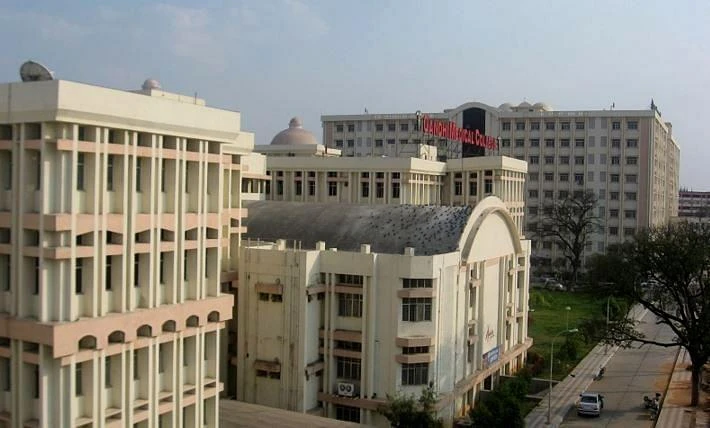
In this preview: 1 photo · 0 videos
Gandhi Medical College is noted for its superior, newer infrastructure with all departments located on a single campus. Osmania Medical College holds a stronger legacy reputation and operates more attached specialty hospitals distributed throughout the city.
For MBBS graduates, there is a mandatory 1-year rural service bond; the alternative is a payment of ₹20 Lakhs. For Postgraduate (PG) students, a 1-year senior residency bond is required, with the option to pay a bond penalty ranging from ₹20 to ₹50 Lakhs depending on the admission year.
The hostel for girls is considered safe with strictly enforced curfews. The infrastructure is described as manageable but not luxurious.
The current monthly stipend for interns is ₹25,906. This amount is subject to periodic increases by the Telangana government.
Admission with a NEET rank of 5000 is only possible through the State Quota for candidates with Telangana domicile, typically in certain reserved categories like OBC, SC, or ST. For the General All India Quota, the cutoff rank usually closes below 3000.
Share what future students should know about Gandhi Medical College.
Student voices are not rewritten by colleges. We remove spam and abuse.
Wider admission question? Community PulseWhat should future students know?
Tell us which course you're considering. We'll help you work out the next step.
Get instant Partner access after mobile verification. Your public edits are reviewed before they go live.
Claim this college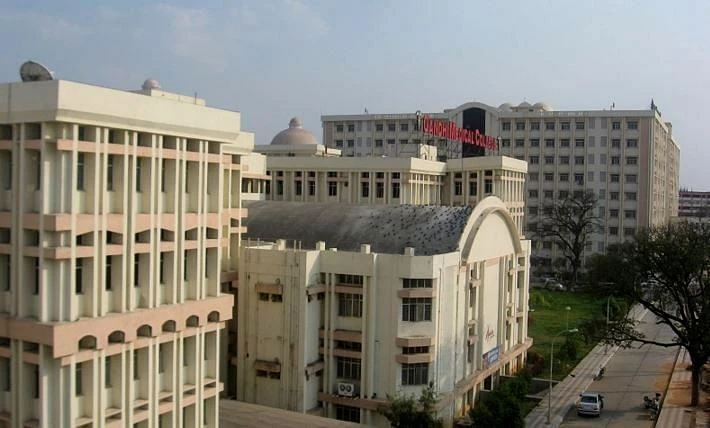
 Auditorium
 Cafeteria
 Computer Labs
 Gym
Gym Hostel
 Medical
 Science Labs
 Sports Complex
 Study Library