Loading Admission Guardian content
Loading Admission Guardian content

Provisional score based on available data. It may change as more information is verified.
Find a program, read its fee details and explore the admission requirements.
Summary of the programs shown below. Total course fee. Check the note beside each amount for inclusions and exclusions.
| Course | Stream | Fees |
|---|---|---|
| Bachelor of Education [B.Ed] | Education | 3500 |
| Bachelor of Arts [BA] | Arts | |
| Master of Arts [MA] | Arts | |
| Bachelor of Science [B.Sc] | Science |
Specializations
Eligibility: Graduation with 55% + UP Bed JEE
Specializations
Eligibility: 10+2
Specializations
Eligibility: Graduation
Specializations
Eligibility: 10+2
Gandhi Smarak Post Graduate College in Jaunpur is a study in contrasts. It's a government-aided institution with a sprawling 16-acre campus, offering some of the most affordable arts and science degrees in eastern Uttar Pradesh. The annual fee for its B.Ed. program is just ₹3,500. But that low cost comes with trade-offs—limited course options, a remote location, and placement outcomes that are more about securing a stable teaching job than landing a high corporate salary. If you're a local student from a modest background looking for a respectable, no-frills degree to enter government service or teaching, this college has served that purpose for over six decades. If you're dreaming of multinational recruiters and a bustling campus life, you'll need to look elsewhere.
This isn't a place for engineering or management aspirants. The academic portfolio is strictly traditional, focused on the core arts and sciences, plus teacher education. The total seat capacity across all programs is around 980.
For undergraduates, you have two main paths. The Bachelor of Arts (B.A.) offers specializations in Political Science, Sociology, Economics, English, Geography, Hindi, and Sanskrit. The Bachelor of Science (B.Sc.) is more limited, covering just Chemistry, Physics, and Mathematics. Then there's the one-year Bachelor of Education (B.Ed.), which is the college's NCTE-recognized program and a significant draw for those aiming for teaching careers.
At the postgraduate level, the Master of Arts (M.A.) is available in History, Hindi, Sociology, and Sanskrit. There are no doctoral programs.
The faculty list includes over 20 teachers, with several holding doctorate degrees, like Dr. Ramesh Chandra Singh (English) and Dr. Rajeev Ranjan (Geography). The principal is Dr. Moti Lal Gupta. The academic culture, as stated by the college, emphasizes moral education and career development preparation for students from economically weaker sections. You'll find regular workshops, but don't expect a flood of industry MoUs or international collaborations—that's not the model here. The academic calendar follows the affiliating university, with admissions typically kicking off between May and July.
Let's be direct: you don't come to a college like this for campus placements in the conventional sense. The placement data is thin and unverified, which tells its own story. One source claims an 85% placement rate with an average package of INR 4.8 LPA and a high of INR 12.5 LPA. Another, seemingly more grounded source points to a median package of INR 1.8 LPA and averages between INR 1.5-2.5 LPA for B.Ed. and Science graduates.
The second set of numbers feels more realistic for the region and the college's profile.
Top recruiters are primarily schools, coaching institutes, and local firms. The sectors are education, public sector, and general private jobs. The college mentions a Corporate Resource Center that supports summer internships with "leading brand names," but specific stats aren't available. For most graduates, the degree is a ticket to appearing for government teacher eligibility tests (TETs), other state service exams, or finding work in the local educational ecosystem. That's the real placement story. If you measure success as getting a stable job in education or government service, the college can be a stepping stone. If you're benchmarking against NCR or Pune average packages, you'll be disappointed.
Affordability is the undisputed headline. The fee structure is a major reason students enroll here.
A full cost breakdown including hostel, mess, and other mandatory fees isn't available in the data. Hostel accommodation is mentioned as available, with both AC and non-AC options, but no pricing is given.
The college does offer scholarships to eligible students. These are typically based on academic merit and categories like reserved quotas or demonstrated financial need. For students from the surrounding districts, this combination of low fees and scholarship potential makes higher education accessible.
The process is straightforward and bifurcated by program.
For the B.A., B.Sc., and M.A. programs, admission is primarily merit-based. Your marks in the qualifying examination (10+2 for UG, graduation for PG) are the key. The college doesn't publish specific cutoff percentages, but as a government-aided college, it will follow the reservation policies of Uttar Pradesh. There's no mention of a demanding entrance exam for these courses.
The B.Ed. program is different. Admission here requires qualifying the UP B.Ed JEE (Joint Entrance Examination). Selection is based on your rank in this state-level entrance test, followed by a centralized counseling process. This is a competitive route, as B.Ed. seats are in high demand across the state.
The application window for most programs generally opens between May and July. For B.Ed., it opens after the UP B.Ed JEE results are declared. There's a nominal application fee, but the exact amount isn't specified. The process includes document verification.
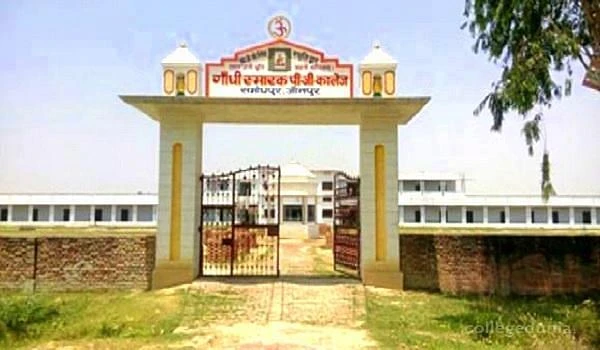
The campus is spacious—16.67 acres gives it room to breathe. The infrastructure, as per the college's claims, includes a library with over 17,700 books and 15+ journals, modern laboratories for science subjects, and sports facilities for indoor and outdoor games. They say the campus has Wi-Fi, a cafeteria, an auditorium, and even an on-campus hospital and pharmacy.
Hostel facilities are available, which is crucial given the location. The nearest railway station is 12 km away in Jaunpur city, and the bus stand is 19 km away. College-provided transport isn't explicitly mentioned, so having hostel accommodation is a significant plus. Details on room quality, food, or the social dynamics of hostel life aren't available in the reviews.
Student life seems quiet. The college mentions organizing annual festivals, tech fests, and cultural events. But a recurring note in the sentiment analysis is that there "aren't many extracurricular activities." So while events happen, the overall social and cultural scene might not be as vibrant as in a large city college. It's a self-contained, academic-focused environment.
Student feedback is limited, which is common for regional colleges. The consensus, from what exists, paints a picture of a functional institution that meets basic expectations without exceeding them.
The positives people mention are good infrastructure relative to the area, qualified faculty, and the undeniable benefit of affordable fees. The location is called "good," likely referring to the campus itself rather than connectivity. These are practical, no-nonsense praises.
The negatives are equally practical. Students point out limited course options and a lack of extracurricular activities. One aggregate rating on a platform like Justdial shows a low score (2.0/5), but that's based on only three reviews—too small a sample to be definitive, but it hints at potential administrative or experience issues.
No one is raving about transformative campus life or groundbreaking placements. The reviews suggest it's a place to get your degree, hopefully from a good teacher, without financial strain. The teaching staff is described as dynamic and knowledgeable. The reality of placements aligns with the official data being sparse; graduates carve their own paths, often in education.
It depends entirely on your context and goals. This college has a very specific, valuable role. It's worth it if you are a student from Jaunpur or the surrounding districts in Eastern UP, with limited financial means, seeking an affordable BA, B.Sc., B.Ed., or MA degree. Your goal is to get a respectable qualification to become a teacher, enter government service through exams, or take up a local private job. The low fees remove a major barrier, and the NCTE recognition for B.Ed. is legitimate.
You should probably look elsewhere if you want a wide choice of modern specializations (like computer science, commerce, or management), a highly active campus life with numerous clubs and fests, or a college with a strong track record of corporate campus placements. The remote location (12 km from the station) is also a factor if you can't secure a hostel seat.
Gandhi Smarak Post Graduate College isn't trying to be a national powerhouse. It's a local institution providing accessible education. For its target student, it's a pragmatic and often necessary choice. Just go in with clear, realistic expectations about what it can and cannot deliver. For more official information, you can visit the college's website at http://www.gspgcollege.org.
In this preview: 1 photo · 0 videos
The college offers traditional undergraduate and postgraduate programs. At the UG level, you can pursue a Bachelor of Arts (B.A.) in subjects like Political Science, Hindi, and Economics, a Bachelor of Science (B.Sc.) in Physics, Chemistry, and Mathematics, or a one-year Bachelor of Education (B.Ed.). For postgraduates, Master of Arts (M.A.) degrees are available in History, Hindi, Sociology, and Sanskrit.
The Bachelor of Education (B.Ed.) program is notably affordable. For the 2025-2026 academic year, the annual tuition fee is ₹3,500. Fees for other programs like B.A., B.Sc., and M.A. are generally in the range of ₹2,000 to ₹15,000 per year, varying by specialization.
Admission processes differ. For B.A. and B.Sc. courses, it's primarily merit-based, relying on your 10+2 marks. For the B.Ed. program, it's entrance-based. You must qualify for the state-level UP B.Ed JEE exam and then participate in the centralized counseling process for seat allocation.
Yes, the college provides hostel accommodation for students, which is important given its location. Separate AC and non-AC options are mentioned. It also offers scholarships to eligible students based on criteria like academic merit, reserved category status, and financial need.
The 16.67-acre campus houses a well-stocked library with over 17,700 books, modern science laboratories, and sports facilities. Other claimed amenities include Wi-Fi, a cafeteria, an auditorium, and medical facilities. Hostel accommodation is also available on campus.
Share what future students should know about Gandhi Smarak Post Graduate College.
Student voices are not rewritten by colleges. We remove spam and abuse.
Wider admission question? Community PulseWhat should future students know?
Tell us which course you're considering. We'll help you work out the next step.
Get instant Partner access after mobile verification. Your public edits are reviewed before they go live.
Claim this college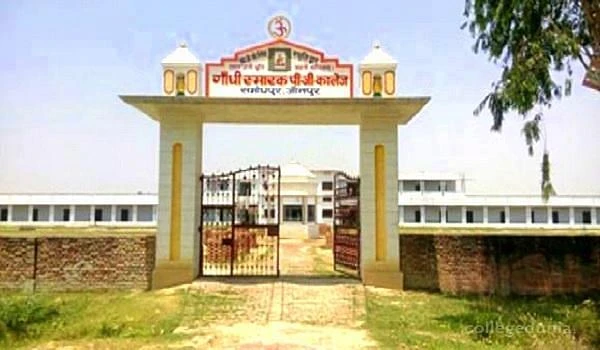
 Auditorium
 Computer Labs
 Hostel
 Medical
 Science Labs
 Sports Complex
 Study Library