Loading Admission Guardian content
Loading Admission Guardian content

Find a program, read its fee details and explore the admission requirements.
Summary of the programs shown below. Fee periods can differ by program. Check the note beside each amount before comparing costs.
| Course | Stream | Fees |
|---|---|---|
| Bachelor of Arts [BA] | Arts | 1390 |
| Bachelor of Library and Information Science [B.Lib.I.Sc] | Arts | 20000 |
| Bachelor of Computer Applications [BCA] | Computer Applications | 20000 |
| Master of Computer Applications [M.C.A] | Computer Applications | 90000 |
| Bachelor of Education [B.Ed] | Education |
Specializations
Eligibility: 10+2
Eligibility: 10+2
Specializations
Eligibility: 10+2
Eligibility: Graduation
Specializations
Eligibility: Graduation
1 exam with cutoff data available
Gaya College, Gaya, isn't trying to be an IIT. It's something arguably more vital for its region: a massive, affordable, and academically solid state-run institution that has been a launchpad for generations of students in Bihar. Established back in 1944, this 57-acre campus operates under the sprawling umbrella of Magadh University. Its recent NAAC 'A' grade (CGPA 3.23) is a quiet signal of stability in a sector often defined by chaos. For students seeking a traditional arts or science degree without crippling debt, or a shot at a vocational course like BCA or MBA, Gaya College represents a pragmatic, if imperfect, choice. You come here for the foundation, the space to study, and the legacy—not for glossy brochures.
The academic structure here is a tale of two systems. On one side, you have the vast, traditional streams of B.A., B.Sc., and B.Com. (Honours) across virtually every classic subject—History, Political Science, Physics, Chemistry, Mathematics. These are the college's bedrock, with a total student intake pushing 5,745. On the other, there's a suite of vocational and professional courses: BCA, BBM, B.Sc. in IT, Biotech, and Biochemistry, plus postgrad offerings like MCA and MBA.
The faculty mix is telling. There's a core of around 150+ lecturers, with a significant number of permanent professors holding PhDs and known to be knowledgeable. But there's also a reliance on guest lecturers, which can affect consistency. Academically, the college follows the Choice Based Credit System (CBCS), especially for PG courses. The single biggest academic caveat, echoed by every student review, is the specter of session delays from Magadh University. It's common for a three-year degree to stretch to four. That's a real cost students factor in.
Let's be blunt: if you're enrolling in a traditional B.A. or B.Sc. program, campus placements are virtually non-existent. The college states a placement rate of under 10% for these streams, and alumni confirm it. Those students are overwhelmingly on the competitive exam track—BPSC, UPSC, SSC—using the college as a low-cost base for preparation.
The placement cell is active, but its focus is squarely on the vocational and professional courses: BCA, MCA, BBM, and MBA. Here, the reported placement rate is around 40-50%. You'll see top recruiters like TCS, Infosys, and Wipro on the roster, alongside ICICI Bank and local biotech firms. The highest package touted can reach an outlier figure of 9-18 LPA, but the more reliable, consistent top offers for IT roles are in the INR 7.5 LPA range. The average settled package for placed students falls between INR 3.5 to 4.5 LPA. It's a decent outcome for a government college in the region, but don't confuse it with a private engineering college's placement drive. The gap between the official claim and the on-ground reality for the average student is notable.
This is where Gaya College's value proposition shines brightest, especially for students from modest economic backgrounds. The fees for traditional courses are almost symbolic. A full three-year B.A. or B.Sc. can cost between INR 6,000 to 12,000 total—that's total, not per year. Vocational courses cost more but are still subsidized: BCA or BBM will run about INR 20,000–25,000 annually. Postgraduate professional degrees like MBA or MCA are in the INR 45,000–50,000 per year range.
Hostel fees add another INR 4,000–25,000 per year, with mess charges extra at around INR 2,500–3,500 monthly. The key support system is the Bihar Post-Matric Scholarship (PMS) for SC, ST, OBC, and EBC students. Applications are processed through the state's online portal, and this scholarship is critical for many students to manage even these low costs. The college's official website, gayacollege.ac.in, and the Magadh University notices are the primary sources for fee and scholarship updates.
Admission routes differ by program. For the vast majority of UG regular courses (B.A./B.Sc./B.Com. Hons), it's strictly merit-based on Class 12 marks. Competition is fierce for popular science subjects; for B.Sc. Mathematics (Hons), the 2024 cutoff for the General category was above 80-85%. For arts subjects, it's typically between 55-70%.
For professional courses, entrance exams kick in. MBA admissions consider scores from MAT, CAT, or CMAT followed by group discussion and personal interview. MCA admissions may use a university-level entrance or merit. The B.Ed. program requires clearing the Bihar B.Ed CET. The application window usually opens in May-June, and everything flows through the Magadh University UMIS portal or the college's own admission link. Don't expect a swift process—administrative speed isn't a noted strength here.
The 57-acre campus is repeatedly praised as a green, peaceful oasis. It's a space meant for walking and self-study. Infrastructure is a mixed bag, typical of a large, older government college. Labs for Physics, Chemistry, and Biotech are well-equipped, and the computer lab has over 100 systems with Wi-Fi. The central library boasts over 1,00,000 books and e-journal access via INFLIBNET. There's a large playground for cricket and football, along with facilities for volleyball and basketball. Basic amenities like a canteen, bank, and ATMs are on campus.
Hostel life is functional. The girls' hostel is located inside the campus and is considered secure. The boys' hostel is situated near the boundary. Quality is often rated a middling 3 out of 5 by students—it's not luxurious, but it's affordable. The social life isn't "vibrant" in the metropolitan sense; it's more subdued, centered around campus events, NCC/NSS activities, and student group gatherings.
Scouring platforms like CollegeDunia and Shiksha reveals a consistent, clear-eyed consensus. The positives are powerful: "Best ROI for humble backgrounds" is a constant refrain. The low fees and expansive campus are genuinely appreciated. Many note that the permanent faculty are excellent—if you take the initiative to approach them.
But the negatives are equally stark and repeated. The "session delay" due to Magadh University's schedules is the universal complaint, adding a year to many degrees. Administrative processes are described as slow and bogged down in red tape. And there's a clear warning: "If you are in BA or BSc, don't expect a campus placement. You are on your own." This isn't a college that hand-holds you into a corporate job. It provides a platform, and what you build on it is largely up to you.
Gaya College is a specific solution for a specific set of needs. It's an outstanding, arguably unmatched, value for a student seeking a reputable, affordable traditional degree in arts or science with the goal of preparing for government service exams. The low cost removes financial pressure, and the campus environment allows for focused study. For those looking at vocational courses like BCA or MBA, it offers a credible, budget-friendly alternative to expensive private colleges, with a shot at decent IT sector placements, albeit with modest average packages.
However, if your primary goal is a seamless, timely academic journey with strong corporate placement hand-holding from day one, look elsewhere. The session delays and administrative hurdles are real trade-offs. This college is best for the self-directed, cost-conscious student who sees education as a foundation to build upon, not a finished product to be consumed. It's a workhorse institution, not a showhorse, and it has served that purpose reliably for decades.
For authoritative verification of its accreditation status, you can check the NAAC website, and for broader institutional rankings, refer to the NIRF India portal.
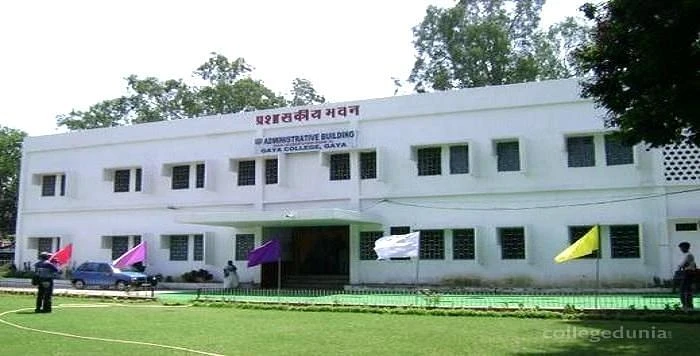
In this preview: 1 photo · 0 videos
Gaya College and Gaya College of Engineering (GCE) are different institutions serving distinct academic purposes. Gaya College offers undergraduate and postgraduate programs in Arts, Science, Commerce, and Vocational fields, while GCE is strictly an engineering college offering B.Tech degrees.
Class regularity at Gaya College varies by department. Vocational courses like BCA and MBA typically enforce strict attendance policies, while traditional BA and BSc courses generally offer more flexible scheduling for students.
Admission applications are typically submitted online. Prospective students should apply through the official Magadh University portal (magadhuniversity.ac.in) or use the dedicated admission link provided on Gaya College's own website when the process opens.
Yes, a degree from Gaya College is valid for UPSC and other government examinations. The college is a UGC-recognized government constituent college under Magadh University, making its degrees fully recognized.
Yes, Gaya College provides a dedicated girls' hostel located inside the main campus. The hostel facility is secured with 24/7 security for the safety and convenience of its residents.
Share what future students should know about Gaya College.
Student voices are not rewritten by colleges. We remove spam and abuse.
Wider admission question? Community PulseWhat should future students know?
Tell us which course you're considering. We'll help you work out the next step.
Get instant Partner access after mobile verification. Your public edits are reviewed before they go live.
Claim this college
 Cafeteria
 Computer Labs
 Study Library