Loading Admission Guardian content
Loading Admission Guardian content
Provisional score based on available data. It may change as more information is verified.
Selected ranking categories, with the recorded year beside each result. Open all records for the complete history.
1 published record · Lower numeric ranks are stronger
Find a program, read its fee details and explore the admission requirements.
Summary of the programs shown below. First-year fee. Check the note beside each amount for inclusions and exclusions.
| Course | Stream | Fees |
|---|---|---|
| Bachelor of Engineering [BE] | Engineering | 69549 |
| Bachelor of Engineering [BE] {Lateral} | Engineering | 69549 |
Specializations
All accepted exams
Eligibility: 10+2
Specializations
All accepted exams
Eligibility: 10+3
5 exams with cutoff data available - showing recent entries
 Bharati Shipyard Ltd.
 Gharda Chemicals Limited
 Subex
SubexGharda Institute of Technology sits on 23 acres of land along the Mumbai-Goa highway, a private college that's been quietly building a reputation in Ratnagiri since 2007. It's affiliated with the University of Mumbai and holds an NAAC 'A' grade, which is a solid mark of institutional quality. But the real story here isn't just about accreditation. It's about a college that offers decent engineering education at a relatively affordable cost, with a campus life that students seem to genuinely enjoy, even if the placement packages don't always match the brochure promises.
GIT runs a standard set of B.E. programs under the University of Mumbai syllabus. You've got the usual suspects: Chemical, Civil, Computer, Electronics & Telecommunication, and Mechanical Engineering. Each branch has an intake of 60 seats. The newer Computer Science Engineering with a specialization in Artificial Intelligence & Machine Learning started in 2022 and has a slightly larger batch size of 69. That's the program they're pushing as forward-looking, with a curriculum heavy on algorithms, AI, ML, and data analytics.
On the postgraduate side, there's an MCA and an MMS, each with 60 seats. The faculty strength is listed at 48, though data on PhD holders isn't publicly detailed. Academically, it's a typical affiliated college setup. The calendar and grading follow Mumbai University's patterns. They've made some efforts to connect with industry, like an MOU with the AWS Academy for training and a workshop with IIT Bombay's chemical engineering department. There's also a language lab with spoken English software. It's not groundbreaking, but it shows an attempt to add value beyond the standard curriculum.
This is where you need to read between the lines. The official placement cell reports a highest package of ₹9 LPA for 2024, with an average of ₹3.5 LPA. The NIRF reports, which are a more standardized metric, show a median salary hovering around ₹2.66 to ₹2.8 LPA for the last few years. In 2024, they placed 170 out of 200 registered students.
And then you talk to students, or read their reviews. The narrative shifts. Alumni, particularly from the Computer and E&TC branches, frequently mention highest packages closer to ₹1-1.2 LPA and averages between ₹50,000 to ₹60,000. One review for Chemical Engineering highlighted a ₹4.8 LPA offer for the 2026-27 batch, which is a decent core engineering outcome. The placement percentage, according to student estimates, sits between 60-80%, not the near-universal placement some brochures might imply.
The recruiter list is respectable for a college in this location: TCS, Infosys, Wipro, Capgemini, IBM, Tech Mahindra, KPIT, Persistent, and a mix of core companies like Pidilite, Hindustan Unilever, and Gammon. The sectors are split between IT services and core engineering. The takeaway? Placements happen. You'll get interview opportunities, especially with the mass recruiters. But temper your salary expectations. The ₹3.5 LPA average is likely skewed by a few higher offers; the median around ₹2.8 LPA, or even lower as per student anecdotes, is probably the more common reality for an average performer.
The fee structure is a bit of a maze, with different numbers floating around for the same programs. For B.E./B.Tech, annual tuition seems to range from about ₹78,000 to ₹1,34,840. The lower end might be for the CAP quota seats, while the higher end could be for specific branches or payment structures. Over four years, total tuition works out to somewhere between ₹3.2 lakhs and ₹5.37 lakhs. That's not cheap, but it's also not in the exorbitant league of some metro-based private colleges.
Hostel costs add a significant layer. If you opt for just a room, it's ₹16,000 to ₹25,000 annually. But the all-inclusive package—room, mess, utilities, maintenance—is the real cost. That ranges from ₹55,000 per year for a non-AC four-seater to ₹1.25 lakhs for an AC single seater for girls. Mess fees alone are about ₹3,500 per month. Add in the one-time application fee (₹1,000), exam fees, and refundable deposits, and the first-year cost can be substantial.
Where GIT does reasonably well is scholarships. They list a wide array: the AICTE Tuition Fee Waiver Scheme, various government freeship and scholarship schemes (EBC, Vidya Vetan), merit-cum-means scholarships for minorities, and even their own GIT Merit Scholarship and a few endowment scholarships. If you have the academic scores or fall under certain economic criteria, there are avenues to reduce the financial load. It's worth digging into the specifics on their official website or with the administration.
Getting into GIT's B.E. programs is straightforward: you need a valid score in either MHT CET or JEE Main. Admission happens through the Maharashtra state counseling process (CAP rounds) based on these ranks. For MCA, it's the MAH MCA CET, and for MMS, the MAH CET. The application fee is ₹1,000.
Specific cutoff ranks aren't published, which is common. Being an affiliated college not in a major city, the cutoffs for most branches are likely to be in the moderate range. If you have a decent MHT CET percentile (often above the 50th percentile for open category in many branches, but this varies yearly), you stand a good chance. The selection is purely merit-based through the centralised process—no mention of a separate management or NRI quota.
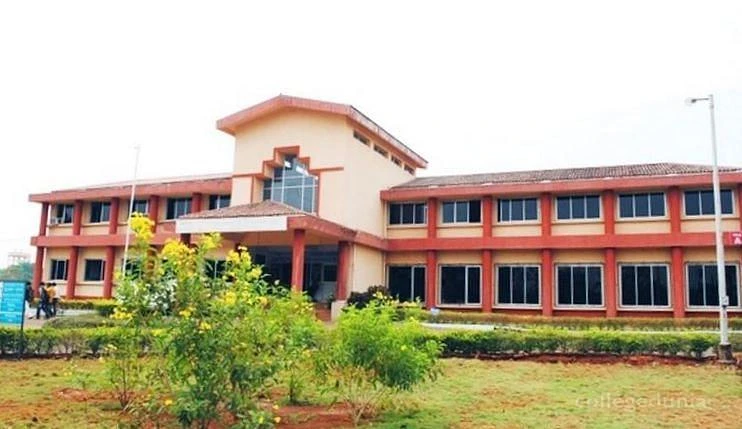
The 23-acre campus is consistently praised. The labs for various engineering departments are described as well-equipped, the library is comprehensive with digital access, and classrooms have projectors. Sports facilities are a real highlight—large grounds for football, volleyball, and kabaddi, plus indoor games like table tennis and a well-equipped gym. There's a bank with an ATM, a medical centre, and a canteen.
Hostel life is a mixed bag. The capacity is there (over 500 for boys, 200 for girls), with options from two-seaters to four-seaters, some with attached bathrooms. Facilities include beds, study tables, wardrobes, 24-hour power backup, and Wi-Fi. The food in the separate hostel messes gets reviews ranging from "good and tasty" to "okish." The consistent negative? Bathroom maintenance can be lacking, and the Wi-Fi, while available, is notorious for being unreliable. Security is strict, which parents might appreciate, and there's no noted history of ragging.
Social life revolves around departmental student associations (like ELITE for IT, CASTLE for Civil) that organize tech fests, cultural events, and workshops. Some students feel the administration is overly focused on academics at the expense of bigger cultural festivals, but there's still activity. The overall vibe, set against the scenic Konkan backdrop, is reported to be positive and relaxed.
Synthesizing the student sentiment gives you a clear, balanced picture. The love is for the infrastructure—the labs, library, and sprawling sports facilities. The campus environment and "vibe" are big positives. Many find the faculty to be good and supportive.
The grumbles are just as consistent. The Wi-Fi issue is almost a universal complaint. There's a palpable cynicism about placement statistics, with many feeling the real-world packages are far lower than advertised. The canteen food quality is debated. And a few point to an administrative focus that prioritizes academics and discipline over a vibrant, holistic student culture.
It's not a place of glaring red flags, but of managed expectations. You get a decent campus, decent teaching, and a shot at placements, but don't expect metropolitan-level networking or guaranteed high salaries.
Gharda Institute of Technology is a pragmatic choice for a specific type of student. If you're from the Konkan region or western Maharashtra, have a moderate MHT CET/JEE Main rank, and are looking for an affordable engineering degree from a reputable University of Mumbai-affiliated college with a good campus, GIT makes sense. Its NAAC 'A' grade and established infrastructure are legitimate strengths.
However, if your primary goal is to land a high-paying tech job right out of college, you might feel shortchanged. The placement reality, as echoed by students, is modest. The remote location also means limited off-campus opportunities and a quieter social scene.
So, who is it for? Students who value a solid academic foundation, a self-contained campus life, and are willing to hustle for their placements—perhaps through internships and off-campus drives—rather than relying solely on the college's network. It's a value-for-money option in the private college space, but with the understanding that "value" here means a decent education and environment, not a golden ticket to a corporate career.
In this preview: 1 photo · 0 videos
The total tuition for the four-year B.E./B.Tech at GIT ranges from approximately ₹3.2 Lakhs to ₹5.37 Lakhs, depending on the specialization. Annual tuition varies from ₹78,000 to about ₹1,34,840. You must add annual hostel and mess costs, which can range from ₹55,000 to over ₹1.2 Lakhs per year, for a complete picture.
GIT has separate hostels for boys and girls with capacities of 578 and 204, respectively. Rooms come in double, triple, and four-sharing configurations. The annual fee for just the room ranges from ₹16,000 to ₹25,000. An all-inclusive package (room, mess, utilities) costs between ₹55,000 and ₹1.25 Lakhs per year. Student reviews on food are mixed, from "good" to "okish," and some note bathroom maintenance could be better.
Official 2024 data cites a highest package of ₹9 LPA and an average of ₹3.5 LPA, with a median salary of ₹2.8 LPA as per NIRF reports. Top recruiters include TCS, Infosys, Wipro, Capgemini, and IBM. However, student reviews frequently report lower figures, with highest packages around ₹1-1.2 LPA and averages of ₹50,000-60,000, indicating a gap between official claims and typical graduate outcomes.
Admission to the B.E./B.Tech programs requires a valid score in either the MHT CET or JEE Main entrance exams. Selection is based on rank through the Maharashtra state CAP counseling process. For the MCA program, the MAH MCA CET is required, and for the MMS program, the MAH CET is needed.
The campus features well-equipped engineering labs, a comprehensive library with digital resources, and extensive sports facilities including large grounds and a gym. Hostels offer 24/7 power backup and Wi-Fi (noted to be sometimes inconsistent). Amenities include a medical centre with ambulance service, a bank with ATM, a canteen, and college transport. The 23-acre campus is consistently praised for its infrastructure and environment.
Share what future students should know about GIT.
Student voices are not rewritten by colleges. We remove spam and abuse.
Wider admission question? Community PulseWhat should future students know?
Tell us which course you're considering. We'll help you work out the next step.
Get instant Partner access after mobile verification. Your public edits are reviewed before they go live.
Claim this college
 Auditorium
 Bank & ATM
 Cafeteria
 Campus Shuttle
 Campus Wi-Fi
 Computer Labs
 Gym
Gym Hostel
 Medical
 Science Labs
 Sports Complex
 Study Library