Loading Admission Guardian content
Loading Admission Guardian content

Provisional score based on available data. It may change as more information is verified.
Find a program, read its fee details and explore the admission requirements.
Summary of the programs shown below. Total course fee. Check the note beside each amount for inclusions and exclusions.
| Course | Stream | Fees |
|---|---|---|
| Bachelor of Education [B.Ed] | Education | 102000 |
| Bachelor of Science [B.Sc] | Science | 155000 |
| Bachelor of Arts [BA] | Arts | |
| Bachelor of Commerce [B.Com] | Commerce | |
| Post Graduate Diploma in Computer Applications [PGDCA] | Computer Applications |
Specializations
Eligibility: Graduation
Specializations
Eligibility: 10+2
Specializations
Eligibility: 10+2
Specializations
Eligibility: 10+2
Specializations
GHG Khalsa College isn't your typical Punjab college. It's a sprawling, 26-acre academic village in Gurusar Sadhar, a place that feels more like a self-contained campus town than just a collection of buildings. Founded in 1948, it's earned the nickname "Mini-University" for good reason. With over 39 courses across 14 degrees, from traditional B.A. programs to specialized B.Voc. in Food Processing, it serves as the educational heart of the rural Ludhiana region. But its real identity is split: it's a disciplined, almost old-school academic institution with a surprisingly modern and fierce reputation for producing national-level athletes. You come here for the structure, the green campus, and maybe a shot at sports glory—not for a bustling city life. That trade-off defines everything about the place.
The academic portfolio here is broad, reflecting its "Mini-University" moniker. You can study pretty much anything except engineering and medicine. The backbone is the classic Panjab University-affiliated curriculum: B.A., B.Sc. (Medical and Non-Medical), and B.Com., with intakes in the hundreds. But the more applied programs—BCA, BBA, B.Voc. in Food Processing & Quality Management—are where student interest is growing. The B.Ed. and M.Ed. programs, run through the separately accredited College of Education wing, are a significant draw, given their 'A+' NAAC grade.
Faculty density is decent, especially in the science and education departments where a good number of PhD holders, like Dr. Swaranjit Singh Deol and Dr. Rajwant Singh, lead the departments. The academic rhythm is strictly tied to Panjab University's calendar. The grading is PU's system, and the teaching style leans traditional. Don't expect too many experimental pedagogies. It's a place where attendance (a strict 75% minimum) matters, internal marks are tied to it, and the syllabus is covered methodically. The standout, academically, is the focus on Physical Education. With B.P.Ed., M.P.Ed., and integrated programs, the infrastructure and faculty for sports sciences are arguably the best in any affiliated college in Punjab.
Let's separate the brochure numbers from the ground reality. The college placement cell is active, and they do bring companies. But the outcomes are sharply tiered by course.
The highest package touted for 2024-25 is 12 LPA, reportedly for a BCA or IT student. That number, while possible, is an outlier. More consistent reports point to a top end of 8-10 LPA. The average cluster for placed students is between 2.5 and 3.5 LPA. This aligns with the official NIRF data from a few years back, which reported a median of ₹2.35 LPA for UG programs. You can check recent data on the NIRF Rankings portal for updates.
Recruiters are a mix of volume-hiring names. IT sees Cognizant, Tech Mahindra, and Wipro. Banking includes ICICI Prudential and HDFC Bank. For the Pharmacy wing, Alembic and Cipla are known to visit. B.Ed. graduates, of course, find their way into the school system through mandatory internships and their own networks.
The placement percentage is the real variable. Official claims hover around 60-70%. Student reviews, especially for general BA/B.Sc. streams, suggest a lower figure, with many graduates seeking jobs independently after college. For BCA and BBA, the placement rate is better, maybe hitting that 60% mark. The verdict? It's a decent, not spectacular, placement scene for a rural, multi-disciplinary college. If you're in a professional course, you have a reasonable shot. If you're in the arts or sciences, view the degree as a foundation and plan to hustle on your own.
One of Khalsa College's compelling advantages is its affordability, a function of its government-aided status. For a full degree, you're looking at total costs that are a fraction of private university fees.
A B.A. will cost you roughly ₹75,000 to ₹90,000 for the entire three-year program. B.Sc. degrees range from ₹1.1 to ₹1.4 lakhs total. The more specialized BCA or BBA programs come in around ₹1.2-1.35 lakhs for three years. The B.Ed., at ₹51,000 per year, is a two-year commitment. The B.Voc. program is at the higher end, around ₹65,000 annually.
On top of tuition, budget for the hostel. It's approximately ₹40,000 per year for girls, including mess charges, with boys' hostel fees being similar. Add semester exam fees (₹2,500 or so) and a refundable library security deposit.
Financial aid is available. The standard Post-Matric Scholarships for SC/ST/OBC students apply. The college also offers merit scholarships for Panjab University toppers. Their most notable support is for athletes: national and state-level players often receive 100% fee waivers and free hostel accommodation, underlining the institution's commitment to sports.
The gateway to GHG Khalsa is straightforward, mostly merit-based, and managed by the state system.
For the vast majority of UG programs—BA, B.Sc., B.Com., BCA, BBA—admission is purely based on your 10+2 marks. There's no entrance exam. Cutoffs vary by course and demand. Generally, you'll need between 60% and 85% in your board exams. B.Com. and BCA tend to be the most competitive, often requiring scores on the higher end of that spectrum.
The professional programs have specific gates. Admission to the B.Ed. and M.Ed. programs is through the Panjab University B.Ed. Entrance Test. For B.Pharm (offered by the Pharmacy wing), selection is based on merit in 10+2 with Physics, Chemistry, and Biology/Mathematics.
The process is centralized. You apply online through the Punjab Government's admission portal, usually between April and July. Merit lists are published, followed by document verification and fee payment at the college. Late admissions, with a fee penalty, can sometimes stretch into August.
Life at GHG Khalsa is defined by its location and its rules. The campus is expansive, green, and clean—students consistently praise its maintenance. But Gurusar Sadhar is a rural area. The nearest city buzz is 30 km away in Ludhiana. That means campus is your entire world.
The hostels (capacity: 220 boys, 300 girls) are functional. Reviews rate them a 3.5 out of 5. The food in the mess is described as simple, hygienic, and repetitive. The canteen, however, gets a solid 4/5 for its snacks. Infrastructure is good where it counts: the library has over 50,000 volumes, labs for science and computer students are well-equipped, and there's a bank branch and ATM on-site.
But the crown jewel is the sports infrastructure. It's exceptional. A 400m synthetic track, hockey grounds, an indoor gymnasium, and even a shooting range. The Annual Sports Festival is a major event. If you're athletically inclined, these facilities are a massive draw.
The social life, however, is subdued. The college is known for its discipline. There's no student politics, no ragging, and strictly no birthday celebrations on campus. Gate timings for hostels are enforced, and some departments have a formal dress code. For some, this structured, focused environment is a positive. For others, it feels isolating and restrictive. You have to know which camp you're in.
Scouring forums like CollegeDunia and Quora paints a consistent picture. The positives are clear and repeated: discipline, sports, approachable faculty, and a clean, green campus. Students feel safe and appreciate the lack of campus politics. The teachers are often described as supportive and knowledgeable, particularly in the science and education faculties.
The negatives are just as consistent. The rural location tops the list—"social life outside campus is zero" is a common refrain. The strict rules (attendance, dress code, no celebrations) chafe for many. And there's a palpable gap between placement hopes and reality for those not in IT or professional courses. The Wi-Fi is patchy, mainly confined to labs and the library.
The consensus? It's an excellent choice if you're a sportsperson or if you value a quiet, disciplined, and affordable education. It's a challenging fit if you crave urban connectivity, a vibrant social scene, or expect high-octane corporate placements directly from campus.
GHG Khalsa College is a specific institution for a specific student. It's not trying to be a cosmopolitan university. Its value proposition is built on three pillars: remarkable affordability, outstanding sports infrastructure and culture, and a disciplined, traditional academic environment. If you are a national or state-level athlete looking to study, this is arguably a top-tier choice in Punjab—the scholarships and facilities are unmatched at this price point. If you're a student from the surrounding rural areas seeking a reputable, low-cost degree from Panjab University without the distractions (and expenses) of the city, it makes perfect sense. The B.Ed. program, with its 'A+' NAAC grade, is also a strong option.
However, if your primary goal is high-paying, on-campus placements in tech or corporate roles, you might find the opportunities limited compared to city-based colleges or private universities. The rural isolation and strict rules can be a dealbreaker for students accustomed to more independence. In the end, Khalsa College is a legacy institution that does a few things very well. It's up to you to decide if those things align with what you need from your college years.
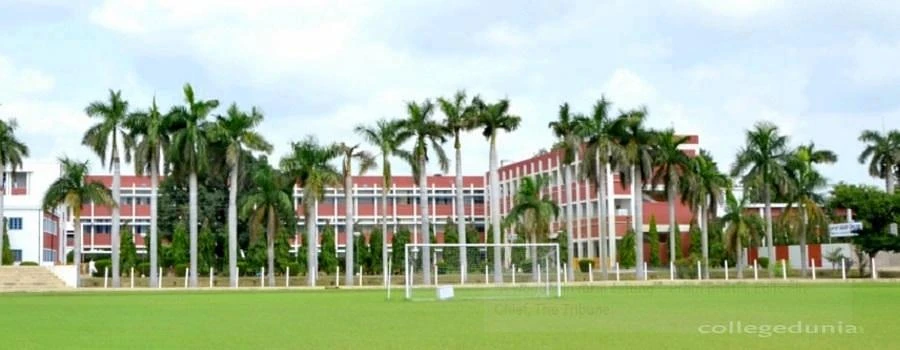
In this preview: 1 photo · 0 videos
Yes, the BCA department at GHG Khalsa College is considered one of the better-performing departments for placements. Recruiters like Cognizant and Tech Mahindra visit the campus, with the median salary package typically around 3 LPA.
The hostel fee for girls at GHG Khalsa College is approximately ₹40,000 per year. This cost includes mess charges for food and accommodation.
GHG Khalsa College is a private-aided institution. This means it is managed by a private trust but receives financial grants from the government.
GHG Khalsa College is located about 28–30 kilometers from Ludhiana city. The travel time by road is typically between 45 to 60 minutes.
Yes, GHG Khalsa College offers scholarships for sports. National and state-level players often receive benefits such as a 100% tuition fee waiver and free hostel accommodation.
Share what future students should know about GHG Khalsa College.
Student voices are not rewritten by colleges. We remove spam and abuse.
Wider admission question? Community PulseWhat should future students know?
Tell us which course you're considering. We'll help you work out the next step.
Get instant Partner access after mobile verification. Your public edits are reviewed before they go live.
Claim this college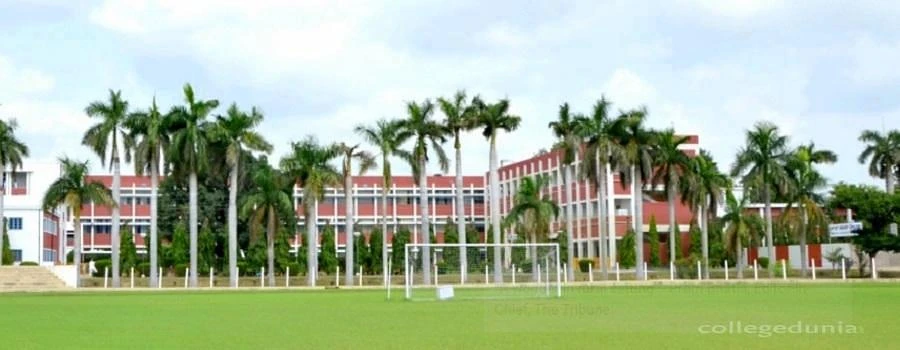
 Auditorium
 Cafeteria
 Computer Labs
 Gym
Gym Hostel
 Science Labs
 Sports Complex
 Study Library