Loading Admission Guardian content
Loading Admission Guardian content
Find a program, read its fee details and explore the admission requirements.
Summary of the programs shown below. Fee amounts are not listed. Contact the college for its current fee schedule.
| Course | Stream | Fees |
|---|---|---|
| Auxiliary Nursing Midwifery [ANM] (Nursing) | Paramedical | |
| General Nursing and Midwifery [GNM] | Paramedical |
Specializations
For students in Pune's rural belt looking for a direct, practical path into nursing, Giriraj Nursing School in Baramati is a name that comes up consistently. Established in 2004 and anchored to the well-known Giriraj Hospital, this private institute trades fancy campuses for immediate hospital-floor experience. It’s a vocational school in the truest sense—your classroom is often a ward, and your training starts with real patients. That’s the core appeal here. If you want a disciplined, hands-on education that leads directly to a job in local healthcare, this place has built a solid local reputation over two decades. But if you’re dreaming of a vibrant college life or national-level opportunities, you’ll need to look elsewhere.
This isn’t a university offering a plethora of degrees. Giriraj focuses squarely on two core nursing diplomas: the 3-year General Nursing & Midwifery (GNM) with 60 seats, and the 2-year Auxiliary Nurse Midwifery (ANM) program, which is for female students only with 50 seats. The academic model is straightforward and practice-heavy. Theory follows the syllabi set by the MSBNPE and MUHS, but the real learning happens next door at Giriraj Hospital. Students get folded into the daily rhythm of a working multi-specialty hospital from an early stage, which is a significant advantage. You’re not waiting for semester-long "clinical postings"; you’re in the environment regularly. Community health postings in nearby rural and urban centers round out the practical training. The faculty, around 11-15 members led by Principal Mr. Aravind Indi, are typically M.Sc. or B.Sc. Nursing graduates with clinical backgrounds. Reviews describe them as strict and exam-focused, which aligns with the school’s primary mission: ensuring students pass the state board exams and are clinically competent from day one.
Let’s talk about the "Guaranteed Job" claim you might see. It’s not a corporate placement cell with a hundred recruiters. The guarantee stems from the school’s primary asset: Giriraj Hospital itself. A significant portion of graduates, especially high performers, are absorbed directly into the hospital and its ICU. That’s a decent and reliable outcome. Beyond that, placement relies on tie-ups with other private hospitals in Pune and Baramati. For government jobs, which offer better pay scales, you’re on your own to clear the required competitive exams. Salary ranges for fresh GNM graduates in the private sector are modest, typically between ₹10,000 to ₹20,000 per month (₹1.2 to ₹2.4 LPA). It’s a starting wage for a vocational field. Top recruiters are essentially the hospital network—Giriraj Hospital being the main one—followed by local nursing homes and clinics. So, the placement promise is real, but it’s geographically and sectorally limited. You’re being trained for the local healthcare ecosystem, and the school delivers on that.
For a private institution, the fees are relatively accessible, regulated under Maharashtra’s Fee Regulating Authority (FRA) norms. The annual tuition for the GNM course is estimated to be in the ballpark of ₹50,000 to ₹75,000. Add hostel and mess fees, which run between ₹20,000 to ₹35,000 per year, and other one-time charges for admission, exams, and uniforms. All in, the total cost for the three-year GNM diploma can land somewhere between ₹2.5 to ₹3 lakhs. That’s a manageable investment for a direct-to-employment course. Financial aid is available primarily through government schemes for eligible SC/ST/OBC/EBC students via the Maharashtra DBT (MahaDBT) portal. The college office can guide you on the application process, but don’t expect a wide range of private merit scholarships.
The process is fairly direct, though it’s evolving. For years, admissions to the ANM and GNM diplomas were purely merit-based, relying on your 10+2 (HSC) marks. A minimum of 40% with English is required for GNM, with a science background preferred. For ANM, any stream in 12th grade works. However, the state is moving towards a common entrance test. The MH-Nursing CET is now required for B.Sc. Nursing and is increasingly becoming the norm for GNM admissions as well. You’ll need to keep an eye on the official MSBNPE or college website for the latest mandate. The application window is typically open from June to August. Selection often involves a centralized allotment or a direct application to the college followed by document verification. Cutoffs aren’t published in the traditional engineering college sense; seats are filled based on the merit list generated from either HSC scores or CET ranks.
Think functional, not luxurious. The campus is essentially the nursing school building situated within the Giriraj Hospital complex. The integration is total—your walk to class might take you past the outpatient department. The labs are well-equipped for core training needs: Fundamentals of Nursing, Community Health, Maternal and Child Health, and Nutrition. The library has a collection of 700+ books and journals, sufficient for diploma-level reference. The hostel situation is a point of note. There are three units with 96 total beds, but the split is uneven: 80 for girls, only 16 for boys. Student reviews on portals like JustDial rate the hostels a 3.5/5—basic, secure, and clean, but not spacious. The boys' facility is notably small. There’s a canteen, an auditorium for seminars, and some basic sports facilities. But let’s be clear: this is not a "campus life" institute. The location adjacent to the Baramati ST Stand is incredibly convenient for travel, but the social scene is minimal. The culture is disciplined, with a heavy emphasis on clinical duties and academics.
Scouring reviews on JustDial, Shiksha, and local forums paints a consistent picture. The overall rating is positive (4/5 on JustDial), but the praise is specific. The overwhelming positive is the practical exposure. Students repeatedly say the direct, daily access to Giriraj Hospital is invaluable and the school’s biggest strength. The location’s convenience and the disciplined, no-nonsense environment are also seen as pluses, especially for students from surrounding rural areas who want a focused education. On the flip side, the negatives are just as consistent. Campus life is described as virtually non-existent. The infrastructure, while adequate, isn’t modern, and the administrative style is often cited as slow and traditional, relying on offline processes. The faculty gets marks for being helpful and knowledgeable but within a framework that’s rigid and exam-centric. It’s a trade-off students here seem aware of: you’re choosing hands-on skill development over a broad collegiate experience.
Giriraj Nursing School serves a specific student profile very well. If you are from Pune’s rural districts (Baramati, Solapur, Satara) and want a cost-effective, practical nursing diploma that almost certainly leads to a job in the local healthcare sector, this is a strong choice. The hospital attachment is a genuine advantage you won’t get at many larger, more isolated colleges. The discipline ensures you are work-ready. However, if your aspirations extend beyond becoming a staff nurse in Western Maharashtra, if you want a vibrant campus social life, research opportunities, or a degree from a nationally ranked institution, you will feel constrained here. It’s a vocational launchpad, not a university. For its intended purpose—training competent, employable nurses for the region—Giriraj Nursing School does a solid, reliable job. Just know exactly what you’re signing up for.
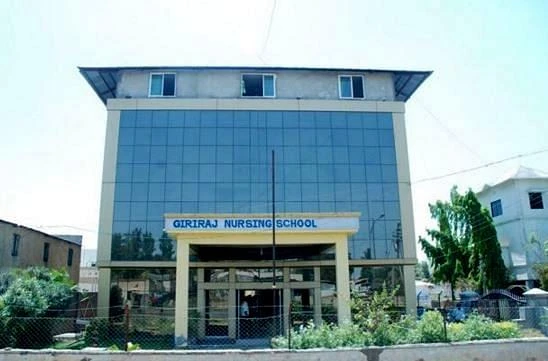
In this preview: 1 photo · 0 videos
Yes, Giriraj Nursing School is co-educational. Its General Nursing and Midwifery (GNM) program accepts both male and female candidates. However, the Auxiliary Nurse Midwife (ANM) course is for female candidates only.
The annual fee for the General Nursing and Midwifery (GNM) program at Giriraj Nursing School is approximately ₹50,000 to ₹70,000. This fee is for tuition and does not include the cost of hostel accommodation.
Yes, the college has a high placement rate for its GNM graduates. Placement opportunities are primarily within its own hospital network and local private clinics.
Yes, Giriraj Nursing School maintains affiliation with the Maharashtra University of Health Sciences (MUHS). This affiliation ensures degree-level standards, while the diploma programs are executed under the Maharashtra State Board of Nursing and Paramedical Education (MSBNPE).
The girls' hostel at Giriraj Nursing School is a secure, on-campus facility with a capacity for 80 students. It includes an attached mess for dining services.
Share what future students should know about Giriraj Nursing School.
Student voices are not rewritten by colleges. We remove spam and abuse.
Wider admission question? Community PulseWhat should future students know?
Tell us which course you're considering. We'll help you work out the next step.
Get instant Partner access after mobile verification. Your public edits are reviewed before they go live.
Claim this college
 Auditorium
 Cafeteria
 Hostel
 Medical
 Sports Complex
 Study Library