Loading Admission Guardian content
Loading Admission Guardian content

Provisional score based on available data. It may change as more information is verified.
Find a program, read its fee details and explore the admission requirements.
Summary of the programs shown below. First-year fee. Check the note beside each amount for inclusions and exclusions.
| Course | Stream | Fees |
|---|---|---|
| Bachelor of Science [B.Sc] (Agriculture) | Agriculture | 2491 |
| Master of Science [M.Sc] | Science | 11000 |
| Bachelor of Science [B.Sc] | Science | 21000 |
| Bachelor of Education [B.Ed] | Education | 51250 |
| Bachelor of Physical Education [B.P.Ed] | Education | 51250 |
Eligibility: 10+2
Specializations
Eligibility: Graduation
Specializations
Eligibility: 10+2
Specializations
Eligibility: Graduation 55% + UP Bed JEE
Eligibility: 10+2 or Graduation
Gochar Mahavidyalaya is a bit of a paradox. Established in 1959, this government-aided college in rural Saharanpur has built a reputation for offering a surprisingly solid education at a very reasonable cost. It’s not a flashy, high-ranked institution, but for students from the region looking for a dependable, affordable degree—particularly in Agriculture, Education, or the Sciences—it’s a pragmatic choice. The campus is substantial, hosting over 3,000 students, and the faculty gets consistently good marks from reviewers. But you have to be okay with its location. Rampur Maniharan is remote, and while the college provides bus services, the disconnect from a major urban center is a real part of the experience. Think of it as a workhorse, not a showhorse. It delivers value where it counts for a specific student demographic.
The academic portfolio here is broad and practical, heavily tilted towards fields with clear vocational pathways in the state. Agriculture is a major focus, which makes sense given the region. You can pursue a B.Sc in Agriculture, and the college even offers postgraduate M.Sc and Ph.D. programs in specializations like Agriculture Chemistry and Horticulture. That’s a decent level of academic depth for a rural college.
Teacher education is another strong suit. The B.Ed and the Diploma in Elementary Education (D.El.Ed/BTC) are NCTE-accredited, which is essential for teaching careers. The B.P.Ed (Bachelor of Physical Education) is also offered, requiring a separate entrance test. For more general streams, there’s BA, B.Sc (in subjects like Computer Science, Maths, Biology), B.Com, and BBA. The intake numbers are healthy—120 for B.Sc Agriculture, 100 for B.Ed—suggesting these are well-established programs.
Academically, it’s a traditional, university-affiliated setup. Exams are annual or semester-based as per CCSU’s schedule. With about 50 faculty members, the student-to-faculty ratio is manageable. Reviews consistently highlight the teachers as “helpful and well-qualified,” with some noting they take the time to explain entire papers before exams. It’s a teaching-focused environment. Don’t expect a whirlwind of industry MoUs or cutting-edge research, though an unverified note mentions a potential link with INMAS-DRDO for translational research.
This is where you need to read between the lines. The college states an official aim to place 100% of students with “full assistance.” That’s an aspirational goal. The on-the-ground reality, pieced together from student reviews, is more nuanced and varies wildly by program.
For B.Sc Agriculture, one review claims “almost 50%” of students get placed, with top pesticide companies being recruiters. For B.Sc Mathematics, another surprisingly states “90 Percent” placement. But a contrasting review for general B.Sc programs paints a different picture: “Approximately 10%” placement, with a “less probability of getting placed.” That gap between the official line and student-reported numbers is notable. It suggests placement is highly program-dependent and likely requires significant student initiative.
Recruiters mentioned by name include HDFC Bank, ICICI Bank, Infosys, and Wipro—likely for BBA, B.Com, and B.Sc Computer Science roles. There’s no data on highest or average packages, which is common for colleges at this tier. The more reliable stat seems to be internships, with nearly 80% of students reportedly securing them. The verdict? Don’t bank on a guaranteed on-campus job. Your degree here is a affordable credential to build upon.
The fee structure is arguably this college’s biggest draw. It’s remarkably affordable, especially for government-aided seats. For the 2026 academic year, a BA can cost as little as ₹3,438 annually. Even the more professional courses are reasonably priced: B.Sc Agriculture is ₹72,000 per year, BBA is ₹36,500, and B.Com is ₹31,000. The B.Ed and B.P.Ed programs are at the higher end, ranging from ₹81,250 to about ₹1,02,500.
Where this gets even better is the scholarship support. The college actively facilitates state government scholarships through the Samaj Kalyan Department. There’s a specific Krishi Mandi Samiti Scholarship for UG and PG agriculture students. They also mention merit-based waivers and support for EWS, domicile holders, single girl children, and sports or defense wards. One key detail: the total course fee for some programs (approximately ₹10,000) is eligible for full reimbursement by the UP Government's scholarship program. That’s a huge deal for eligible students. Hostel costs are implied but not explicitly stated, though a “hostel maintenance amount up to ₹14,000” is mentioned as part of a scholarship.
Admissions are straightforward and follow two main paths. For most UG and PG courses (BA, B.Sc, B.Com, BBA, MA, M.Com), selection is merit-based on your marks in the qualifying examination (like 10+2). You’ll need to register online on both the Chaudhary Charan Singh University (CCSU) website and the college’s own portal.
For the professional programs, there are entrance exams:
Application windows are specific. For example, for B.Sc Agriculture 2025-26, applications were open from July 3 to July 13, 2025. A general admission timeline suggests applications open around August for the following academic year. There’s no available data on cutoff ranks or percentiles, as the merit lists are based on marks. An online application fee is required, but the amount isn’t specified.
The campus is described as “substantial” and well-equipped, especially considering its rural setting. Infrastructure is a recurring positive in student reviews. Classrooms are modern, there’s a central library with over 65,000 books and digital resources, and labs for sciences and computers are reportedly well-equipped with good broadband.
Hostels are separate for boys and girls, described as well-furnished and ventilated. They come with a hostel library and mess facility. The college provides a bus service for day scholars, which addresses—but doesn’t eliminate—the primary complaint about location.
For amenities, there’s a cafeteria, a dispensary for first aid, a big playground, indoor game rooms, and an auditorium. The campus is gated with CCTV. Student life seems engaged but not cosmopolitan; the NSS (National Service Scheme) is active with two units, and there are regular events and extracurriculars. It’s a self-contained community. The social life is what you make of it within that campus bubble.
Synthesizing student sentiment reveals a clear consensus on strengths and a universal caveat.
The Good: The phrase “awesome college in less fee with good education” sums it up. Students consistently praise the value for money, the helpful faculty, and the good infrastructure. They appreciate the manageable class size (around 50 students) and feel the college “provides enough time for overall development and preparation for other exams.” For a government-aided college, the facilities exceed expectations.
The Not-So-Good: It all circles back to location. Reviews explicitly call it “remote” and “not easily accessible by public transport,” even with the college buses. This isolation is the trade-off for the affordable education. The other major point of contention is placement reliability, with reviews giving wildly different percentages, indicating it’s not a college-wide strength.
The Verdict from Students: It’s a highly recommended option if you’re budget-conscious, focused on your studies, and aren’t reliant on a bustling city life or a guaranteed corporate placement drive. The teaching quality delivers on the core academic promise.
Gochar Mahavidyalaya is a classic case of “know what you’re signing up for.” It’s an excellent, value-driven choice for a specific student. If you are from Uttar Pradesh (especially the Saharanpur region), are seeking an affordable degree in Agriculture, Education, Commerce, or the Sciences, and your priority is a solid education without a hefty price tag, this college makes a lot of sense. The scholarship ecosystem is robust, the faculty is well-regarded, and the infrastructure is better than you’d expect.
However, you should probably look elsewhere if you crave an urban campus experience, need extensive industry exposure integrated into your curriculum, or are counting on high-profile, high-salary on-campus placements. The remote location is a significant factor. Ultimately, this college is a pragmatic launchpad. It gives you a respectable degree at a low cost, with decent facilities and good teachers. What you build on that foundation is up to you. For thousands of students every year, that’s a deal that works.
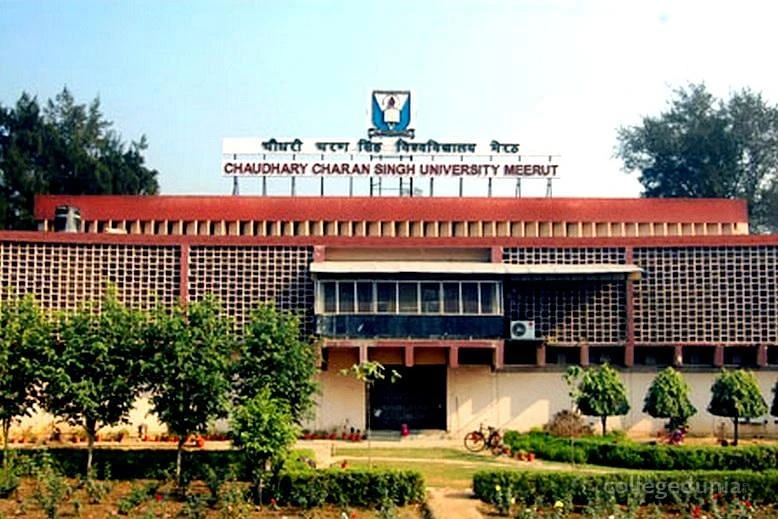
In this preview: 1 photo · 0 videos
Gochar Mahavidyalaya is primarily affiliated with Chaudhary Charan Singh University (CCSU) in Meerut. For accreditation, it holds a 'B' grade from the National Assessment and Accreditation Council (NAAC). It is also recognized by the National Council for Teacher Education (NCTE) for its education programs like B.Ed and D.El.Ed, and is included under sections 2(f) and 12(b) of the UGC Act, confirming its university status and eligibility for central grants.
For the 2026 academic session, the annual tuition fee for the B.Sc (Agriculture) program at Gochar Mahavidyalaya is ₹72,000. The program duration is four years. It's important to note that this is the tuition fee; additional costs for hostel, mess, and other mandatory charges like library and development fees would apply, though specific amounts are not detailed in the latest available data.
Placement outcomes at Gochar Mahavidyalaya vary significantly by program. For B.Sc Agriculture, student reviews indicate that almost 50% of students get placed, with recruiters including top pesticide companies. However, placement is not guaranteed college-wide. Other reviews for general B.Sc programs suggest a much lower placement rate. The college's official aim is to provide full assistance for 100% placement, but students should view the placement cell as a support system and be proactive in their job search.
Admission to the B.Ed program at Gochar Mahavidyalaya is not purely merit-based. It requires candidates to appear for the state-level entrance exam, the UP B.Ed JEE. After qualifying in the entrance exam, candidates must participate in the centralized counseling process conducted for seat allocation. Alongside this, online registration on both the CCSU university portal and the college's own website is mandatory for final admission.
Yes, Gochar Mahavidyalaya provides separate hostel facilities for boys and girls. The hostels are described as well-furnished, ventilated, and include a dedicated hostel library for studying. A mess facility is also available for residents. While a specific hostel fee is not listed, a 'hostel maintenance amount' of up to ₹14,000 is mentioned as part of a scholarship scheme, indicating the likely cost range.
Share what future students should know about Gochar Mahavidyalaya.
Student voices are not rewritten by colleges. We remove spam and abuse.
Wider admission question? Community PulseWhat should future students know?
Tell us which course you're considering. We'll help you work out the next step.
Get instant Partner access after mobile verification. Your public edits are reviewed before they go live.
Claim this college
 Auditorium
 Cafeteria
 Computer Labs
 Medical
 Sports Complex
 Study Library