Loading Admission Guardian content
Loading Admission Guardian content
Provisional score based on available data. It may change as more information is verified.
Find a program, read its fee details and explore the admission requirements.
Summary of the programs shown below. First-year fee. Check the note beside each amount for inclusions and exclusions.
| Course | Stream | Fees |
|---|---|---|
| Bachelor of Arts [BA] | Arts | 3061 |
| Master of Arts [MA] | Arts | 3061 |
| Bachelor of Science [B.Sc] | Science | 4006 |
| Bachelor of Education [B.Ed] | Education | 5717 |
| Ph.D | Arts |
Specializations
Eligibility: 10+2
Specializations
Eligibility: Graduation
Specializations
Eligibility: 10+2
Specializations
All accepted exams
Eligibility: Graduation with 55% + UP Bed JEE
Specializations
Eligibility: Post Graduation
Gokul Das Hindu Girls College in Moradabad is a study in contrasts. It's a private-aided institution with a 70-year history, sprawling across 13.7 acres in the city center, yet it operates with a quiet, focused intensity that feels removed from the bustle outside its gates. With annual tuition fees for a BA starting at just over three thousand rupees, it represents one of the most accessible higher education options in western Uttar Pradesh for young women. The college doesn't chase national rankings or flashy corporate partnerships. Instead, its identity is built on a straightforward proposition: providing a solid, affordable liberal arts and sciences education in a secure, all-female environment. Student reviews consistently point to knowledgeable, supportive faculty as the core strength, while also acknowledging the limitations of a campus some describe as small. If you're looking for a no-frills, value-driven college where the classroom experience is the main event, this is a contender. If your checklist includes sprawling tech parks and guaranteed six-figure packages, you'll need to look elsewhere.
The academic portfolio here is traditional and comprehensive for a degree college. With an annual intake of about 1,460 students across 23 courses, the focus is squarely on the core streams of Arts, Science, and Education. You won't find engineering or management here. What you will find is depth in the humanities and sciences.
The BA program is the largest, offering a dozen specializations from Sociology and Economics to Hindi, English, Sanskrit, and even Drawing and Painting. The B.Sc. is more focused, with three core science tracks. At the postgraduate level, the MA program expands into six specializations, including Psychology and Sociology alongside the language and economics courses. The Bachelor of Education (B.Ed.) program is a significant offering, requiring the UP B.Ed JEE entrance exam for admission—a point of differentiation from the merit-based admissions for most other courses.
Faculty strength sits at 35 permanent and 15 part-time members. That's a decent student-faculty ratio for a college of this size and type, which aligns with student feedback praising teacher accessibility and subject knowledge. The college also promotes research, offering Ph.D. programs in nine areas under the Arts and Education faculties. The academic culture, from available descriptions, seems oriented towards foundational learning and teacher-led instruction rather than disruptive innovation.
This is where the data gets fuzzy and a reality check is essential. The brief cites an unverified highest package of 12 LPA and an average of 4.5 LPA. A student review from 2020 states "almost 70% of students got placed" and calls the quality "overall average," while noting that placements for postgraduates are "very good."
Let's parse that. A 70% placement rate for a liberal arts college in this region is actually a respectable claim. The average package figure of 4.5 LPA, if accurate, is a realistic outcome for graduates entering fields like teaching, government services, content roles, or entry-level corporate jobs. That 12 LPA figure is almost certainly an outlier, perhaps for a top B.Ed. graduate securing a position in a premium private school or for an MA graduate landing a niche role.
The critical point is the lack of named top recruiters in the data. This suggests placements are likely decentralized, driven by local and regional employers, school chains, and perhaps campus drives from the affiliated university. The college isn't a destination for mass-recruiting IT giants. Students should expect a self-driven job search supplemented by college assistance, not a conveyor belt of high-profile interviews. The positive takeaway from reviews is that teachers "help the students to [become] job ready," indicating support in building foundational skills.
The affordability of Gokul Das Hindu Girls College is its most compelling feature. For the 2025 academic year, the tuition fees are strikingly low:
On top of tuition, students should budget for other mandatory fees: a ₹500 application fee, approx. ₹1,000 in exam fees, and around ₹3,500 for library, technology, and miscellaneous charges.
Hostel costs are the major variable. The college provides a clear breakdown for 2025: annual mess fees are fixed at ₹15,000, while hostel fees range from ₹10,000 for a triple-sharing room to ₹25,000 for a single. That puts the total annual stay cost between ₹25,000 and ₹40,000. It's worth noting a conflicting, unverified source mentions hostel fees could go as high as ₹2.5 lakhs—this seems anomalous compared to the detailed official structure and the college's overall low-cost positioning. The hostel is described as well-furnished with free Wi-Fi, daily cleaning, and a gym.
Specific scholarship information isn't in the brief, but at this fee level, many state and central government need-based scholarships likely apply. The total cost for a 3-year BA with hostel stay could be under ₹1.5 lakhs—an almost unparalleled value in today's higher education market.
Admissions operate on two tracks. For the vast majority of programs—BA, B.Sc., MA—selection is merit-based. Your marks in the qualifying examination (like the 12th board for UG, graduation for PG) are the sole criterion. There's no mention of stringent published cutoffs; admission likely continues until seats are filled for each specialization.
The B.Ed. program is the exception. Admission here requires appearing for the state-level UP B.Ed Joint Entrance Exam (JEE). You need a graduation degree with at least 55% marks to be eligible. The process follows the state counseling schedule.
For the 2025 cycle, application windows were clearly defined: BA/B.Sc. applications were accepted from May 9 to July 24, while B.Ed. applications ran from February 9 to April 29. The UP B.Ed JEE for the 2026 admission cycle is scheduled for April 26, 2026. The application fee for all courses is a nominal ₹500.
The campus spans 13.72 acres, which students in reviews have called "small." In context, it's a compact, walkable campus rather than a vast university ground. Infrastructure is described as functional and well-maintained. Classrooms are spacious and ventilated, with senior classes having LCD projectors. There's a conference hall, an auditorium, and a multi-purpose hall for events.
For a science college, lab facilities are adequate—departmental labs for Zoology (separate for UG and PG), a general science lab, and dedicated ICT and Language labs. The library is a strong point, housing around 43,000 books and 30 periodicals, with a browsing centre.
Hostel life appears to be a positive experience based on descriptions. Rooms come furnished with beds, study tables, and chairs. Common rooms with TV and magazines, a dedicated dining hall, and daily cleaning services are provided. The presence of a gym, yoga hall, and free Wi-Fi for residents adds significant value. Sports facilities include a playground, volleyball court, and indoor games like chess and table tennis.
The college has an active event calendar, celebrating Founders Day, annual days, sports day, Hindi Divas, and awareness campaigns. NSS units are active, with cadets participating in state and national camps. There's a canteen serving hygienic food, an ATM, and a 24-hour medical dispensary on campus. The overall vibe is one of a self-contained, supportive community.
Synthesizing the available sentiment, a clear, consistent picture emerges. No one is calling this a glamorous powerhouse, but most acknowledge it delivers solid value for money.
The praise is heavily concentrated on the teaching faculty. Reviews repeatedly mention "good quality of education," "knowledgeable teachers," and instructors who are "helpful in almost every domain" and actively work to make students "job ready." This is the college's bedrock reputation.
Campus life gets a "good" rating, with specific shout-outs to hygienic canteen food and well-run hostel facilities. The annual events and NSS activities provide a structured social and co-curricular framework.
The criticisms are pragmatic. The "small campus with limited facilities" comment pops up, reflecting a desire for more expansive infrastructure. And then there's placements—the consensus is "average." The 70% placement figure is viewed positively, but the scope and prestige of opportunities are understood to be modest. It's seen as a launchpad, not a guarantee.
There's no mention of management issues or serious administrative grievances, which for a college of this age and type, is a quiet positive in itself.
Gokul Das Hindu Girls College is an easy recommendation for a specific, large demographic. If you are a young woman from Moradabad or surrounding districts in western UP, looking for an affordable, reputable, and secure college to pursue a BA, B.Sc., B.Ed., or MA, this institution should be at the top of your list. The cost-to-value ratio is exceptional. You get committed teachers, a clean and functional campus, and a degree from a long-established, UGC and NAAC-accredited college affiliated with a state university—all for a total cost that is a fraction of private alternatives.
It is not the right fit if your primary goal is a hyper-competitive, corporate-focused campus recruitment drive. You won't find multinationals lining up here. Success will require leveraging the solid academic foundation and then proactively seeking opportunities. Similarly, if you crave the sprawling campus and ultra-modern amenities of a central university or a large private deemed university, you'll find the facilities here basic.
In short, it's a college that understands its role. It provides accessible, quality education without pretension. For thousands of students over seven decades, that has been more than enough. For the right student, it still is.
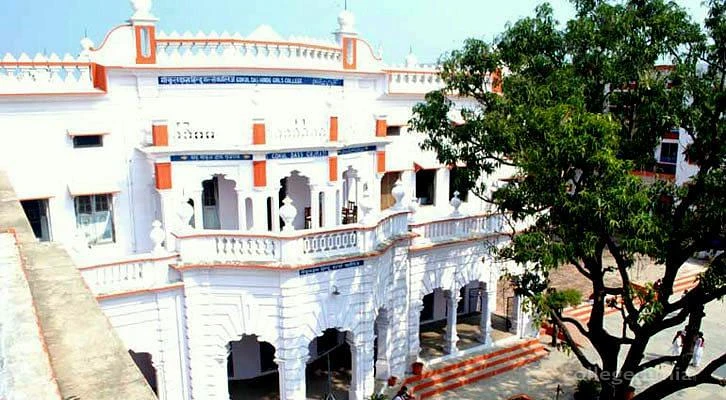
In this preview: 1 photo · 0 videos
The college offers a traditional yet comprehensive range of programs focused on Arts, Science, and Education. At the undergraduate level, you can pursue a Bachelor of Arts (BA) with numerous specializations or a Bachelor of Science (B.Sc.). A key professional program is the Bachelor of Education (B.Ed.). For postgraduates, Master of Arts (MA) degrees are available in several specializations, and the college also facilitates Ph.D. research in Arts and Education streams.
For the 2025 academic session, the tuition fees are remarkably affordable. A BA degree costs approximately ₹3,061 per year. The B.Sc. program is ₹4,006 annually. The professional B.Ed. course is priced at ₹15,000 per year. For the MA program, the fee is about ₹3,061 in the first year and ₹3,001 in the second year.
Yes, the college offers separate hostel accommodation for girls. For the 2025 intake, the annual mess fee is fixed at ₹15,000. The hostel rent varies by room type: ₹10,000 for triple-sharing, ₹15,000 for double-sharing, and ₹25,000 for a single room. Therefore, the total annual cost for hostel stay and food ranges from ₹25,000 to ₹40,000. The hostel is described as furnished with amenities like free Wi-Fi and a gym.
Admission to the B.Ed. program requires a graduation degree with at least 55% marks and a valid score in the UP B.Ed Joint Entrance Exam (JEE). It is not merit-based like other courses. For the 2025-26 cycle, the college's application window was from February 9 to April 29, 2025. The entrance exam itself (UP B.Ed JEE 2026) is scheduled for April 26, 2026, with its own registration process.
Student feedback consistently highlights strong teaching quality, describing faculty as knowledgeable, helpful, and effective in preparing students for the job market. On placements, the sentiment is pragmatic. Reviews describe them as "overall average," with an estimated 70% of students getting placed, often in good companies. Postgraduate placements are frequently noted as being particularly strong.
Share what future students should know about Gokul Das Hindu Girls College.
Student voices are not rewritten by colleges. We remove spam and abuse.
Wider admission question? Community PulseWhat should future students know?
Tell us which course you're considering. We'll help you work out the next step.
Get instant Partner access after mobile verification. Your public edits are reviewed before they go live.
Claim this college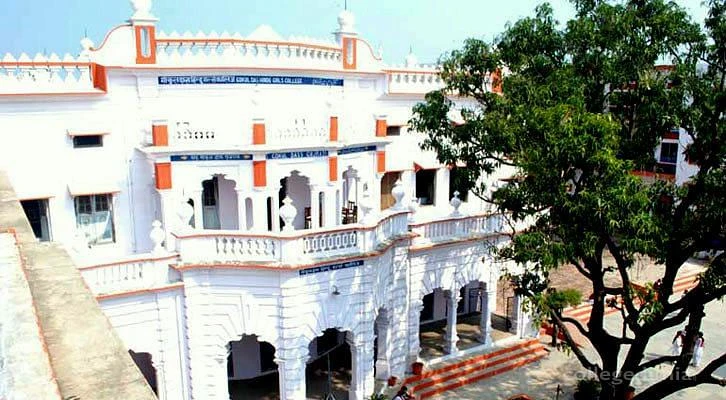
 Auditorium
 Bank & ATM
 Cafeteria
 Campus Security
 Computer Labs
 Medical
 Science Labs
 Study Library