Loading Admission Guardian content
Loading Admission Guardian content

Provisional score based on available data. It may change as more information is verified.
Selected ranking categories, with the recorded year beside each result. Open all records for the complete history.
5 published records · Lower numeric ranks are stronger
NIRF
Overall · college
#692019
Find a program, read its fee details and explore the admission requirements.
Summary of the programs shown below. Fee amounts are not listed. Contact the college for its current fee schedule.
| Course | Stream | Fees |
|---|---|---|
| Bachelor of Arts [BA] (Economics) | Arts | |
| Bachelor of Commerce [B.Com] | Commerce | |
| Master of Commerce [M.Com] | Commerce | |
| Bachelor of Science [B.Sc] | Science | |
| Master of Science [M.Sc] | Science |
Specializations
Eligibility: 10+2
Specializations
Eligibility: 10+2
Specializations
Eligibility: Graduation
Specializations
Eligibility: 10+2
Specializations
Eligibility: Graduation
Government Arts College in Thiruvananthapuram is a bit of a paradox. It's a century-old institution with alumni who've led the nation, yet it sits quietly on a modest 3-acre campus in Thycaud. Its NIRF ranking has bobbed between #151 and #300 in recent years, which is decent for a government arts and science college. But the real story here isn't about chasing corporate placements—it's about providing an affordable, foundational education in the humanities and sciences. For under ₹20,000 a year, you get access to a library with 36,000 books, labs that are surprisingly well-equipped, and a campus that students consistently call 'green' and peaceful. The placement numbers are modest, with a UG median of ₹1.8 LPA, but that's not really the point for most who enroll. This is a college for students who value learning over branding, and who see a degree from a University of Kerala-affiliated institution as a solid first step.
The academic portfolio is classic and focused, mirroring its identity as a traditional arts and science college. You won't find engineering or management here. What you get are the core disciplines, taught under the syllabus of the University of Kerala.
At the undergraduate level, the three-year BA program covers staples like Economics, English, Political Science, History, Sanskrit, and Malayalam. The B.Sc offers Physics, Chemistry, Statistics, and a combined Botany & Biotechnology program. There's also a B.Com in Finance. The total intake across all UG courses hovers around 350-400 students per year. It's not a huge number, which can mean smaller class sizes and more direct access to faculty—a definite plus.
Postgraduate studies are available in a more select range. You can pursue an MA in Economics or English, an M.Sc in Analytical Chemistry, Statistics, or Biotechnology, and an M.Com in Finance. The college also functions as a research centre for Commerce under the university, offering Ph.D. programs in select disciplines.
The faculty strength is around 70 members. While data on PhD holders isn't specified, student reviews consistently rate 'Faculty & Course Curriculum' a perfect 5/5. That's a strong signal. The academic calendar follows the University of Kerala's schedule, kicking off in July or August. Don't expect a glut of industry MoUs or flashy collaborations; the focus is squarely on the university curriculum and foundational knowledge.
Let's be direct: this is not a placement powerhouse, and it doesn't pretend to be. The data reflects a reality typical of many government arts and science colleges.
For the 2023-24 academic year, the median package for undergraduate students was ₹1,80,000. For postgraduates, it was higher at ₹3,55,998. The college's own ranking data for B.Sc programs cites an average package of 4 LPA and a highest of 6 LPA. One older review from 2014 nostalgically mentioned "good placements," while a more recent student rating gave placements a 3 out of 5. That gap might tell its own story.
The college states that recruitment options are "varied" across corporates, the public sector, and entrepreneurship. Specific top recruiter names aren't listed in the available data, which is often the case when campus hiring is more ad-hoc than structured. The overall average median package is reported as ₹1,53,600, with BA students specifically seeing in-campus offers around ₹0.6 LPA.
So, what's the takeaway? If your primary goal is a high-paying campus placement straight out of graduation, you'll likely be disappointed. The placement cell exists, but its reach is limited. For most students here, the degree is a platform for competitive exams (like civil services), further studies (like an M.Phil or Ph.D.), or seeking employment through off-campus channels. The value is in the low-cost education and the alumni network, not in corporate recruitment drives.
This is where the college shines for budget-conscious students and families. The fees are a fraction of what private institutions charge.
For the 2025-2026 cycle, the total fee for an entire 3-year BA or B.Com program is ₹54,000. That breaks down to roughly ₹18,000 per year. A B.Sc degree totals ₹67,500 for three years (about ₹22,500 annually). At the postgraduate level, a 2-year MA or M.Com costs ₹75,000 total, and an M.Sc is ₹90,000 for the duration.
These fees typically include tuition, but remember there will be nominal semester exam fees, which are often covered by government scholarships for eligible students. Hostel fees are concessional for scholarship beneficiaries, though exact figures aren't specified. Mess costs are separate but described as affordable.
The financial aid system is robust, as you'd expect from a government institution. It's a layered support network:
The process is straightforward and follows the University of Kerala's protocols. There's no management or NRI quota—it's all based on merit and reservation norms.
For UG courses (BA, B.Sc, B.Com), you need a pass in the Higher Secondary (10+2) or equivalent with a minimum aggregate of 45-50% (varies by course/category). Selection is merit-based, purely on your qualifying marks. Applications are expected to open in early June 2025 via the university portal, for a session starting July-August.
PG admissions are more competitive. You need a relevant bachelor's degree with at least 50% marks (45% for reserved categories). Selection is a 60:40 blend: 60% weightage to the University of Kerala entrance exam score, and 40% to your UG marks. Application windows generally open in June-July.
For Ph.D. programs, you need a master's with 55% (50% for SC/ST/OBC). Selection involves a written entrance test (70% weightage) followed by an interview (30%). Admissions are biannual, in January and July.
Application fees range from ₹300 to ₹750, with concessions for SC/ST/OBC candidates. Specific cutoff ranks or percentiles aren't detailed in the public data, as cutoffs fluctuate yearly based on applicant pools and seats.
Don't imagine a sprawling, resort-like campus. At 3 acres, it's compact. But students repeatedly praise its maintenance and "green" atmosphere. The infrastructure, while not flashy, is described as more than adequate.
Academics: Classrooms are spacious, some with air conditioning and smart class tech. There are six well-equipped labs for the science and computer courses. The library is a standout—it's tidy, houses over 36,000 books, 6,000 journals, and offers digital resources. Campus-wide Wi-Fi is noted as strong and reliable.
Hostels: Separate facilities for boys and girls get excellent reviews. Students use words like "home-like environment," "clean rooms," and "beautiful garden." The mess food is considered "good enough," and basic medical treatment is accessible. It sounds comfortable and safe.
Life Beyond Class: This isn't a dead campus. There's a large sports ground for cricket and football, courts for volleyball, and a basic indoor gym. Three sports complexes host activities. The college actively organizes annual arts and sports meets, and students participate in university youth festivals. Clubs are active—NSS, NCC, and departmental clubs for science, arts, and the environment keep things engaging. There's a clean, affordable canteen, seminar halls, an auditorium, and even prayer rooms. Cultural vibrancy comes from departmental activities, academic fests, and seminars.
Synthesizing the feedback, a clear picture emerges. Students are overwhelmingly positive about the core academic experience and the campus environment.
The positives are consistent: "Good green infrastructure," "strong Wi-Fi," "tidy library full of books," "well-designed classrooms and labs." The hostels are a major win, described as excellent with a home-like feel. One review called it the "overall best college for M.A. in Economics." Academics and faculty are routinely rated 5/5. It seems to deliver exactly what it promises: a solid, no-frills education in a pleasant setting.
The negatives or concerns primarily orbit around career outcomes. One review rated placements 3/5. The mention of good placements in a 2014 review might hint at inconsistency or changing fortunes over time. The median package data (₹1.8 LPA UG) confirms that career launch support is modest. You won't find complaints about ragging or poor management in the available reviews, which is a good sign. The main trade-off is clear: you get great value and a good learning environment, but you're largely on your own when it comes to landing a job.
It depends entirely on what you're looking for. If you need a brand-name college with guaranteed, high-paying campus placements, look elsewhere. That's not this institution's game.
But if you're a student seeking a reputable, affordable, and peaceful environment to pursue a degree in the arts or sciences, this college makes a lot of sense. For roughly ₹20,000 a year, you get competent teaching, a well-stocked library, decent labs, and a clean, green campus with good hostels. It's a fantastic launchpad for students aiming at competitive government exams or further academic research. The alumni network, featuring figures like former President K.R. Narayanan and ISRO Chairman G. Madhavan Nair, is impressive for a college of this scale.
Consider it a strong, value-for-money option within the Kerala state university system. Manage your expectations on placements, focus on your academics, and leverage the low cost to prepare for your next step. For that purpose, it's hard to beat.

In this preview: 1 photo · 0 videos
Admission to BA, B.Sc, and B.Com programs is merit-based. You need to have passed your Higher Secondary (10+2) or equivalent exam with a minimum aggregate of 45-50%, depending on the specific course and your category. There's no separate entrance exam for UG courses. Applications are processed online through the University of Kerala's admission portal, with the window expected to open in early June 2025 for the session starting in July-August.
For the 2025-2026 academic year, the total fee for the entire 3-year BA or B.Com program is ₹54,000. For the 3-year B.Sc program, the total fee is ₹67,500. At the postgraduate level, the total fee for the 2-year MA or M.Com program is ₹75,000, and for the 2-year M.Sc program, it's ₹90,000. These are comprehensive figures for the full course duration.
The college offers a wide array of scholarships. These include merit-based waivers for high academic scores, need-based support like the E-Grant scholarship for families with annual income below ₹2 lakhs, and category-specific awards for SC/ST, OBC, single girl children, sports achievers, and wards of defense personnel. The Kerala University Grantz scholarship can also cover full course fees. The college actively supports students in securing educational loans from nationalized banks.
Key facilities include a well-maintained central library with over 36,000 books and digital resources, six well-equipped science and computer labs, and spacious classrooms (some with AC and smart boards). For sports, there are large grounds for cricket and football, volleyball courts, and an indoor gymnasium. The campus has reliable Wi-Fi, a clean and affordable canteen, and provides basic medical/first-aid services. Hostel facilities for boys and girls are also available and are highly rated by students.
Placement support is modest, which is typical for government arts and science colleges. For the 2023-24 academic year, the median package for undergraduate students was ₹1,80,000, and for postgraduate students, it was ₹3,55,998. The college reports varied recruitment in corporate, public sector, and entrepreneurship domains, but does not publish a consistent placement percentage. The highest package reported for B.Sc students is 6 LPA. Students should view the degree as a foundation for competitive exams or further studies rather than a direct ticket to high-paying corporate jobs.
Share what future students should know about Government Arts College.
Student voices are not rewritten by colleges. We remove spam and abuse.
Wider admission question? Community PulseWhat should future students know?
Tell us which course you're considering. We'll help you work out the next step.
Get instant Partner access after mobile verification. Your public edits are reviewed before they go live.
Claim this college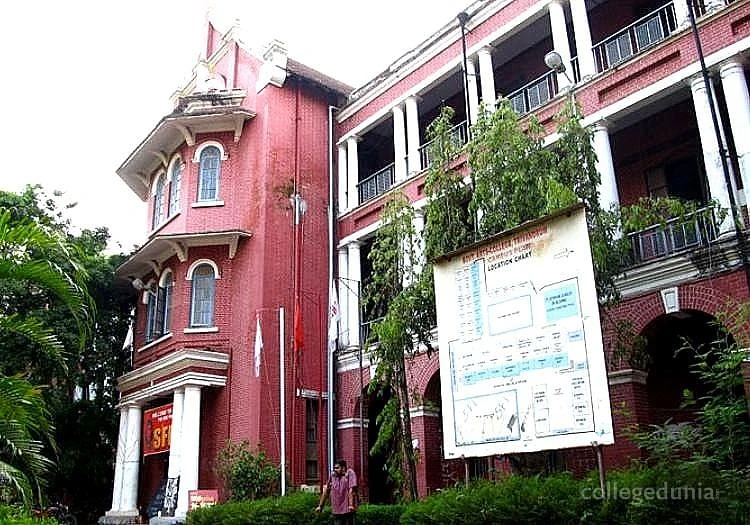
 Auditorium
 Cafeteria
 Computer Labs
 Medical
 Science Labs
 Sports Complex
 Study Library