Loading Admission Guardian content
Loading Admission Guardian content

Provisional score based on available data. It may change as more information is verified.
Find a program, read its fee details and explore the admission requirements.
Summary of the programs shown below. Total course fee. Check the note beside each amount for inclusions and exclusions.
| Course | Stream | Fees |
|---|---|---|
| Bachelor of Arts [BA] | Arts | 3571 |
| Master of Arts [MA] | Arts | 3571 |
| Bachelor of Business Administration [BBA] | Management | 3571 |
| Bachelor of Science [B.Sc] | Science | 3571 |
| Master of Science [M.Sc] | Science | 3571 |
Specializations
Eligibility: 10+2
Specializations
Eligibility: Graduation
Specializations
Eligibility: 10+2
Specializations
Eligibility: 10+2
Specializations
Eligibility: Graduation
1 exam with cutoff data available
 Bajaj Allianz
 ICICI Bank
 NIIT
NIITGovernment Autonomous Post Graduate College in Chhindwara is a classic example of what a solid, no-frills state institution can offer. Established back in 1961, it's built its reputation on affordability and a sprawling 45-acre campus, serving as a primary higher education hub for the region. With a NAAC B+ grade and autonomous status, it operates with a degree of academic freedom while being affiliated with the local Raja Shankar Shah University. For students in and around Chhindwara looking for a credible, low-cost degree, this is often the first and most logical stop. It's not a national brand, and you won't find glossy placement brochures here. But for what it is—a government college focused on foundational education in arts, sciences, and commerce—it fills a crucial role.
The college's strength is in its breadth. It offers more than 25 courses across eight degree programs, which is substantial for a government college in this part of MP. The curriculum is traditional but comprehensive.
At the undergraduate level, the B.Sc program is the most diversified with ten different courses. You've got the standard trio of Physics, Chemistry, and Mathematics, alongside Computer Science and Zoology. The BCA and BBA (Hons.) programs are relatively newer additions, aiming to provide vocational skews. The BA and B.Com programs are the backbone for humanities and commerce students. And yes, they offer a 3-year LL.B as well, which is somewhat unique for a non-specialized law college.
For postgraduates, the M.Sc and MA programs continue in similar specializations—Chemistry, Physics, Maths, Computer Science, Zoology for sciences; Hindi, English, History, Geology, and Law for arts. The college also offers a Ph.D. program and a one-year Post Graduate Diploma in Computer Applications (PGDCA).
With 53 faculty members, the student-teacher ratio is likely decent, but data on PhD holders among faculty isn't public. The "Pradhan Mantri College of Excellence" tag is used, which typically indicates some level of government funding for infrastructure development. Academically, it's a merit-based, lecture-driven environment. Don't expect a flood of industry MoUs or exotic electives. It's about covering the syllabus thoroughly.
This is where you need to set realistic expectations. The college has a Placement Cell. It provides career guidance and organizes recruitment drives. But detailed, audited placement statistics—highest package, average package, median package, placement percentage—are not publicly disclosed. That's common for many government arts and science colleges where the primary focus is degree completion, not corporate onboarding.
The recruiters named are ICICI Bank, Bajaj Allianz, and NIIT. These are credible companies, but their visits are likely for specific roles (sales, support, training) and are probably not mass recruiters. The placement scenario is almost certainly not the primary reason students choose this college.
If you're a BCA or BBA student, you might have a shot at these campus drives. For a B.Sc in Physics or an MA in History, the path will more likely involve competitive exams for government jobs, teaching, or pursuing further studies. The college library's noted collection of competitive exam books supports this trajectory. The placement story here isn't about high-flying packages; it's about the college providing a platform and basic support, with the onus on the student to build their career path.
The most compelling argument for this college is its cost. An annual tuition fee of approximately ₹3,571 for most UG and PG programs is almost negligible in today's higher education market. This covers core programs like B.Sc, BA, B.Com, BCA, and M.Com.
Now, that's just tuition. You'll need to add exam fees, library fees, and other development charges, which are typically nominal in government colleges but can add a few thousand rupees per year. The total annual academic cost for a day scholar will likely remain under ₹10,000, which is exceptional.
Hostel fees are a separate unknown. The college has a girls' hostel with 40 rooms housing 50 residents. Fees for this, including mess charges, are not published. Given the ultra-low tuition, hostel fees should also be highly subsidized, but you'd need to contact the college administration for exact figures.
Information on specific scholarships isn't detailed in the brief, but as a government institution, it will facilitate all state and central government scholarship schemes for SC, ST, OBC, and EWS students. The application process for these would be handled through the college office.
The process is straightforward and merit-based. There's no mention of entrance exams like CUET, JEE, or state-level tests for general UG and PG courses. Admission is primarily based on your marks in the qualifying examination (12th board for UG, graduation for PG).
You apply either online through the college's official portal or by picking up a form offline from the campus. The application fee is rumored to be between ₹1,000 to ₹2,500, but that's unverified—check the official source for the exact amount.
Once applications are in, the college declares merit lists based on 12th-grade percentages. Shortlisted candidates are then called for a counselling session where they confirm their seat and choose their specialization (where applicable). The admission window typically opens right after the higher secondary (12th) results are announced by the MP board.
Seats are reserved as per government of Madhya Pradesh regulations for SC, ST, OBC, and physically handicapped candidates. There's no mention of an NRI or management quota, which aligns with its government, non-minority status.
The campus is vast—over 44 acres—which is a luxury. Infrastructure is a clear positive. Academically, there are 35 classrooms, some with smart class capabilities, and two auditoriums. The library is a major asset: over 81,000 books in the main library, plus departmental PG libraries, and digital access through INFLIBNET, e-journals, and an e-Granthalaya. For research and study, it's well-equipped.
The 11 laboratories across science and computer departments are described as well-equipped with up-to-date hardware and software. There are 80 computers on campus, with high-speed internet in the labs and a campus-wide Wi-Fi facility (10 Mbps connection). It's not blazing fast, but it's functional.
For sports, the facilities are impressive on paper: four large playgrounds, courts for cricket, football, basketball, volleyball, badminton, and two modern gymnasiums. If you're athletically inclined, the space and facilities are there.
Basic amenities include a canteen with a 40-seat capacity, a well-equipped medical centre, and space for banking facilities on campus. The girls' hostel exists, but details on room quality, food, or hostel life are scarce. An Anti-Ragging Cell is in place, which is standard.
Social life will be typical of a non-residential government college in a smaller city. Most students will be commuters. The culture revolves around academics, exams, sports events, and college festivals. It's not a "campus life" college in the residential university sense.
Here's the thing: there's a notable lack of extensive, vocal student reviews on the usual platforms like CollegeDunia, Shiksha, or Reddit. That in itself is data. It often means the student body isn't highly engaged in online rating culture, which is common for local commuter colleges where the college is a part of daily life, not an all-encompassing identity.
The positives that can be gleaned consistently point to infrastructure and cost. Students and official documents highlight the well-equipped labs, the extensive library, the sports facilities, and the Wi-Fi. The "focus on quality education and holistic development" is an official line, but the facilities do support it. For local students, the biggest pro is proximity to home combined with a credible, affordable degree.
The absence of loud negatives is somewhat positive. There are no widespread scandals or management issues reported. The lack of placement data isn't a complaint because it's not a core expectation. The teaching quality is an unknown variable—it likely varies by department, as it does in most large colleges.
The overall sentiment, from what little is available, suggests it's viewed as a dependable local institution. It does its job without fanfare. You get what you pay for, and in this case, the low fee makes it a value proposition.
It depends entirely on what you're looking for. If you are a student from Chhindwara or nearby districts seeking an affordable, recognized bachelor's or master's degree in arts, science, or commerce, this college is a very sensible choice. The cost is minimal, the infrastructure is better than you'd expect for the price, and the autonomous status means a slightly more responsive academic structure. It's a solid launchpad for government job exams, teaching careers, or further studies like an M.Sc or NET.
However, if your primary goal is high-paying corporate placements directly after your degree, you'll likely be disappointed. The placement cell exists, but it's not a driving force. Similarly, if you're seeking a vibrant, residential campus life with a buzzing social scene and students from across the country, this isn't that kind of college. It serves its regional community first and foremost.
In short, Government Autonomous Post Graduate College is worth it for the budget-conscious, academically focused student who sees a degree as a foundational step. It's not a destination for brand value or premium placements, but as a reliable, low-cost provider of higher education in central Madhya Pradesh, it fulfills its role effectively.
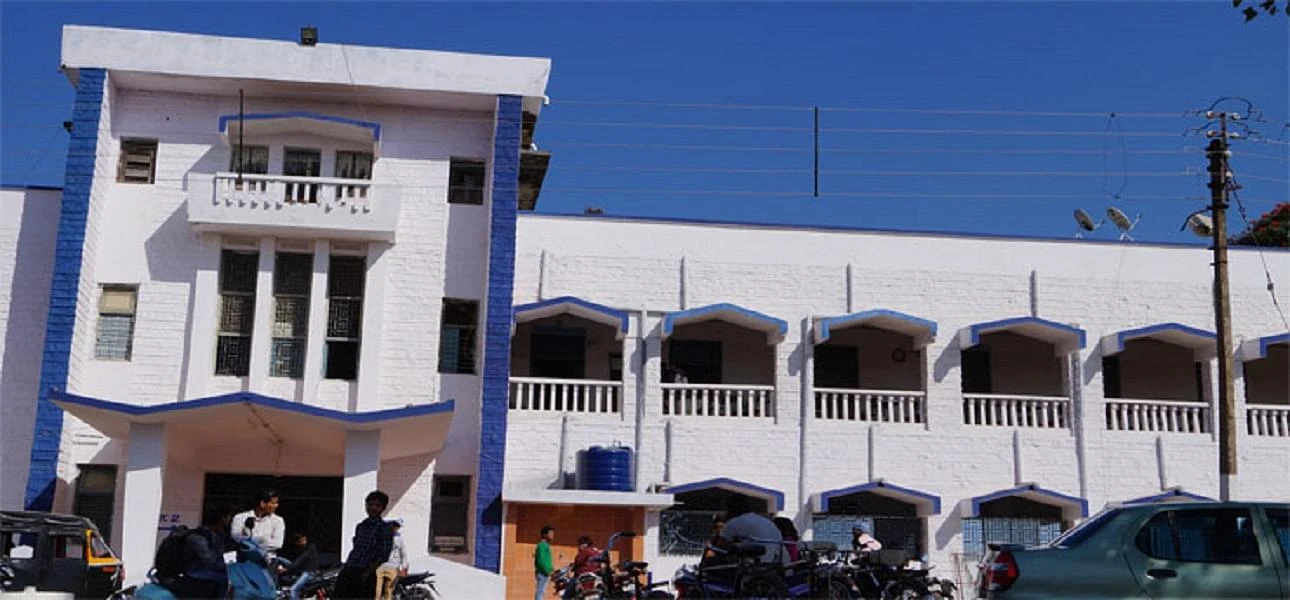
In this preview: 1 photo · 0 videos
The college holds a B+ grade from the National Assessment and Accreditation Council (NAAC), valid until May 2027. It is an autonomous institution affiliated with Raja Shankar Shah University, Chhindwara, and is recognized by the University Grants Commission (UGC).
The college offers a wide range of undergraduate (BA, B.Sc, B.Com, BCA, BBA, LL.B), postgraduate (MA, M.Sc, M.Com), and doctoral programs. For many core UG and PG courses like B.Sc, BA, B.Com, and M.Com, the annual tuition fee is approximately ₹3,571 (as of 2026).
The 45-acre campus features 35 classrooms, 11 well-equipped labs, a library with over 81,000 books and digital resources, 4 playgrounds, 2 gyms, 2 auditoriums, a girls' hostel, a canteen, a medical centre, and campus-wide Wi-Fi.
Admissions are merit-based, considering marks from the previous qualifying exam (12th for UG, graduation for PG). Candidates apply online via the college website or offline, and shortlisted candidates attend a counselling session for seat allocation.
While the college has an active placement cell, specific statistics like average package or placement percentage are not publicly disclosed. Companies like ICICI Bank, Bajaj Allianz, and NIIT have recruited from the campus for roles in sales, support, and training.
Share what future students should know about Government Autonomous Post Graduate College.
Student voices are not rewritten by colleges. We remove spam and abuse.
Wider admission question? Community PulseWhat should future students know?
Tell us which course you're considering. We'll help you work out the next step.
Get instant Partner access after mobile verification. Your public edits are reviewed before they go live.
Claim this college
 Auditorium
 Cafeteria
 Gym
Gym Hostel
 Medical
 Sports Complex
 Study Library