Loading Admission Guardian content
Loading Admission Guardian content

Provisional score based on available data. It may change as more information is verified.
Find a program, read its fee details and explore the admission requirements.
Summary of the programs shown below. Fee amounts are not listed. Contact the college for its current fee schedule.
| Course | Stream | Fees |
|---|---|---|
| Bachelor of Arts [BA] | Arts | |
| Master of Arts [MA] | Arts | |
| Bachelor of Commerce [B.Com] | Commerce | |
| Bachelor of Science [B.Sc] | Science | |
| Master of Science [M.Sc] | Science |
Specializations
Eligibility: 10+2
Specializations
Eligibility: Graduation
Specializations
Eligibility: 10+2
Specializations
Eligibility: 10+2
Specializations
Eligibility: Graduation
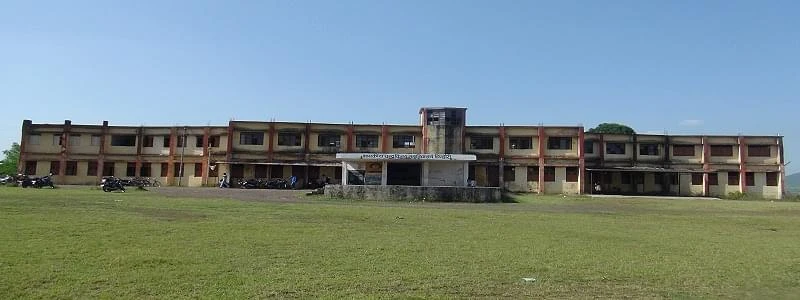
Government Chandra Vijay College in Dindori is a classic example of a regional government institution doing what it's supposed to do: provide affordable, accessible higher education in a rural district. Established in 1969, it serves as a crucial academic hub for students in and around Dindori, Madhya Pradesh. With a sprawling 14.82-acre campus and fees that rarely cross ₹12,000 a year, it’s a practical choice for students seeking a solid foundation in arts, science, and commerce without the financial strain of a private college. The NAAC-B grade from the National Assessment and Accreditation Council signals a baseline of institutional quality, though it’s a step below the 'A' grades that top-tier colleges aim for. That’s the reality here—it’s a functional, no-frills college focused on its core mission. You won’t find glossy brochures or international tie-ups, but you will find a dedicated faculty of 34 and a campus that, according to student feedback, provides a "Very Good for Rural Areas Study" environment. Its affiliation with Rani Durgavati Vishwavidyalaya in Jabalpur means the curriculum and degree standards are set by the state university, which is typical for government colleges across MP.
The academic portfolio is straightforward and mirrors the demand in a region like Dindori. At the undergraduate level, the college offers the three classic streams: Bachelor of Arts (B.A.), Bachelor of Science (B.Sc.), and Bachelor of Commerce (B.Com.). The intake numbers tell a story—B.A. has a massive 500 seats, reflecting its popularity, while B.Sc. splits 250 seats for the Botany-Chemistry-Zoology combination and 100 for the Physics-Chemistry-Mathematics combo. B.Com. takes in 100 students, with a noted preference for those from a commerce background in 10+2.
For postgraduates, the college runs Master of Arts (M.A.) and Master of Science (M.Sc.) programs. The M.A. specializations are broad, covering Hindi, History, Political Science, Sociology, Economics, and Geography, among others. M.Sc. programs are offered in core sciences like Physics, Mathematics, and Chemistry. The faculty list includes experienced professors like Dr. S.K. Barman (Economics), Dr. Tulsi Karcham (Sociology), and Dr. Parvati Kushram (Zoology). There’s no mention of a complex CGPA system or major industry MoUs, which is expected. The academic culture is likely traditional, lecture-based, and geared towards successfully navigating the university syllabus. It’s a teaching-focused environment.
This is where you need to separate official claims from ground-level expectations. The college states an 85% placement rate with an average package of ₹4.8 LPA and a high of ₹12.5 LPA. Given the rural location and the general arts/science/commerce focus, these figures should be viewed with significant caution. They are marked as unverified in the brief for a reason.
Student reviews on platforms like CollegeDunia tell a different, more plausible story. The placement rating sits at a modest 3.0 out of 5. One fragmented student comment is revealing: "Not applicable for the session But some students has been receiving the job for His or her settlement Supposed As Operator And Management In the larged company in the world." This reads like a description of students finding jobs independently after graduation, not through a structured, high-volume campus recruitment drive.
The college does mention facilitating summer internships with "leading brand names" and offering comprehensive support for research projects. For a government college in this setting, that likely translates to guidance for applying to government schemes, research fellowships, or local internship opportunities rather than corporate placement cells hosting mass recruiters. If securing a high-paying corporate job directly from campus is your primary goal, this probably isn’t the right fit. The college serves as an affordable launchpad for further studies (like NET, SET, MPSC) or for entering the local job market through government exams and teaching positions.
Affordability is the undisputed headline here. For the 2025-26 academic year, the overall fee for all three major undergraduate programs—B.A., B.Sc., and B.Com.—is just ₹11,094. That’s for the entire year, not per semester. Postgraduate fees are even lower, with an M.A. in Sociology costing around ₹7,396. These numbers make it one of the most accessible higher education options in the state.
Hostel and mess fees aren’t specified in the data, but given the college's nature, they will be minimal. The college confirms the availability of scholarships based on academic merit, reserved category quotas, or financial need. Students are advised to check the official college website or contact the admissions office directly for the latest schemes and application guidelines. For students from economically constrained backgrounds in rural MP, this financial model is often the only viable path to a college degree.
The admission process is merit-based and refreshingly simple, typical of many state-affiliated colleges. For undergraduate courses, selection is primarily based on your marks in the 10+2 or equivalent board exam. There’s no mention of a college-specific entrance test. For B.Com., they note a "special preference" for students from the commerce stream, which is standard practice.
For postgraduate courses, it’s based on your Bachelor’s degree marks, though some PG courses may require a state-level CET (Common Entrance Test). The application window for the 2025-26 session runs from May 14 to June 24, 2025. There is an application fee, payable online or at the office, though the exact amount isn’t specified. The process follows the standard government college pattern: eligibility check, application, document verification, merit list publication, and finally, fee payment. There’s no management or NRI quota mentioned, which aligns with its transparent, government-run status.
The 14.82-acre campus provides the essential infrastructure. Academically, the science and geography departments are noted to have "quality and well-equipped" laboratories. There’s a computer lab, a library described as a "modern knowledge management center," and the college boasts of "excellent IT Infrastructure." A cafeteria and on-campus parking are available.
For accommodation, there is a girls' hostel with basic, non-AC amenities. Rooms come with a bed, table, chair, wardrobe, and security. The CollegeDunia rating for accommodation is 3.0/5, which suggests it’s functional but not luxurious. On the extracurricular front, the college organizes annual festivals, tech fests, and cultural events, which students cite as a positive for fostering creativity and participation. Sports facilities and a gym are also present. Social life gets a 3.5/5 rating, indicating a decent, community-oriented campus atmosphere without the hustle of a big city college.
Synthesizing the limited feedback available paints a consistent picture. The overwhelming positive is the college’s role as a valuable institution for its context. The phrase "Very Good for Rural Areas Study" encapsulates this—it’s appreciated for what it is. Students report a positive learning environment and are happy with the annual cultural and tech events. Faculty quality is rated 3.5/5, suggesting the teaching is generally considered satisfactory.
The criticisms, while not detailed, are implied in the ratings. Placement support is the weakest rated aspect (3.0/5), confirming the earlier assessment that formal campus recruitment is limited. Hostel facilities are also rated 3.0/5, pointing to adequate but basic living conditions. There are no major complaints about management or ragging, which points to a generally safe and orderly campus. The consensus? It’s a dependable local college that meets core academic needs for a very low cost. Don’t expect metropolitan amenities or global exposure, but do expect a genuine educational opportunity.
It depends entirely on your profile and expectations. For a student from Dindori or a surrounding rural district in Madhya Pradesh, looking for an affordable, recognized bachelor’s degree in arts, science, or commerce, Government Chandra Vijay College is an excellent and pragmatic choice. Its ultra-low fees, NAAC-B accreditation, and experienced faculty make it a responsible investment for building a foundation for further competitive exams or entry-level jobs. It fulfills its purpose as an accessible government institution.
However, if you are aiming for high-paying corporate placements directly after graduation, seeking a vibrant, metropolitan campus life with extensive industry connections, or looking for nationally top-ranked programs, you will likely be disappointed. The placement claims are optimistic, and the infrastructure, while sufficient, is basic. This college is best for locally-focused, cost-conscious students who view it as a stepping stone. For them, it’s absolutely worth it. For others with different ambitions, it might feel like a mismatch. It’s a classic case of judging a college by its mission—and here, the mission of accessible rural education is being met.
In this preview: 1 photo · 0 videos
The college offers three core undergraduate programs: Bachelor of Arts (B.A.), Bachelor of Science (B.Sc.), and Bachelor of Commerce (B.Com.). At the postgraduate level, it provides Master of Arts (M.A.) in specializations like Hindi, Sociology, and Political Science, and Master of Science (M.Sc.) in subjects such as Physics and Mathematics.
Admission to UG courses is merit-based, relying primarily on your marks in the 10+2 or equivalent qualifying examination. There's no separate entrance exam mentioned for most courses. For the B.Com. program, the college notes a special preference for students coming from a commerce stream in their 12th grade.
Yes, but specifically for female students. The college has a girls' hostel on campus offering basic, non-air-conditioned accommodation. Rooms are furnished with a bed, table, chair, and wardrobe, and the facility includes security provisions.
For the 2025-2026 academic session, the overall annual fee for the Bachelor of Arts (B.A.), Bachelor of Science (B.Sc.), and Bachelor of Commerce (B.Com.) programs is approximately ₹11,094 each. This is an exceptionally affordable rate for a full year of study.
Yes, scholarships are available. They are typically awarded based on criteria like academic merit, belonging to a reserved category (SC/ST/OBC), or demonstrating financial need. Students should check the official college website or contact the admissions office directly for the most current details on scholarship programs and how to apply.
Share what future students should know about Government Chandra Vijay College.
Student voices are not rewritten by colleges. We remove spam and abuse.
Wider admission question? Community PulseWhat should future students know?
Tell us which course you're considering. We'll help you work out the next step.
Get instant Partner access after mobile verification. Your public edits are reviewed before they go live.
Claim this college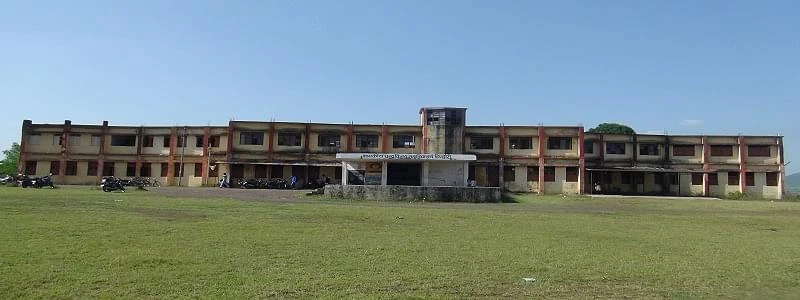
 Computer Labs
 Hostel
 Science Labs
 Sports Complex
 Study Library