Loading Admission Guardian content
Loading Admission Guardian content
Provisional score based on available data. It may change as more information is verified.
Selected ranking categories, with the recorded year beside each result. Open all records for the complete history.
6 published records · Lower numeric ranks are stronger
IIRF
Engineering · public
#1312022
IIRF
B.Tech · public
#1362022
Find a program, read its fee details and explore the admission requirements.
Summary of the programs shown below. First-year fee. Check the note beside each amount for inclusions and exclusions.
| Course | Stream | Fees |
|---|---|---|
| Bachelor of Technology [B.Tech] | Engineering | 16580 |
| Bachelor of Technology [B.Tech] {Lateral} | Engineering | 21030 |
| Master of Technology [M.Tech] (Textile Technology) | Engineering | 24340 |
Specializations
All accepted exams
Eligibility: 10+2 with 45% + WBJEE
Specializations
All accepted exams
Eligibility: 10+3 with 45% + WBJEE
Specializations
All accepted exams
Eligibility: Pass in Graduation + GATE
3 exams with cutoff data available - showing recent entries
 Accenture
 Alstom Group
 Aricent Group
 Cognizant
 CSC India
 IBM
IBM IGATE
IGATE Indian Army
 Infosys
 Jayshree Textiles(Aditya Birla Nuvo)
 L&T Infotech
 Oracle
 PWC
PWC Siemens
 TCS
TCS Wipro
WiproGovernment College of Engineering & Textile Technology (GCETT) in Behrampore is a study in contrasts. It’s a nearly century-old government institution where the total cost of a four-year B.Tech can be less than a single semester at many private colleges. But that affordability comes with a clear trade-off: a placement landscape that’s wildly uneven. If you’re in Textile Technology, you’re tapping into a legacy department with a near-100% placement rate and a powerful alumni network. For Computer Science, Electrical, or Mechanical Engineering? The story is different. You’ll get a legitimate, AICTE-approved degree for a pittance, but the on-campus recruitment drive is anemic. The college’s identity is split—part historic textile powerhouse, part emerging multi-disciplinary engineering institute still finding its footing. For the right student with the right expectations, it’s an incredible value proposition. For others, it might feel like a missed opportunity.
GCETT offers a focused set of programs. At the undergraduate level, you have four B.Tech choices: Computer Science and Engineering (44 seats), Electrical Engineering (30), Mechanical Engineering (30), and Textile Technology (60). They also run B.Tech Lateral Entry programs. For postgraduates, the focus remains on textiles with M.Tech programs in Textile Technology and Chemical Processing of Textiles.
The academic experience is defined by its affiliation with MAKAUT. That means the syllabus, exam patterns, and academic calendar are set by the university—a point some students feel leads to a curriculum that isn’t always cutting-edge. But within that framework, the college does what it can. The Textile Technology department has received MODROBS project funding from AICTE to modernize labs. The Mechanical Engineering department brings in guest lecturers from institutes like Jadavpur University and BESU.
With just 22 faculty members across all departments, class sizes are relatively small. Student reviews consistently rate the faculty as a major positive—describing them as helpful, polite, and decently qualified. You won’t find a sprawling list of electives or minors here. It’s a straightforward, no-frills academic path focused on the core curriculum. The college's official website lists the detailed program structures.
This is where you need to pay very close attention. The placement data isn’t just a single number; it’s two completely different narratives depending on your branch.
For Textile Technology, the college delivers. Student reviews and available stats suggest a placement rate hovering between 90-100%. The department has a strong, active alumni network in the textile industry, which directly fuels recruitment. Top core textile recruiters like Arvind Mills, Vardhman Group, Raymond, Trident, and Welspun regularly visit. The highest package cited for TT is around INR 18 LPA, though the typical range is more modest.
For CSE, Electrical, and Mechanical, the picture is less rosy. While the college’s overall placement percentage was 66% in 2024 (up from a dismal 28% in 2023), that number is heavily skewed by textile. Reviews from students in other branches tell a different story: placement rates of 30-40%, with only 5-6 students out of a 45-seat CSE batch sometimes landing on-campus offers. Major IT service companies like Infosys, Wipro, TCS, IBM, and Accenture are listed as recruiters, but their intake is limited.
Package figures are all over the map, which is typical for colleges where a few high offers distort the average. You’ll see claims of a INR 30 LPA offer from a Taiwanese company for CSE, but that’s unverified and likely an extreme outlier. The most recent, ground-level figures from student reviews point to an average package of around INR 4 LPA for 2025, with the highest on-campus offer being about INR 12 LPA. For CSE and Electrical, averages have been reported as low as INR 3.2 LPA; for Mechanical and Textile, around INR 3 LPA. The median package is not published.
The reality check? If you’re in Textile, trust the process. If you’re in any other branch, consider the college’s placement cell as a potential facilitator, not a guarantee. You’ll likely need to be proactive about off-campus drives, internships, and building your own skills. About 90% of students secure internships, with textile students getting them through college and others finding their own, often paying around INR 10,000 per month.
This is GCETT’s undisputed, strongest selling point. The fees are so low they almost defy belief in today’s engineering education market.
For a four-year B.Tech, the total tuition is between INR 28,900 and INR 53,400. Let that sink in. That’s the full degree, not a yearly fee. B.Tech in CSE costs about INR 53,400 in tuition over four years. For EE, ME, and Textile Technology, it’s between INR 28,900 and INR 32,700. M.Tech tuition is around INR 20,200 per year.
Hostel fees for boys add another layer of affordability. The annual lodging charge is just INR 1,600. Food, managed by a student committee, costs between INR 1,200 to INR 2,000 per month. There’s a one-time hostel admission fee of INR 3,200. Even with all other minor fees (medical, library, games, etc.), the total cost for four years—tuition, hostel, and food—ranges from INR 0.86 lakhs to about INR 1.5 lakhs.
To support students, the college facilitates a robust list of government scholarships. The Swami Vivekananda Merit-cum-Means Scholarship (SVMCM) can provide up to INR 60,000 per year for eligible students. The OASIS scholarship offers funds for SC/ST/OBC students. There are also Minority scholarships, National Scholarship Portal (NSP) schemes, and a Tuition Fee Waiver (TFW) scheme for students from families with an income under INR 3 LPA. Siemens Scholarship and OYESIS are also options. For a financially constrained student, GCETT can be a debt-free path to an engineering degree.
Admission to the B.Tech programs is entrance-exam based, primarily through the West Bengal Joint Entrance Examination (WBJEE). JEE Main scores are also accepted. For B.Tech Lateral Entry, you need a valid JELET score. M.Tech admissions require a GATE or WBUT PGET score.
The selection happens through centralized counseling conducted by the WBJEEB. Cutoffs vary by branch and category. For the General Home Science (HS) quota in WBJEE 2025, the closing ranks were: CSE around 12,730, Electrical Engineering around 23,547, and Textile Technology much higher at 52,309. For the General All India quota in 2024 Round 3, the CSE cutoff ranged from rank 5,939 to 20,333.
These ranks aren’t fiercely competitive compared to top-tier state or national colleges, which aligns with the college’s profile. The application window follows the WBJEE calendar—for the 2026 cycle, the exam is slated for May 24, 2026, with results likely by late April. There’s no management or NRI quota here; it’s a transparent, rank-based government process.
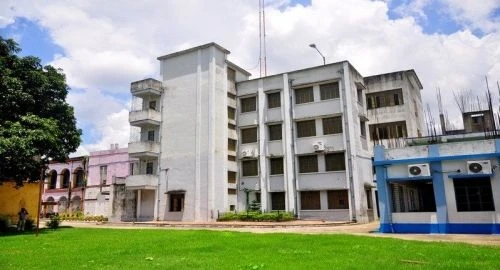
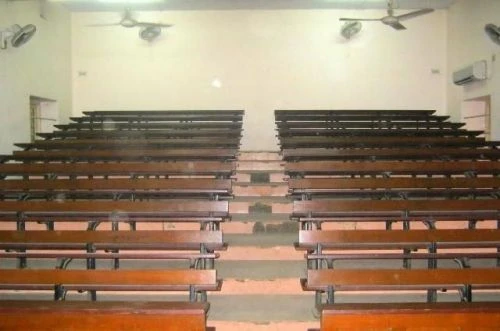
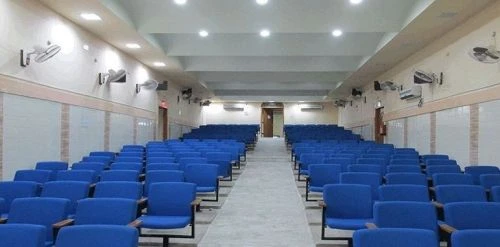
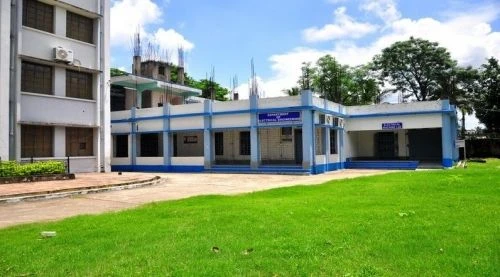
The campus is a mix of older, historic buildings and newer academic blocks. It’s compact and centrally located in Berhampore, just half a kilometer from the railway station. Infrastructure is a common point in student reviews—many feel it needs modernization, though labs are generally well-equipped.
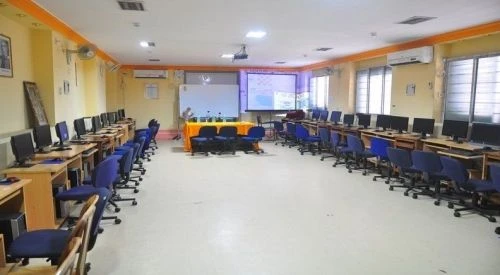
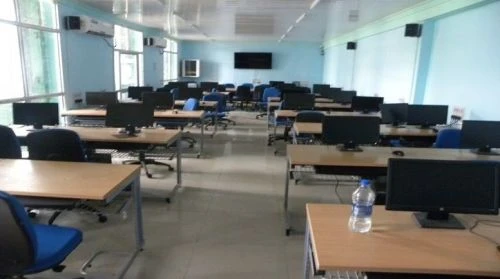
And the labs are a highlight. There are 43 of them across departments. The Mechanical labs have a Maruti turbine engine, a mini-power plant, and a 3D printer. CSE labs are air-conditioned and cover areas like VLSI and operating systems. The library is well-stocked with over 15,000 books and provides access to e-resources and journals.
The hostel situation is critical to understand. There is a boys-only hostel with a capacity of 100-114. It’s located about 1.5 km from campus. Reviews praise it as clean, with good rooms, 24/7 internet, a gym, and a decent common room. The food, managed by students, is considered acceptable. The major catch? There is no girls’ hostel. Female students must arrange private accommodation. Furthermore, hostel rooms are primarily allocated from the second year onward. First-year boys are admitted on a first-come, first-served basis, often only if they live far away.
Student life seems to have improved in recent years. While older reviews complained of no social life, current students mention fests like ALFRESCO and INIZIO, cultural activities, alumni meets (REMINISCENCE), and sports events. The atmosphere is described as friendly and supportive. Ragging is reported to be non-existent. There’s a canteen, sports facilities (basketball, volleyball, gym), and transport available.
Synthesizing the chatter from review sites and forums, a clear consensus emerges.
They love the affordability and the teachers. Phrases like “extremely low fees” and “helpful, polite faculty” are universal. The campus environment is called “friendly” and “amazing.” For Textile Technology students, the sentiment is overwhelmingly positive, focused on the strong alumni network and placement security.
Their frustrations are equally clear. Placement anxiety for non-textile branches is the biggest complaint. “Placement scenario is not great” is a typical refrain. The lack of a girls’ hostel is a significant and frequently cited drawback. Many feel the physical infrastructure is outdated and needs investment. Some critique the MAKAUT syllabus for not being current. The hostel access policy for first-years is also a pain point.
The teaching quality gets high marks (a 4.23/5 faculty rating on some platforms), attributed to the approachable faculty and smaller batches. The management isn’t heavily praised or criticized—it operates like a typical government institution. The takeaway from reviews is that GCETT is exactly what it appears to be: a no-nonsense, low-cost government college with one exceptional department and several others that provide a basic, accredited degree with minimal financial risk.
The answer is a firm “it depends.”
GCETT Behrampore is an outstanding, undeniable value for a specific student: one from West Bengal or nearby, with limited financial means, seeking a government engineering degree with near-zero debt. If your goal is to study Textile Technology, it’s a no-brainer—the strong industry network and placement record make it one of the best public options in the region for that field.
For Computer Science, Electrical, or Mechanical Engineering, the calculation changes. You are paying very little for the degree itself, which is a huge advantage. But you are essentially buying the certificate and the foundational education. You cannot rely on the college for high-flying placements or brand-name recruitment. Success in these branches will depend almost entirely on your own drive to secure off-campus internships, build projects, and prepare for competitive exams or private job searches.
If you have the rank and can afford slightly higher fees at other state engineering colleges with more balanced placement records, you might find better opportunities elsewhere. But if budget is the primary, overriding constraint, and you’re a self-motivated learner, GCETT offers a legitimate, low-risk pathway to a B.Tech. Just go in with your eyes wide open about the post-graduation landscape.
In this preview: 5 photos · 0 videos
Students overwhelmingly point to three things: the extremely affordable fee structure, which makes a B.Tech degree accessible with minimal debt; the helpful, polite, and supportive nature of the teaching faculty; and a friendly, cohesive campus atmosphere. The Textile Technology department is singled out as a particular strength due to its strong alumni network and high placement rate.
The most consistent complaint is the uneven placement scenario. While the Textile Technology department excels, placement opportunities for Computer Science, Electrical, and Mechanical Engineering are significantly lower, often requiring students to seek off-campus jobs. Other major drawbacks include the lack of a girls' hostel facility, infrastructure that many feel needs modernization, and a first-year hostel policy that typically excludes new students.
GCETT provides a boys-only hostel with a capacity of 100-114 students. It is generally not available for first-year students; allocation typically starts from the second year. There is no hostel facility for female students on campus. The costs are very low: annual lodging is approximately INR 1,600, with a monthly food charge managed by students ranging from INR 1,200 to INR 2,000. There is also a one-time hostel admission fee of INR 3,200.
The total tuition fee for the entire 4-year B.Tech program ranges from approximately INR 28,900 to INR 53,400, depending on the branch. Computer Science and Engineering is around INR 53,400, while Electrical, Mechanical, and Textile Technology are between INR 28,900 and INR 32,700. Including estimated hostel and mess charges over four years, the total cost of the degree can range from about INR 0.86 lakhs to INR 1.5 lakhs.
GCETT students have access to several government scholarship schemes. Key options include the Swami Vivekananda Merit-cum-Means Scholarship (SVMCM), offering up to INR 60,000 per year; the OASIS scholarship for SC/ST/OBC students; various Minority scholarships; and the Tuition Fee Waiver (TFW) scheme for economically weaker sections. Applications are typically processed through the National Scholarship Portal (NSP).
Share what future students should know about GCETT.
Student voices are not rewritten by colleges. We remove spam and abuse.
Wider admission question? Community PulseWhat should future students know?
Tell us which course you're considering. We'll help you work out the next step.
Get instant Partner access after mobile verification. Your public edits are reviewed before they go live.
Claim this college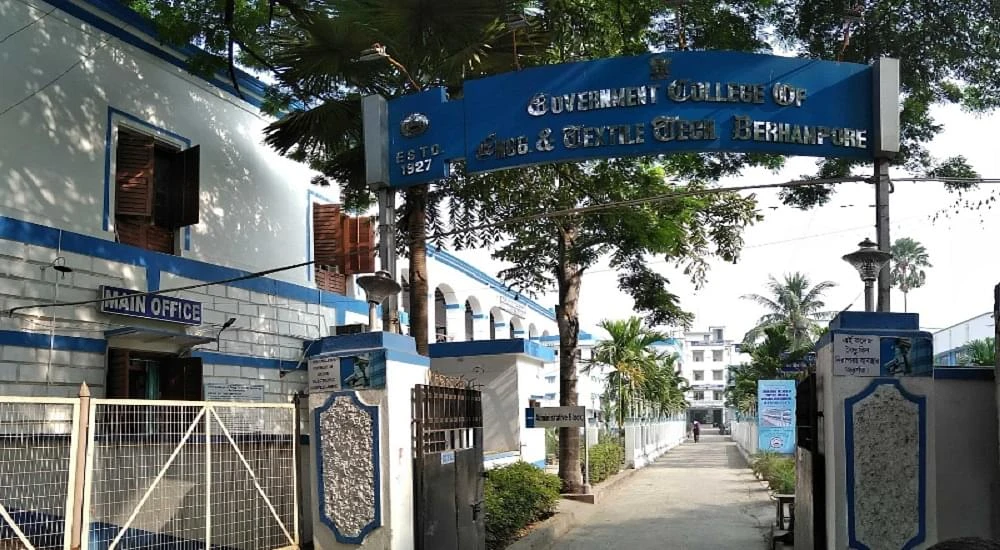
 Auditorium
 Cafeteria
 Computer Labs
 Gym
Gym Hostel
 Medical
 Science Labs
 Sports Complex
 Study Library