Loading Admission Guardian content
Loading Admission Guardian content

Provisional score based on available data. It may change as more information is verified.
Find a program, read its fee details and explore the admission requirements.
Summary of the programs shown below. First-year fee. Check the note beside each amount for inclusions and exclusions.
| Course | Stream | Fees |
|---|---|---|
| Bachelor of Arts [BA] | Arts | 1250 |
| Bachelor of Science [B.Sc] | Science | 1300 |
| Master of Arts [MA] | Arts | 1370 |
| Bachelor of Commerce [B.Com] | Commerce | 5250 |
| Master of Science [M.Sc] | Science | 8420 |
Specializations
Eligibility: 10+2
Specializations
Eligibility: 10+2
Specializations
Eligibility: Graduation
Specializations
Eligibility: 10+2
Specializations
Eligibility: Graduation
Government Maharani Laxmi Bai Girls PG College in Indore is a study in contrasts. It's a sprawling, historic campus set within the walls of Kila Bhavan, offering a secure, green environment for women's education at some of the most affordable tuition rates you'll find. But scratch the surface of the official brochures, and you'll find a reality shaped by student reviews that tell a different story about placements, infrastructure, and daily life. This isn't a high-flying private institution; it's a government college with a 60-year legacy, a 'B+' NAAC grade, and a mission to provide accessible education. Whether it's the right fit depends entirely on what you're looking for—and what you're willing to compromise on.
This is where the college's scale becomes apparent. With 48 programs across UG, PG, and PhD levels, it's a comprehensive arts and sciences institution. The intake numbers are staggering—over 430 seats for BA in some streams and more than 1,000 for B.Sc. That tells you this is a mass-education provider, not a boutique college.
The undergraduate spread is typical of a government girls' college: BA, B.Sc, B.Com, BBA, and niche offerings like Bachelor of Library and Information Science (B.Lib.I.Sc) and B.Sc in Home Science. The specializations are where some interesting options pop up. For B.Sc, you can find Biochemistry, Biotechnology, and even Pharmaceutical Chemistry. The BA and MA programs offer arts staples like Hindi, English, and History, but also more performance-based tracks like Dance (Kathak) and Instrumental Music.
Five departments are recognized as Ph.D. research centers, which is a decent signal for post-graduate academic depth. The faculty count is listed as 73, with 20 registered PhD guides. Names like Dr. Chandrakiran Agnihotri (Principal) and Dr. Gomti Chelani come up. Student reviews consistently praise the teaching faculty as qualified and supportive, which is a significant positive. The academic calendar is set by the Madhya Pradesh Department of Higher Education, and the college follows the DAVV curriculum. Don't expect cutting-edge industry tie-ups or MoUs here; the focus is squarely on delivering the university syllabus.
Here's the single biggest point of contention you need to understand. The data presents two completely different worlds.
The college's official Placement Report for 2026 paints a rosy picture: an 85% placement rate, a highest package of ₹12.5 LPA, an average of ₹4.8 LPA, and a recruiter list that includes Amazon, Google, Microsoft, TCS, Infosys, and the Big Four accounting firms (Deloitte, KPMG, PwC). On paper, that's competitive with many private colleges.
And then you talk to students and alumni. The consensus across reviews is starkly different. They report a placement rate of maybe 10% to 20%. The "highest package" mentioned is around ₹50,000 per year, with averages closer to ₹20,000. The recruiters aren't tech giants or global consultancies; they're local companies and the occasional firm like EY for tax roles. Positions are typically clerical—data entry operator, assistant—not the corporate careers the official list implies. Internship support is also reported as weak, with only about 10% of students securing them, often in similar low-skill roles.
So, who do you believe? The gap is too wide to ignore. It's likely the official report aggregates data from the broader university or includes offers that are not campus-specific. For a prospective student, the safer assumption is to trust the ground-level feedback. If your primary goal is a high-paying corporate job right after graduation, this college is a risky bet. The placement cell's effectiveness, based on student testimony, is limited. The value here is in the degree itself and the low cost, not in a robust recruitment pipeline.
This is the college's undeniable strength. The fees are a fraction of what any private institution charges. For a BA or B.Sc, you're looking at annual tuition between ₹3,750 and ₹27,900, depending on the specialization. An MA costs just ₹2,740 per year. The BBA program is the most expensive at ₹48,180 annually, which is still very affordable.
A precise total cost of attendance is tricky because hostel and mess fees aren't explicitly broken out in the data. However, given the low tuition, the overall four-year cost for a commuting student is minimal. For hostellers, it will be higher but still low by any comparative standard.
The college facilitates government scholarships, which is critical for its student demographic. These include the SC/ST/OBC Pratibha Kiran Yojana and the Gaon Ki Beti Disability Support Scheme. If you are eligible, the already low cost can be reduced further. This affordability is the core of the college's value proposition.
The process is straightforward and merit-based. There are no complex entrance exams for most UG courses. Admission is primarily based on your Class 12 board exam marks (CBSE, ISC, MP Board, etc.). For PG courses, it's based on your undergraduate performance.
The application mode is notably offline. For the 2025-26 session, the window for BA and B.Sc was from May 14 to June 24, 2025. You'd need to obtain the form directly from the college. An application fee is likely, but the amount isn't specified in the available data.
Cutoff ranks or percentages aren't published in a centralized way. Since selection is merit-based, the cutoff is simply the marks of the last student admitted in a given category for a particular program. For high-demand courses like BBA or popular B.Sc specializations, the cutoff will naturally be higher. Your best bet is to contact the college administration directly after your board results are out to gauge your chances.
The campus itself is probably the most charming part of the college. Set within the old Kila Bhavan fort, it's spread over 13 acres of green lawns, gardens, and historic buildings. Students mention peacocks on campus, which gives you a sense of the atmosphere. There's an indoor auditorium and open stage for events. The infrastructure includes 20 classrooms and 14 departmental laboratories, which are described as "well-equipped."
The library has a collection of over 36,000 books and some e-journals, though some students note the collection for extra-reading beyond the syllabus is limited. Sports facilities are reported to be good, with a dedicated complex.
Now, for the significant drawbacks highlighted in reviews.
Hostel: The hostel has two wings with a capacity for about 51 students. Rooms come with basic furniture—bed, table, chair, wardrobe, fan. There's a TV room, indoor games, and a small gym. However, reviews are overwhelmingly negative about the living conditions. The most common and severe complaint is about the mess food, described as "very bad," "poor," "unhygienic," and "indigestible." Issues with water supply and maintenance are also cited. It's a major pain point for residents.
Other Facilities:
The social life revolves around cultural activities, which are said to be vibrant. But don't expect a continuous fest calendar like in larger universities. The vibe is described as calm, secure, and focused on studies—a positive for some, a drawback for others seeking a more eventful campus life.
Synthesizing the feedback creates a clear, if mixed, picture.
The Good:
The Not-So-Good:
The overall sentiment is that it's a good college if your expectations are calibrated: you're there for a low-cost, reputable degree from a DAVV-affiliated college, with good teachers, in a nice environment. You are not there for placements, modern amenities, or a luxurious hostel life.
It depends entirely on your priorities and budget.
This college is worth serious consideration if: You are a student from Madhya Pradesh (or elsewhere) looking for an extremely affordable, government-run, women's college affiliated with a recognized university (DAVV). Your goal is to get a solid foundational degree in arts, science, or commerce without incurring debt. You value a calm, green, and secure campus environment with reportedly good teachers. You are a self-starter who doesn't rely on college-provided placements and plans to prepare for government exams, teaching, or further studies (like an MBA or MSc elsewhere). The low fee structure makes it a viable option for many.
You should probably look elsewhere if: Your number one goal is campus placements into corporate jobs with high salaries. You require modern, reliable infrastructure like good hostels, edible mess food, consistent Wi-Fi, and active student amenities. You thrive on a bustling campus with frequent fests and events. You are not from the region and would struggle without robust hostel facilities.
In essence, Government Maharani Laxmi Bai Girls PG College is a classic government institution. It provides access and opportunity at a rock-bottom price, but it comes with the typical bureaucratic shortcomings and infrastructure challenges. Manage your expectations, focus on the academic opportunity, and you might find it's a perfect fit. Go in expecting a polished, placement-driven experience, and you'll be disappointed. For the right student, it's a stepping stone. For the wrong one, it's a dead end. You have to decide which category you fall into.
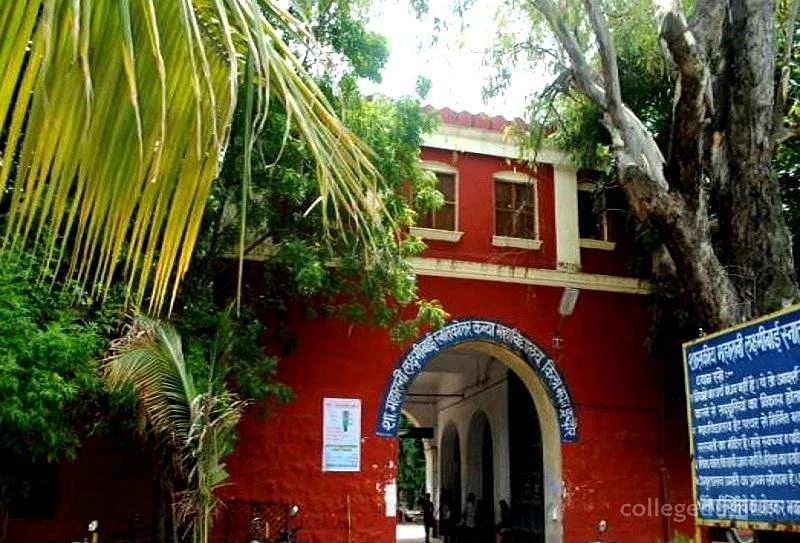
In this preview: 1 photo · 0 videos
Government Maharani Laxmi Bai Girls PG College is a government institution established in 1963. It is affiliated with Devi Ahilya Vishwavidyalaya (DAVV) in Indore, a prominent state university. The college is recognized by the University Grants Commission (UGC) and holds a 'B+' grade accreditation from the National Assessment and Accreditation Council (NAAC).
There is a significant discrepancy in placement data. An official placement report cites an 85% placement rate with a highest package of ₹12.5 LPA and an average of ₹4.8 LPA. However, consistent student and alumni reviews present a different reality, indicating placement rates of only 10-20%. The packages mentioned in reviews are much lower, around ₹20,000 to ₹50,000 per year, primarily from local companies for clerical roles. Prospective students should weigh the ground-level feedback heavily.
The hostel has basic amenities like beds, fans, wardrobes, and common rooms. However, student reviews are overwhelmingly negative regarding the mess food, consistently describing it as very bad, poor quality, unhygienic, and indigestible. Issues with water supply and maintenance are also reported. While the hostel provides a secure living space, the quality of food is a major and frequent complaint among residents.
The fee structure is notably affordable, which is a key attraction. For the 2025-2026 academic year, the annual tuition fee for B.Sc programs ranges from approximately ₹3,850 to ₹27,900 depending on the specialization. For BA programs, the annual fee ranges from ₹3,750 to ₹6,180. These fees are significantly lower than those of private colleges.
Admission to undergraduate courses (BA, B.Sc, B.Com, etc.) is primarily merit-based. Eligibility is determined by your performance in the Class 12 board examinations (CBSE, ISC, State Board, etc.). The college does not typically require a separate entrance exam for most UG programs. The application process is offline, and selection is based on the marks secured in the qualifying exam, with cutoffs varying by program and category.
Share what future students should know about Government Maharani Laxmi Bai Girls PG College.
Student voices are not rewritten by colleges. We remove spam and abuse.
Wider admission question? Community PulseWhat should future students know?
Tell us which course you're considering. We'll help you work out the next step.
Get instant Partner access after mobile verification. Your public edits are reviewed before they go live.
Claim this college
 Auditorium
 Cafeteria
 Campus Security
 Computer Labs
 Hostel
 Medical
 Science Labs
 Sports Complex
 Study Library