Loading Admission Guardian content
Loading Admission Guardian content
Selected ranking categories, with the recorded year beside each result. Open all records for the complete history.
1 published record · Lower numeric ranks are stronger
Find a program, read its fee details and explore the admission requirements.
Summary of the programs shown below. Fee periods can differ by program. Check the note beside each amount before comparing costs.
| Course | Stream | Fees |
|---|---|---|
| Bachelor of Commerce [B.Com] | Commerce | 29900 |
| Bachelor of Computer Applications [BCA] | Computer Applications | 44900 |
| Diploma in Engineering (Polytechnic) | Engineering | 49200 |
| Bachelor of Technology [B.Tech] | Engineering | 103800 |
| Bachelor of Pharmacy [B.Pharma] | Pharmacy | 107820 |
Specializations
Eligibility: 10+2
Specializations
All accepted exams
Eligibility: 10+2
Specializations
Eligibility: 10 Pass
Specializations
All accepted exams
Eligibility: 10+2+UPTAC
All accepted exams
Eligibility: 10+2
3 exams with cutoff data available
 Amazon India
 Atrenta
 BGR Energy Systems Limited
 Easyday
 HDFC Bank
 Jones Lang Lasalle
 Kotak Mahindra Bank
 Netcore Solutions
 Patanjali
 Reliance Industries Ltd.
 Reliance Jio Infocomm
 Tata Consulting Engineers Ltd.
 Tech Mahindra
 Wipro
Wipro Yes Bank
H.R. Group of Institutions (HRIT) in Ghaziabad is a study in contrasts. It’s a sprawling, green campus with an impressive NAAC A+ grade, yet its placement stories are more about steady, mass-recruiter jobs than headline-grabbing packages. For students with mid-range JEE Main ranks looking for an affordable AKTU degree in the NCR, it’s a pragmatic choice. But walk in with sky-high corporate dreams, and you might leave disappointed. The real strength here isn’t in flashy brochures; it’s in providing a functional, decently-equipped education for a price that doesn’t break the bank.
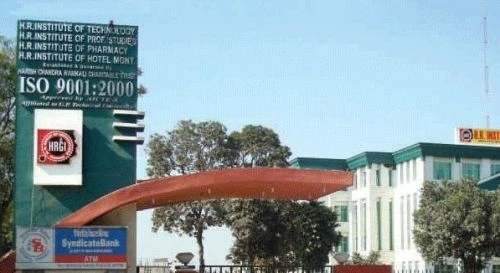
HRIT isn't a single college but a group. The engineering and pharmacy wings (HRIT and HRIP) are affiliated with AKTU, while law and some other programs fall under Chaudhary Charan Singh University (CCSU). That means you're getting a standard state university curriculum, delivered through their choice-based credit system. The B.Tech intake varies by branch, with CSE and its newer specializations like AI & Data Science taking the lion's share—up to 120 students. Other core branches like Mechanical and Civil have smaller batches. The B.Pharm program, with an intake of 100, is frequently cited by students as having superior lab infrastructure and academic rigor compared to some engineering departments.
Faculty numbers are decent, over 150 across the group. You'll find a mix of experienced PhDs and younger instructors. The consensus from student reviews is that the teaching staff is generally approachable and helpful, especially when it comes to navigating the notoriously tricky AKTU semester exams. They provide notes and old papers. Where the academics get a slight edge is in industry linkages. There are TCS-certified labs on campus, a Microsoft IT Academy partnership, and MoUs with firms like NIIT for specialized training modules in areas like cybersecurity. It’s not a top-tier industry-integrated program, but it adds a layer of practical exposure you wouldn’t get from books alone.
This is where you need to separate the official narrative from the on-ground consensus. The college portal might highlight a highest package of INR 10.8 LPA for 2024-25. You might even see an old, outlier claim of 40 LPA floating around. Ignore that. The real story is the median. For most graduates, the offer falls between INR 3.2 and 3.6 LPA. The average is pushed to maybe 4.5 LPA by a handful of better offers.
The placement percentage tells another tale. Officially, it's 70-85%. Talk to alumni on forums like Shiksha or Reddit, and they’ll peg the working number lower—closer to 50-60% for core branches like Mechanical or Civil, and maybe 70%+ for CSE and IT. The recruiters are the familiar Indian IT services giants: TCS, Wipro, Infosys, HCL, Capgemini, Cognizant. They account for about 60% of the offers. Another 20% come from sales and marketing roles at companies like ICICI Prudential or Apollo Tyres. Core engineering roles are scarce, maybe 10% of the pie.
So, the reality check is this: HRIT is a reliable pipeline to a stable, entry-level IT or sales job at a mass recruiter. It’s a safety net. As one Quora reviewer bluntly put it, "If you want a degree at a low cost and are okay with a 3.5 LPA job, this is fine. Don't expect Google or Microsoft to walk through the gates." That’s a fair, if unglamorous, assessment.
Affordability is HRIT's undeniable strong suit. For B.Tech, the annual tuition is approximately INR 85,300. Over four years, excluding hostel, you're looking at a total course cost of roughly INR 4.5 to 5.5 lakhs. Compare that to other private colleges in the NCR region, and the value proposition becomes clear. You’re paying for the degree and the infrastructure, not a brand name.
Hostel fees are a significant additional cost. A triple-sharing non-AC room with mess charges runs about INR 85,000 per year. Double and single rooms go up to INR 95,000 and INR 1,15,000 respectively. Add in one-time charges like a refundable security deposit (INR 5,000) and book bank fees (INR 6,500), and the first-year outlay can feel hefty. There’s no prominent scholarship program detailed in official materials, which aligns with student comments about the management being "money-minded" on fee deadlines. Financial aid, if any, would likely be need-based and require direct inquiry with the administration.
For B.Tech, the primary gateway is the JEE Main score and subsequent state counseling. 85% of seats are filled through the Uttar Pradesh Admission Committee (UPTAC) rounds. The remaining 15% are management quota seats, available for direct admission usually based on 10+2 marks and an interview.
The cutoffs aren't steep. For B.Tech in Computer Science, the closing ranks in recent UPTAC counseling have ranged widely from about 2.5 lakh to 8 lakh in the JEE Main rank list, depending on the round and category (OBC/SC/ST). This accessibility is key to HRIT's identity—it’s a realistic option for students with moderate scores.
For other programs:
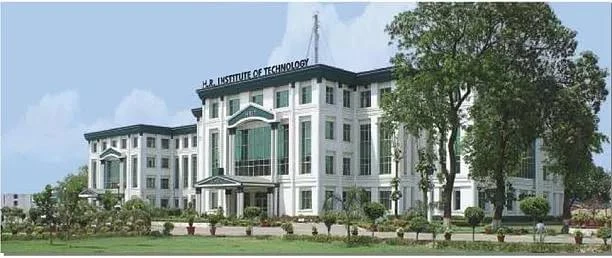
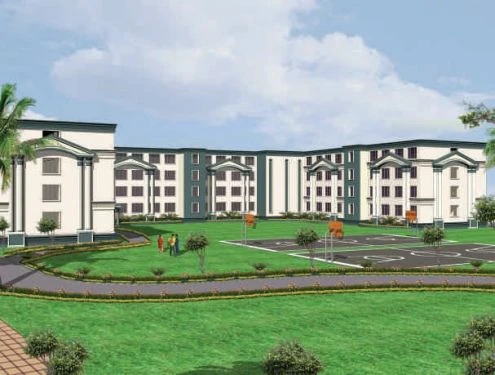
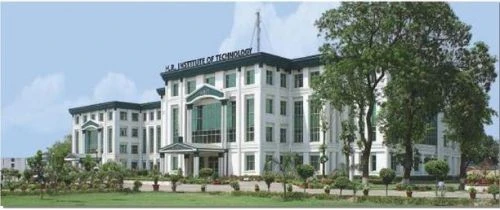
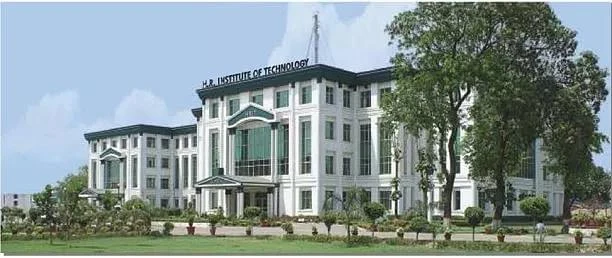
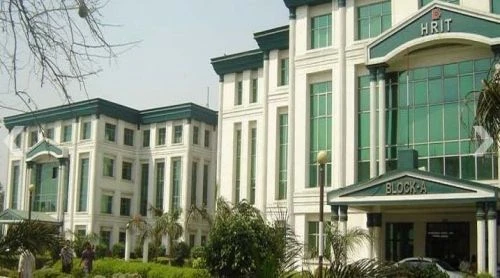
The campus itself is a genuine positive. It’s spacious, green, and the buildings—especially the pharmacy block and central auditorium—are modern and well-maintained. Infrastructure gets a solid 3.5/5 from most students. There’s a large central library with over 56,000 books, decent sports grounds for cricket and football, and indoor facilities. The canteen is a popular spot because, frankly, the mess food isn’t. Student reviews consistently rate the hostel mess a 2.5/5, calling the food monotonous and average. Many seniors eventually move to private PGs in nearby Raj Nagar Extension.
Hostel life is disciplined, some say overly so. Attendance is strictly enforced at 75%, and gate timings are rigid. It creates a safe, structured environment that can feel restrictive to students expecting a typical college vibe. The Wi-Fi situation is a common gripe; it’s largely reserved for staff, leaving students to rely on their own mobile data in many parts of the campus. It’s a functional campus, not a luxurious or digitally seamless one.
Synthesizing the chatter from CollegeDunia, Shiksha, and Reddit paints a consistent picture. The positives are the pleasant campus, the value-for-money fee structure, and the supportive, approachable faculty who help you clear AKTU exams. The pharmacy department, in particular, gets repeated praise for its working labs and stronger academic culture.
The negatives are just as consistent. Placement hype versus reality is the biggest letdown. The strict, school-like discipline (high attendance, gate timings) wears on many. The administrative side is often described as slow and quick to levy fines. And the mess food is a perennial complaint. One Reddit user summed up a tech frustration: "Wi-Fi is only for staff; students have to struggle with mobile data in most blocks." Another review highlighted the disparity: *"The Pharmacy building is the best part of the campus; the labs actually have working equipment."
HRIT is a college for pragmatists, not dreamers. Its NAAC A+ grade and IIRF 2025 ranking of 64th among private engineering institutes signal a baseline of institutional quality. But its true niche is serving students with JEE Main ranks in the 3-8 lakh range who want a decent, affordable AKTU degree and a probable shot at a 3.5 LPA job with a known IT firm. If that’s your profile and goal, HRIT represents solid value for money. The campus is better than many at this price point.
However, if you’re in a core branch like Mechanical or Civil, have significantly higher scores, or are banking on campus placements to land a high-paying, role-specific job, you should probably look elsewhere. The placement support for non-IT roles is weak. Also, if you chafe under strict rules, the hostel environment might feel stifling. In short, HRIT is a competent stepping stone. It provides the platform, but the onus for climbing beyond the mass-recruiter tier rests almost entirely on you.
In this preview: 5 photos · 0 videos
HRIT Ghaziabad is considered an average choice for B.Tech in Computer Science and Engineering. It is suitable for students seeking a degree from an AKTU-affiliated college with decent infrastructure, but it requires significant self-effort from students to secure high-paying placements.
H.R. Group of Institutions (HRIT) is a group of colleges affiliated with state universities like AKTU and CCSU. While the group sometimes uses "HRIT University" in its marketing branding, it functions as an affiliated institute and is not a standalone private university.
Hostel life at HRIT is described as disciplined and safe. The food quality is considered average. It is often recommended for first-year students to stay in the hostel for safety, though many students later opt to move to private paying guest accommodations in areas like Raj Nagar Extension.
Yes, HRIT has a management quota. Approximately 15% of seats are reserved for direct admission under this quota. Candidates typically need to have secured between 50-60% marks in their 10+2 examinations to be eligible for consideration.
The nearest metro station to HRIT Ghaziabad is Shaheed Sthal (New Bus Adda) on the Delhi Metro's Red Line. The campus is approximately 15 to 20 minutes away from the station by auto-rickshaw or bus.
Share what future students should know about HRIT.
Student voices are not rewritten by colleges. We remove spam and abuse.
Wider admission question? Community PulseWhat should future students know?
Tell us which course you're considering. We'll help you work out the next step.
Get instant Partner access after mobile verification. Your public edits are reviewed before they go live.
Claim this college
 Auditorium
 Cafeteria
 Computer Labs
 Gym
Gym Hostel
 Medical
 Science Labs
 Sports Complex
 Study Library