Loading Admission Guardian content
Loading Admission Guardian content
Selected ranking categories, with the recorded year beside each result. Open all records for the complete history.
28 published records · Lower numeric ranks are stronger
NIRF
B.Tech
#1502019
Outlook
Engineering · private
#672024
IIRF
Engineering · private
#1032024
India Today
Engineering · private
#992021
Find a program, read its fee details and explore the admission requirements.
Summary of the programs shown below. Fee periods can differ by program. Check the note beside each amount before comparing costs.
| Course | Stream | Fees |
|---|---|---|
| Bachelor of Technology [B.Tech] | Engineering | 116200 |
| Bachelor of Technology [B.Tech] {Lateral} | Engineering | 116200 |
| Master of Computer Applications [M.C.A] | Computer Applications | 151100 |
| Master of Technology [M.Tech] | Engineering | 151100 |
Specializations
All accepted exams
Eligibility: 10+2 with 45% + JEE Main
Specializations
All accepted exams
Eligibility: 10+3 with 45% + WBJEE
All accepted exams
Eligibility: Graduation with 50% + WBJECA
Specializations
All accepted exams
Eligibility: Pass in Graduation + GATE
4 exams with cutoff data available - showing recent entries
 ACC Limited
 Accenture
 Aditya Birla Group
 Amazon
 Apeejay Surendra
 Apollo Tyres
 Avery Dennison
 Berger
 BOC India Ltd
 Bosch Ltd
 BRG
BRG Byju's
 Capgemini
 Caritor India Pvt. Ltd.
 CEAT
CEAT Century Plyboards (I) Ltd.
 Cerner
 CMC Limited
 Cognizant
 Deloitte
 DIC India Ltd.
 DXC Technology
 Embee Software Pvt.Ltd.
 Ericsson India Pvt Ltd
 Essar Group
 Extra Marks
 Godrej & Boyce
 Gujarat Fluorochemicals Ltd.
 Haldia Petrochemicals Ltd
 HCL Technologies
 HDFC Bank
 Hewlett Packard
 Hindustan Copper Limited (HCL)
 I-Flex
 IBM
IBM IBM Global
 ICICI Bank
 IDBI Bank
 India Bulls
 Infosys
 Infosys Technologies
 ITC INFOTECH
 Johnson Controls
 Jute Corporation of India Ltd.
 Kanbay
 KPIT Cummins
 Larsen & Toubro Ltd.
 MBT (MAHINDRA BRITISH TELECOM)-Tech Mahindra
 Metaljunction.com
 Microsoft
 NCR
NCR NIIT Ltd
 Odessa Technologies Inc.
 OMICS International
 Paharpur Cooling Towers Ltd.
 Pepsico Holdings (I) Pvt. Ltd.
 Philips
 Phillips Carbon Black Ltd.
 Polaris
 Polaris Software
 PricewaterhouseCoopers
 R.R. Oomerbhoy Pvt. Ltd.
 Reliance Infocomm
 Sasken Communication Technologies Ltd
 Skipper Limited
Heritage Institute of Technology (HIT) in Kolkata occupies a distinct, almost contradictory space in the city's engineering landscape. It's a private college with a sprawling, modern campus that feels more like a university, yet it's affiliated with the state's MAKAUT. It boasts a strong placement record for its computer science students, while those in core branches often feel like an afterthought. For over two decades, HIT has built a reputation not on draconian discipline, but on offering a balanced, infrastructure-rich environment where motivated students can thrive—provided they navigate its unique academic quirks.
HIT offers a fairly standard spread of B.Tech programs, but with a clear tilt towards computing. The intake is telling: CSE and ECE lead with 180 seats each, while core branches like Mechanical and Civil sit at 60. The newer specializations—CSE in AI & ML, Data Science, and IoT & Cyber Security—reflect the market demand, each with 60 seats. It's a pragmatic portfolio. The M.Tech and MCA programs exist, but they're smaller in scale, with intakes around 18-60.
The academic culture is where HIT sets itself apart from stricter Kolkata peers. The faculty base is decent, with about 40-50% holding PhDs from institutes like IITs and Jadavpur University. You won't find the oppressive, school-like monitoring some rival colleges are known for. There's more breathing room. But that freedom comes with a catch: the infamous "Surprise Test" system. At least four unannounced tests per semester count towards your internal marks, a constant low-grade stressor students consistently mention in reviews. It's a trade-off. The industry MoUs, like those with NJIT and UMass Lowell, sound impressive on paper, but their direct impact on the average undergraduate is often limited to guest lectures or potential research avenues.
This is where the branch hierarchy becomes starkly evident. The official narrative and the student-ground reality require some untangling.
Let's start with the numbers. The institute's published highest package for 2024-25 is around 16 LPA for on-campus roles. You'll see flashier figures—45 LPA, even a crore—in some brochures, but those are almost always off-campus achievements by exceptional individuals. The average package for CSE/IT/ECE clusters between 5.5 to 6.5 LPA. The overall institute average, pulled down by core branches, is between 4.5 and 5.2 LPA. The most authoritative figure comes from the NIRF report, which lists a median package of INR 4.78 LPA for UG students. That's a solid, if not spectacular, number for a private college in this tier.
Placement percentage claims hover around 85-90%. Student consensus suggests that's plausible for CSE, IT, and ECE, where placement rates are around 80%. For Mechanical, Civil, and Electrical Engineering, the story changes. The rate likely drops to 40-50% for core roles. Many students from these branches end up in the same IT service companies that recruit from CS, essentially pivoting after graduation. Top on-campus recruiters are the reliable mass hirers: TCS, Cognizant, Wipro, Infosys, and Capgemini. Product companies like Amazon and Microsoft recruit, but very selectively and not in large cohorts. For core engineering, a handful of firms like Berger Paints, UltraTech, and Haldia Petrochemicals visit.
The verdict? If you're in a tech branch, HIT's placement cell will provide ample opportunity to land a standard IT job. If you're in a core branch dreaming of a design or R&D role, you'll be relying heavily on your own hustle, internships, and GATE prep. The library, as students note, is an excellent place for that latter pursuit.
HIT's fee structure is relatively transparent and moderate for a private institute. The B.Tech tuition fee is approximately INR 60,500 per semester. Over four years, that totals roughly INR 4.84 lakhs in tuition. Add in the one-time library fee (INR 6,000), caution deposit, and other incidentals, and the total course cost lands between INR 5.5 to 6 lakhs. That's before hostel costs.
Accommodation is a split experience. Girls get an on-campus hostel with high security. Boys have to look off-campus at nearby PGs or the "Modern Boys Hostel," a 15-minute walk away. Combining rent and mess, annual hostel expenses can run from INR 80,000 to 90,000. Financial aid is available through state schemes like the West Bengal Free-ship Scheme (WBFS) and the Swami Vivekananda Merit-cum-Means Scholarship (SVMCM). There's also a TFW (Tuition Fee Waiver) category for eligible students, which drastically reduces the semester fee.
Admission to HIT's B.Tech programs is primarily gatekept by the West Bengal Joint Entrance Examination (WBJEE). A full 80% of seats are filled through WBJEE ranks. Another 10% are via JEE Main scores, and the remaining 10% constitute the management quota.
The cutoffs define the pecking order clearly. For the 2024 general category in Round 1, CSE closed around a rank of 3,585. IT went to about 5,200, and ECE to 10,800. For Mechanical or Civil, the ranks can stretch far beyond 20,000, even past 60,000 in later rounds. This massive spread illustrates both the demand for computer science and the relative accessibility of core branches. The entire process is managed through centralized counseling by the WBJEEB. If you're eyeing the management quota, be prepared for a total cost that can be 2-3 times the normal fee, potentially reaching INR 10-15 lakhs for a course like CSE.
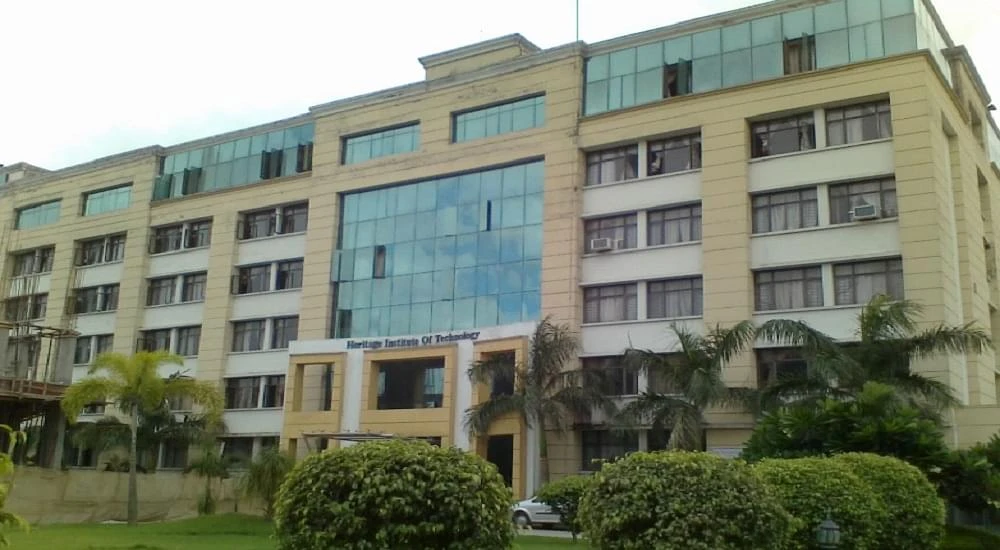
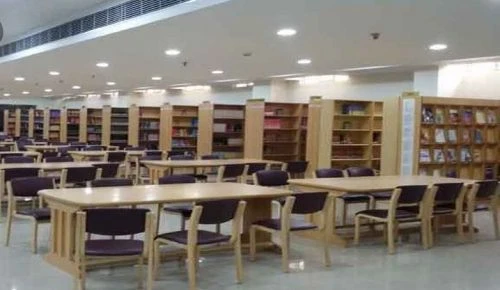
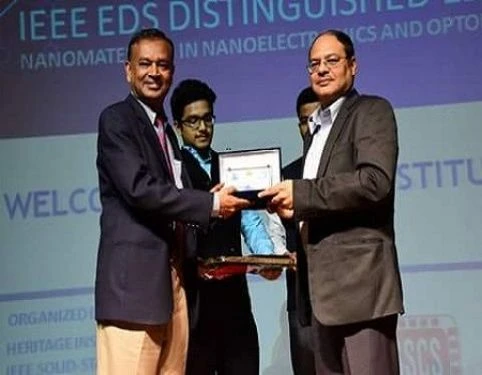
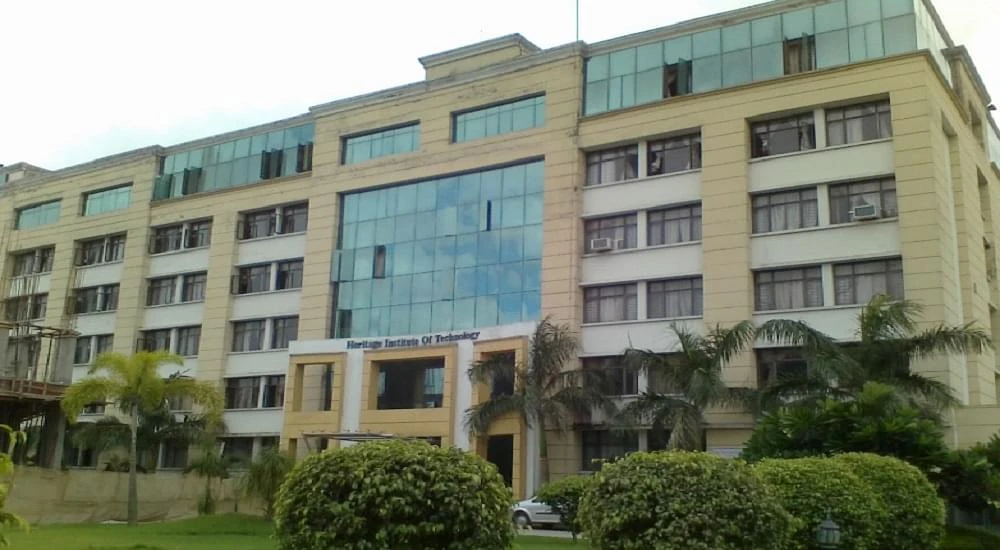
HIT's campus is its undisputed crown jewel. Spread over 10 acres, it's green, clean, and meticulously maintained—a rarity for an urban Kolkata campus. The infrastructure consistently earns top marks from students. The central library is massive (20,000 sq. ft.), air-conditioned, and stocked with over 57,000 volumes and digital access. Labs are plentiful and include an IEEE Centre of Excellence.
Where HIT truly shines for many is in extracurriculars. The sports facilities are exceptional, featuring a full-sized cricket/football ground, basketball and volleyball courts, and even an archery range. Clubs for drama, music, and photography are active. This vibrant student life is a primary reason students choose HIT over more academically rigid competitors. The canteen options are decent, and the campus is Wi-Fi enabled. The major gripe, especially for boys, is the lack of an on-campus hostel. The off-campus living situation is a logistical hassle you have to factor in.
Synthesizing feedback from CollegeDunia, Shiksha, Reddit, and Quora paints a consistent picture. The positives are strong: "best infrastructure in West Bengal," "good balance between studies and life," and a "strong coding culture in CSE." The library is repeatedly praised as a sanctuary for serious study.
The criticisms are equally specific. The "Surprise Test" system is almost universally loathed as a stress-generator. Administrative processes are described as slow and bureaucratic. And the placement disparity breeds resentment among core branch students, with one review bluntly stating, "Don't join Civil here if you only want a core job." A popular Reddit sentiment sums up the HIT vs. IEM debate: "If you want a balance between studies and life, Heritage is better than IEM. If you want 100% placement at the cost of your soul, go to IEM."
HIT is a very specific bet. It's arguably the best choice in Kolkata for a student who wants a proper college experience—a great campus, active clubs, sports, and some personal freedom—while still having a credible shot at a decent IT placement. If you're in CSE, IT, or ECE with a WBJEE rank under 10,000, HIT delivers good value for its fee. You'll get the environment to grow beyond just academics.
However, think twice if your priority is purely the highest possible placement package or rigorous, focused training for core engineering fields. The college's strengths are not in ultra-high-pressure academics or specialized core industry connections. And if you're a male student, the lack of on-campus housing is a genuine downside. For the right student—one seeking balance and opportunity within a top-tier physical campus—HIT makes a lot of sense. For others, the compromises might be too significant.
In this preview: 5 photos · 0 videos
Heritage Institute of Technology is often noted for offering a better campus life and more freedom to its students. In comparison, IEM Kolkata is known for slightly more rigorous placement training but operates within a more restrictive, school-like environment.
The management quota fee for B.Tech in Computer Science and Engineering is typically 2 to 3 times the normal tuition fee. The total cost often ranges between INR 10 to 15 Lakhs, depending on the academic year and demand.
No, Heritage Institute of Technology does not have an official on-campus hostel for male students. However, the college facilitates accommodation by helping students find nearby private paying guest (PG) facilities and hostels, such as the Modern Boys Hostel.
Officially, yes, a 75% attendance rule is in place. In practice, enforcement can vary depending on the academic department and specific professors. It is important to note that laboratory sessions generally require 100% attendance.
It is unlikely to secure a seat in the core Computer Science and Engineering program, which typically has a cutoff rank around 3,500. However, with a rank of 10,000, you may have a chance for related specializations like IoT or Cyber Security in later counseling rounds.
Share what future students should know about Heritage Institute of Technology.
Student voices are not rewritten by colleges. We remove spam and abuse.
Wider admission question? Community PulseWhat should future students know?
Tell us which course you're considering. We'll help you work out the next step.
Get instant Partner access after mobile verification. Your public edits are reviewed before they go live.
Claim this college star cements
 Subex
Subex Syntel
 Tata Chemicals
 Tata Consultancy Services
 Tata Elxsi
 TCS
TCS Tech Mahindra
 TEGA Industries
 Times of India
 UST Global
 VA Tech Wabag Ltd.
 Visa Steel
 Voith Paper Technology(India)Pvt.Ltd.
 Wacker Metroark Chemicals Pvt.Ltd.
 Wipro
Wipro Wipro Technologies
 Young Optics
83 named recruiters in the recorded data. Company names are deduplicated.
 Bank & ATM
 Cafeteria
 Campus Shuttle
 Computer Labs
 Hostel
 Medical
 Science Labs
 Sports Complex
 Study Library