Loading Admission Guardian content
Loading Admission Guardian content
Find a program, read its fee details and explore the admission requirements.
Summary of the programs shown below. Fee amounts are not listed. Contact the college for its current fee schedule.
| Course | Stream | Fees |
|---|---|---|
| Bachelor of Education [B.Ed] | Education | |
| Diploma in Education [D.Ed] | Education |
Specializations
Eligibility: Graduation
The most important fact about Holy Child B.Ed. College in Malda right now is its uncertain future. As of May 2025, the National Council for Teacher Education (NCTE) has issued a formal withdrawal of recognition for its B.Ed. and D.El.Ed. courses, effective from the 2025–2026 academic session. That's a seismic shift for an institution that, since 2007, has been a standard choice for aspiring teachers in North Bengal. For any student considering admission, the immediate, non-negotiable first step is to verify whether the college has secured a legal stay on this order. Everything else—the fees, the location, the reviews—is secondary to that fundamental question of legitimacy.
The college offers two core teacher-training programs. The two-year Bachelor of Education (B.Ed.) program, with an intake of 100 students, is affiliated with the University of Gour Banga. The two-year Diploma in Elementary Education (D.El.Ed.), with 50 seats, falls under the West Bengal Board of Primary Education. Academically, the structure is semester-based and fairly standard. The pedagogy is described as drawing on "Jesuit Education" principles, emphasizing holistic development, though the institution itself is a private, secular entity managed by the SERVE society.
Faculty includes a roster of assistant professors like Prof. Subhankar Panigrahi and Prof. Kusher Ali. Student feedback on teaching quality, however, is mixed—a point we'll get to. The mandatory component is a school internship, or Practice Teaching, conducted in local government-aided schools during the third semester. It's the practical cornerstone of the curriculum.
Let's be clear: you won't find placement statistics or average salary packages here. That's not how B.Ed. colleges work. Holy Child, like its peers, does not have a corporate placement cell. The entire model is geared towards preparing students to pass the competitive exams that gatekeep teaching jobs in India.
Success for an alumnus means qualifying for the Central Teacher Eligibility Test (CTET) or the state-level Primary TET, and subsequently getting selected through the West Bengal School Service Commission (WBSSC) recruitment. Others find positions in private English-medium schools in Malda and the broader North Bengal region. The college's role is to provide the theoretical foundation and the mandatory internship experience that makes you eligible to sit for these exams. Your placement is ultimately in your own hands, dependent on your exam performance.
The cost is straightforward and aligns with other private B.Ed. colleges in the state. The total fee for the two-year B.Ed. program is estimated between ₹1.4 and ₹1.5 lakhs. For the D.El.Ed. diploma, it ranges from ₹96,000 to ₹1.2 lakhs. On top of tuition, you need to budget for university examination fees, library deposits, and uniform charges.
Hostel facilities are available, with separate accommodations for boys and girls. Monthly costs for a shared room with mess facilities are reported to be in the ₹3,000–₹5,000 range. For financial support, students can apply for West Bengal state scholarships, notably the Aikyashree scholarship for minority communities and the Swami Vivekananda Merit-cum-Means Scholarship (SVMCM). Eligibility and application processes are managed through the state portals, not directly through the college.
Admission is merit-based, pure and simple. There is no college-specific entrance exam. Your ticket in is your marks in your qualifying Bachelor’s or Master’s degree. You need a minimum of 50% aggregate (with a 5% relaxation for reserved categories).
The process is centralized. You apply through the counseling portal of the affiliating university—which, as of the last cycle, was the University of Gour Banga. The application window typically opens around September or October. But here's the massive caveat for the 2025-26 cycle and possibly beyond: all of this is contingent on the college having a valid NCTE recognition. No recognition means the university cannot legally admit students into its programs. Always confirm the current NCTE status on the official NCTE website before you even look at the application form.
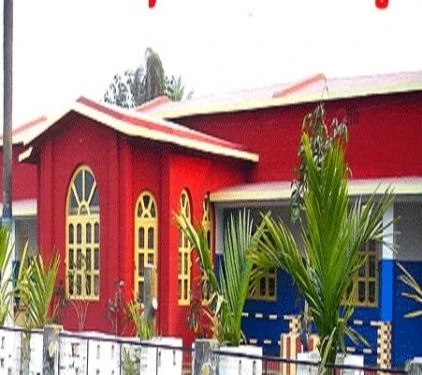
The campus, spread over roughly 1-2.8 acres, is consistently described in reviews as "peaceful" and "disciplined." Infrastructure is considered above average for a local private college. You'll find subject-specific labs for sciences and geography, a dedicated ICT lab, a library with over 5,300 books, and a reading room. There's a full-sized playground, a gymnasium, an auditorium, and a canteen. Basic Wi-Fi is reported to be available.
Hostels provide basic, no-frills accommodation. Rooms are shared, and amenities are functional. The location is a significant plus for many students; being just 2.5 km from Malda Town Railway Station and near NH-12 makes it easily accessible for students from Malda, South Dinajpur, and Murshidabad districts. Social life is quiet, revolving around campus activities. There's no buzzing metropolitan scene here—it's a focused, small-town academic environment.
Aggregating from platforms like Justdial and Shiksha, the college holds a rating around 3.7 out of 5. The feedback paints a picture of contrasts.
The positives are clear. Students appreciate the accessible location and the generally well-maintained infrastructure. The environment is often called conducive to study. Some assistant professors are singled out for praise for their dedication.
But the negatives are consistent and noteworthy. A common complaint points to administrative rigidity—strict attendance policies and complaints about "hidden" fines for late fee payments. More critically, several reviews mention irregular classes, particularly during the internship semester when faculty engagement is perceived to drop. And now, overarching all of this, is the palpable anxiety among current and prospective students regarding the NCTE withdrawal order. This legal cloud fundamentally alters the risk calculation for anyone thinking of joining.
The answer is entirely conditional on one factor: the resolution of its NCTE recognition status. If the college successfully obtains a stay order from the courts and has its recognition reinstated, then it remains a viable, mid-tier option for students from North Bengal seeking a functional B.Ed. college close to home. Its infrastructure is decent, the location is convenient, and the fee, while not cheap, is market-standard. It can serve as a platform to prepare for your TET exams.
However, if the withdrawal order stands, the college is not worth any consideration. Without NCTE recognition, your degree will not be valid for government teacher recruitment. That's an absolute deal-breaker. Even if the status is in legal limbo, the associated uncertainty and stress are significant drawbacks. My advice? For the 2025-26 session, prospective students should look at other NCTE-approved colleges in the region affiliated with the University of Gour Banga or Baba Saheb Ambedkar Education University. Only if Holy Child provides clear, official, and verifiable proof of restored recognition should it re-enter your list. Always, always verify directly with the NCTE first.
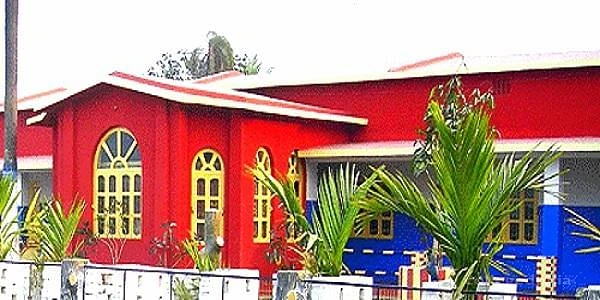
In this preview: 1 photo · 0 videos
No. According to official NCTE gazette notifications, a withdrawal order was issued in May 2025. It is crucial for prospective students to verify if the college has since obtained a "Stay Order" from the High Court before considering admission for the 2025–26 session.
The total fee for the complete two-year B.Ed. program at Holy Child B.Ed. College is approximately ₹1.45 Lakhs.
Yes, the college provides separate on-campus hostel accommodation specifically for girls.
Holy Child B.Ed. College is affiliated with the University of Gour Banga, located in Malda.
The college is conveniently located approximately 2.5 kilometers from Malda Town station and is easily accessible by auto-rickshaw or e-rickshaw (toto).
Share what future students should know about Holy Child BEd College.
Student voices are not rewritten by colleges. We remove spam and abuse.
Wider admission question? Community PulseWhat should future students know?
Tell us which course you're considering. We'll help you work out the next step.
Get instant Partner access after mobile verification. Your public edits are reviewed before they go live.
Claim this college
 Auditorium
 Cafeteria
 Campus Security
 Computer Labs
 Hostel
 Medical
 Science Labs
 Study Library