Loading Admission Guardian content
Loading Admission Guardian content
Find a program, read its fee details and explore the admission requirements.
Summary of the programs shown below. Fee periods can differ by program. Check the note beside each amount before comparing costs.
| Course | Stream | Fees |
|---|---|---|
| Bachelor of Education [B.Ed] | Education | 41000 |
| Bachelor of Arts [BA] | Arts | 47000 |
| Bachelor of Arts [BA] {Hons.} | Arts | 47000 |
| Bachelor of Science [B.Sc] | Science | 47000 |
| Bachelor of Business Administration [BBA] | Management | 48000 |
Specializations
Eligibility: Graduation
Specializations
Eligibility: 10+2
Eligibility: 10+2
Specializations
Eligibility: 10+2
Specializations
Eligibility: 10+2
Holy Cross College in Agartala is a bit of an anomaly in the Northeast's higher education scene. Established in 2009, it's a relatively young institution, yet it carries the weight of being the first and only private college in Tripura to bag an NAAC 'A+' grade. That's a serious accreditation score, sitting at a CGPA of 3.37 out of 4. Affiliated with the central Tripura University, it’s built a reputation that’s less about sprawling university life and more about disciplined, focused academics. If you talk to students, you’ll hear two things repeatedly: the faculty is genuinely supportive, and the campus is spotless. But you’ll also hear that it runs on a tight schedule—9 to 4, with 75% attendance non-negotiable. It’s a trade-off. You get structure and a proven track record for professional courses like B.Ed and BBA, but you don’t get the chaotic, freewheeling vibe of a typical university campus. For many in Tripura and the surrounding states, that’s a trade-off worth making.
The academic portfolio is classic liberal arts and sciences, with a clear tilt towards professional undergraduate degrees. The BA (Hons) programs, especially in English and Political Science, have the highest intakes—English alone takes in about 160 students. B.Sc (Hons) courses like Zoology and Botany run smaller, more focused batches of 30-50. Where the college really stakes its claim is in its professional courses: the B.Ed program (NCTE-approved) and the BBA are consistently highlighted as strengths.
Academically, it follows Tripura University’s CBCS system. The grading breaks down to 20-30% internal assessment—attendance, assignments, sessionals—and 70-80% on the end-semester exams. It’s a 10-point CGPA scale. A unique feature is the mandatory "Foundation Courses" in English and Computer Skills for all students, which is a pragmatic touch. The faculty roster of about 55-76 includes a solid chunk, around 40-50%, with PhDs. Department heads like Dr. Moumita Dey (English) are frequently mentioned by students as being particularly accessible. There’s also an MoU with ICFAI University Tripura for exchange, though the tangible student benefits from that seem limited so far.
This is where you need to read between the official lines. The placement cell is active, but its focus is undeniably on the professional streams. For B.Ed graduates aiming for teaching jobs and BBA students targeting banks, the system works. The college claims placement percentages in the 70-90% range for these courses. The highest package touted for 2024 was 9 LPA, but that appears to be an outlier for a specific B.Ed or corporate role; the more consistent top-end for corporate jobs is 5-7 LPA.
The median package, as noted in supporting data and student reviews, sits at about 4 LPA. The average typically falls between 3.5 to 4.5 LPA. Recruiters are a mix of national and regional names: ICICI Bank, South Indian Bank, Federal Bank, TCS, Wipro, and Indigo for aviation roles, plus a slew of private schools for B.Ed placements.
Now, the reality check from alumni reviews on platforms like CollegeDunia and Shiksha: students from general BA and B.Sc programs often feel the placement cell isn't working as hard for them. Their estimated placement rate is closer to 40-50%. The gap between the official claim and the on-the-ground sentiment for arts and science students is notable. So, if placements are your top priority, your choice of program here matters immensely.
The fee structure is relatively straightforward and, for a private college with an A+ grade, is considered reasonable in the regional context. For the 2024-25 session, a one-time admission fee is around ₹28,000-₹30,000 for most UG courses, with B.Ed being slightly higher at ₹35,000. Annual tuition then ranges from ₹41,000-₹47,000 for BA/B.Sc/B.Com to ₹48,000-₹55,000 for BBA/BCA.
Do the math over three years, and you’re looking at a total cost of ₹1.5 to ₹1.8 lakhs for most degrees, and ₹1.9 to ₹2.2 lakhs for BBA/BCA. The two-year B.Ed totals around ₹85,000 to ₹1 lakh.
Living on campus adds cost. Hostel fees are approximately ₹4,500 per month, which includes mess charges, plus a one-time hostel admission fee of ₹1,500. If you need the college bus transport, budget another ₹1,500 monthly.
Financial aid is available, primarily through government schemes. The ST Umbrella Scheme is a key one for eligible students. The college also offers some merit-based institutional scholarships and facilitates applications for Government of India Post-Matric scholarships.
The gateway to HCC is evolving. With its affiliation to Tripura University (a central university), CUET (UG) scores are increasingly becoming the primary entry ticket. However, the college still often conducts its own entrance test followed by a personal interview.
The selection cocktail usually mixes merit (your 10+2 marks) with that personal interview, which is typically with the Principal or Vice-Principal. It’s not just a formality; they’re assessing your fit for the college's disciplined environment. The application window is tight, running from May through July.
Eligibility is standard: a minimum of 50% in your 10+2 exams. Stream requirements apply—you’ll need a science background for B.Sc or BCA, while the BA and BBA programs are open to students from any stream. Don’t underestimate the interview. In a college that values discipline as much as academics, it’s a crucial filter.
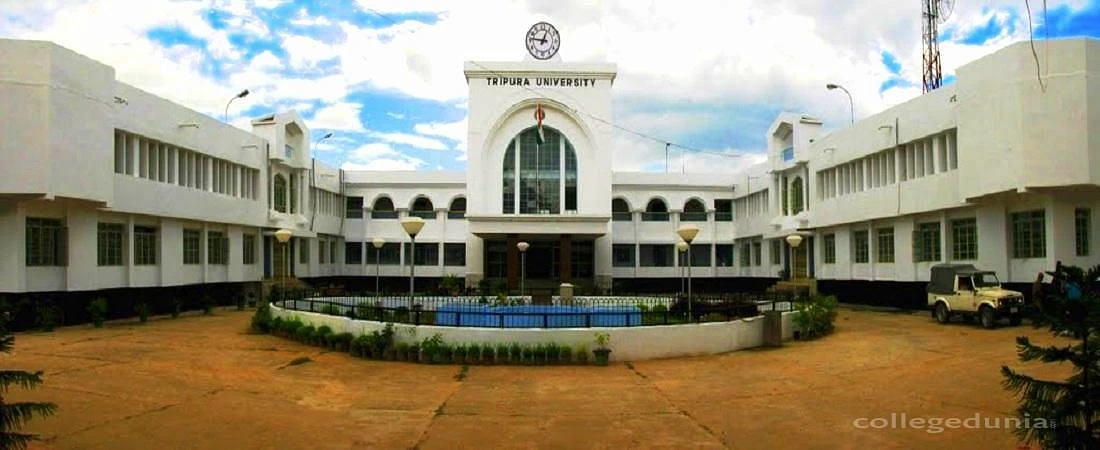
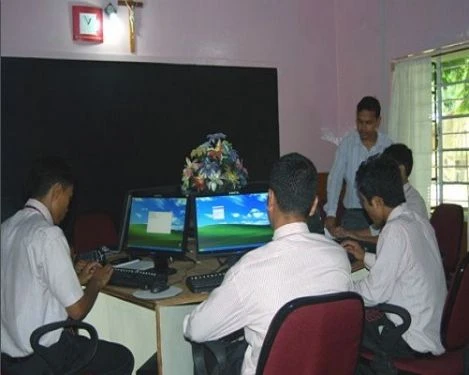
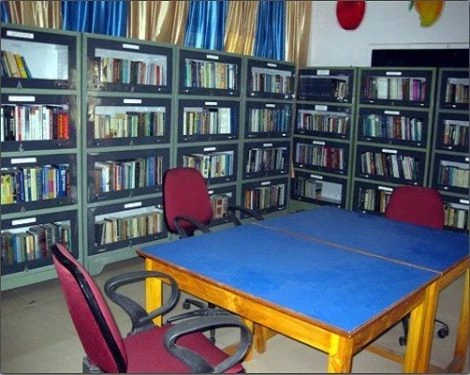
The 18.3-acre campus at Jubatara is modern and, by all accounts, impeccably maintained. It’s often called the cleanest campus in the state, and that discipline shows. Infrastructure is good: there are over seven smart lecture halls, well-equipped labs for sciences and computers, and a library with 8,000+ physical titles and digital access via N-LIST. High-speed Wi-Fi covers the campus.
Hostels get high marks, rated around 4/5 by students. They’re separate for boys and girls, and the attached mess serves hygienic, "home-like" food three times a day. Sports facilities are decent—basketball, volleyball, badminton courts, and a football ground. There’s no dedicated cricket stadium, but the field gets use.
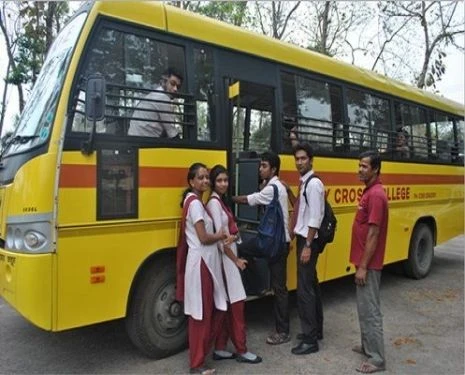
Life is structured. The canteen is subsidized, there’s a medical room with ambulance service, and the college runs its own bus fleet. But the social scene is defined by college-organized events like the annual fest "Tejas." This isn’t a place for self-directed, 24/7 campus revelry. It’s a self-contained, scheduled environment. And its location in Lembucherra means Agartala city center is a 12-15 km trip away.
Synthesizing feedback from review sites and forums paints a consistent picture. The positives are strong. Discipline and safety are the top accolades—it’s a ragging-free zone, and parents appreciate that. Faculty accessibility is a huge plus; teachers are repeatedly described as "approachable," "supportive," and even "goated" by students. The cleanliness and focus on personality development through various clubs and fests are also praised.
But the negatives are just as consistent. The strictness grates on some—the 9-4 schedule and the unwavering 75% attendance rule feel like school to many. While the land is 18 acres, some feel the built-up academic area is compact, lacking the sprawl of a university. The biggest gripe, especially from arts and science students, is the placement gap. They feel the cell prioritizes BBA and B.Ed. And yes, the location is a bit remote from Agartala's hub.
One paraphrased student quote sums it up: “The college is like a school in terms of discipline, but the faculty quality is the best in Tripura.” Another is brutally practical: “If you want a job in a bank or school, come here. If you want a 'chill' college life, look elsewhere.”
Holy Cross College is a very specific proposition. It’s not for everyone. If you’re seeking an autonomous, unstructured university experience with a buzzing social scene, this will feel restrictive. The discipline is real, and the schedule is rigid.
But if you, or your parents, value a safe, focused, and academically serious environment, HCC delivers arguably better than any other private college in Tripura. Its NAAC A+ grade isn’t just a plaque on the wall; it reflects in the quality of teaching and infrastructure. It’s an excellent choice for students targeting professional outcomes—especially in teaching (B.Ed) or business (BBA). The placement support for these streams is tangible. It’s also a strong launchpad for students aiming for higher studies or government exams like the TPSC, thanks to its rigorous academic foundation.
So, is it worth it? For the right student—one who prioritizes academics, discipline, and a clear path to a professional career in the region—absolutely. It provides a premium, trusted education in Northeast India. But go in with your eyes open: this is a place of work and growth, not endless leisure. You can verify its credentials directly on the NAAC website and through its own official portal.
In this preview: 5 photos · 0 videos
Yes, Holy Cross College Agartala is considered the best private option in the state for a B.Ed program, and it holds approval from the National Council for Teacher Education (NCTE).
The annual fee for the BBA program at Holy Cross College Agartala is approximately ₹48,000 to ₹55,000 per year.
Yes, Holy Cross College provides separate hostel accommodations for boys and girls, complete with mess facilities.
Admission to the BA program is usually based on merit and a personal interview. The college also considers scores from the Common University Entrance Test (CUET).
Holy Cross College strictly enforces a 75% minimum attendance requirement for students to be eligible to appear for their semester examinations.
Share what future students should know about Holy Cross College.
Student voices are not rewritten by colleges. We remove spam and abuse.
Wider admission question? Community PulseWhat should future students know?
Tell us which course you're considering. We'll help you work out the next step.
Get instant Partner access after mobile verification. Your public edits are reviewed before they go live.
Claim this college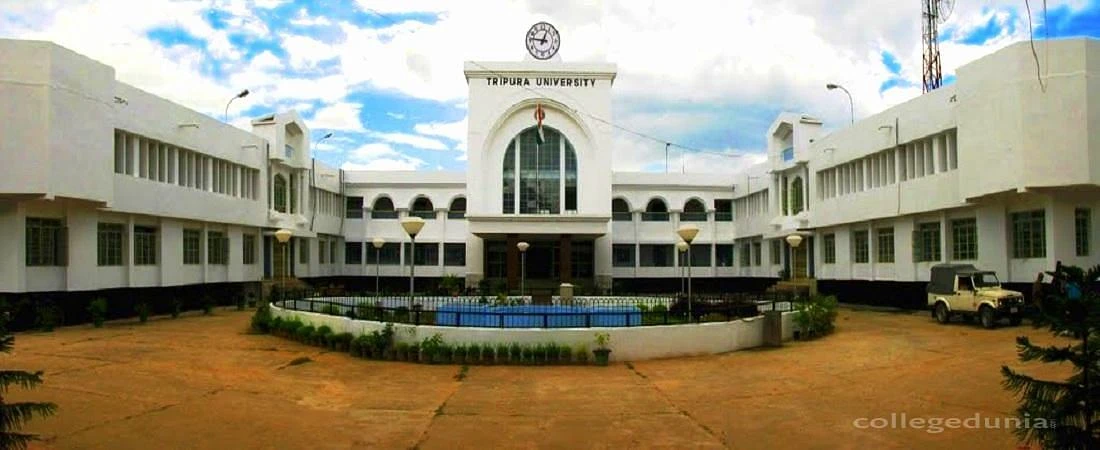
 Cafeteria
 Campus Shuttle
 Computer Labs
 Medical
 Science Labs
 Sports Complex
 Study Library