Loading Admission Guardian content
Loading Admission Guardian content

Selected ranking categories, with the recorded year beside each result. Open all records for the complete history.
26 published records · Lower numeric ranks are stronger
NIRF
MBA
#242022
Outlook
Management · public
#82026
IIRF
Management · public
#82023
TOI
MBA
#42023
Find a program, read its fee details and explore the admission requirements.
Summary of the programs shown below. Fee periods can differ by program. Check the note beside each amount before comparing costs.
| Course | Stream | Fees |
|---|---|---|
| Ph.D | Arts | 65000 |
| Master of Arts [MA] (Economics) | Arts | 410000 |
| Master of Business Administration [MBA] (International Business) | Management | 825000 |
| Master of Business Administration [MBA] | Management | 2177314 |
| Integrated Programme in Management (IPM) | Management | 3377314 |
Specializations
Eligibility: Post Graduation with 55%
Specializations
Eligibility: Graduation
Specializations
All accepted exams
Eligibility: Graduation with 50%
Specializations
All accepted exams
Eligibility: Graduation with 50%
All accepted exams
2 exams with cutoff data available
 3M
3M Abbott Healthcare Pvt. Ltd.
 Accenture
 Airtel
 AkzoNobel India
 Amazon
 Amway India
 Aviva
Aviva Axis Bank
 Bain & Company India Private Limited
 Bajaj Finserv Ltd.
 Birlasoft
 Boston Scientific
 Brillio
 Britannia Industries
 Canara Bank
 Capgemini
 Cargill india Ltd
 Cars24.com
 Cipla Limited
 Citi Bank
 Cognizant
 Crisil
 Dabur India Ltd.
 DCM Shriram Industries
 Delhivery
 Dell
Dell Deloitte
 eBay
eBay EXL Service
 Federal bank
 Flipkart
 Genpact
 Glaxo Smithkline Consumer Ltd (GSK)
 Godrej Properties Limited
 GODREJ Pvt. Ltd
 Goldman Sachs
 Google
 HDFC Bank
 Hewlett-Packard (HP)
 Hexaware Technologies
 Hindustan Copper Limited (HCL)
 HSBC
HSBC HSBC Bank
 HT Media
 IBM
IBM ICICI Bank
 Idea Cellular
 Incture Technologies
 IndiaMart Company
 Indus Valley Partners
 ITC
ITC ITC Limited Agri Business Division
 JCB
JCB Johnson & Johnson
 JP Morgan
 JP Morgan Chase
 KPMG
KPMG Larsen & Toubro Ltd.
 Lilly Maritime
 Loreal
 Mahindra & Mahindra
 Marico Industries Ltd.
 Maruti Suzuki
 McKinsey & Co
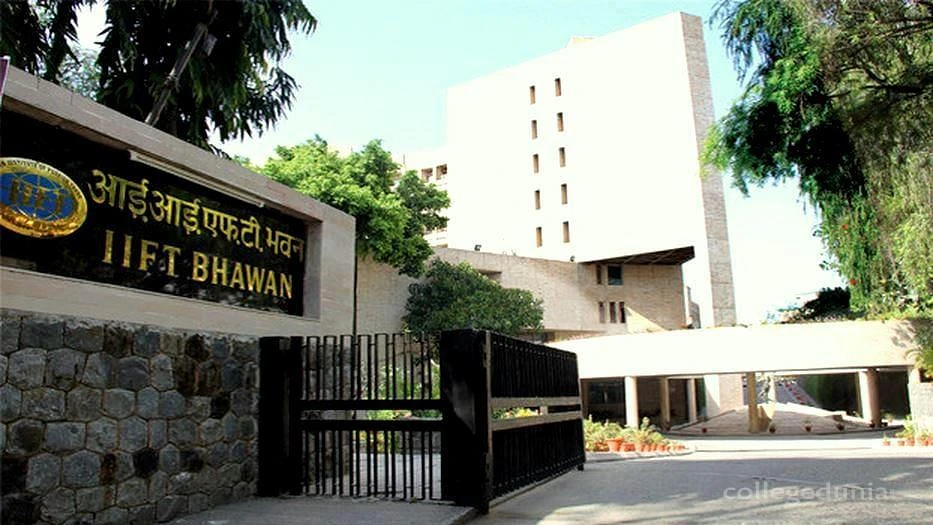
If you're aiming for a career in international trade, finance, or global strategy, there's really only one name that comes up first in India. The Indian Institute of Foreign Trade (IIFT) Delhi isn't just another business school. It's a specialized powerhouse, a 'Deemed to be University' created by the government back in 1963 to build expertise in the country's foreign trade. Nestled in the Qutub Institutional Area of South Delhi, its compact campus belies an outsized reputation. Recent years have seen its average placement package hover around the ₹27-31 LPA mark, with the 2025 batch reportedly seeing an international offer cross the ₹1 crore mark. But the real draw is the niche. When companies like Goldman Sachs, Bain, and Shell come looking for talent that understands cross-border operations, they come here first.
Forget the generalist approach. IIFT's academic identity is laser-focused on the global economy. The flagship is the two-year, full-time MBA in International Business (MBA-IB), with an intake of roughly 250-300 students in Delhi. It covers all core MBA subjects—finance, marketing, strategy—but layers on mandatory, deep-dive courses in international trade policy, forex management, and global supply chains. The newer MBA in Business Analytics (MBA-BA) is a smaller, ~60-seat program that applies data science to business decisions, with a natural tilt towards trade and logistics analytics.
Beyond the MBAs, there's a niche MA in Economics specializing in Trade & Finance (~30-40 seats), various executive programs, and PhD tracks. The faculty is a strong point, with nearly 100% of the ~75 permanent professors holding PhDs. Names like Dr. Jaydeep Mukherjee (a past InsideIIM Professor of the Year) and Dr. Satinder Bhatia carry significant weight in academic and corporate circles.
The pedagogy isn't confined to classrooms. Two unique programs define the IIFT experience. The mandatory Port Visit—to hubs like Mumbai's JNPT or Singapore's PSA—forces students to see textbook logistics in gritty, real-time action. Then there's the Social Awareness Program (SAP), a month-long NGO internship that's more than a checkbox; it's a genuine, often humbling, exposure to grassroots realities. The academic calendar is intense, famously so. The grading is relative and rigorous, setting a pace that students describe as relentless from day one.
The placement reports tell a story of resilience and specialization. The 2024 cycle was tough for everyone, with the global slowdown hitting tech and consulting. IIFT's official average that year was ₹27.30 LPA, with a median of ₹25 LPA. The highest domestic package was ₹75.60 LPA. For the 2025 batch, the institute projects an average of ₹31.30 LPA and a median of ₹26 LPA, with a staggering international offer of ₹1.23 Crore leading the pack.
But here's the reality check you need. While the official placement percentage claim for 2025 is 100%, student discussions on forums like Reddit (r/CATpreparation) during the 2024 downturn pointed to a less rosy picture, with whispers of delayed placements and unspoken numbers. It's a reminder that even top schools aren't immune to market forces. The sectoral split, however, reveals IIFT's core strength. Consulting & Strategy (22-25%) and Finance (21-23%) are the top drawers, with a specific focus on trade finance and investment banking roles you won't easily find elsewhere. Sales & Marketing and IT/Analytics make up most of the rest.
The recruiter list is pure tier-1: McKinsey, Bain, Amazon, Goldman Sachs, JP Morgan, HUL, ITC, Shell, and the Big Four. Summer internships are strong, too, with the 2024-26 batch seeing an average stipend of ₹2.67 lakhs for two months. So, is the placement stellar? For its niche, absolutely. But don't ignore the whispers during a downturn—they're part of the full picture.
Pursuing an MBA here is a significant investment. For the 2025-27 cycle, the total tuition for the MBA-IB program is approximately ₹21.77 lakhs. The MBA-BA program is slightly lower at around ₹17.17 lakhs. On top of that, add hostel and mess charges of about ₹1.5-2 lakhs per year, plus another ₹50,000 or so for other fees. All in, you're looking at a total two-year cost of ₹25 to 28 lakhs.
Financial aid exists but isn't extensive. The main offering is a Need-cum-Merit scholarship that provides a 20% tuition fee waiver for students with a family income below ₹8 LPA. There's also an Exim Bank scholarship for SC/ST toppers. It's not a wide net, so most students fund their education through loans, where the return on investment (ROI) has historically been positive given the average salary outcomes.
The gateway to IIFT is now exclusively through the CAT (Common Admission Test). The institute scrapped its own entrance exam in 2023, simplifying the process. The cutoffs are steep. For General category candidates, you typically need an overall percentile in the range of 96.5 to 98. And they mean business with sectional cutoffs too—usually around 75-80 percentile in each section (VARC, DILR, QA). Just a great overall score with a weak section can knock you out.
The selection process is a multi-stage gauntlet:
The final composite score weighs the CAT performance heavily (about 45-50%), with the PI accounting for 25-30%, and your past academics, diversity factors, and work experience making up the remaining 20-25%. The application fee is ₹2,500 for General/OBC candidates and ₹1,250 for SC/ST/PWD.
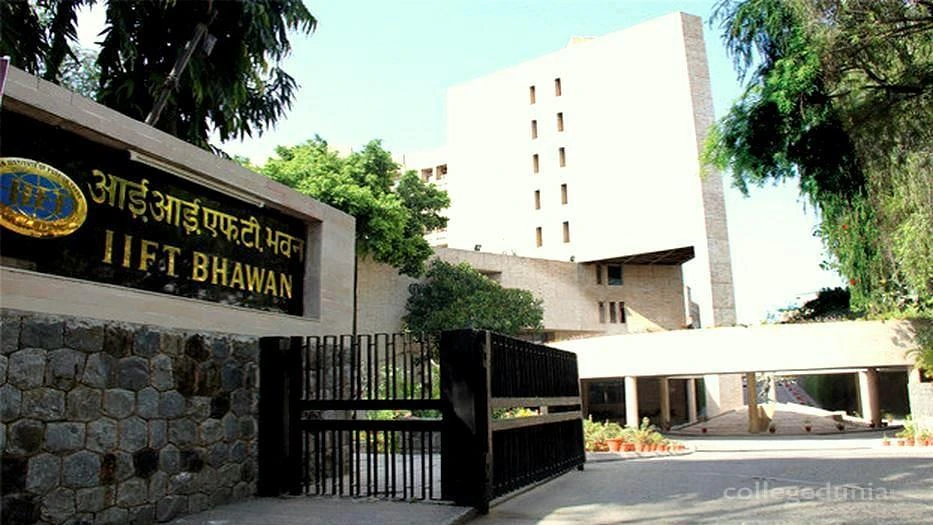
Let's be blunt: don't come for the sprawling lawns. The campus is about 6.5 acres—students call it a 'matchbox' campus. Sports infrastructure is limited to a volleyball court and a badminton court. For anything more, you trek to nearby Sanjay Van or public DDA complexes.
The hostel situation is a mixed bag. It's a mandatory residential program. First-year students are usually in triple-sharing rooms in the Old Hostel (OH), often without AC—a major griate in Delhi's heat. Second years upgrade to double rooms in the New Hostel (NH). Due to overcrowding, some first-year boys get housed in an off-campus annexe a short walk away. The mess food gets a middling '3/5' rating from students. The social epicenter is the campus 'Nescafe' outlet, the default hangout for late-night chai and conversations.
But what the campus lacks in size, it gains tenfold in location. Being in South Delhi means upscale markets like SDA and the nightlife of Hauz Khas Village are your extended playground. The administration is known to be relatively 'chill' with curfews and movement, fostering an adult, self-regulated culture. The peer group is intensely sharp, filled with 98+ percentilers, which drives both competition and camaraderie.
Synthesizing opinions from platforms like InsideIIM, CollegeDunia, and Reddit paints a clear, balanced picture.
The positives are powerful. Alumni unanimously call it the 'Trade Mecca' of India. The brand value for international roles is unmatched. The location in the heart of the capital is a huge plus for networking, interviews, and lifestyle. The ROI, despite rising fees, is still considered very good. And the quality of peers is consistently highlighted as a top benefit—you're learning as much from the person next to you as from the professor.
The negatives are just as consistently reported. The tiny campus and cramped, non-AC hostels are the biggest physical drawbacks. The academic pressure, especially during the initial 'Parichay' trimester, is notoriously high, leading to serious burnout for some. And as noted in the placements section, there's a perception among some students that the institute could be more transparent about placement numbers during tough market years, a sentiment echoed in online forums.
IIFT Delhi isn't for everyone. If you dream of a picturesque, sprawling campus with vast sports fields, look elsewhere. If you want a generic MBA with no specific industry tilt, there are other excellent options.
But if you are specifically targeting a career in international trade, global finance, or cross-border strategy, this is your best bet in the country. The niche is its superpower. The curriculum, the port visit, the faculty expertise, and the recruiter relationships are all fine-tuned for this world. The location is a massive career and lifestyle advantage. For the right candidate—someone with a clear international outlook, a high CAT score, and the resilience for an intense two years—the investment makes compelling sense. Just go in with your eyes open: it's a pressure cooker, not a picnic. But for many, that pressure forges a truly global career.
For authoritative verification of its standing, you can check its official NIRF Rankings page.

In this preview: 5 photos · 0 videos
No, the Indian Institute of Foreign Trade (IIFT) Delhi no longer conducts a separate entrance exam for its MBA (International Business) program. It now accepts Common Admission Test (CAT) scores for domestic student admissions.
The consensus is that each institute has distinct strengths. IIFT Delhi is generally considered superior for careers in Finance and International Trade, while MDI Gurgaon is often preferred for specializations in Marketing and Consulting.
Both campuses share a centralized placement process. However, the Delhi campus is considered the main campus, offering better infrastructure and a more advantageous location compared to the Kolkata campus.
The MBA (International Business) degree from IIFT covers all standard MBA subjects while adding specialized modules focused on global trade, foreign exchange (forex), and international logistics, providing a unique international business edge.
Life for a first-year student is highly intense. A typical day involves classes from 9 AM to 6 PM, followed by committee work and preparation for case competitions, often extending until 3 AM.
Share what future students should know about IIFT Delhi.
Student voices are not rewritten by colleges. We remove spam and abuse.
Wider admission question? Community PulseWhat should future students know?
Tell us which course you're considering. We'll help you work out the next step.
Get instant Partner access after mobile verification. Your public edits are reviewed before they go live.
Claim this college
 Microsoft
 Mother Dairy
 Ninjacart
 Nomura Services India (P) Ltd.
 Paytm
Paytm Philips
 Raymond
 Religare
 RPG Enterprises
 SAP
SAP Schindler Ltd.
 Signify
 Tata International
 Tata Motors
 Tata Steel
 TCS
TCS Tech Mahindra
 Texas Instrument
 Trident
 Virtusa
 Vodafone
 Wipro
Wipro Yes Bank
 ZS Associates
90 named recruiters in the recorded data. Company names are deduplicated.
 Auditorium
 Bank & ATM
 Cafeteria
 Campus Wi-Fi
 Computer Labs
 Gym
Gym Hostel
 Medical
 Smart Classrooms
 Sports Complex
 Study Library