Loading Admission Guardian content
Loading Admission Guardian content

Provisional score based on available data. It may change as more information is verified.
Find a program, read its fee details and explore the admission requirements.
Summary of the programs shown below. First-year fee. Check the note beside each amount for inclusions and exclusions.
| Course | Stream | Fees |
|---|---|---|
| Bachelor of Science [B.Sc] | Science | 22000 |
| Bachelor of Computer Applications [BCA] | Computer Applications | 24000 |
| Diploma in Pharmacy [D.Pharm] | Pharmacy | 36000 |
| Diploma | Medical | 42000 |
| Bachelor of Physiotherapy [BPT] | Medical | 47000 |
Specializations
Eligibility: 10+2
Specializations
Eligibility: 10+2
Specializations
Specializations
Eligibility: 10+2
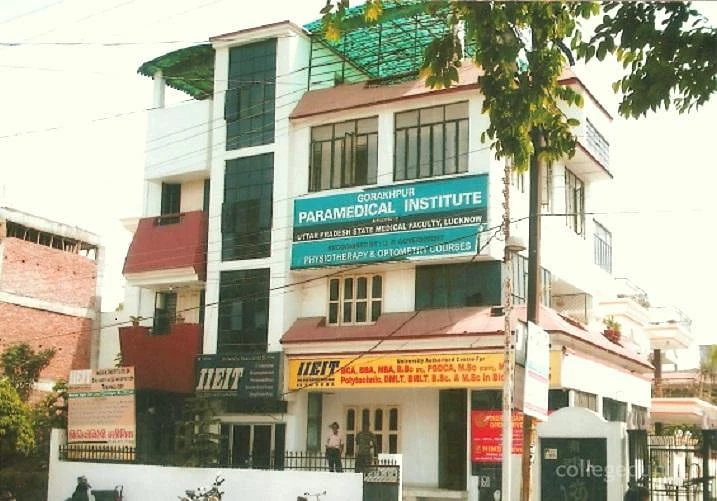
The Indiana Institute of Engineering and Information Technology (IIEIT) in Gorakhpur presents a complex picture. Established in 2001, it's a private institute offering a wide range of programs from B.Tech and BBA to paramedical courses like B.P.T and BMLT. Its primary draw is affordability and a straightforward admission process, often via direct entry. But student reviews paint a starkly different picture from the official claims, highlighting significant gaps in infrastructure, administrative support, and placement assurance. This isn't a college that appears in national rankings; its story is one of local access versus consistent quality, and that tension defines the experience for many who enroll.
IIEIT casts a wide net. Its academic portfolio is less about deep engineering specializations and more about providing vocational and degree options across several fields. You'll find B.Tech, B.Sc, and the standard BCA and BBA programs. Where it gets more specific is in its allied health and paramedical offerings: Bachelor of Physiotherapy (B.P.T), Bachelor in Medical Laboratory Technology (BMLT), and a Diploma in Pharmacy (D.Pharm). Postgraduate options include MBA, MCA, and M.Sc.
The academic model seems geared toward accessibility. They offer personality development classes and weekly guest lectures, which is a decent attempt at value-add. The institute claims tie-ups with hospitals, research centers, and other colleges for student project training. That's promising on paper, but the execution is a recurring question mark among students.
Faculty qualifications are described in broad terms. The institute states its faculty is "well qualified and educated with PhD degrees," putting the count at around 250. However, a student review offers a more granular, and less flattering, perspective: "Faculties are bachelor degree holders and master pursuing." This discrepancy between official claims and on-the-ground reality is a theme you'll see again. The academic calendar and grading system follow the norms of its affiliating university, JRNRVU.
This is the section where the data is thinnest and student concerns are loudest. The research brief contains no concrete numbers for IIEIT—no highest, average, or median packages. There's no list of top recruiters. The official stance, as inferred from student feedback, is notably hands-off: the college does not take responsibility for internships.
That's a major red flag for any institute offering professional degrees.
A review states plainly, "Detailed placement records for physiotherapy are not widely reported, and a high salary package directly from this institute is not guaranteed." For B.Tech and MBA students, this lack of a structured, corporate-driven placement cell is a significant drawback. You're essentially paying for the degree and the hope that the affiliation and your own hustle will land you a job. The institute's strength appears to be in creating graduates for the local job market in paramedical and technical roles, not in facilitating campus recruitment drives with national brands.
If a robust, guaranteed placement track is your top priority, IIEIT's offering, based on available information, is likely insufficient.
Affordability is arguably IIEIT's most compelling feature. In a landscape of skyrocketing private engineering and medical education costs, its fees are notably modest.
For the 2025-2026 session, the total fee for a B.Tech degree is about ₹2.45 lakhs. The first-year installment is around ₹54,000. Compare that to many private colleges, and it's a fraction of the cost. The MBA program totals approximately ₹1.33 lakhs, with a ₹40,000 first-year fee. Paramedical courses like B.P.T come in at ₹1.87 lakhs total, and B.Sc programs range from ₹65,000 to ₹1.4 lakhs for the full duration.
There are additional one-time costs: a ₹350 application form fee and a ₹3,000 admission fee plus the first installment.
Financial aid exists in principle. The institute mentions scholarships for deserving students based on merit and need, and encourages applications for government schemes. A concrete, student-friendly policy is a 5% fee concession for girl candidates. Combined with the 40% seat reservation for girls, this is a genuine effort to improve gender diversity on campus.
Hostel and mess fees are not detailed in the available data, which is a gap prospective out-of-town students need to actively inquire about.
The process here is straightforward, which is a plus for many. There's no complex, multi-round national counseling drama for most seats. Admission is possible both directly and through counseling.
For B.Tech, the key eligibility criterion is a minimum of 60% in Physics, Chemistry, and Mathematics (PCM) in your 12th-grade exams. For MBA, you need a graduation degree in any discipline. The institute doesn't explicitly mandate entrance exams like JEE Main or UPSEE for B.Tech, which reinforces the direct admission pathway.
Cutoff ranks or percentiles aren't published, likely because admissions are often based on meeting the minimum criteria and seat availability rather than fierce competition.
The application process involves downloading a form from the official website, paying a ₹350 fee, and submitting it by the deadline (a notice mentioned May 1, 2026, for the 2026-27 batch). After selection, you pay the ₹3,000 admission fee and your first program installment.
The 40% reservation for girls is a standout policy. It, along with the fee concession, suggests the management is trying to build a specific student demographic. The lack of explicit mention of an NRI or management quota doesn't mean it doesn't exist; the direct admission route often accommodates such cases.
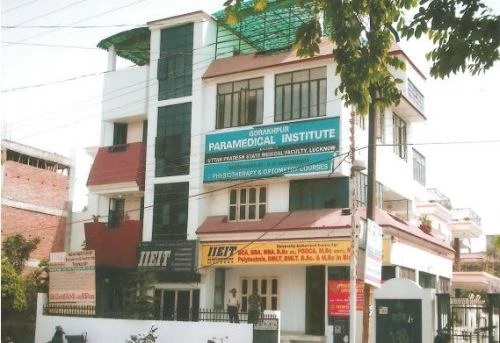
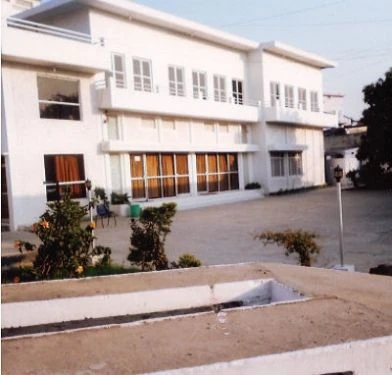
Descriptions of the campus infrastructure are a study in contrasts. Officially, it's described as having "beautiful infrastructure" and "modern buildings equipped with state-of-the-art technology." Student reviews tell another story.
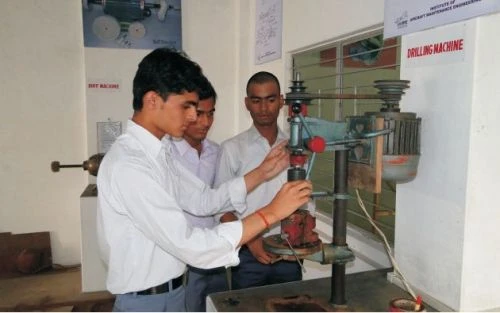
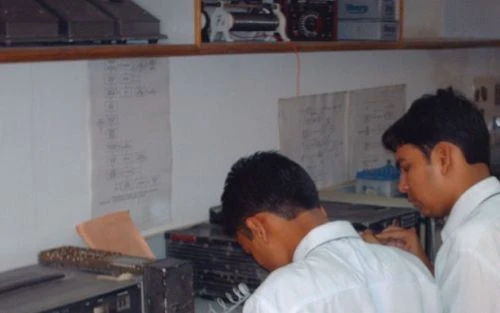
On the positive side, multiple sources confirm a Wi-Fi enabled campus. There's an auditorium and a cafeteria. Academic infrastructure includes "Advanced A.C Computer, Pathology, Bio Tech & Medical Sc. Labs" which are said to be spacious. One student singled out the sports ground as "too good." Medical and transport facilities are claimed to be available.
Now, the negatives from student voices are specific and damning. One review states, "This college gives direct admission but with no facilities." Another complains, "The water facilities is not good; The road are not very well." Most critically for academic life, a student notes, "They even don't have a perfect Library for reading."
Hostel facilities are confirmed to exist, but no details on capacity, quality, gender split, or food are available. The absence of this data, coupled with critical reviews about basic amenities, suggests prospective hostel residents should visit and inspect personally.
This is where the rubber meets the road. Public sentiment is limited but intensely polarized. There are no glowing, five-star testimonials here. The feedback is raw and points to systemic issues.
The Good (It's a short list): A few students found the faculty to be "helping in nature." The admission process is praised as "very advanced" for offering both direct and counseling routes. And, as mentioned, the sports ground gets a thumbs up.
The Bad (This list is longer and more detailed): The criticisms are severe and often directed at management and administration.
These aren't minor grumbles. They point to a potential disconnect between the institute's stated goals and the daily student experience.
IIEIT Gorakhpur is a classic case of "you get what you pay for." Its low fees and simple admission process make it accessible, particularly for students from the region who may not have high entrance exam scores or large budgets. The 40% reservation and fee concession for girls is a genuine positive policy.
However, the trade-offs are significant. The near-total absence of verifiable placement data, coupled with student reports of the college not owning internship responsibility, means you cannot view this as a placement-oriented institute. Your degree will be the primary credential, not the campus recruitment drive. The harsh student reviews concerning infrastructure, library resources, and administrative apathy cannot be ignored. They suggest a management style that is reactive rather than student-centric.
Who might it be for? A local student looking for an affordable, UGC/NAAC-approved degree in paramedical sciences, B.Sc, or B.Tech, who is highly self-motivated, doesn't rely on campus placements, and can manage expectations around amenities. The girl student quota is a tangible benefit.
Who should look elsewhere? Anyone prioritizing strong campus placements, modern infrastructure, a vibrant residential life, or a reputation for academic excellence. Students who value responsive administration and robust learning support systems will likely be disappointed.
In short, IIEIT functions as a gateway to a basic degree at a low cost. It is not a launchpad for a high-flying corporate career. Your decision hinges entirely on whether that trade-off aligns with your goals, budget, and tolerance for institutional shortcomings.
In this preview: 5 photos · 0 videos
IIEIT Gorakhpur is approved by the University Grants Commission (UGC) and the National Assessment and Accreditation Council (NAAC). It is affiliated with Janardan Rai Nagar Rajasthan Vidhyapeeth (JRNRVU), Udaipur, and is also an ISO 9001:2015 Certified Institute.
For the 2025-2026 academic session, the total fee for the B.Tech program is approximately ₹2.45 lakhs. The total fees for B.Sc programs range from ₹65,000 to ₹1.4 lakhs for the complete duration of the course.
Admission can be secured directly or through counseling. For B.Tech, a minimum of 60% in PCM in 12th grade is required. The institute has a notable policy of reserving 40% of its seats for girls and offers them a 5% concession on fees.
The campus is Wi-Fi enabled and includes academic labs (Computer, Pathology, Biotech), a sports ground, an auditorium, and a cafeteria. Hostel facilities are available. However, student reviews frequently cite issues with library resources, water supply, and road conditions.
Student sentiment is cautious. Detailed placement records are not publicly available, and the college states it does not take responsibility for internships. Management and administrative staff have been criticized in reviews for being unresponsive and unprofessional, with some alumni expressing strong regret over their choice.
Share what future students should know about IIEIT.
Student voices are not rewritten by colleges. We remove spam and abuse.
Wider admission question? Community PulseWhat should future students know?
Tell us which course you're considering. We'll help you work out the next step.
Get instant Partner access after mobile verification. Your public edits are reviewed before they go live.
Claim this college

 Auditorium
 Cafeteria
 Computer Labs
 Science Labs
 Sports Complex
 Study Library