Loading Admission Guardian content
Loading Admission Guardian content
Provisional score based on available data. It may change as more information is verified.
Find a program, read its fee details and explore the admission requirements.
Summary of the programs shown below. Fee amounts are not listed. Contact the college for its current fee schedule.
| Course | Stream | Fees |
|---|---|---|
| Bachelor of Technology [B.Tech] (Marine Engineering) | Engineering |
Specializations
Eligibility: 10+2
If you're a fresh high school graduate searching for a four-year B.Tech in Marine Engineering, you're looking in the wrong place. That's the first and most important thing to understand about the Institute of Marine Engineers (India), or IMEI. This isn't a typical undergraduate college. It's a professional powerhouse—a DGS-approved training center where seasoned seafarers go to level up. Think of it as the finishing school for merchant navy engineers, the critical pit stop between being a 4th Engineer and earning the stripes of a Chief Engineer. The campus in Nerul, Navi Mumbai, hums with a different energy. You won't find teenagers fresh out of school. You'll find officers with sea miles under their belts, focused intensely on passing the grueling MMD orals. Their reputation? Among working professionals, it's solid. The faculty are often retired Chief Engineers, and they've got one of the best Kongsberg full-mission engine room simulators in the country. But this is a niche, post-experience world. Let's break down what it actually is.
Forget semesters and credit systems. IMEI's academic calendar is built around the Directorate General of Shipping's examination schedule and the urgent career needs of serving engineers. The programs are intensely practical and hyper-focused.
The core offerings are the Competency Courses. These are the gateways to promotion. The MEO Class II (FG) course, for instance, is a four-month grind that prepares 4th and 3rd Engineers for the exams to become 2nd Engineers. The MEO Class I (FG) is the two-month final sprint to Chief Engineer. Intakes are small—typically 24 to 40 per batch—which allows for the "individual attention" many alumni praise. The teaching methodology is direct: master the DGS syllabus, endure relentless mock orals, and learn from real engine room failures shared by instructors who've lived them.
Then there are the Simulator and Modular Courses. This is where the institute's infrastructure shines. Their Kongsberg K-Sim® Full-Mission Engine Room Simulator is DNV-GL certified and mimics a real MAN 6S70 ME engine. Courses like the 5-day ERS Management Level training are not just checkboxes; they're hands-on crisis management drills. You'll also find specialized courses on the IGF Code for gas-fueled ships and advanced tanker operations, which are essential for moving into the lucrative LNG or chemical carrier segments.
The faculty are the backbone. They're almost exclusively former Chief Engineers or senior superintendents. They're not just teaching theory; they're preparing you for the examination room and, more importantly, for the ultimate responsibility of a ship's engine room. The institute's strong links with bodies like the International Maritime Organization (IMO) and the Institute of Marine Engineering, Science and Technology (IMarEST) in London add a layer of global relevance to the curriculum.
The concept of "placements" here is fundamentally different. Students arriving at IMEI are already employed by shipping companies like Synergy Marine, Anglo-Eastern, or Maersk. They are usually on study leave. So, there's no placement cell arranging interviews.
The ROI is measured in career advancement, not a starting salary. Successfully clearing your MEO exams after the preparatory course means a promotion—from 4th Engineer to 3rd, or 2nd to Chief. That translates directly to a significant jump in salary, often measured in thousands of dollars per month. The institute's certificate carries weight in the industry, signaling that an engineer is well-prepared.
Perhaps the most tangible "placement" benefit is the network. IMEI serves as a massive hub for the Indian maritime engineering community. The connections made during a course—with batchmates and instructors—often lead to referrals for coveted shore-based jobs in technical management, superintendency, or surveying later in one's career. It's an alumni network of industry leaders, not fresh graduates.
The fee structure is straightforward and course-specific. There's no annual tuition. You pay for the specific program you need. For the 2024-2025 period, the flagship MEO Class II course fee is around ₹40,000. Opting for the combo package with the corresponding Engine Room Simulator training (ERS II) brings it to ₹52,000. The MEO Class I course is ₹30,000. Shorter, modular courses like the standalone ERS Operational Level training cost ₹7,500.
These fees are generally considered reasonable within the industry, especially given the simulator access and instructor quality. They are also subject to minor changes based on DGS exam charges.
Hostel fees are charged on a per-day basis due to the varying course durations. A shared non-AC room costs ₹500 per day, while an AC single room is ₹3,000 per day. The hostel is within IMEI House, which is a major convenience.
For financial aid, the institute sometimes offers special concessions to its Student Members. It's worth checking the official website or contacting the administration directly to inquire about any active scholarship or concession schemes when booking a course.
Admission here has nothing to do with JEE ranks or state-level entrance exams. The entire process is governed by DGS regulations and professional eligibility.
There is no entrance exam. Your ticket in is your seafaring career documentation. The selection is a verification process:
The application process is entirely online through the IMEI Portal. Batches for popular courses like MEO Class I and II start frequently, often every month or every alternate month. The key is to plan well in advance based on your ship's schedule and the DGS exam dates. Spots in batches with renowned instructors can fill up quickly.
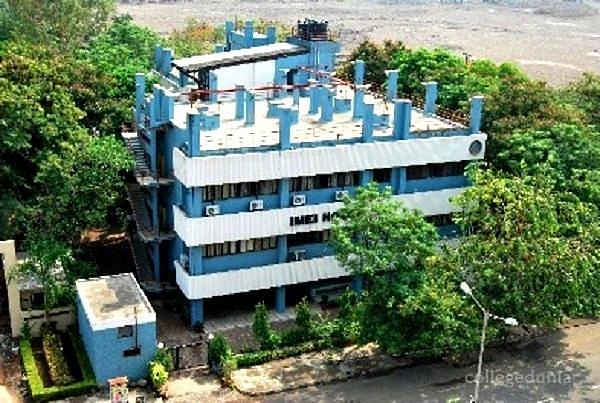
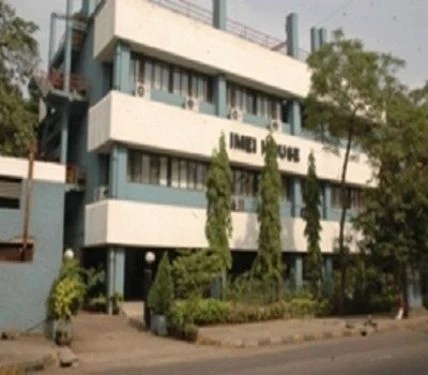
The campus is the IMEI House building in Nerul. It's a functional, professional facility, not a sprawling university campus. The location is a plus—it's about 1.5 km from Nerul Railway Station and well-connected to the Sion-Panvel Expressway.
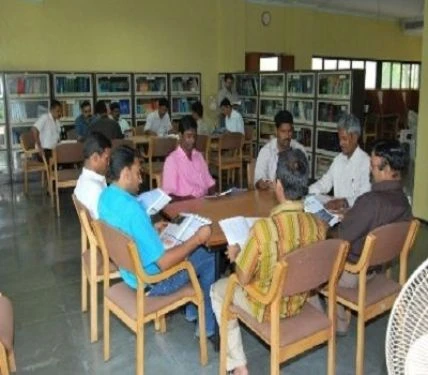
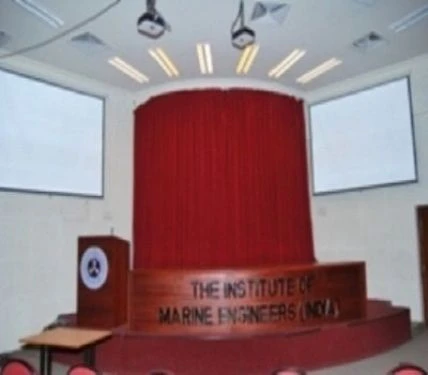
Infrastructure is geared towards efficient learning. Classrooms are air-conditioned with audio-visual setups. The library is a notable resource, packed with technical manuals, journals like the Marine Engineers Review (MER), and digital archives crucial for exam preparation.
The hostel gets consistently good reviews (around 4/5) from seafarers for its cleanliness and convenience. Rooms are tastefully furnished with attached bathrooms. The fact that it's in the same building as the classrooms is a huge relief for those on a tight study schedule.
Student life is austere and focused. You're not here for extracurriculars or fests. You're here to study. The canteen provides basic, hygienic meals, but most reviews label the food as "average" and "repetitive." It's common for students to walk to the eateries in Nerul Sector-19 for variety. The social life is your batch—bonding over shared stress, swapping sea stories, and preparing for orals together. The atmosphere is that of a dedicated professional boot camp.
Scouring forums like Marine Insight, Quora, and Google reviews paints a consistent picture. The sentiment is largely positive, but from a very specific user: the working seafarer.
The overwhelming praise is for the faculty. Reviews constantly mention that the instructors, often retired Chiefs, are the institute's greatest asset. "They teach you how to think in the orals, not just what to say," is a common refrain. The quality and realism of the Kongsberg simulator are also frequently highlighted as a major advantage over other training centers.
The professional environment is appreciated. Students like that it's no-nonsense, with everyone there for the same serious purpose. The hostel's cleanliness and location are pluses.
The criticisms are operational. Some alumni report slow administrative responses and delays in document processing. The canteen food is a common gripe. And the strict 90%+ attendance mandate (a DGS rule, not IMEI's) is noted as stressful, especially for those trying to juggle final revisions. These are seen as friction points, not deal-breakers, in the larger mission of passing the exam.
For its intended audience—serving marine engineers aiming for their next Certificate of Competency—IMEI Navi Mumbai is a strong and reputable choice. It's not a college for beginners; it's a specialist training institute for professionals. If you're a 3rd Engineer with your sea time completed, booking your MEO Class II prep here is a logical, well-regarded step. The faculty expertise and top-tier simulator provide tangible value for the course fee. The networking opportunity is an unadvertised bonus. However, if you're a 12th-grade student dreaming of a career at sea, you need to look at undergraduate programs at the Indian Maritime University (IMU) or the Marine Engineering and Research Institute (MERI). IMEI is your next stop, years down the line. For the right person at the right career stage, it's practically an essential one. Just go in with the right expectations: this is about certification, not campus life.
In this preview: 5 photos · 0 videos
No, the Institute of Marine Engineers India (IMEI) in Navi Mumbai does not offer a B.Tech program in Marine Engineering. IMEI specializes in post-sea competency courses for maritime professionals, such as MEO Class I, II, and IV. For a B.Tech in Marine Engineering, prospective students should consider institutions like the Indian Maritime University (IMU) campus in Navi Mumbai (T.S. Chanakya) or the Marine Engineering and Research Institute (MERI).
Yes, certificates from the Institute of Marine Engineers India (IMEI) are valid internationally. The institute's courses are approved by the Directorate General of Shipping (DGS) and are designed in compliance with the international STCW (Standards of Training, Certification, and Watchkeeping) guidelines. This ensures that the certifications are recognized by maritime authorities globally.
To book a course at the IMEI campus in Nerul, you should visit the official website at imare.in. On the website, use the "Course Booking" link, which will redirect you to the institute's IMS (Institute Management System) portal to complete the booking process for your desired course.
Yes, the Institute of Marine Engineers India (IMEI) provides hostel facilities for students coming from outside the area. IMEI House, located on-campus, offers accommodation with both air-conditioned (AC) and non-AC options for the convenience of outstation students.
Following the pandemic, most competency courses at the Institute of Marine Engineers India (IMEI) have returned to being conducted offline, or in-person. While the primary mode of instruction is now offline, some modular courses may offer hybrid (a mix of online and offline) options.
Share what future students should know about Institute of Marine Engineers India.
Student voices are not rewritten by colleges. We remove spam and abuse.
Wider admission question? Community PulseWhat should future students know?
Tell us which course you're considering. We'll help you work out the next step.
Get instant Partner access after mobile verification. Your public edits are reviewed before they go live.
Claim this college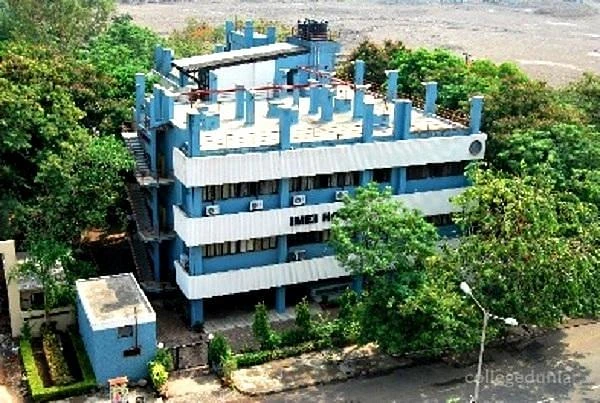
 Auditorium
 Cafeteria
 Computer Labs
 Medical
 Science Labs
 Study Library