Loading Admission Guardian content
Loading Admission Guardian content

Selected ranking categories, with the recorded year beside each result. Open all records for the complete history.
11 published records · Lower numeric ranks are stronger
NIRF
Medical
#212022
IIRF
Medical
#262022
IIRF
Physiotherapy
#382023
The Week
Medical
#162022
Find a program, read its fee details and explore the admission requirements.
Summary of the programs shown below. Fee periods can differ by program. Check the note beside each amount before comparing costs.
| Course | Stream | Fees |
|---|---|---|
| M.B.B.S. | Medical | 6500 |
| Bachelor of Physiotherapy [BPT] | Medical | 12500 |
| Bachelor of Science [B.Sc] | Paramedical | 12500 |
| Diploma | Medical | 15000 |
| General Nursing and Midwifery [GNM] | Paramedical |
All accepted exams
Eligibility: 10+2 with 50% + NEET
Eligibility: 10+2
Specializations
All accepted exams
Eligibility: 10+2
Specializations
All accepted exams
2 exams with cutoff data available - showing recent entries
If you want to understand medicine by touching patients, not just reading about them, the Institute of Post Graduate Medical Education and Research (IPGMER) in Kolkata is a place you'll hear about. It's not just a college; it's SSKM Hospital, a 3000-bed tertiary care giant where the line between classroom and clinic blurs completely. Founded as a postgraduate institute in 1957, it's now a premier government institution offering everything from MBBS to super-specialty DM/MCh programs. Ranked 24th in India by NIRF for two years running, its reputation is built on an overwhelming, almost brutal, volume of clinical cases. That's the trade-off: elite training in the heart of the city, but you work for it.
IPGMER’s academic structure is unique. For decades, it was a postgraduate-only powerhouse before introducing undergraduate courses in 2004. That legacy shapes everything. The MBBS program (200 seats) is the flagship UG offering, alongside B.Sc Nursing (60 seats), BPT, and various paramedical B.Sc courses. But the real depth is in postgraduate and super-specialty education. There are over 200 MD/MS seats across staples like Medicine, Surgery, Pediatrics, and Radiology. Where IPGMER truly stands apart in Eastern India is its super-specialty portfolio—DM programs in Cardiology, Neurology, and Nephrology, and MCh courses in Neurosurgery and Cardiothoracic Surgery. The faculty roster of 350+ includes many who literally wrote the textbooks. The academic calendar follows WBUHS, but the real curriculum is the hospital itself. A key historical footnote: the campus houses the Ronald Ross Memorial, where the malaria parasite transmission was discovered.
"Placement" in a government medical college context means something different. It's about the compulsory internship, subsequent house-staff positions, and the brand value that opens doors. Every MBBS graduate completes a one-year rotating internship right at SSKM Hospital, with a 100% placement rate for that role. The stipend for interns is around ₹28,000 to ₹30,000 monthly. Postgraduate trainees (PGTs) earn between ₹45,000 and ₹55,000, scaling up for post-doctoral roles. The career path isn't corporate recruitment; it's clearing national exams. The overwhelming consensus from alumni is that the "IPGMERian" tag carries immense weight when applying for Junior Residency spots across top hospitals in India or for exams like USMLE/PLAB. Top eventual employers include the Government of West Bengal Health Service and major private hospital chains like Apollo, AMRI, and Fortis. The placement story here isn't about a placement cell—it's about the institute's reputation doing the work for you.
This is where a government institution shines. The fees are heavily subsidized, making elite medical education accessible. For the MBBS program, the annual tuition fee is approximately ₹9,000. Add a one-time admission fee of around ₹1,000 and a refundable caution deposit of ₹10,000. Hostel rent is a nominal ₹125 per month. The major variable is mess fees, which are student-managed and range from ₹2,500 to ₹3,500 monthly. All in, the total estimated cost for the entire 4.5-year MBBS course, including basic living expenses, is under ₹1.5 lakhs. That's an almost unbelievable figure in modern medical education. Financial aid is available through state scholarships like the Swami Vivekananda Merit-cum-Means (SVMCM) Scholarship, Kanyashree Prakalpa for female students, and Oasis scholarships for SC/ST/OBC categories.
Admission is strictly through national and state-level entrance exams. For MBBS, you need a qualifying score in NEET-UG. For MD/MS, it's NEET-PG, and for DM/MCh, it's NEET-SS. Nursing admissions go through JENPAS-UG. IPGMER is consistently the first or second choice in West Bengal, alongside Medical College Kolkata, which reflects in its high cutoffs. For the 2024 cycle, the All India Quota (AIQ) for MBBS generally closed within the top 1,500 to 2,500 All India Ranks (AIR). For the West Bengal state quota, the cutoff usually fell within the top 5,000 to 8,000 AIR. You'll need a score in the 660+ range for AIQ and 640+ for the state quota—a 600 is typically not enough. The selection process is centralized: clear NEET, participate in MCC (All India) or WBMCC (State) counseling, followed by document verification and a medical fitness check at the college.
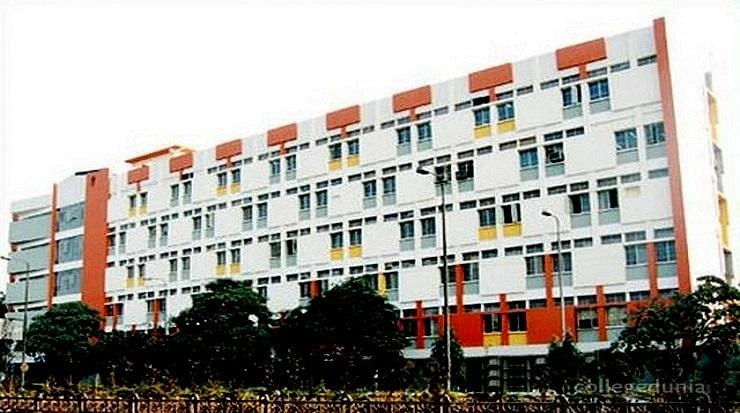
The campus is a sprawling, dense 34-40 acre complex in the heart of Kolkata. It's not a secluded, lush campus; it's a working hospital city. The hostels reflect this duality. The main boys' and ladies' hostels are on or near campus, with rooms often shared between 2-3 students. Reviews on infrastructure are mixed—some wings are heritage structures showing their age, with complaints about damp walls and slow maintenance, while newer blocks are adequate. The central library, however, is a major asset with over 30,000 books and digital access to resources like ClinicalKey and UpToDate. Sports facilities on campus are limited to a small playground and indoor games in hostels, but students have easy access to the vast Maidan nearby. The hospital infrastructure is the crown jewel: 3000+ beds, advanced diagnostic labs, BSL-3 facilities, and the renowned Bangur Institute of Neurosciences. And you're in Bhowanipore—the street food and cultural life of Kolkata are right outside the gate.
Scouring forums like Reddit and Quora reveals a clear, consistent picture. The praise is fervent, and the criticisms are pragmatic. The overwhelming positive is clinical exposure. Students repeatedly call it "unmatched." You see textbook-rare cases daily, and by internship's end, clinical confidence is high. The brand value of an SSKM degree in West Bengal is elite. The location in central Kolkata is a huge plus for food and transport. But there are significant trade-offs. The patient load is described as "overwhelming," leading to high stress and long hours—"be prepared to work 14 hours a day during internship." Infrastructure decay in parts of the hostels is a common gripe. Student politics is an active part of campus life, and administrative red tape can slow down stipends and paperwork. As one student summed it up: "The Woodburn Ward is like a 5-star hotel, but the general wards are where the real struggle and real learning happen."
IPGMER is a specific kind of bargain. For a student seeking the highest possible clinical volume in a major city and who is unfazed by crowded, sometimes chaotic, working conditions, it offers an education that few private colleges can match—and at a fraction of the cost. The subsidized fee structure is a massive advantage, and the brand opens doors across India. It's best for resilient, hands-on learners who define "campus life" by time spent in the wards, not on lawns. But if you prioritize pristine hostels, a serene campus, or a more curated, less politically active student environment, you might find the SSKM experience grating. The choice often comes down to IPGMER versus Medical College Kolkata (MCK); here, IPGMER generally edges ahead for its super-specialty depth and slightly more modern clinical approach. For the right student, it's not just worth it; it's a career-defining launchpad.
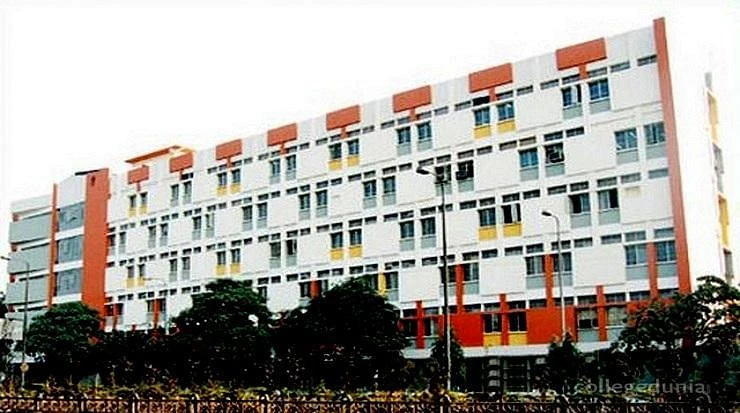
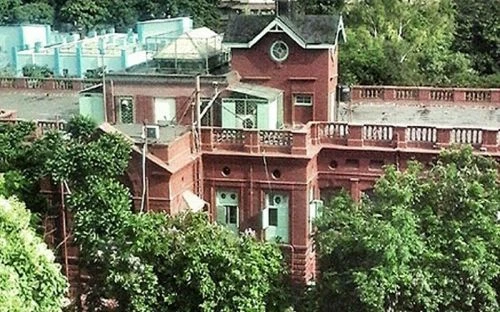
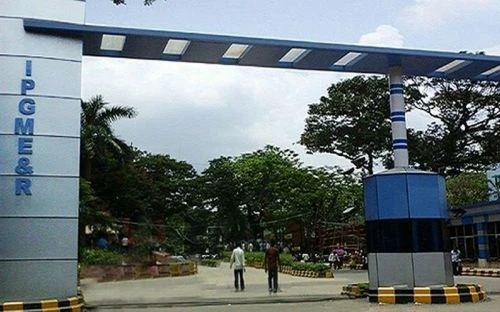
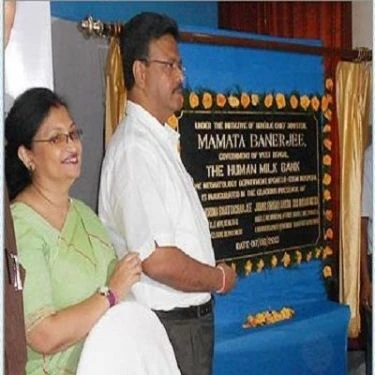
In this preview: 5 photos · 0 videos
Both IPGMER and Medical College Kolkata (MCK) are top-tier government medical colleges in West Bengal. MCK has a longer heritage and history, while IPGMER is often preferred by students for its superior Super-Specialty departments and a slightly more modern clinical approach.
For MBBS admission in West Bengal, including at IPGMER, there is currently a mandatory service bond. If a student opts out of this bond, they are required to pay a financial penalty. This was typically around ₹1 Lakh for MBBS, but prospective students must check the latest official notification from the West Bengal MBBS Counseling Committee (WBBMCC) for the 2025 admission cycle as the terms are subject to change.
First-year MBBS students at IPGMER are usually housed together in hostel facilities as a measure to prevent ragging. The hostel rooms are described as basic but functional, providing the necessary accommodation for new students.
IPGMER has a strict anti-ragging committee in place. While informal "introductory sessions" may exist, severe ragging has not been reported in recent years due to the enforcement of strict National Medical Commission (NMC) guidelines and institutional vigilance.
For the General Category, a NEET score of 600 is usually insufficient for admission to IPGMER. Based on 2024 admission trends, candidates typically needed a score of 660 or above for the All India Quota (AIQ) and around 640 or above for the State Quota seats.
Share what future students should know about IPGMER.
Student voices are not rewritten by colleges. We remove spam and abuse.
Wider admission question? Community PulseWhat should future students know?
Tell us which course you're considering. We'll help you work out the next step.
Get instant Partner access after mobile verification. Your public edits are reviewed before they go live.
Claim this college
 Auditorium
 Cafeteria
 Medical
 Sports Complex
 Study Library