Loading Admission Guardian content
Loading Admission Guardian content

Provisional score based on available data. It may change as more information is verified.
Find a program, read its fee details and explore the admission requirements.
Summary of the programs shown below. Fee amounts are not listed. Contact the college for its current fee schedule.
| Course | Stream | Fees |
|---|---|---|
| Bachelor of Technology [B.Tech] (Information Technology) | Engineering | |
| Master of Technology [M.Tech] (VLSI Design) | Engineering | |
| Ph.D | Science |
Specializations
All accepted exams
Eligibility: 10+2 with 45% + JEE Main
Specializations
Eligibility: Graduation
Eligibility: Post Graduation
If you're looking for a place where the physics behind the circuit matters more than the polish of the campus, the Institute of Radio Physics and Electronics (IRPE) is a singular choice. Founded in 1949 by the 'Father of Radio Science in India,' Professor Sisir Kumar Mitra, this University of Calcutta department has been a UGC Centre of Advanced Study since 1963. It’s a government-run institution where the total cost of a B.Tech can be less than a single semester at a private college, yet its graduates land roles at Intel, ISRO, and NVIDIA. The trade-off is stark: world-class academic depth in a setting that feels frozen in a different era. For the right student, that's a bargain worth making.
IRPE’s academic identity is built on a deep, theory-first approach to electronics. The transition of its flagship B.Tech ECE to a 4-year program in 2015 modernized the structure, but the soul of the curriculum remains rooted in the radio physics legacy. The intake is small, around 60-64 students, which allows for closer faculty interaction.
The postgraduate offerings are where specialization shines. The M.Tech in Radio Physics and Electronics splits into two distinct tracks: Microwave and Space Science, and Nanoelectronics and Photonics. The M.Tech in VLSI Design is particularly noted, even offering a part-time option for professionals. And then there’s the Ph.D. program, which is the heart of the institute’s research reputation.
Faculty strength is a major asset. With nearly 100% of its ~24 permanent professors holding PhDs from top institutions, the teaching is authoritative. Professors like Debatosh Guha (a J.C. Bose Fellow) and Animesh Maitra are well-known in their fields. The academic calendar runs on a January-December cycle, which is different from most Indian universities. Collaborations are serious business here, with active MoUs for research with ISRO and MeitY.
The placement story here has two clear chapters: the undeniable value and the tempered expectations. Let’s start with the numbers. The official median package for the University of Calcutta’s B.Tech cohort (where IRPE is a major contributor) was a solid ₹10.0 LPA for the 2024 batch, as reported in the NIRF 2025 documentation. The average tends to hover between ₹8.5 to 10 LPA. The highest on-campus offer in 2024 was ₹18.5 LPA, with student whispers of off-campus peaks near ₹24.5 LPA.
Placement percentage for B.Tech is around 85%, which is a decent outcome. For M.Tech, it’s lower at 40-50%, but that’s largely by design—a significant chunk of postgrads pursue PhDs instead. The recruiter list is impressive for a state university department: Intel, Qualcomm, Texas Instruments, NVIDIA, and ISRO for core roles, alongside Amazon, Microsoft, and major IT service firms. About 70% of students secure internships, often at ISRO or tech hubs in Kolkata’s Salt Lake Sector V.
The reality check? This isn’t a placement-driven factory. The process is quieter, more reliant on the institute’s legacy reputation than a flashy corporate relations team. You need to be proactive. But for a total degree cost under ₹70,000, an outcome of ₹10 LPA is an ROI that’s virtually impossible to beat anywhere else in the country.
This is where IRPE stops the conversation. The affordability is staggering in today’s education market. For the B.Tech program, annual tuition is between ₹12,000 and ₹15,000. Over four years, you’re looking at a total academic fee of less than ₹70,000. The M.Tech program costs about ₹12,000 per year.
Hostel fees are heavily subsidized by the university, at just ₹1,500 – ₹2,000 per semester. The catch is the condition of the facilities, which we’ll get to. Mess fees, managed separately by students, run ₹2,500 – ₹3,500 per month.
Financial aid is available through state schemes like the Swami Vivekananda Merit-cum-Means Scholarship (SVMCM) and Kanyashree for female students. Given the already low fees, securing a scholarship can virtually cover a student’s entire direct educational cost.
Admission is strictly merit-based through centralized state counseling. For the B.Tech in ECE, the only gate is the West Bengal Joint Entrance Examination (WBJEE). There’s no management quota, no donation seats—just your rank.
The cutoffs are competitive but not unreachable. For the 2024 counseling rounds, the General category (Home State) seats closed around ranks 800 to 1,500. For All India General candidates, the range was tighter, between 500 and 900. The Tuition Fee Waiver (TFW) seats, as expected, had the highest cutoff, around ranks 400 to 700. If your WBJEE rank is above 2,000, chances are slim.
For M.Tech programs, the process involves a GATE score in Electronics or Physics, followed by a University of Calcutta entrance test and an interview. The application window for WBJEE typically opens in December, while M.Tech applications are around June-July.
Let’s be blunt: if you’re looking for a lush, sprawling campus with modern amenities, you’re in the wrong place. IRPE operates from the historic but worn Rajabazar Science College campus, a dense 4-5 acre urban plot. The buildings are old. Student reviews on Reddit aren’t exaggerating when they say it looks unchanged for decades. The academic infrastructure, however, tells a different story. The labs for microwave engineering, VLSI design, and the specialized Liquid Phase Epitaxy (LPE) Reactor are excellent and support serious research.
The hostel situation is the biggest pain point for many. While the fees are minuscule, you get what you pay for. Accommodations in university halls like P.G. Lady Students’ Hall or the Rajabazar hostels are basic, with a quality rating students often put at 2.5 out of 5. Complaints about hostel food hygiene and quality are frequent and persistent, with mentions of issues as recent as 2025.
Social life is quiet. There’s no giant cultural fest. The highlight is the technical seminar circuit and the annual CODEC conference. The campus has Wi-Fi via the National Knowledge Network, but it can be spotty. The canteen is famously "cheap" and serves basic Bengali meals. The location is a plus—right in North Kolkata, with Sealdah railway station and the metro within walking distance.
The consensus from forums like Quora, CollegeDunia, and Reddit paints a consistent picture. The praise is fervent for the academics and the legacy. “If you want to learn the ‘Physics’ behind the ‘Electronics,’ this is the place,” is a common refrain. Alumni talk about the weight an IRPE degree carries in global research circles and the unbeatable return on investment.
The criticism is equally fervent and focused on infrastructure and administration. The dilapidated buildings and bureaucratic “red-tapism” of the university system are constant grievances. The hostel food situation is a major health and morale concern for many. Teaching style is described as traditional and lecture-heavy, with a strict 75% attendance rule enforced.
It’s a divided experience. You’ll either love the pure, unvarnished academic focus and learn to tolerate the surroundings, or you’ll feel stifled by the lack of campus vibrancy. There’s not much middle ground.
IRPE is a niche, high-value proposition for a specific kind of student. It is absolutely worth it if you are intensely curious about the fundamental science of electronics and communication, if you see yourself pursuing research or a core engineering role (especially in microwaves, space science, or VLSI), and if your primary metric is maximizing learning per rupee spent. The academic pedigree, faculty quality, and historic reputation are genuine. For a total cost of a few thousand dollars, you get an education that opens doors to top tech firms and premier PhD programs.
You should probably look elsewhere if a vibrant, holistic campus life with modern dorms and facilities is a priority, or if you thrive in a more applied, project-based learning environment. The trade-offs in daily comfort and administrative hassle are real. Ultimately, IRPE isn’t for everyone. But for those it fits, it’s not just a good college—it’s a unique academic institution that stands apart in the Indian education landscape.
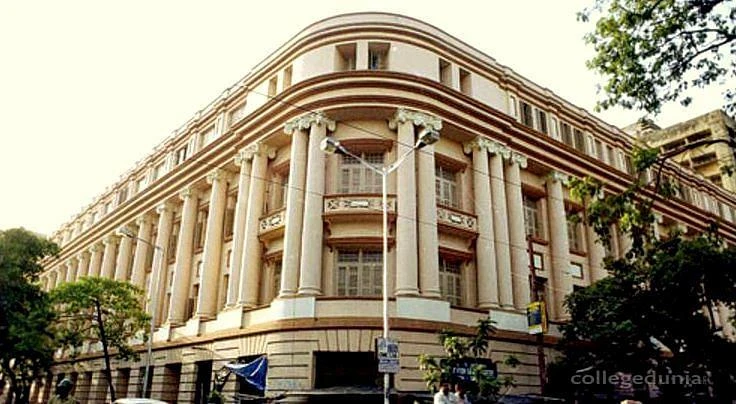

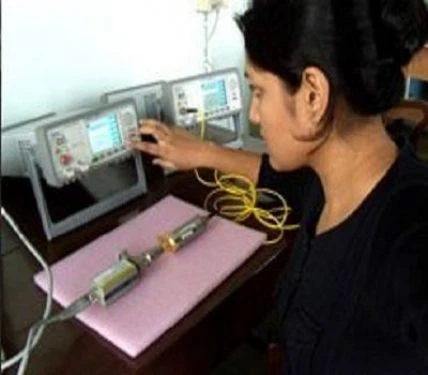
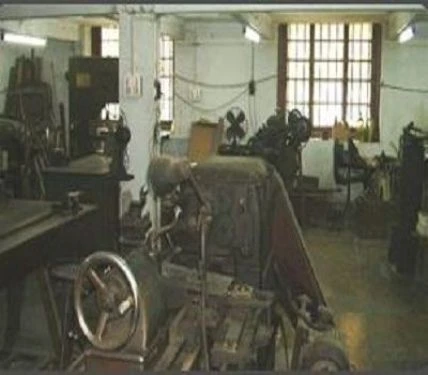
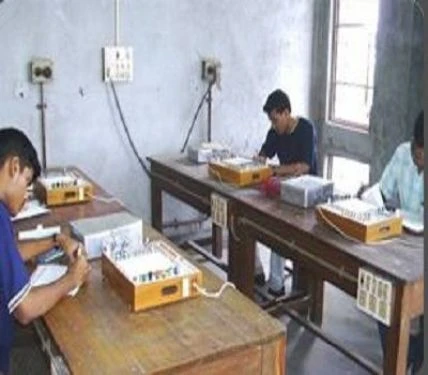
In this preview: 5 photos · 0 videos
While Jadavpur University offers better infrastructure and campus life, the Institute of Radio Physics and Electronics (IRPE) is generally considered superior for core research and specialized fields like Microwave and Space Science within ECE.
For the General category, securing a rank under 2000 is typically necessary. Admission with a rank around 5000 is considered unlikely, as the institute's seats usually fill with much higher-ranked candidates.
The B.Tech degree is formally awarded by the University of Calcutta. The Institute of Radio Physics and Electronics (IRPE) is the specific academic department under the university where the program is conducted.
Placements for the M.Tech in VLSI are very strong, particularly for core semiconductor and electronics companies like Intel and Qualcomm. Success in these placements is contingent on students possessing strong coding and Verilog skills.
No, there is no mandatory uniform policy for students at the Institute of Radio Physics and Electronics (IRPE).
Share what future students should know about IRPE.
Student voices are not rewritten by colleges. We remove spam and abuse.
Wider admission question? Community PulseWhat should future students know?
Tell us which course you're considering. We'll help you work out the next step.
Get instant Partner access after mobile verification. Your public edits are reviewed before they go live.
Claim this college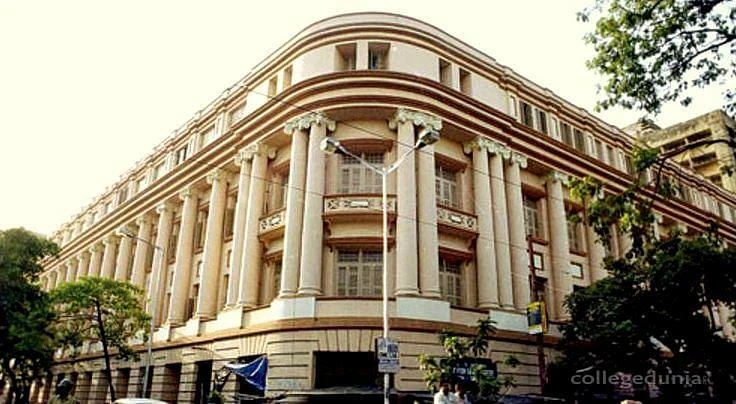
 Computer Labs
 Study Library