Loading Admission Guardian content
Loading Admission Guardian content

Selected ranking categories, with the recorded year beside each result. Open all records for the complete history.
12 published records · Lower numeric ranks are stronger
Financial Times
MBA
#312024
Find a program, read its fee details and explore the admission requirements.
Summary of the programs shown below. Fee periods can differ by program. Check the note beside each amount before comparing costs.
| Course | Stream | Fees |
|---|---|---|
| Advanced Management Programme | Management | 1386000 |
| Post Graduate Programme in Management (Working Executives) | Management | 3046000 |
| Post Graduate Program in Management [PGPM] | Management | 3629620 |
| Post Graduate Program in Management for Senior Executives [PGPMAX] | Management | 4163000 |
| Fellow Programme in Management [FPM] | Management |
Specializations
Eligibility: Graduation
Specializations
Eligibility: Graduation
All accepted exams
Eligibility: Graduation + GMAT
Eligibility: Graduation
Eligibility: Post Graduation
 Accenture
 Adani group
 Amazon
 Axis Bank
 Azul Systems (India) Pvt. Ltd
 Cognizant
 Deloitte
 Flipkart
 Google
 HDFC Bank
 ICICI Bank
 Microsoft
 Novartis
 OpenText
 Uber
Uber Yes Bank
 ZS Associates
The Indian School of Business (ISB) in Hyderabad isn't just another business school. It's a financial and professional gamble that, for the right candidate, can pay off spectacularly. Established in 2001, it carved a unique niche with its intense, one-year Post Graduate Programme (PGP) aimed squarely at working professionals. With a sprawling 260-acre campus in Gachibowli and the rare distinction of holding the "Triple Crown" of accreditations (AACSB, EQUIS, AMBA), ISB operates in a league of its own in India. But that league comes at a steep price—north of INR 40 lakhs for the flagship program. The 2024 placement reports showed an average package hovering around INR 33-34 LPA, a solid number that nonetheless sparked heated online debates about Return on Investment (ROI) in a tough market. For many, the real product isn't the curriculum but the network—a powerful, responsive alumni base that includes names like boAt's Aman Gupta and Zivame's Richa Kar. It's a pressure cooker of an experience, globally ranked but intensely local in its competitive dynamics.
Forget the traditional two-year MBA model. ISB's academic engine is its 12-month PGP, a whirlwind designed for professionals with at least two years of experience. The intake is large—around 850-900 students split between the Hyderabad and Mohali campuses under the "One School, Two Campuses" model. The academic calendar runs from April to April, and the pace is famously brutal. Terms are just six weeks long, leading to the common student refrain of surviving on four to five hours of sleep.
The curriculum offers specializations in core areas like Finance, Marketing, and Operations, but also has industry-focused tracks in Healthcare and Public Policy. A key differentiator is the faculty mix. While there are about 65 permanent resident faculty, the school leverages its founding partnerships with Wharton and Kellogg to bring in over 100 visiting professors from top global institutions. That's a unique draw. The grading is on a strict 4.0 scale, and the environment is fiercely competitive despite a Grade Non-Disclosure policy. There's no summer internship; instead, students work on live Experiential Learning Projects (ELPs) with companies. For those further along in their career, ISB offers longer, part-time formats like the PGPpro (18 months) and PGPMAX (15 months) for senior executives.
The placement report is the document everyone scrutinizes. For the 2024 graduating class, the official average package stood between INR 33.25 and 34.21 Lakhs Per Annum (LPA), with a median around INR 31-32 LPA. The highest international package reported was a staggering INR 1.35 Crore. Consulting remains the darling sector, taking 27-37% of the batch, with McKinsey, BCG, and Bain leading the charge. Technology (Amazon, Google, Microsoft) and BFSI (Goldman Sachs, HDFC Bank) are other major recruiters.
But here's where you need to read between the lines. The school historically boasts 99%+ placement rates. However, for the 2024 cycle, discussions on forums like r/MBAIndia pointed to a tighter market, with an estimated 60-100 students still seeking roles as graduation approached. The official claim that ~80% of the class secured packages above INR 35 LPA is impressive, yet it implicitly acknowledges a segment that did not. The placement process is centralized for both campuses, but students often note it can feel "opaque," with a heavy focus on candidates fitting the consulting or product management mould. If you're coming from a non-traditional background, you'll need to network aggressively from day one. The ELPs are crucial for this, often converting into pre-placement offers.
Let's be blunt: ISB is one of the most expensive management educations in India. For the 2024-25 PGP, the all-inclusive cost is INR 38,97,480 for a shared quad accommodation and goes up to INR 41,65,340 for a private studio. This lumps together a hefty tuition fee (~INR 24.72 Lakhs), a non-refundable admission fee, and premium accommodation. You should also budget an additional INR 6.45 Lakhs or so for books, meals, a mandatory laptop, and optional international exchange trips.
The sticker shock is real, but ISB does offer a range of scholarships that can significantly offset the cost. These include merit-based, need-based, and diversity scholarships (like the ISB-Aman Gupta Scholarship for entrepreneurs). They can cover anywhere from 25% to 100% of the tuition fee. Securing one is highly competitive and forms a critical part of the ROI calculation for many applicants. Most students rely on education loans, which major banks readily provide given the school's brand reputation.
ISB's gatekeepers are the GMAT or the GRE. They do not accept CAT scores for the PGP. The median GMAT score for the admitted class typically ranges from 710 to 720 (for the Classic Edition), which translates to roughly a 655-675 on the newer GMAT Focus Edition. A GRE score of 320-330 is considered competitive. But a good test score is just a ticket to the next round.
The selection is intensely holistic. You need a minimum of 24 months of full-time work experience by the program start date. The application involves academic transcripts, 2-3 essays, and one professional recommendation. Shortlisted candidates are then called for a personal interview, which often includes an on-the-spot essay. The application fee starts at INR 5,000 for Round 1 and increases in later rounds. For exceptional candidates without the work experience, there's the Young Leaders Program (YLP), a deferred admission pathway.
The Hyderabad campus is often described as a "5-star resort," and it's not much of an exaggeration. The 260-acre LEED-rated campus houses students in four "Student Villages." Accommodation isn't a hostel in the traditional sense; it's serviced apartments. You can choose a "Quad" (four private bedrooms with a shared lounge and kitchen) or a private Studio (ideal for married students). The quality is consistently rated near 5/5, with 24/7 housekeeping.
Infrastructure is top-tier. The Learning Resource Centre (library) provides access to Bloomberg terminals, Reuters data, and over 10,000 e-journals. There's a behavioural lab, a finance lab, and DLabs, the on-campus incubator. For downtime, facilities include a swimming pool, indoor courts for basketball and squash, tennis courts, a football ground, and a fully-equipped gym. Food is catered by Sarovar Portico, with options ranging from the main dining hall to outlets like Subway. The social calendar peaks with the annual fest "Solstice," a major networking and cultural event.
Synthesizing feedback from platforms like Shiksha, CollegeDunia, and Reddit paints a consistent picture of highs and lows.
The network is universally hailed as the program's crown jewel. Alumni are remarkably responsive, and the diversity of the cohort—doctors, engineers, army officers, lawyers—enriches classroom debate. The global faculty and the brand's international recognition (evidenced by its Financial Times Ranking) are major positives. Many call the campus life "unparalleled."
But the critiques are just as pointed. The one-year format is a "pressure cooker" of academic rigour. The high fee leads to serious ROI anxiety, especially for those already earning INR 20 LPA or more pre-MBA. The relative grading system fuels a competitive, sometimes stressful environment. Most notably, the 2024 placement cycle revealed vulnerabilities. While the average package held steady, online forums were abuzz with concerns about the number of students still unplaced late in the process, a stark reminder that even the best brands aren't immune to market downturns.
ISB Hyderabad isn't for everyone. It's a specialist instrument, not a general-purpose tool. It's unequivocally worth it for the career switcher—the engineer aiming for consulting, the doctor moving into healthcare management, or the professional seeking a fast-track into leadership roles in multinationals. The one-year format minimizes career break time, and the network is a genuine, lifelong asset. If you secure a substantial scholarship, the calculus becomes even more favourable.
However, you should probably look elsewhere if you're a fresher, if you're targeting Indian public sector or government jobs that require a formal MBA degree (remember, ISB grants a certificate), or if you're already in a high-paying role and cannot stomach the risk of a marginal salary jump. The financial commitment is enormous, and the program demands total immersion. In a shaky job market, the assurance of placement isn't absolute. Ultimately, ISB is a high-stakes investment in your own profile and network. For those with clear goals, strong work experience, and the resilience to handle the pace, it can be a transformative year. For others, the price of entry—both financial and personal—might be too high.
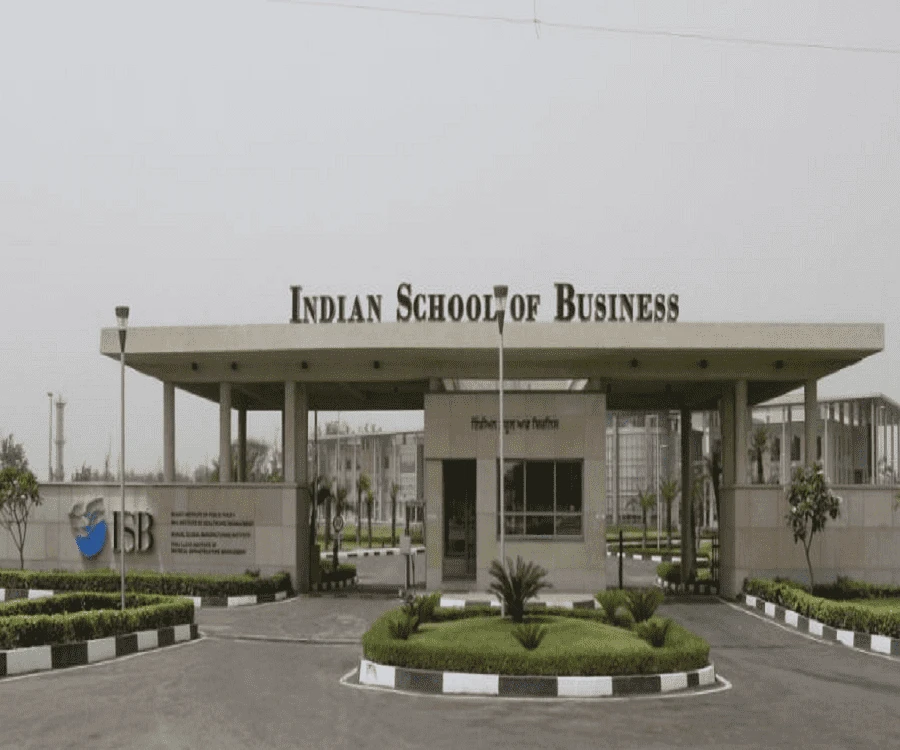

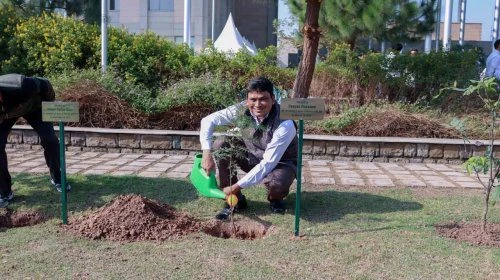

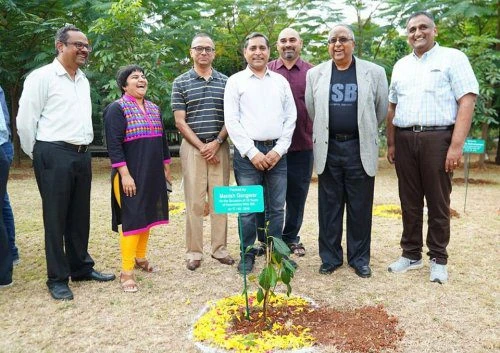
In this preview: 5 photos · 0 videos
ISB and IIM Ahmedabad cater to different profiles. ISB is often preferred for its intensive one-year Post Graduate Programme (PGP) and strong global exposure. IIM Ahmedabad's two-year MBA is typically preferred by freshers or early-career professionals and holds a distinct advantage for careers in the Indian government or public sector undertakings due to the strength of the "IIM" brand.
No, the Indian School of Business does not accept CAT scores for its flagship Post Graduate Programme (PGP). Admission to the ISB PGP requires a valid GMAT or GRE score.
Yes, a minimum of 24 months of full-time, post-qualification work experience is mandatory for the Post Graduate Programme (PGP). Freshers or those with less experience can explore the Young Leaders Programme (YLP), which offers a deferred admission pathway.
Academically, the two campuses operate as "One School" with an identical curriculum, faculty, and unified placement process. The primary differences are non-academic: the Hyderabad campus is the older, larger campus and tends to have a wider array of student-led clubs and activities.
Globally, the ISB Post Graduate Programme (PGP) is recognized as equivalent to a top-tier MBA. However, within India, the program awards a postgraduate certificate rather than an MBA degree. This distinction may affect eligibility for certain government jobs or doctoral (PhD) programs in the country.
Share what future students should know about ISB Hyderabad.
Student voices are not rewritten by colleges. We remove spam and abuse.
Wider admission question? Community PulseWhat should future students know?
Tell us which course you're considering. We'll help you work out the next step.
Get instant Partner access after mobile verification. Your public edits are reviewed before they go live.
Claim this college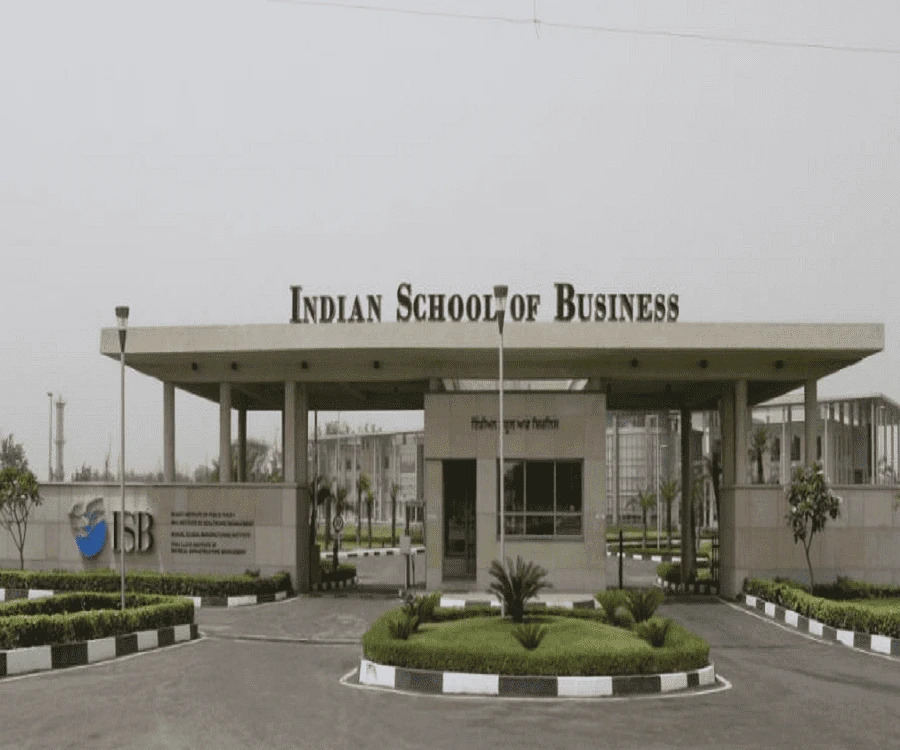
 Auditorium
 Cafeteria
 Campus Security
 Campus Wi-Fi
 Computer Labs
 Medical
 Science Labs
 Sports Complex
 Study Library