Loading Admission Guardian content
Loading Admission Guardian content

Provisional score based on available data. It may change as more information is verified.
Selected ranking categories, with the recorded year beside each result. Open all records for the complete history.
55 published records · Lower numeric ranks are stronger
Outlook
Engineering · private
#1192023
India Today
Engineering · private
#1552020
The Times Of India
Engineering · private
#892023
Find a program, read its fee details and explore the admission requirements.
Summary of the programs shown below. First-year fee. Check the note beside each amount for inclusions and exclusions.
| Course | Stream | Fees |
|---|---|---|
| Diploma in Engineering (Polytechnic) | Engineering | 40000 |
| Bachelor of Computer Applications [BCA] | Computer Applications | 45000 |
| Bachelor of Technology [B.Tech] | Engineering | 60000 |
| Master of Business Administration [MBA] | Management | 75000 |
| Bachelor of Pharmacy [B.Pharma] | Pharmacy | 110000 |
Specializations
Eligibility: 10th with 35% + JEECUP
Specializations
All accepted exams
Eligibility: 10+2 with 45% + CSJMU
Specializations
All accepted exams
Eligibility: 10+2 with 45% + UPTAC
Specializations
All accepted exams
Eligibility: Graduation + NTA
All accepted exams
Eligibility: 10+2 + NTA
3 exams with cutoff data available - showing recent entries
 Alembic Pharmaceuticals
 BI Biotech India Ltd
 Capital Via
 CEDCOSS Technologies Pvt Ltd
 Chegg
Chegg DHFL Pramerica life insurance
 Doubtnut
 EduGorilla
 Epic Research Pvt Ltd
 Genius Consultants Ltd
 HCL Technologies
 Healthwatch Telediagnostics Pvt Ltd
 Hindustan Unilever Limited
 IDBI Bank
 IGATE
IGATE Infosys
 Itenic Technologies
 Just Dial
 Magicpin
 Mechlin Software Technolgy
 Mobiloitte Technologies
 NIIT
NIIT Optra Automation Private Limited
 Orient Technologies
 Paisa Bazaar
 Research Panel Investment Advisers
 SRDT
SRDT Sundak Solar
 swastika investmart
 Tata Consultancy Services
 Team Computers
 Tech Mahindra
 Trinity Globaltech
 Value Prospect Consulting
 Victory Terminal Financial Service
Kanpur Institute of Technology, or KIT, sits on a 25-acre campus along the Kanpur-Allahabad highway. It’s a private institute that’s been around since 2004, and it’s got a decent spread of programs under two different university umbrellas. For engineering, pharmacy, and management, it’s affiliated with Dr. A.P.J. Abdul Kalam Technical University (AKTU). For BBA, BCA, and B.Sc, it answers to Chhatrapati Shahu Ji Maharaj University (CSJMU). The NAAC ‘A’ grade accreditation is a solid point in its favor—that’s not a given for every private college. But the real story here is the placement data, which tells a more complicated tale than the official brochures might suggest.
KIT offers a fairly standard private college portfolio. The B.Tech program is the main draw, with a total intake of 480 students across specializations. You’ve got the usual suspects—Computer Science, Mechanical, Civil, ECE—along with newer tracks like Artificial Intelligence & Machine Learning and Data Science. The B.Pharm program is PCI-approved, which is essential for pharmacy. On the management and computer applications side, there’s MBA, MCA, BBA, and BCA. They also run a polytechnic diploma program.
Academically, the institute leans on its industry connections. They have a skill development cell that arranges workshops, guest lectures, and industrial tours. The list of industry partners for training includes names like HP, HCL, Wipro, and IBM. It’s promoted by IIT alumni, which is a point they highlight. The faculty count is listed at 137, which, for the number of programs, suggests a manageable student-teacher ratio. It’s a practical, industry-oriented curriculum, typical of AKTU-affiliated colleges.
This is where you need to read between the lines. The official placement report for 2025 throws out some eye-catching numbers: a highest package of INR 49 LPA and a placement percentage claim of 100%. But the more consistent figures tell a different, and probably more realistic, story.
The average package for 2025 is reported at INR 5 LPA. The median package for UG programs in 2025 was INR 6 LPA. For B.Tech specifically, the median was also INR 6 LPA. That’s a more grounded figure. When you look at batch-specific data, like for the B.Tech CSE 2024-2028 batch, the average is cited as INR 4.5-5 LPA, with placement rates between 80-85%. That feels more aligned with what you’d expect from a mid-tier private college in the region.
The recruiter list is long and has some good names—Accenture, Amazon, Capgemini, Deloitte, Infosys, Wipro, Tech Mahindra. But also a lot of mid-sized and regional companies in sales, telesales, and business services. The sectors are a mix of IT, core engineering, and BFSI. The gap between the headline-grabbing INR 49 LPA and the median INR 6 LPA is significant. It likely represents a single exceptional off-campus offer, not the norm. The takeaway? You can get placed here, especially in IT and sales roles, but temper your salary expectations. The average of INR 4-5 LPA is what most students should realistically plan for.
KIT’s fee structure is on the more affordable side for a private institute, which is one of its main selling points. For the flagship B.Tech program, total tuition fees range from about INR 2.6 lakhs to 5.2 lakhs for the entire four years. That breaks down to roughly INR 65,000 to 1,30,000 per year. B.Tech in Computer Science tends to be at the higher end, around INR 4.6 lakhs total. The new AI & ML specialization is listed at INR 5.2 lakhs for the full course.
Other programs are even more economical. A three-year BCA costs about INR 1.56 lakhs in total. MBA fees have two figures—INR 1.9 lakhs and INR 5.87 lakhs—suggesting different categories or specializations. M.Tech is surprisingly low at around INR 30,480 total. Hostel and mess fees are approximately INR 78,000 per year, which is fairly standard. There’s no detailed information on substantial institutional scholarships in the brief, so financial aid likely depends on government schemes or merit-based discounts offered at admission.
Admissions are straightforward and follow the central and state systems. For B.Tech, eligibility is based on the Uttar Pradesh State Entrance Examination (UPSEE), now known as UPCET, conducted by AKTU. Candidates need to have passed 10+2 with Physics and Mathematics as compulsory subjects. The cutoff ranks aren’t specified in the data, but for a college like KIT, they are typically not as fiercely high as the top-tier NITs or government colleges. Admission happens through the state counseling rounds.
For B.Pharm, the process is similar via UPCET. For MBA and MCA, admissions are based on scores in national or state-level management/entrance tests, likely followed by counseling. For programs under CSJMU (like BBA, BCA), the institute probably conducts its own counseling based on 10+2 marks. The polytechnic diploma admissions are likely based on the 10th-standard board marks. It’s not a highly selective process, which aligns with its accessible fee structure.
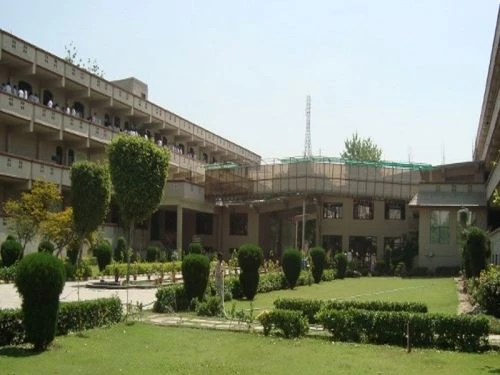
The 25-acre campus in Rooma is a plus. It’s not in the heart of the city—it’s on the highway near the airport—which means it’s quieter but you’ll need auto-rickshaws or cabs to get to Kanpur proper. The infrastructure includes the necessary labs, workshops, and a library. They have memberships in professional bodies like the Computer Society of India, which can facilitate guest lectures and events.
Hostel facilities are available, with the combined hostel and mess fee coming to around INR 78,000 per year. Reviews from similar colleges suggest the quality is functional—not luxurious, but adequate. The social life will be largely campus-centric. There’s mention of a skill development cell that organizes activities, but there isn’t a strong indication of a vibrant cultural or festival scene. It’s the kind of place where your experience will be what you make of it, focused more on academics and placement preparation than a bustling extra-curricular calendar.
Synthesizing the data, a clear picture emerges. The positives students highlight are the affordable fees, the NAAC ‘A’ grade accreditation, and the fact that placements do happen. The recruiter list has enough brand names to lend credibility. The campus size is also appreciated.
The criticisms, often unspoken in official literature, are implied in the numbers. The wide disparity in placement packages suggests inconsistency. An average package of INR 5 LPA against a highest of INR 49 LPA means many students are clustering at the lower end. While the college claims very high placement percentages, the more realistic 80-85% figure for core branches indicates not everyone gets an on-campus offer. The location, while peaceful, is a bit isolated from the city's amenities. The academic experience is described as decent but not exceptional, heavily reliant on the student's own drive to utilize the industry training sessions and workshops on offer.
KIT is a practical choice for a specific type of student. If you’re looking for an affordable private engineering or pharmacy college in Uttar Pradesh with a legitimate accreditation (that NAAC ‘A’ grade matters) and you have a UPCET rank that lands you here, it’s a viable option. The return on investment can be positive if you secure a placement in the INR 4-6 LPA range, which the median data suggests is achievable.
However, don’t come in dreaming of the INR 40-49 LPA packages. Those are outliers. The college is best for students who are self-motivated, willing to engage with the skill development activities, and pragmatic about their career start in IT services, core engineering, or sales. If you have a rank that can get you into a top government college or a more renowned private institute with a stronger track record, you should probably aim there. But as a budget-conscious, placement-focused option in the region, KIT does its job. Just go in with clear eyes about what the typical outcome looks like.
The average placement package at KIT for the 2025 batch was around INR 5 Lakhs Per Annum (LPA). The median package for UG programs was slightly higher at INR 6 LPA. It's important to note that while the institute has reported a highest package of up to INR 49 LPA, this is an exceptional case, and the median and average figures are more representative of what most students can expect.
The total tuition fees for the B.Tech program at Kanpur Institute of Technology range approximately from INR 2.6 lakhs to 5.2 lakhs for the entire four-year course. This breaks down to an annual tuition fee of roughly INR 65,000 to 1,30,000. The B.Tech in Computer Science and Engineering (CSE) is at the higher end, with total fees around INR 4.6 lakhs.
Yes, Kanpur Institute of Technology is approved by the All India Council for Technical Education (AICTE). It is also accredited by the National Assessment and Accreditation Council (NAAC) with an 'A' grade, which is a significant mark of institutional quality. Additionally, its pharmacy programs are approved by the Pharmacy Council of India (PCI).
Admission to the B.Tech program at KIT is based on the Uttar Pradesh Combined Entrance Test (UPCET), formerly known as UPSEE. Candidates must have passed their 10+2 with Physics and Mathematics as compulsory subjects. Seats are allotted through the state counseling process conducted by Dr. A.P.J. Abdul Kalam Technical University (AKTU), to which KIT is affiliated for its engineering programs.
A wide range of companies recruit from KIT, including major IT and consulting firms like Accenture, Infosys, Wipro, Capgemini, Cognizant, and Tech Mahindra. Other notable recruiters include Amazon, Deloitte, HCL, HP, Tata, and various banks like ICICI and HDFC. The list also includes many mid-sized and regional companies in sectors like sales, automotive, and software services.
Share what future students should know about KIT.
Student voices are not rewritten by colleges. We remove spam and abuse.
Wider admission question? Community PulseWhat should future students know?
Tell us which course you're considering. We'll help you work out the next step.
Get instant Partner access after mobile verification. Your public edits are reviewed before they go live.
Claim this college
 Auditorium
 Cafeteria
 Computer Labs
 Hostel
 Medical
 Science Labs
 Sports Complex
 Study Library