Loading Admission Guardian content
Loading Admission Guardian content

Explore the available options or ask for admission guidance.
Explore the available options or ask for admission guidance.
Kumaraguru College of Technology (KCT) is an autonomous engineering college in Saravanampatty, Coimbatore, affiliated with Anna University. That combination matters when comparing courses: KCT operates as an autonomous institution, while its regulatory disclosure identifies the university affiliation. Applicants should check the exact degree, branch, admission route and current-year notice rather than assuming one course list or eligibility rule applies to every programme. KCT’s AICTE Mandatory Disclosure names the institution as an “Autonomous Institution” and says it is “Affiliated to Anna University, Chennai.”
KCT’s official material places the institution at Kumaraguru Campus in Coimbatore. Its main academic decision is likely to be programme fit, followed by admission route and cost. The college’s public pages cover undergraduate engineering and technology as well as postgraduate options; course titles, duration and entry conditions differ, so use the official programmes directory and the current admission notice to shortlist. This profile focuses on what the available KCT and authority sources establish. It does not repeat older online estimates or student anecdotes as institutional facts.
KCT’s autonomous status makes the course-level curriculum especially important to inspect. Before comparing branches, open the current programme page and verify the exact degree title, duration, approved intake, curriculum year, electives and practical components. A broad label such as “engineering” does not tell you whether a branch fits your interests, how much time is spent in labs, or which prerequisites lead to a later specialisation. Ask the department for its current syllabus and a sample timetable if the public page leaves those details unclear.
The same check applies to postgraduate study. KCT’s 2024-25 AICTE disclosure lists GATE, TANCET or a common entrance test among the PG admission references; that disclosure is dated, and it does not establish one universal examination for every postgraduate programme or for the 2027-28 intake. Confirm the current programme notice before registering for an exam. The official disclosure is a useful starting point, while the current KCT Admissions portal is the place to check programme-specific forms and instructions.
A practical shortlist should compare the work you want to do, not just branch names. For each course, check required mathematics or science subjects, core modules, project work, laboratory access, internship expectations and whether the degree’s professional pathway matches your goals. If two programmes share introductory subjects, compare their later-year modules and the projects students can actually choose. Ask how students enter electives, whether a laboratory is scheduled or open-access, and what work is available outside required classes. Those questions are more useful than assuming that a course title guarantees a particular job or specialisation.
As of 6 November 2026, the KCT portal’s visible admissions material is labelled for 2026. It thanks students selected through TNEA 2026 and directs them to complete an application form, review fee details and check required documents. It does not publish the dates, fees or seat availability for 2027-28. Treat the steps below as an explanation of the last visible cycle, not as an open application schedule. KCT Admissions 2026 is the source to revisit when a new notice appears.
For first-year B.E. and B.Tech. candidates entering through Tamil Nadu Engineering Admissions, the 2026 process was online. The TNEA registration instructions list application and certificate upload, random-number generation, certificate verification, rank publication, choice entry, tentative allotment, confirmation and reporting. These are separate stages. Completing a form is not the same as receiving an allotment, and a tentative allotment requires the next action specified by TNEA. Read the current brochure before submitting documents or choosing branches. The TNEA 2026 registration instructions set out that sequence.
The 2026 brochure also explains the merit calculation for first-year engineering counselling. It uses Mathematics, Physics and Chemistry marks on the stated scale and gives the registration fee for that edition. Applicants should not translate an old cutoff score into a predicted chance for the next year. TNEA cutoffs depend on the counselling edition, branch, community category and round; KCT’s latest accessible institution-published branch/community table in the 2024-25 Mandatory Disclosure is historical. The CSE example there reports separate cutoff scores and maximum state ranks by category. Read both columns with the row label, and compare only the same branch, community, round and year. Open the TNEA 2026 brochure and the KCT 2024-25 disclosure for their respective periods.
If you are considering a postgraduate course or a route outside first-year TNEA, do not infer its process from the undergraduate flow. Confirm the exact course notice, eligibility, exam requirement, application window, selection stages and fee deadline with KCT. The available material does not establish 2027-28 dates or a general management-quota test for every applicant. Keep a copy of the notice that applies to your course and year, and use the contact details on the admission portal if a course-specific instruction is missing.
The latest fee document identified in KCT’s Admissions 2026 materials is titled “Government Quota - First Year B.E./B.Tech Degree Programme, Academic Fees - 2026-2027.” It lists ₹1,60,000 for General Category and ₹1,35,000 for First Graduate. These are the amounts shown for the named first-year government-quota schedule. They are not a verified 2027-28 charge, a full four-year total, or a universal fee for all branches and admission routes. The document does not define the First Graduate eligibility test in the fee table. Check the exact category and amount in the current payment instruction before paying. Read the official UG fee schedule.
A first-year academic-fee amount is only one part of a student’s budget. The cited schedule does not provide a complete four-year forecast or establish what a particular hostel, meal plan, transport choice, deposit, device, books or personal expenses will cost. Request an itemised current estimate for the exact programme and category, including one-time charges and refund terms. If you receive a revised counselling allotment, follow the payment instruction for that case and retain the earlier receipt; KCT’s Admissions 2026 portal tells selected students to review the fee details for their chosen programme rather than rely on a college-wide estimate.
Aid may change the net cost, but it should not be counted until current eligibility and award terms are confirmed. KCT’s AQAR for 2022-23 says the college, with philanthropic organisations Maatram and Agaram, provided admission scholarships to meritorious students “ranging up to 100%,” and says it applied for the AICTE Tuition Fee Waiver scheme for economically disadvantaged students. Those are reported support practices for that year, not a promise of a 2027-28 award or an amount available to every course. The institutional report also describes merit scholarships and incentives connected with academic, research, extracurricular and outreach work. The AQAR 2022-23 is historical evidence; ask for the current circular, eligible programmes, application route, renewal rules and payment timing.
A KCT document titled “Scholarship Scheme 2020” gives earlier examples, including a first-year tuition waiver for the highest-cutoff student in each programme subject to a stated 190/200 minimum, and a rural-school topper waiver with a stated 180/200 minimum. It also names other award categories and a continuation condition. Do not use those thresholds as current rules: the document is dated 2020, and the sources checked here do not establish that those awards remain open or retain the same criteria. Use it only to frame questions, then request the current written scheme. The 2020 scheme PDF should not be added to a 2027-28 budget as guaranteed aid.
KCT’s Career Development placement page currently shows a four-year series. Its latest row is marked 2025-2026* and displays 1,086 registered, 920 placed, 1,128 offers and 85%. The asterisk is not explained on the page, and the page does not define “registered” or the percentage formula. The earlier rows display 1,082 registered and 986 placed for 2024-2025, 992 and 952 for 2023-2024, and 1,073 and 1,057 for 2022-2023. They are institution-wide counts, not programme-level guarantees. KCT’s placement page should be read with its original labels and limits.
Offers and placed students are different measures: the 2025-2026* row has more offers than students placed, but the source does not explain whether offers include multiple offers to one student, later withdrawals or deferred decisions. Its “registered” denominator is also not defined as all graduates, eligible candidates or students who opted in. Ask KCT which programmes and graduating groups are covered, what the asterisk means, and how eligibility and multiple offers are counted. The page also groups participating companies by categories; those counts do not show how many students were hired by each company or the roles open to a given branch.
A separate NIRF 2025 Engineering submission reports students graduating in minimum time for a specified programme duration. For UG four-year programmes in 2023-24, it lists 1,229 graduates in minimum time, 949 placed and 208 selected for higher studies. Its median salary field is ₹5,00,000, labelled “Amount in Rs.” in the report. The row does not label the amount per annum, so do not convert it to LPA or equate it with a placement-page average. The NIRF cohort and KCT’s “registered” placement-page series use different frames and should not be merged. KCT’s NIRF Engineering submission preserves that programme-duration and graduation-year scope.
For a course decision, request a current programme-specific report with the number graduating, the number eligible or registered, the number placed, higher studies, salary measure and reporting unit. Ask whether the report covers the whole academic year or a placement season. A top offer, total offers or broad recruiter list cannot tell you the likely result for your branch. Outcomes can vary by course and student choices, while the public figures cited here do not supply a branch-level denominator or individual probability.
NIRF’s 2025 Engineering band listing names Kumaraguru College of Technology, Coimbatore, Tamil Nadu in the 151-200 rank band. The 2024 Engineering listing shows KCT in the same band. These are institution-level results for the Engineering category. A band does not identify an exact position within that range, provide a KCT score or rank a particular department. See the NIRF 2025 Engineering band list and the 2024 edition.
The exact band listing is available here as indexed official-source text rather than a saved full HTML capture; a direct open of the general EngineeringRankingALL page returned 403 during the research. The band excerpts themselves name KCT and Coimbatore. No 2026 ranking result or 2027-28 ranking is claimed. When comparing colleges, use the same NIRF category and edition for each institution, and keep an Engineering band distinct from an Overall or programme result. Do not treat ranking position as evidence of the quality of a specific lab, curriculum or placement outcome.
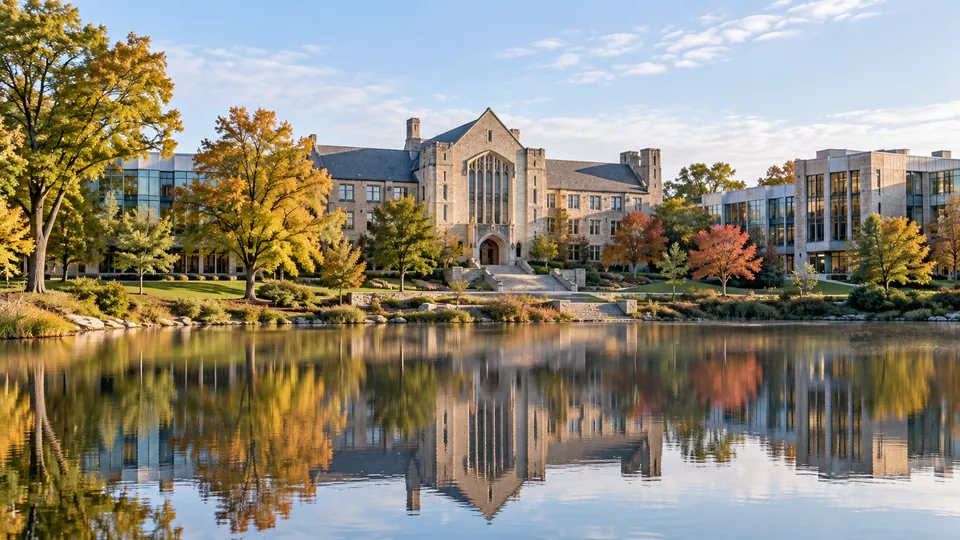
KCT’s campus page describes a 150-acre campus with four academic blocks and 23 acres of playgrounds. It identifies the Mahatma Gandhi Central Library, hostels, sports areas, wellness support, food and conferencing facilities. The library listing gives an area of 1,714 square metres and counts for titles, volumes, print periodicals and online journals. These are campus-level descriptions and counts shown by KCT, not proof that each resource is available at every hour or included for every programme. KCT’s campus page is the source for the current published description.
For a library or lab that matters to your work, ask about opening hours, borrowing, digital access, equipment, booking and whether course-level sessions are scheduled. For accommodation, request the current hostel and mess charges, room-sharing options, allotment priority, availability, move-in and cancellation rules. Public hostel capacity figures describe infrastructure, not vacant rooms for an incoming cohort. The 2022-23 mandatory disclosure marks a barrier-free built environment as “Available,” but it does not give a current access map or establish that every classroom, hostel room or route meets a particular accessibility need. Ask the college to confirm the route and support that apply to you.
A campus visit should cover the spaces you will actually use: your department, first-year teaching rooms, relevant laboratories, library, dining and, if needed, residence and accessible routes. Ask who manages access, when spaces close and whether extra fees or booking apply. The official campus description can help plan questions, but it cannot replace a current visit or a written answer for a specific student requirement.
KCT may suit an applicant who has identified a programme that fits their academic interests, understands its exact admission route and can budget from a current written fee schedule. Its autonomous status, TNEA 2026 process references, published campus facilities and institution-level placement information offer useful starting points, but each has a different scope and date. The 2027-28 application schedule, current scholarship rules, complete programme costs, branch-level outcomes and hostel availability were not established by the source bundle checked here.
Before committing, make a one-page comparison for your exact course: degree and curriculum, admission route and deadlines, the fee schedule and other charges, aid eligibility, placement denominator and cohort, and access to the spaces you need. Keep each item linked to a dated official source. If KCT answers a question verbally, ask for the circular or email that applies to your year. Treat a missing or unannounced figure as unknown, not as zero and not as the value from a different route.
Avoid using unsupported older claims as decision shortcuts. The earlier Overview included an A++ grade, anonymous donation estimates, a fixed attendance percentage and broad package averages; these claims are not retained here because the current source set did not verify their scope and validity. The latest evidence in this revision supports a more useful comparison: a named 2026-27 first-year government-quota fee, clearly labelled historical and current placement frames, a dated NIRF Engineering band, a current campus description and historically reported scholarship programmes. Use the linked specialist pages for each domain, then confirm any 2027-28 rule directly with KCT or the responsible authority before acting.
Loading programmes and admission routes.
Selected ranking categories, with the recorded year beside each result. Open all records for the complete history.
18 published records · Lower numeric ranks are stronger
IIRF
Engineering · private
#442022
IIRF
B.Tech · private
#432022
NIRF
B.Tech
#772019
Find a program, read its fee details and explore the admission requirements.
Summary of the programs shown below. First-year fee
Showing 5 courses
Specializations
Listed entrance exams
Eligibility: 10+2 with 50% + TNEA
Specializations
Listed entrance exams
Eligibility: 10+2 with 50% + TNEA
Specializations
Eligibility: Graduation with 50% + TANCET
Listed entrance exams
Eligibility: Graduation with 50% + TANCET
Specializations
Eligibility: Graduation
2 exams with cutoff data available - showing recent entries
 Aditi Technologies
 Aditya Birla Group
 ADP Private Limited
 Altran Technologies
 AMW Automobiles
KCT is generally preferred for its campus life, infrastructure, and brand value. SKCET is often cited as having slightly more aggressive placement training for IT services companies.
For competitive branches like CSE or IT, a 180 cutoff is not sufficient. However, admission is possible for core branches like Textile Technology, Fashion Technology, or Civil Engineering in later counseling rounds.
No, the campus hostels are strictly vegetarian, though eggs are served. Students can find many non-vegetarian eateries right outside the college's back gate in the Saravanampatti area.
The management quota process involves submitting an online application via the KCT portal, followed by an aptitude test and a personal interview. The fees under this quota are significantly higher than those for the government counseling quota.
The rule is strictly enforced. While some professors may be lenient, the system is automated, and students who fall below 75% attendance are usually prevented from writing the end-semester examinations.
About Kumaraguru College of Technology.
Colleges cannot rewrite published reviews. We remove spam and abuse.
Ask the communityWhat should future students know?
Tell us which course you're considering. We'll help you work out the next step.
Get instant Partner access after mobile verification. Your public edits are reviewed before they go live.
Claim this college
 Apollo Tyres
 Ashok Leyland
 Asian Paints
 Aspire Systems
 Athenahealth
 Beroe Inc
 Blue Star
 Bosch Ltd
 Cameron Manufacturing
 Circor
 Cognizant
 CommVault Systems India Pvt. Ltd.
 Consolidated Construction Consortium Limited (CCCL)
 Cordys Software India Pvt. Ltd.
 CSC
 Decathlon
 Defiance Technologies
 Dell
 Delphi-TVS Diesel Systems Ltd.
 Econ Systems
 ELGI Equipments Ltd
 Elite Stock
 Exterro (I) Pvt. Ltd.
 Ford Motors
 Gokaldas Exports Ltd
 HCL Technologies
 Hexaware Technologies
 Hochtief
 Honeywell
 HP India Pvt. Ltd.
 Huawei
 IGATE
 iNautix Technologies
 Informatica Business Solutions Pvt Ltd.
 Infosys
 Intimate Fashions (I) Pvt. Ltd.
 ITC
 IVTL Infoview
 Jay Jay Mills (I) Pvt. Ltd.
 JK Tyre
 JSW Steel Ltd
 KLA Tencor
 Larsen & Toubro Ltd.
 Lucas TVS
 Mahindra Rise
 Marsh India Insurance Brokers Pvt. Ltd.
 Microsoft
 MindTree
 Mphasis
 Mu Sigma
 Multicoreware India
 Must Garment Corp. Ltd.
 Newgen
 Nippon Paints
 Odessa Technologies Inc.
 Oracle
 Pantaloons
 Parker Hannifin
 Payoda Technologies
 Quest
 Rane Group
 Raymond
 Roots Infovision
 Saipen
 SAP
 Shantha Biotech
 Skavasystems Pvt. Ltd.
 Soliton Technologies Pvt Ltd
 Soma
 Standard Chartered
 Subex
 Sundaram Finance
 SunTec
 Syntel
 Tech Mahindra
 Thyrocare
 Titan
 Trident
 Trimble
 TVS Motors
 Union Bank of India
 Vembu Technologies Pvt Ltd
 Verizon
 Virtusa
 Voltas
 VWR
 Wabco India Ltd
 Wipro
 Zifo RnD Solutions
 Zoho
96 named recruiters in the recorded data. Company names are deduplicated.
 Auditorium
 Cafeteria
 Computer Labs
 Gym
 Hostel
 Medical

 Sports Complex
 Study Library