Loading Admission Guardian content
Loading Admission Guardian content

Provisional score based on available data. It may change as more information is verified.
Find a program, read its fee details and explore the admission requirements.
Summary of the programs shown below. Fee amounts are not listed. Contact the college for its current fee schedule.
| Course | Stream | Fees |
|---|---|---|
| Bachelor of Technology [B.Tech] | Engineering | |
| Diploma in Civil Engineering | Engineering |
Specializations
All accepted exams
Eligibility: 10+2 with 75% + UPTAC
Specializations
Eligibility: 10th with 35% + JEECUP
Millennium Institute of Technology in Saharanpur is a private engineering college that’s been around since 2009, affiliated with Dr. A.P.J. Abdul Kalam Technical University (AKTU). It’s a place with clear contradictions. The official line talks about a “highly technical and advanced campus environment” preparing “globally adaptable professionals.” But you talk to students, and you’ll hear a different story about placements and management. The 2024 placement data shows a highest package of 15 LPA and a median of 7.5 LPA, which is a decent spread for a newer AKTU college. Yet, the gap between that official median and the average numbers students whisper about—somewhere between 2.5 to 6 LPA—tells you everything you need to know about managing expectations here. It’s a college that seems to be trying, with a founder from IIT Roorkee and a focus on industry workshops, but it’s still finding its feet in a competitive Uttar Pradesh technical education landscape.
The academic portfolio is standard for an AKTU-affiliated private institute. The B.Tech program is the main draw, with the usual specializations: Civil, Computer Science, IT, Electronics & Communication, Mechanical, and Electrical Engineering. They also run a second shift for Civil Engineering. Postgraduate options include M.Tech in CAD/CAM, Computer Science, and Machine Design, and an MBA with Marketing and General Management tracks. The three-year Polytechnic (Diploma) courses in Civil and Mechanical engineering round out the offerings, with some second-shift programs there too.
Academically, the college pushes a “judicious mix of theory and practice.” You’ll see workshops in tools like MATLAB and AutoCAD, along with Personality Development Programs (PDP) and mock interviews. The goal, as stated, is to build a “Complete Student.” In reality, that translates to a curriculum heavily aligned with AKTU’s syllabus, supplemented by these add-ons. The faculty count is 143, and the college highlights that many are “experienced pass outs of NITs and IITs.” Founder Mr. Sanjeev Arora is an IIT Roorkee alumnus, which lends some credibility. But student reviews aren’t unanimous. While many praise helpful and knowledgeable teachers, a few point out that some instructors are M.Tech students themselves and can be inexperienced, sometimes failing to complete the syllabus on time. That’s a common tension in newer private colleges.
This is where you have to read between the lines. The official 2024 data points to a highest package of 15 LPA and a median package of 7.5 LPA. A median of 7.5 LPA suggests that at least half the placed students are at or above that figure, which isn’t terrible for a tier-3 college in this region. But the college doesn’t publish an official average package. And that’s where student sentiment fills the void.
On review platforms, the quoted average ranges from 2.5 to 6 LPA. That’s a significant spread, and it hints at inconsistency. Placement percentage claims are equally fuzzy. One source says around 65% get placed, another mentions 30-40% for a specific batch, and a third vaguely states “most students get placed.” You have to take all of it with a grain of salt. The truth likely lies in the middle and varies wildly by branch, with Computer Science and IT faring better.
Recruiters are a mix of IT service giants and regional pharmaceutical companies. TCS and Wipro are named for engineering roles, while Macleods, Cipla, and Sun Pharma recruit for pharmacy (though the brief notes B.Pharma data is unverified). A company called “Work Flow” is also listed. It’s not a star-studded list, but it provides a baseline. Internships seem more consistent, with a 6-month stint during the course and claims that “almost everyone gets internships.”
The verdict? The placement cell is active, but don’t expect a flood of high-paying core engineering roles. The median package is the most reliable positive takeaway. For top-tier IT roles, you’ll be competing against students from older, more established colleges. The gap between the official median and the student-reported averages is the story here.
The fee structure is relatively straightforward, at least for tuition. For the 2025-26 academic year, the total program fee for B.Tech is ₹2.45 Lakhs. That’s for the entire course, not per year, which makes it one of the more affordable private B.Tech options in the AKTU system. The Polytechnic (Diploma) program costs ₹1.01 Lakhs in total.
Now, the big caveat. These are tuition fees only. The brief lacks concrete data on hostel and mess charges, which can easily add ₹70,000 to ₹1,00,000 per year. Other mandatory fees for exams, library, and development are also not specified. When students complain that “the fees are too high for what they offer,” they’re likely looking at the complete out-of-pocket cost, not just tuition.
The college does mention merit-based scholarships are available. These are typically tied to entrance exam ranks or academic performance in the previous qualifying exam. If you’ve scored well in JEE Main or your 12th board, it’s worth asking the admission office directly for details, as they’re not prominently advertised online.
Admissions are entrance-exam driven and follow the central and state counseling processes. For B.Tech, you need a valid JEE Main score or you must appear for the state-level UPTAC (Uttar Pradesh Technical Admission Counselling) process. Eligibility requires 10+2 with Physics, Chemistry, and Mathematics, and a minimum of 75% marks (as per the fee table) for the general category.
Specific cutoff ranks for MIT Saharanpur aren’t publicly listed in the same way as for older, more popular colleges. Admission here is less about hitting a published cutoff and more about your rank in the UPTAC counseling rounds. Seats are filled based on that rank and availability in your chosen branch. For M.Tech, a GATE score or the institute’s own entrance exam is needed. MBA admissions consider CAT, MAT, XAT, or CMAT scores. Diploma admissions go through JEECUP.
The application window for B.Tech via UPTAC typically runs from late May to mid-July. The selection process is standard: qualify in the exam, register for counseling, get a seat allotted based on your rank and choices, pay the fee, and verify your documents. There’s no mention of a separate management or NRI quota, which suggests most seats are filled through the counseling process.
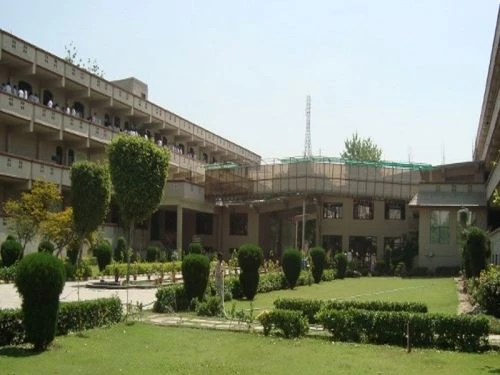
The 11-acre campus is described as “lush green” and “peaceful,” located on the highway about 35 km from Saharanpur city. Infrastructure gets generally good marks from students. Classrooms are digitalized, Wi-Fi is reportedly available throughout, and labs are called “efficient” with “required facilities.” There’s a digital library, sports facilities for grounds and indoor games, and an on-campus cafeteria. A notable plus is the on-site infirmary with medical officers and a 24-hour ambulance service.
Transport is a highlighted feature, with the college operating three deluxe buses on routes to Saharanpur, Roorkee, and Dehradun. But a student review also cites “bus problems” as a big issue, so reliability might be a question.
Now, the hostel situation is confusing. The college officially lists “hostel” as an available facility. However, a 2023 student review states flatly, “College have no hostel, if you enrolled in college you have to take a house in rent by yourself.” This is a major red flag if true. Prospective students must contact the college directly to confirm the current status of on-campus housing. If hostels do exist, details on capacity, room quality, food, and rules are completely absent from available data.
Social life seems quiet. There’s no mention of major fests or a vibrant club culture. The atmosphere leans towards “peaceful” rather than “bustling.” Your social circle will likely be your classmates and hostel-mates (if hostels exist).
Sifting through reviews paints a picture of a college with clear strengths and frustrating weaknesses. The most consistent praise is for the faculty. Multiple reviews call teachers “helpful,” “knowledgeable,” and “excellent,” specifically noting many are IIT/NIT pass-outs. One even called them “the most distinguished and strong pillars of the college.” That’s a significant asset.
Infrastructure is the second big plus. Students mention “good buildings,” “beautiful and peaceful” campuses, a “awesome” library, and “comfy” classrooms. The “highly technical and advanced” environment the college promotes is, in part, reflected in these reviews.
But the negatives are serious and recurring. Management is criticized for being “not good” and lacking proper rules. The fee is called “very high” for the value offered. The most damaging contradictions are around placements and hostels. While some say placements are good, others claim barely any jobs were offered in their batch. And the direct contradiction on hostel availability erodes trust. Other complaints include “bus problems” and some faculty being inexperienced M.Tech students.
The takeaway? If you get a good set of teachers and manage your own accommodation, the academic experience can be positive. But administrative hassles and uncertain placement outcomes are real risks you should be prepared for.
Millennium Institute of Technology is a budget-friendly, option for students who have a mid-tier rank in UPTAC counseling and want an AKTU degree without a massive tuition fee. Its strengths are a low tuition cost (₹2.45 Lakhs for the entire B.Tech), a faculty that receives genuine praise, and decent basic infrastructure. The 7.5 LPA median package is a legitimate, respectable figure for a college in this category.
But it comes with caveats. You must independently verify the hostel situation—be prepared to rent locally if needed. You have to be proactive about placements; don’t expect the cell to hand you a dream job. And you’ll need patience with administrative processes.
It’s best for a pragmatic student from the region looking for an affordable route to a B.Tech degree, who is willing to supplement college resources with self-study and external preparation for placements. It’s not the right choice if you’re seeking a vibrant campus life, guaranteed top-tier recruiters, or a completely smooth administrative experience. Do your due diligence, visit if possible, and talk to current students before committing.
The institute offers a B.Tech degree with specializations in Civil Engineering, Computer Science and Engineering, Information Technology, Electronics & Communication Engineering, Mechanical Engineering, and Electrical Engineering. Eligibility requires passing 10+2 with Physics, Chemistry, and Mathematics, securing a minimum of 75% aggregate marks, and having a valid score in either JEE Main or the UPTAC state entrance exam for counseling.
For the 2025-2026 intake, the total tuition fee for the entire B.Tech program is ₹2.45 Lakhs. The total fee for the three-year Polytechnic (Diploma) program is ₹1.01 Lakhs. It is crucial to note that these figures are for tuition only and do not include potential additional costs for hostel, mess, examination, or other development fees, which are not specified in the available data.
According to official 2024 data, the highest package offered was 15 LPA (Lakhs Per Annum) and the median package was 7.5 LPA. The college does not publish a consistent official average package figure. Student reviews and third-party sources suggest an average placement range between 2.5 to 6 LPA, with recruiters including TCS, Wipro, and various pharmaceutical companies.
The college officially lists hostel facilities as available. However, there is a direct contradiction in student feedback, with at least one recent review stating no hostels exist and students must arrange private rentals. Prospective students must verify this directly with the institute. The campus infrastructure is generally well-reviewed, featuring digitalized classrooms and library, Wi-Fi, efficient labs, sports facilities, a cafeteria, and an on-campus infirmary with ambulance service.
Sentiment is mixed. Faculty are frequently praised as highly qualified, helpful, and often IIT/NIT alumni, forming a core strength of the institute. Conversely, management receives significant criticism for being disorganized and lacking proper rules. Some reviews also note inconsistencies in teaching quality, citing inexperienced instructors and syllabus delays, though these complaints are less common than the praise for faculty.
Share what future students should know about MIT.
Student voices are not rewritten by colleges. We remove spam and abuse.
Wider admission question? Community PulseWhat should future students know?
Tell us which course you're considering. We'll help you work out the next step.
Get instant Partner access after mobile verification. Your public edits are reviewed before they go live.
Claim this college Auditorium
 Cafeteria
 Computer Labs
 Hostel
 Medical
 Science Labs
 Sports Complex
 Study Library