Loading Admission Guardian content
Loading Admission Guardian content
Provisional score based on available data. It may change as more information is verified.
Find a program, read its fee details and explore the admission requirements.
Summary of the programs shown below. First-year fee. Check the note beside each amount for inclusions and exclusions.
| Course | Stream | Fees |
|---|---|---|
| Diploma in Engineering (Polytechnic) | Engineering | 5550 |
Specializations
Mizoram Polytechnic in Lunglei is a government institution that presents a paradox. On one hand, it offers some of the most affordable technical education in the country, with annual tuition fees that are almost unbelievably low. On the other, it operates under the shadow of a significant legal and administrative cloud—a November 2024 court order for its immediate closure due to unpaid rent. Yet, its website continues to post academic calendars and admission notices for 2025-2026, suggesting a determination to carry on. For students in Mizoram and the surrounding region, it represents a critical, low-cost gateway to a diploma in engineering, but one that comes with a unique set of uncertainties you won't find in a typical college brochure.
This is a pure-play diploma institute. There are no degree programs here. The focus is entirely on three-year, hands-on Diploma courses designed to create job-ready technicians. The total intake is small—just 110 students across four branches—which can mean more direct interaction in labs and workshops, at least in theory.
The program breakdown is straightforward:
Academically, the institute has benefited from external funding schemes in the past, like the World Bank Assisted Project (Tech. Ed. III Phase) and the AICTE-NEQIP scheme, which were used to strengthen laboratories and infrastructure. A mandatory part of the curriculum includes industrial visits and training sessions, which is a decent attempt at providing real-world exposure. The faculty count is listed at 40 teaching staff, though specific qualifications like PhD holders aren't detailed. Student reviews often mention the faculty as "well-qualified and experienced," which, for a government polytechnic in a remote location, is a positive note.
Here's where the data runs dry. The research brief provides no concrete placement statistics—no highest, average, or median packages, no top recruiter names, and no placement percentage. That's not entirely unusual for smaller state polytechnics where formal, large-scale campus placement drives might be less structured.
The placement reality likely hinges on a few factors. First, the institute's industry visits and training are meant to build connections. Second, being a government diploma likely holds some value for state government technical departments and local industries in Mizoram and neighboring states like Assam. Third, many diploma holders use the qualification as a stepping stone to lateral entry into engineering degree programs or to seek jobs through personal networks and off-campus drives.
If you're evaluating this college, you should operate on the assumption that securing a job will be largely self-driven. The polytechnic's role may be to provide the qualification and basic technical training, but the onus for finding employment may fall more on the student. That's a crucial consideration.
This is the single most compelling reason to consider Mizoram Polytechnic. The cost of education is staggeringly low, especially for a government-run technical institute.
Tuition & Academic Fees (2025):
Hostel & Living Costs (2025 Expected Fees): Hostel fees vary by room type:
So, a student opting for a double-sharing hostel and mess would be looking at roughly ₹15,000 (hostel) + ₹10,000 (mess) + ₹2,040 (tuition) + ~₹3,000 (other fees) = about ₹30,040 for the first year. That's for everything—tuition, room, and board. It's an almost unbeatably low figure for professional education. For comparison, older fee documents from 2022-2023 show a grand total of just ₹5,700 for hostel and mess, indicating fees have been revised upward but remain very affordable.
Information on specific scholarships isn't provided in the brief, but as a government institution, it's plausible that state and central government schemes for SC/ST/OBC/EWS students would be applicable. You'd need to check with the institute directly for confirmed details.
Admission is strictly through the Mizoram Diploma Entrance Examination (MDEE), conducted by the Mizoram State Council for Technical Education (MSCTE). There's no management quota in the traditional sense, though 10% of seats are reserved for departmental/sponsored candidates.
Key Eligibility Criteria:
Selection Process:
The application window for 2025-2026 was from April 1 to May 19, 2025, with an application fee of ₹500. The process is centralized through MSCTE, so all updates and notifications would come from their official channels as well as the polytechnic's own website.
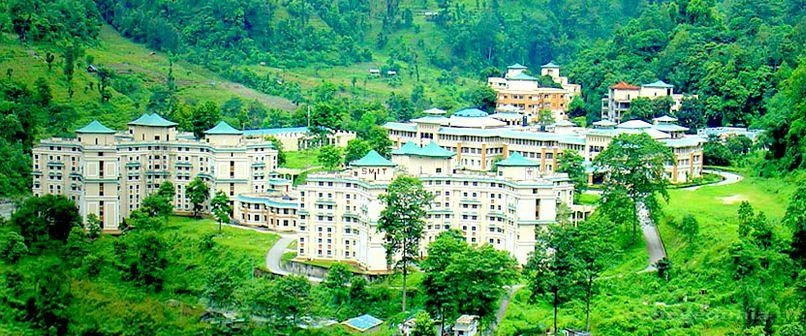
The campus is spread over 13 acres in Hrangchalkawn, on the outskirts of Lunglei town. It's a quiet, secluded setting. Infrastructure is a mixed bag, with some facilities showing their age and others being more modern thanks to past funding.
Hostels: Separate hostels for boys (80 capacity) and girls (40 capacity) provide basic accommodation. The recent fee revision suggests upgrades may have been made. A canteen caters to both staff and students.
Academic Infrastructure: This is where past investments are visible. The computer labs are described as well-equipped with broadband internet and video projection. Most departmental labs and workshops were constructed or upgraded under the World Bank project. However, a recurring student complaint is that much of the machinery and equipment in engineering workshops is over 27 years old and in need of modernization. The library, built under AICTE-NEQIP, houses 13,000-15,000 books and important journals.
Other Facilities:
Student life includes organized events like sports meets, essay and debate contests, and cultural programs. There's an active Students' Union. It's not a "happening" metro campus, but it provides a structured environment for study and extracurriculars.
Synthesizing the sentiment from the brief, a clear picture emerges.
The Good: Students consistently praise the low cost and good value for money. The hostel provision is a big plus for those from remote areas. The computer labs and library are seen as strong points. Faculty are generally regarded as qualified and supportive. The regular organization of sports and cultural events adds to campus life.
The Concerns: There are two major, interlinked issues. First, the age and condition of workshop machinery is a frequent complaint, directly impacting the practical training quality in core engineering branches. Second, and most severe, is the looming uncertainty from the November 2024 court order for closure due to unpaid rent. Even though the college is functioning and admitting students, this legal overhang creates anxiety about long-term stability and administrative health. The presence of a Grievance Redressal Committee is noted, but this core financial/legal issue is beyond its scope.
Mizoram Polytechnic is a classic case of "you get what you pay for," with an extra layer of institutional risk. For a local student from a modest economic background in Mizoram or the Northeast, it's arguably one of the few accessible pathways to a government-recognized engineering diploma. At around ₹30,000 a year for tuition, room, and board, the financial barrier is almost nonexistent. If your goal is to get a basic technical qualification at the lowest possible cost, and you are prepared to be proactive about seeking further education (lateral entry) or employment, it can serve that purpose.
However, the significant caveat cannot be ignored. The court-ordered closure is a red flag regarding administrative and financial management. Anyone considering admission must thoroughly verify the current legal and operational status directly with the institute and MSCTE. Furthermore, the outdated workshop equipment is a legitimate concern for practical learning in mechanical and electrical fields.
Who should consider it: Cost-conscious students from Mizoram seeking a government diploma as a foundational credential, with plans to build upon it through personal initiative. Who should look elsewhere: Students who prioritize institutional stability, modern infrastructure, and structured campus placement support. Those from outside Mizoram should also carefully check domicile and admission eligibility rules before applying.
Admission requires passing the 10th standard with at least 35-45% in Math and Science. Candidates must be Indian citizens, meet Mizoram domicile rules, and be under 25 years of age as of July 1st of the admission year (with relaxations for SC/ST and sponsored candidates). Selection is based on the Mizoram Diploma Entrance Examination (MDEE) and a personal interview.
The annual tuition fee for all 3-year Diploma programs is ₹2,040. Hostel fees for 2025 range from ₹10,000 (triple) to ₹20,000 (single) per year, with an additional ₹10,000 for mess charges. Other mandatory academic fees (application, exam, library) add approximately ₹3,000. The total first-year cost for a student in a double-sharing hostel is around ₹30,040.
The campus offers separate hostels for boys and girls, well-equipped computer labs, departmental workshops, a library with thousands of books, and sports facilities including a gym and grounds. It also has Wi-Fi, a canteen, an SBI ATM, basic medical facilities, and a college bus service. An auditorium with a 300-person capacity is used for events.
Mizoram Polytechnic is a government institution, administered by the Directorate of Higher & Technical Education, Government of Mizoram. It is affiliated with the Mizoram State Council for Technical Education (MSCTE) and is fully recognized by the All India Council for Technical Education (AICTE).
While a local court ordered the immediate closure and attachment of the college buildings in November 2024 due to unpaid rent, the institute's official website continues to publish academic calendars and admission notices for the 2025-2026 and 2026 sessions. This indicates that academic operations and admissions are currently proceeding, but prospective students must verify the latest legal and operational status directly with the authorities.
Share what future students should know about Mizoram Polytechnic.
Student voices are not rewritten by colleges. We remove spam and abuse.
Wider admission question? Community PulseWhat should future students know?
Tell us which course you're considering. We'll help you work out the next step.
Get instant Partner access after mobile verification. Your public edits are reviewed before they go live.
Claim this college