Loading Admission Guardian content
Loading Admission Guardian content

Provisional score based on available data. It may change as more information is verified.
Find a program, read its fee details and explore the admission requirements.
Summary of the programs shown below. Programs record different fee periods. Compare the individual amounts and their notes below.
| Course | Stream | Fees |
|---|---|---|
| Post Graduate Diploma | Engineering | 68500 |
| Certification | Vocational Courses | 69100 |
| Fellowship Course | Science | 88900 |
Specializations
Eligibility: Graduation
Specializations
Eligibility: 10+2 with Science
Specializations
Eligibility: 10+2
If you're looking for a niche, government-run institute that practically owns the sugar technology education space in India, the National Sugar Institute (NSI) in Kanpur is it. Established in 1936, this isn't your typical engineering college. It's a specialized central government institute that literally sets the sugar standards for the country. The vibe here is intensely focused—think hands-on factory training, compulsory industry internships, and a curriculum built around the entire sugar and alcohol value chain. You don't come here for a generic degree; you come here to become a specialist. And the industry knows it. That's why placement rates have historically been strong, often hitting 80-90% or more, with graduates landing roles in major sugar mills, distilleries, and even government units. The recent MoU with IIT Kanpur to establish a Centre of Excellence for Biofuels signals where the institute is headed next, blending its traditional strength with cutting-edge renewable energy research.
Forget B.Tech and M.Tech. NSI's academic model is built around specialized diplomas and fellowships, most ranging from one to two and a half years. It's a vocational, industry-first approach. The flagship offerings are the Fellowship Diploma of the Institute (FNSI) programs, which are highly regarded in the sector. These include Sugar Technology, Sugar Engineering, Fermentation Technology, and a unique Alcohol Technology course that includes a year of practical training.
The Postgraduate Diploma slate is broader, with intakes for specializations like Sugar Technology (ANSI-ST), Sugar Engineering (ANSI-SE), and newer, relevant additions like the PG Diploma in Quality Control and Environmental Science (DQCES) and the PG Diploma in Sugarcane Productivity and Maturity Management (DPSPMM). Shorter Certificate Courses (4 months to 2 years) cater to specific skill upgrades in areas like sugar boiling or refinery operations.
The academic crown jewel is the on-campus Experimental Sugar Factory. It's a 100-tonne capacity, fully functional plant used for hands-on training. That's not a lab simulation; it's the real thing. Faculty, numbering around 28, are consistently praised in student reviews for being expert practitioners who teach using both theory and practical methods. The institute also facilitates doctoral (Ph.D.) research through tie-ups with other universities.
This is where NSI's specialized focus pays off. The institute has a captive audience of recruiters from the sugar, alcohol, and allied engineering industries. Official data points to an average annual package in the ₹4-6 lakhs range for 2025, with placement percentages historically fluctuating between 70% and over 100% (the latter meaning some students received multiple offers).
Student reviews largely back up these claims, with alumni frequently mentioning "good placement records" and "honorable posts" in the industry. There's a sense of reliability here, not hype. Top recruiters are a who's who of Indian sugar: Balrampur Chini Mills, Bajaj Hindusthan Sugar Ltd, Dhampur Sugar Mills, Triveni Engineering, EID Parry, and Shree Renuka Sugars. Engineering firms like ISGEC Heavy Engineering and Praj Industries also recruit for their bio-energy divisions.
Beyond private mills, graduates find roles in government sugar units and have opportunities for international placements, particularly in Africa and Southeast Asia where sugar technology expertise is in demand. A key differentiator is the compulsory 4-6 month paid internship at a commercial sugar factory, which often serves as a direct pipeline to a full-time job.
Given it's a central government institute, fees are relatively modest compared to private engineering colleges. For the 2025-26 cycle, first-year tuition for PG Diploma programs ranges from ₹68,500 to ₹81,000, depending on the specialization. The Fellowship Diploma programs cost about ₹88,900 for the first year (2026 data). Certificate courses can be as low as ₹20,500 for the entire duration.
Hostel and mess fees aren't explicitly detailed in the latest brief, but as a government hostel, they are expected to be affordable. The institute offers several scholarship avenues, which is a significant plus. These include scholarships from the Government of India's Ministry of Consumer Affairs, Food & Public Distribution, the Indian Sugar Mills Association (both national and Delhi chapters), and merit-based scholarships directly from NSI Kanpur. Students should apply through the institute's official channels.
Admission is primarily through the institute's own NSI Common Entrance Test (CET), a pen-and-paper exam conducted annually. This test is the gateway for most PG Diploma and Certificate courses. The process is centralized and transparent.
For the 2025 intake, the online application window opened on April 8, 2025, with a tentative deadline of June 30, 2025, for Indian candidates. The entrance exam is tentatively scheduled for July 14, 2025. The application fee is ₹2000 for General candidates and ₹1000 for SC/ST candidates (some sources note ₹1500 for General). Always confirm dates and fees on the official NSI website.
Selection is based on the merit/rank in the NSI CET, along with past academic performance. For the prestigious Fellowship programs, the process usually involves a personal interview in addition to academic credentials. Foreign candidates have a separate process, admitted on a first-come, first-served basis based on merit. There's no clear mention of an NRI or management quota for Indian students.
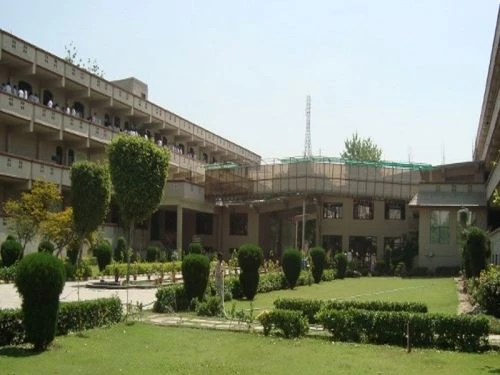
The campus is described as a lush green, pollution-free environment, though the size is ambiguously reported as either 114 or 525 acres. It's located in Kalyanpur, with the Kalyanpur railway station just 400 meters away. Kanpur Central is about 12-15 km, and the nearest airport is Kanpur's Chakeri Airport (25 km).
Hostels are a strong point. There are separate facilities for boys and girls, each with a capacity for over 400 students. Reviews rate the accommodation at 3.8/5, highlighting a safe environment and good housekeeping. The cafeteria gets nods for serving clean and well-prepared food. For academics, the infrastructure is tailored to its niche: state-of-the-art labs for sugar tech, fermentation, and instrumentation, complemented by that unique Experimental Sugar Factory. The centralized, air-conditioned library houses over 8,000 books and 5,000 periodicals dedicated to the field.
Student life seems balanced. The Gymkhana manages a gym, an indoor stadium for badminton and table tennis, and outdoor courts for basketball, volleyball, and a large cricket/football ground. Wi-Fi is available in academic blocks and hostels. A basic medical unit operates on campus. Social life is rated highly in reviews, with the institute promoting various clubs and recreational activities.
Synthesizing feedback from platforms like CollegeDunia and SuggestCollege reveals a strikingly positive consensus. This is rare. The institute scores near-perfect marks (often 5.0/5) for Academics and Social Life, with very high scores (4.8/5) for Faculty and Infrastructure.
Students call it the "best for knowledge of sugar making process in Asia" and praise the curriculum for incorporating new research. Faculty are repeatedly described as "helpful," "knowledgeable," and "experts in their fields" who blend theory with practical demos. The phrase "Life begins here" pops up in reviews regarding the social environment.
Notably, the research brief found no specific recurring negative complaints or rants across multiple platforms. The main critique seems to be the inherent limitation of the institute's niche—it's exclusively for those committed to the sugar and allied industries. If you're looking for a broad-based engineering degree with a wide corporate placement range, this isn't the place. But for its intended purpose, student satisfaction appears exceptionally high.
Absolutely—if you are certain about building a career in the sugar, alcohol, fermentation, or allied bio-energy sectors. NSI is not a generic option; it's the specialist's choice. Its strengths are undeniable: deep industry connections, a practical curriculum centered on a real training factory, strong placement records with known recruiters, and modest fees backed by government scholarships. The recent collaboration with IIT Kanpur on biofuels also future-proofs its relevance.
You should consider NSI if you have a background in chemical engineering, biotechnology, or agriculture and want to apply it to a specific, stable industry. The ROI, in terms of job security and becoming a recognized expert, is solid.
Look elsewhere if you desire a typical campus life with a wide variety of engineering branches, if you're aiming for high-paying IT or core software jobs, or if you're unsure about committing to this specific industrial vertical. NSI is a powerhouse in its lane, but it operates in a very defined lane.
The National Sugar Institute (NSI) Kanpur specializes in postgraduate-level diploma and fellowship programs, not conventional B.Tech or M.Tech degrees. Its main offerings are the Fellowship Diploma of the Institute (FNSI) in Sugar Technology, Sugar Engineering, Fermentation Technology, and Alcohol Technology. It also runs Postgraduate Diplomas in areas like Sugar Technology, Sugar Engineering, Industrial Fermentation, and Quality Control & Environmental Science, along with shorter Certificate courses for skill upgrades.
Admission to most PG Diploma and Certificate courses at NSI Kanpur is based on the institute's own entrance exam, the NSI Common Entrance Test (CET). It's a pen-and-paper test. The selection is merit-based on the CET rank and past academic performance. For the more advanced Fellowship Diploma programs, the process typically involves a personal interview in addition to academic credentials. Applications are submitted online through the official NSI website.
For the 2025-2026 academic session, the first-year tuition fee for Postgraduate Diploma programs ranges from approximately ₹68,500 to ₹81,000. The Fellowship Diploma programs cost about ₹88,900 for the first year. As a government institute, fees are relatively affordable. Several scholarships are available from bodies like the Government of India's Ministry of Consumer Affairs, the Indian Sugar Mills Association, and NSI itself, including merit-based awards.
Placement prospects are strong within the specialized sugar and allied industries. The institute reports an average annual package of ₹4-6 LPA (2025 data) and placement percentages that have historically ranged from 70% to over 100%. Top recruiters include major industry players like Balrampur Chini Mills, Bajaj Hindusthan Sugar Ltd, Dhampur Sugar Mills, Triveni Engineering, and ISGEC. Graduates also find roles in government sugar units and have opportunities for international placements.
NSI Kanpur provides a dedicated, green campus with separate hostels for boys and girls, each accommodating over 400 students. Its standout academic infrastructure is the on-campus 'Experimental Sugar Factory' (100-tonne capacity) for hands-on training. It has well-equipped labs, a centralized AC library with over 8,000 specialized books, sports facilities including a gym and indoor stadium, a cafeteria, a medical unit, and campus-wide Wi-Fi.
Share what future students should know about NSI.
Student voices are not rewritten by colleges. We remove spam and abuse.
Wider admission question? Community PulseWhat should future students know?
Tell us which course you're considering. We'll help you work out the next step.
Get instant Partner access after mobile verification. Your public edits are reviewed before they go live.
Claim this college Cafeteria
 Campus Security
 Campus Shuttle
 Computer Labs
 Science Labs
 Study Library