Loading Admission Guardian content
Loading Admission Guardian content

Provisional score based on available data. It may change as more information is verified.
Find a program, read its fee details and explore the admission requirements.
Summary of the programs shown below. Fee amounts are not listed. Contact the college for its current fee schedule.
| Course | Stream | Fees |
|---|---|---|
| Bachelor of Engineering [BE] | Engineering | |
| Master of Business Administration [MBA] | Management |
Specializations
Eligibility: 10+2
Specializations
Eligibility: Graduation
 Accenture
 Axis Bank
 Birlasoft
 Capgemini
 CMC Limited
 DRDO
DRDO Ericsson India Pvt Ltd
 Genpact
 Hindustan Copper Limited (HCL)
 IBM
IBM ICICI Prudential
 Indian air force-IAF
 Indian Navy
 Infosys
 InfoTech
 Mahindra Satyam
 NIIT Ltd
 Nokia
Nokia Onida
Onida Reliance
 Syntel
 TCS
TCS TELCO
TELCO Tisco
Tisco Vodafone
 Wipro
Wipro Wipro Technologies
NRI Institute of Technology and Management (NRIITM) in Gwalior is a private engineering college that’s been around since 2002, affiliated with the state’s RGPV university. It’s a place of stark contrasts. On one hand, you have a clean, functional campus with decent hostels and some experienced faculty. On the other, you have a placement record that, according to a significant number of alumni, is practically non-existent. The college pitches itself as a budget-friendly option for B.Tech and MBA aspirants in central India, but the gap between its promotional material and the lived experience of many past students is impossible to ignore. If you’re looking purely at cost and a basic degree, it’s an option. If you’re banking on campus placements to launch your career, the data suggests you should look elsewhere.
The academic offering is standard for an RGPV-affiliated private college. The B.Tech programs are the main draw, with Computer Science and Electronics & Communication having the highest intake at 120 seats each. Information Technology takes 90, while Civil, Mechanical, and Electronics & Instrumentation Engineering have smaller batches of 30 each. For postgrads, there’s an MBA with specializations like International Business and Marketing (60 seats) and M.Tech programs in areas like Data Science and Structural Engineering.
The teaching quality, according to students, is a mixed bag. You’ll find some genuinely experienced professors, like Laxmi Narayan Pathak in Sciences or Dr. S.K. Gomasta in Civil Engineering, both with over five decades in academics. But other reviews point to a lack of well-qualified teachers across the board. The grading follows RGPV’s 10-point CGPA system, and you need a minimum CGPA of 5.0 to graduate. Academically, it’s a typical tier-3 engineering college experience—you’ll get by if you’re self-motivated, but don’t expect cutting-edge pedagogy.
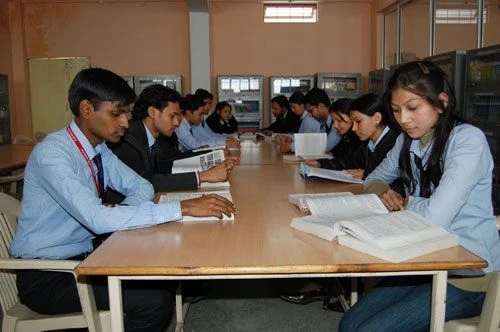
A decent plus is the library’s DELNET facility, which gives digital access to a massive repository of over 2.9 million books and journals. They also have a Real Life Technology Club and organize industrial visits, which is more than some colleges at this level do.
This is the section that demands the most caution. The data is wildly inconsistent, and that’s a major red flag.
The college lists top recruiters like Infosys, Wipro, IBM, Accenture, Genpact, and even the Indian Air Force. You’ll see unverified claims of highest packages ranging from 10 LPA to 20 LPA floating around on some portals.
But then you talk to alumni, and the picture darkens considerably. Reviews from students in the 2015-2019 batches are almost uniformly bleak. They describe a “poor placement system,” with some claiming only 2-3% of their batch got placed. Phrases like “hardly any companies visit” and “0% placement” come up repeatedly. The common advice from these alumni is stark: don’t rely on the college for a job; prepare for GATE, CAT, or look for opportunities in other cities after you graduate.
More recent reviews (2020-2024) show a shift, with some students claiming the placement cell is now active and connecting with MNCs. But without verified placement reports or consistent data, it’s hard to gauge the truth. The complete absence of an official average or median package figure on the college’s part is telling. In the world of engineering admissions, colleges that perform well shout those numbers from the rooftops.
The verdict here isn’t complicated. If you choose NRIITM, operate under the assumption that on-campus placements will be minimal or non-existent. Plan your four years accordingly—build a strong portfolio, ace competitive exams, and network for off-campus opportunities. Banking on the college’s placement cell would be a high-risk strategy based on the historical record.
This is arguably the college’s strongest selling point. The fees are low, especially for a private institution. The annual B.Tech tuition has a wide range (₹42,500 to ₹1,70,000), likely reflecting different quotas or categories. All in, the total 4-year cost is estimated between ₹1.7 Lakhs and ₹6.8 Lakhs. For an MBA, it’s just ₹50,000 per year. When you compare that to private colleges in metros charging ten times as much, the value proposition is clear: a low-cost engineering degree.
The hostel adds ₹73,000 per year, which includes mess charges. They claim the mess is hygienic and the food is routine.
On financial aid, the college does offer avenues. There are government scholarships for SC, ST, OBC, and economically backward students that cover institutional fees. They also have merit-based scholarships that can waive up to 100% of tuition for top rankers, plus sports and means-based scholarships. If you’re eligible, the already low cost can become negligible.
Admissions are centralized through the state system. For B.Tech, you need a valid score from JEE Main or the state-level engineering entrance test. The final selection is through the combined admission test conducted by the Madhya Pradesh Professional Examination Board (MPEB).
For the MBA program, they accept national scores like CAT, MAT, XAT, or CMAT, again with the final allotment likely going through the MPPEB process.
M.Tech admissions are based on GATE scores or the institute’s own entrance exam.
Specific cutoff ranks or percentiles for recent cycles aren’t publicly available, which is common for colleges at this tier. The bar is generally not exceedingly high; if you have a decent score in JEE Main or the state exam, you have a shot. There’s also an NRI/Management quota, allowing up to 15% of seats to be filled outside the counseling process, which explains the higher end of the fee spectrum.
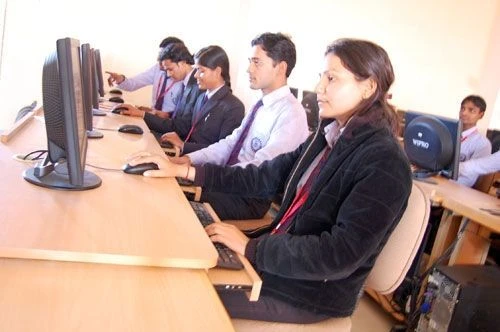
The campus is located about 6 km from Gwalior’s city center, near the railway under-bridge on Jhansi Road. It’s not a sprawling campus, but student reviews consistently praise it for being clean, green, and environment-friendly. Infrastructure includes standard computer labs, departmental labs (the ECE labs are noted as well-equipped), a library with 13,000 volumes, an auditorium, and sports facilities with two playgrounds. Wi-Fi is available across campus and in hostels.
Hostel life gets positive marks. The separate boys' and girls' hostels are described as clean, well-furnished, and secure. Rooms are shared between two or three students, each getting a cot, study table, and chair. The attached bathrooms are a plus. Students say the wardens are cooperative and even provide weekly updates to parents, which is a nice touch. The mess food is termed “good and routine.” With a total capacity of 200, it’s a relatively small hostel community.
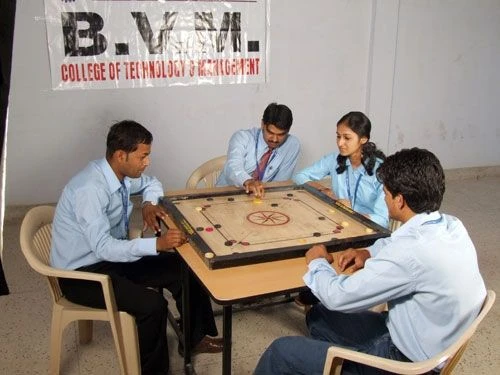
Social life seems quiet. An older review complained about a lack of cultural programs, though the college website mentions extracurricular engagements and sports. It’s probably not the place for a vibrant fest culture. The focus, by design or default, appears to be more insular.
Synthesizing the feedback creates a clear, if bifurcated, narrative.
The positives are concrete: a clean, functional campus; hostels that are better than many at this price point; and the presence of some dedicated, experienced faculty members. Students note teachers use projectors, and the overall environment is conducive to studying if you’re self-driven. The low fee is always highlighted as a major relief.
The negatives are severe and center almost exclusively on career outcomes. The placement cell’s effectiveness is the single biggest complaint across years of reviews. Beyond that, there are grumblings about RGPV’s sometimes erratic university exam and marking processes, which is a systemic issue for all affiliates, not just NRIITM. A few older reviews also mentioned infrastructure gaps, but that seems to have improved in recent years.
The takeaway from student sentiment is pragmatic. Alumni who valued the low-cost degree and used the time to prepare for competitive exams often view their experience neutrally or positively. Those who enrolled with expectations of a campus recruitment drive feel let down.
NRIITM Gwalior is a specific solution for a specific problem. It’s worth serious consideration only if your primary constraint is budget and your primary goal is securing an AICTE-approved B.Tech or MBA degree from an RGPV-affiliated college. At these fee levels, it delivers a basic, no-frills engineering education with decent living conditions.
However, you must enter with eyes wide open. Treat the degree as a minimum viable credential. The placement record, based on a preponderance of alumni testimony, is historically weak. You should not factor campus placements into your decision-making calculus. Your strategy should involve independent upskilling, targeting off-campus drives, and preparing for exams like GATE or CAT from day one.
Who should go? Students from the region seeking an affordable engineering ticket, who are disciplined, self-reliant, and have a clear plan to build their career outside the college’s placement system.
Who should look elsewhere? Anyone for whom strong college-led placements, a vibrant campus life, or a reputation that opens doors is a priority. In those cases, the low fee isn’t worth the opportunity cost.
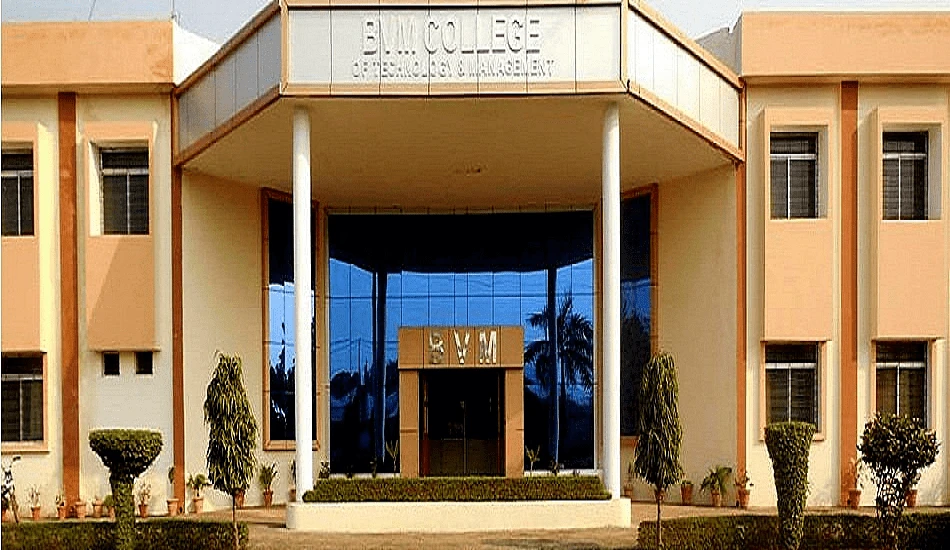
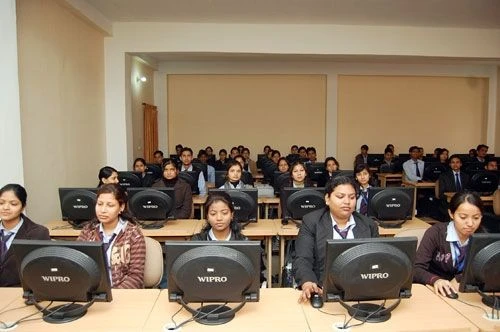
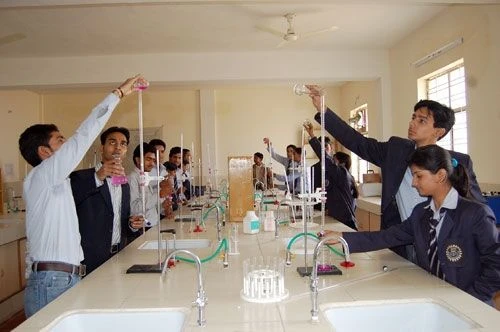
In this preview: 5 photos · 0 videos
NRIITM Gwalior offers Bachelor of Engineering (B.E.)/B.Tech programs with the following intake: Computer Science and Engineering (120 seats), Electronics and Communication Engineering (120 seats), Information Technology (90 seats), Civil Engineering (30 seats), Mechanical Engineering (30 seats), and Electronics and Instrumentation Engineering (30 seats). Admissions are through state counseling based on JEE Main or MP state entrance exam scores.
For the 2026 academic session, the annual tuition fee for B.Tech programs ranges from ₹42,500 to ₹1,70,000. The total estimated cost for the 4-year B.E. degree is between ₹1.7 Lakhs and ₹6.8 Lakhs. The annual tuition fee for the MBA program is ₹50,000, making the total 2-year cost approximately ₹1 Lakh. These are among the most affordable private college fees in the region.
NRIITM provides separate, well-furnished hostels for men and women on campus with a total capacity of 200. Rooms are shared (2-3 students), spacious, and come with a cot, study table, chair, and attached bathroom. Facilities include a hygienic mess, reading room, TV room, internet, and generator backup. The annual hostel and mess fee is ₹73,000 for all students.
Student sentiment on placements is highly polarized and a major point of concern. While the college lists recruiters like Infosys and Wipro, many alumni from batches prior to 2020 report a very poor placement system with extremely low placement rates (often citing 0-3%). Recent reviews are more mixed, but the college does not publish official average placement statistics. Prospective students are advised to plan for off-campus opportunities and not rely solely on college placements.
For B.Tech admissions, NRIITM accepts scores from JEE Main or the Madhya Pradesh state engineering entrance test. Final admission is through the centralized counseling conducted by the Madhya Pradesh Professional Examination Board (MPPEB). For MBA admissions, valid scores from CAT, MAT, XAT, or CMAT are accepted, with admission again processed through the MPPEB counseling system.
Share what future students should know about NRIITM.
Student voices are not rewritten by colleges. We remove spam and abuse.
Wider admission question? Community PulseWhat should future students know?
Tell us which course you're considering. We'll help you work out the next step.
Get instant Partner access after mobile verification. Your public edits are reviewed before they go live.
Claim this college
 Auditorium
 Cafeteria
 Computer Labs
 Hostel
 Medical
 Science Labs
 Sports Complex
 Study Library