Loading Admission Guardian content
Loading Admission Guardian content
Provisional score based on available data. It may change as more information is verified.
Find a program, read its fee details and explore the admission requirements.
Summary of the programs shown below. Fee amounts are not listed. Contact the college for its current fee schedule.
| Course | Stream | Fees |
|---|---|---|
| Bachelor of Dental Surgery [BDS] | Dental | |
| Doctorate of Medicine [MD] | Medical | |
| M.B.B.S. | Medical | |
| Master of Surgery [MS] | Medical | |
| Master of Surgey [M.S.] | Medical |
All accepted exams
Specializations
All accepted exams
Eligibility: MBBS
All accepted exams
Eligibility: 10+2 + NEET
Specializations
Eligibility: MBBS
Specializations
Eligibility: MBBS
2 exams with cutoff data available - showing recent entries
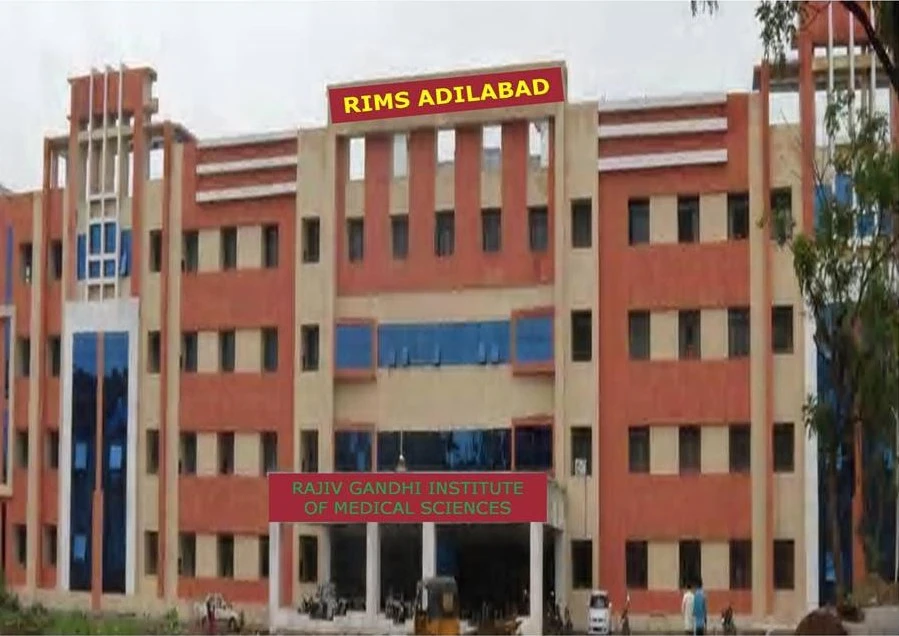
Rajiv Gandhi Institute of Medical Sciences (RIMS) in Adilabad is a study in contrasts. It’s a government-run medical college that offers an MBBS degree for a total tuition cost that’s less than a single year’s fee at many private institutions—around ₹60,000 to ₹75,000 for the entire five-and-a-half-year program. That’s the headline. But the real story is what you get for that rock-bottom price: immense clinical exposure in a remote district hospital and a faculty that students consistently praise, all wrapped in infrastructure that often draws sharp criticism. It’s a classic trade-off, and whether it’s worth it depends entirely on what you value more: cost and hands-on experience, or comfort and city life.
RIMS is, first and foremost, an MBBS factory. With an intake of 120 students, the undergraduate program is the heart of the institute. The curriculum follows the standard NMC-prescribed 5.5-year structure, culminating in a compulsory rotating internship. They also run a B.Sc Nursing program. Where RIMS begins to carve a niche is in its postgraduate offerings. With about 50-60 PG seats across specialties like General Medicine (7 seats), Anaesthesiology (7), and General Surgery (6), it provides a pathway for its own graduates and others to specialize without leaving the state system. The seat matrix for para-clinical subjects like Anatomy and Physiology is also decent.
Academically, the vibe is described as intense but supportive. The faculty-to-student ratio is reported at about 1:12, which isn’t bad for a government college. And the professors, especially in the pre-clinical years, get high marks from students. They’re called approachable and genuinely invested in teaching—a sentiment you don’t always hear. The grading is percentage-based, governed by KNRUHS, with internal assessments acting as gatekeepers for the final university exams. It’s a rigid system, but that’s the norm.
Let’s be clear: medical colleges don’t have placements in the engineering sense. Your career is built on your NEET PG rank and the internship experience you gather. Here, RIMS’s attached 500-bed General Hospital is its greatest asset. Being the primary tertiary care center for the Adilabad district means patient inflow is high and cases are varied. That clinical hands-on time is invaluable and something students in crowded city colleges sometimes struggle to get.
Financially, the path is standard for Telangana government colleges. As an intern, you’ll earn a stipend of ₹26,000-₹28,000 per month. After MBBS, most graduates either crack NEET PG or take up roles as Junior Residents or Medical Officers. The college estimates about 95% are placed in such roles within six months, with a median salary around ₹6.5 LPA for MBBS graduates. For those who complete their MD/MS here, the median climbs to between ₹8.5 and ₹12 LPA as Senior Residents or specialists. Top recruiters are a mix of government bodies like the Telangana State Public Service Commission (TSPSC) and major private hospital chains like Apollo and Yashoda. The outcome is stable, if not spectacular. It’s a government-job pipeline, and it works.
This is where RIMS stops the conversation. The affordability is staggering. The annual tuition fee for the government quota MBBS seat is between ₹10,000 and ₹15,000. Yes, per year. Over five years, that’s a total tuition cost of roughly ₹60,000 to ₹75,000. Hostel accommodation adds a mere ₹1,500-₹3,000 per year. The major variable is the mess fee, which students report runs from ₹3,000 to ₹4,500 per month. Even with that, a realistic total cost for the entire MBBS program, including living expenses, falls between ₹2.5 and ₹3.5 lakhs.
That’s an almost incomprehensible figure in modern medical education. Financial aid is primarily through state government scholarships for SC/ST/OBC/EWS students, accessible via the Telangana ePass portal. There’s no management or NRI quota—it’s a pure government institution. The financial model is its single most compelling feature, full stop.
Admission is 100% NEET-centric. For MBBS, you need a valid NEET UG score. Seats are allocated through centralized counseling: 85% are reserved for the Telangana state quota (managed by KNRUHS), and 15% go to the All India Quota (managed by the Medical Counseling Committee, MCC).
The cutoffs reflect its position as a affordable, government college in a remote location. For the 2024 admission cycle, the Round 1 closing rank for the General category under the State Quota was around 56,259. For the All India Quota, it was significantly more competitive, closing near 12,247. There’s a wide range for reserved categories, with SC/ST ranks closing around the 1,69,000 mark. If you have a NEET UG rank between 50,000 and 70,000 and Telangana residency, RIMS is a very likely option. For PG admissions, it’s all about your NEET PG rank and performance in the state-level counseling.
This is the other side of the low-cost coin. The campus is sprawling and green, described by students as peaceful. The infrastructure, however, is a constant point of contention. The lecture halls and hostels, while functional, show their age. Reviews consistently mention maintenance issues—water leakage, cracked floors, and inadequate cooling. The hostels accommodate about 75% of students, but the quality is rated poorly, around 2.5 out of 5, with sanitation being a common complaint.
And then there’s the mess. It’s arguably the most unanimous negative point across student reviews on portals like CollegeDunia and Shiksha. Complaints range from poor hygiene and insects to monotonous, low-nutrition food. Many students end up relying on the canteen or outside options.
Social life is internally focused. The annual sports fest, the Rims Premier League (RPL), is a huge deal. There are cultural fests too. But Adilabad town offers little. It’s remote, with limited entertainment or shopping. You’re on campus, for better or worse. The location also means travel is a chore; the nearest major airport is in Nagpur, about 190 km away.
Synthesizing the chatter from review sites and forums paints a clear, dual picture. The positives are strong: unmatched clinical exposure due to the busy hospital, dedicated and knowledgeable faculty (particularly in pre-clinical departments), and an incredibly affordable education. The campus environment is generally seen as friendly and cohesive.
The negatives are equally stark and repetitive. Hostel and mess conditions top the list, described as a significant daily hassle. Infrastructure decay in older buildings is frequently cited. The remote location of Adilabad is a downer for those accustomed to city amenities. There are also occasional, though not pervasive, mentions of a strict senior-junior culture and minor ragging incidents, despite official policies against it.
The consensus? It’s a grind. You come for the degree and the experience, not the comfort. The clinical training you get is considered worth the infrastructural sacrifices, but it’s a trade-off every student feels.
RIMS Adilabad is a specific solution for a specific problem. It is an outstanding value proposition for a student from Telangana or Andhra Pradesh with a NEET rank in the 50,000-70,000 range and limited financial means. If your primary goal is to become a doctor with minimal debt and you are willing to trade urban comforts for vast clinical experience, this college is a smart, pragmatic choice. The education is legitimate, the faculty is good, and you will graduate with real-world skills.
However, if you prioritize a comfortable campus life, modern facilities, and the social opportunities of a city, you will likely find RIMS frustrating. The infrastructure and food are genuine quality-of-life issues. It’s also less ideal for students from far-off states unprepared for the cultural and geographic remoteness of Adilabad. In the end, RIMS doesn’t pretend to be a glamorous institution. It’s a workhorse. For the right student, that’s exactly what’s needed.
Yes, Rajiv Gandhi Institute of Medical Sciences (RIMS) Adilabad is a full, state-run government medical college.
For the General category under the State Quota, the MBBS cutoff at RIMS Adilabad typically closes around a rank of 55,000 to 60,000.
The hostel accommodation at RIMS Adilabad is basic and affordable. However, students frequently criticize the quality of food and the level of maintenance.
Yes, postgraduate students at RIMS Adilabad must sign a compulsory one-year government service bond. The alternative is to pay a penalty of ₹20 Lakh.
The campus at RIMS Adilabad is secure. The surrounding town is considered remote, but the student community is diverse, with most students coming from across Telangana and Andhra Pradesh.
Share what future students should know about RIMS.
Student voices are not rewritten by colleges. We remove spam and abuse.
Wider admission question? Community PulseWhat should future students know?
Tell us which course you're considering. We'll help you work out the next step.
Get instant Partner access after mobile verification. Your public edits are reviewed before they go live.
Claim this college Cafeteria
 Computer Labs
 Medical
 Science Labs
 Study Library