Loading Admission Guardian content
Loading Admission Guardian content

Provisional score based on available data. It may change as more information is verified.
Find a program, read its fee details and explore the admission requirements.
Summary of the programs shown below. First-year fee. Check the note beside each amount for inclusions and exclusions.
| Course | Stream | Fees |
|---|---|---|
| Bachelor of Engineering [BE] | Engineering | 58806 |
| Bachelor of Engineering [BE] {Lateral} | Engineering | |
| Master of Technology [M.Tech] | Engineering | |
| Bachelor of Science [B.Sc] | Science | |
| Ph.D | Science |
Specializations
All accepted exams
Eligibility: 10+2 with 45% + JEE Main
Specializations
All accepted exams
Eligibility: 10+3 with 45% + DCET
Specializations
All accepted exams
Eligibility: Pass in Graduation + GATE
Specializations
Eligibility: 10+2
Specializations
Eligibility: Post Graduation
3 exams with cutoff data available
 Accenture
 Artech Infosystems
 ATOS SYNTEL
 Brinton Pharmaceuticals Ltd.
 Capgemini
 Cranes Software
 DXC Technology
 HCL Technologies
 Hewlett-Packard (HP)
 HGS
HGS HP Labs India
 Infosys
 Intel
Intel Kemsys
 Kotak Group
 Oracle
 Philips
 PORTEA
 PRDC
PRDC Qspiders
 Tech Mahindra
If you're looking at engineering colleges in Bangalore and a niche branch like Aeronautical or Biomedical catches your eye, ACS College of Engineering (ACSCE) will likely pop up. Established in 2009, this private college on Mysore Road has carved out a specific reputation. It's known for decent infrastructure and strong lab facilities for its specialized programs, but student sentiment on placements is sharply divided. The official ACSCE website paints a picture of growth, but the reality, as you'll hear from alumni, is more nuanced—especially if you're not in Computer Science.
ACSCE’s main draw is its array of programs. Beyond the standard CSE, ECE, and Mechanical, it offers branches many newer colleges don't. The Aeronautical and Aerospace programs, with their wind tunnel and flight simulator labs, are a genuine differentiator. Biomedical Engineering leverages its tie-up with the adjacent Rajarajeswari Medical College for practical exposure. And the CSE department has splintered into a host of modern specializations: Data Science, Cyber Security, and even an IoT & Cyber Security with Blockchain combo.
That's a lot of options for a college of its size. The total UG intake is around 630, with CSE and its variants claiming nearly half those seats. They follow the VTU semester system and recently switched back to absolute grading, which students generally see as a relief. Faculty-wise, you have a mix. There are over 112 faculty members, with 37+ holding PhDs. Reviews often call them accessible and supportive, which isn't a given everywhere. The industry MoUs with names like Intel, Bosch, and UC Berkeley look good on paper and do facilitate some workshops and project opportunities.
This is where you need to pay close attention. The placement story at ACSCE has two very different versions. The official line quotes an 80% placement rate with an average package of 5-7 LPA and a highest package that fluctuates between 16 LPA (more credible) and 23 LPA (student-claimed). The NIRF 2024 report provides a harder number: a median package of ₹3.43 LPA. That's a more sobering, and likely more accurate, figure for the typical graduate.
But the real split is by branch. For CSE, ISE, and the related tech specializations, placement is fairly active. You'll see the usual IT service giants: Infosys, TCS, Wipro, Cognizant, Capgemini. The placement percentage for these branches likely hits that 80% mark, with packages clustering in the 3.5-5.5 LPA range for most. For core branches—Aeronautical, Mechanical, Civil—the picture is starkly different. Student reviews are almost unanimous: core placements are virtually non-existent. A student from these streams typically has two options: hustle for an off-campus role in their field, or accept an IT support or sales role from the on-campus pool. One Quora review put it bluntly: "If you want to study Aeronautical, the labs are great, but don't expect a job from the college. You are on your own for placements."
Top recruiters beyond the IT mass recruiters include Robert Bosch, Siemens, and L&T Infotech for some roles. Internships with HAL and ISRO are possible, but they're competitive. The sectoral breakdown says it all: an estimated 80% of placements are in IT/Software.
Your fee depends entirely on how you get in. The KCET (government quota) route is the most affordable, with annual tuition around ₹90,000 to ₹1.1 lakhs. Add hostel and mess (₹70k-85k) and other fees, and your annual outlay is roughly ₹1.8-2.2 lakhs. Over four years, that's an estimated ₹6.5-8 lakhs.
If you come in via COMEDK, the tuition jumps to ₹2.4-2.8 lakhs per year, pushing the four-year cost to ₹12-15 lakhs. Management quota is the steepest, ranging from ₹3.5-4.5 lakhs per year for tuition alone, leading to a total cost of ₹18-22 lakhs. Scholarships are primarily available through state government schemes (SSP/NSP) for SC/ST/OBC students. The college itself occasionally offers merit scholarships to top rankers, but don't bank on it as a major funding source.
Admission is entrance-exam driven. For Karnataka residents, the KCET is the primary ticket. For everyone else, COMEDK UGET is the main channel. JEE Main scores are accepted for management quota seats. For postgrad, it's PGCET or GATE.
The cutoffs give you a sense of the demand. For the 2024 KCET Round 1 (General category), CSE closed around the 39,000-45,000 rank. More niche branches were much more accessible: Aeronautical around 80,000-96,000, and Biomedical well beyond 1.2 lakhs. For COMEDK, AI & ML closed near the 63,000 rank. The process is centralized: you go through KEA counseling for KCET or COMEDK counseling for their seats. Management quota involves direct application to the college, an interview, and document verification.
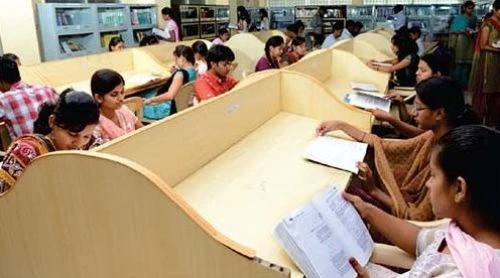
The infrastructure is consistently praised. The campus is spacious, the central library (three floors, 22,000+ volumes) is often called the best part of the college, and the labs, especially for aeronautics, are well-equipped. The 26-acre campus is shared with a medical college and hospital, which provides immediate medical access.
Hostels have a capacity of 300 each for boys and girls. Rooms are mostly 2 or 3 sharing with attached bathrooms and get decent reviews for space. The food in the mess, however, is a common pain point. Reviews frequently rate it a 2 or 3 out of 5, citing limited variety and hygiene concerns. Sports facilities are good—a large indoor arena, cricket ground, football field, and a swimming pool.
Location is a mixed bag. Being on the Bangalore-Mysore Highway makes it connected by road, and the Kengeri metro station is about 4-5 km away, offering a link to the city. But you're on the outskirts, so the immediate social scene is limited. The college culture is described as strict. They enforce an 85% attendance rule rigidly, there's a dress code (no T-shirts), and some students find the security and administrative staff to be overly stringent.
Synthesizing feedback from Shiksha, CollegeDunia, and forums gives a clear, if bipolar, consensus.
The positives are strong: "Outstanding infrastructure," "best-in-class library," and "supportive faculty." Students in Aeronautical and Biomedical feel they get better hands-on exposure here than at peer institutions. The proximity to the medical college and hospital is a unique plus for BioMed students.
But the negatives are significant and repeated. Placement disparity is the biggest gripe. The strict management style is another. "Management is very strict about fees and attendance. They won't let you write internals if you are even 1% short," sums up a common Reddit sentiment. The canteen food is panned. And there's a lingering perception among some that the administration is more focused on rules and fees than student support. One Shiksha review included a surreal detail: "The placement officer is the worst; they ask you to play Antakshari during training."*
It depends almost entirely on your branch and budget. If you're getting Aeronautical or Biomedical Engineering through the KCET quota at roughly ₹1.8-2 lakhs a year, ACSCE can be a reasonable choice. You'll get good infrastructure and specialized labs you won't find in many Tier-3 colleges. Just go in with eyes wide open: you will likely be responsible for securing your own core job or internship. The college's placement cell will primarily offer IT roles.
For Computer Science via KCET, it's a middling option among Bangalore's many private colleges. The placement activity is there, but the median package of ₹3.43 LPA is a telling benchmark. For CSE through COMEDK or Management quota, the value proposition weakens significantly. Paying ₹3-4 lakhs a year for similar outcomes is hard to justify when other colleges in that fee bracket might offer stronger placement records. Ultimately, ACSCE is a college with decent facilities and a clear strength in niche branches, but its placement performance hasn't caught up to its infrastructure. Choose it for the labs and the degree, but plan to be proactive about your career from day one.


In this preview: 5 photos · 0 videos
Yes, ACS College of Engineering is considered good for Aeronautical Engineering in terms of academics and laboratory facilities. It is one of the few colleges in Bangalore with a dedicated wind tunnel. However, core placements in the aeronautical field are reported to be scarce.
Both ACS College of Engineering (ACSCE) and Rajarajeswari College of Engineering (RRCE) belong to the same educational trust and are located near each other. ACSCE is generally perceived to have slightly better infrastructure, particularly for niche engineering branches like Aeronautical and Biomedical.
No, staying in the hostel is not mandatory at ACS College of Engineering. However, it is often recommended for outstation students due to the college's location on the outskirts of Bangalore.
As of 2024, the management quota fee for the Computer Science Engineering (CSE) program at ACS College of Engineering ranges between ₹3.5 Lakhs to ₹4.5 Lakhs per year. The exact fee depends on the student's academic profile.
The college maintains a strict anti-ragging cell. Recent reviews suggest the campus provides a safe environment with no major reported incidents of ragging.
Share what future students should know about ACSCE.
Student voices are not rewritten by colleges. We remove spam and abuse.
Wider admission question? Community PulseWhat should future students know?
Tell us which course you're considering. We'll help you work out the next step.
Get instant Partner access after mobile verification. Your public edits are reviewed before they go live.
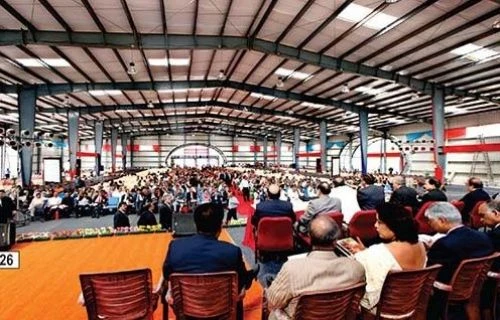
Claim this college Auditorium
 Cafeteria
 Campus Shuttle
 Communication Centre
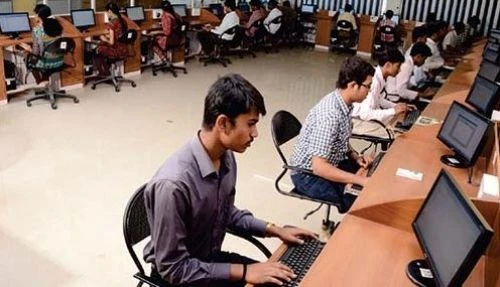
 Computer Labs
 Gym
Gym Hostel
 Medical
 Science Labs
 Sports Complex
 Study Library