Loading Admission Guardian content
Loading Admission Guardian content

Selected ranking categories, with the recorded year beside each result. Open all records for the complete history.
4 published records · Lower numeric ranks are stronger
Indiatoday
MBA
#292021
Find a program, read its fee details and explore the admission requirements.
Summary of the programs shown below. Fee periods can differ by program. Check the note beside each amount before comparing costs.
| Course | Stream | Fees |
|---|---|---|
| Post Graduate Diploma in Management [PGDM] | Management | 895000 |
| Post Graduate Diploma Management [PGDM] (Banking and Financial Services) | Management | 895000 |
| Master of Business Administration [MBA] | Management | 1098153 |
| Master of Science [M.Sc] (Big Data & Business Analytics) | Science | 1450730 |
Specializations
All accepted exams
Eligibility: Graduation with 50%
Specializations
All accepted exams
Eligibility: Graduation with 50%
Specializations
All accepted exams
Eligibility: Graduation
Specializations
Eligibility: Graduation
 99Acres
 Accenture
 Amazon
 American Express
 Ameriprise Financial
 Amul
Amul Axis Bank
 Bajaj Finserv Ltd.
 Bank of America
 Berger
 Bharti Axa General Insurance
 Birlasoft
 Blue Star
 Byju's
 Cadbury
 Capital First Limited
 Capital IQ
 Capital Via
 CavinKare
 Citi Bank
 Coca-Cola
 Colgate Palmolive India Ltd.
 Croma
Croma Decathlon
 Deloitte
 DLF
DLF Edelweiss
 Ernst & Young
 Exide Life Insurance
 Federal bank
 FedEx
FedEx Ge Capital
 HCL
HCL HDFC Bank
 HDFC Ergo
 HDFC Mutual Fund
 Hindware
 Home First Finance Company India Private Limited (HFFC)
 Hyundai Motors
 ICICI Bank
 ICICI Prudential
 ICICI Securities
 IDFC
IDFC IFFCO-Tokio
 Induslnd Bank
 Infosys
 ING Vysya Bank
 ITC
ITC Jaguar
 Jaro Education
 Jeevansathi.com
 JK Lakshmi Cement
 JK Paper
 JK Tyre
 Just Dial
 Kent
Kent Kotak Life Insurance
 Kotak Mahindra Bank
 KPMG
KPMG Kurl-On
 L&T Infotech
 Laurent & Benon group
 Loreal
 Luminous
 Maruti Suzuki
Asia Pacific Institute of Management (AIM) sits in a crowded and competitive space: the mid-tier Delhi B-school. Established in 1996, it’s an AICTE-approved, autonomous institute that’s built a reputation on its prime South Delhi location and modern infrastructure. But the real story here is the gap—the one between the glossy brochure promises and the ground-level student experience, especially when it comes to placements and accreditation. If you’re considering AIM, you’re likely looking at colleges like JIMS or NDIM as well. This profile isn’t about picking a winner. It’s about giving you the unvarnished details, from the official claims to what alumni whisper on forums, so you can decide if this is the right fit for your career and your wallet.
AIM’s academic portfolio is split into two clear lanes: its domestic PGDM programs and its international pathway degrees. The PGDM is the main event, with an intake of 180-240 for the General program and 60 seats each for specializations in Marketing, International Business, Banking & Financial Services, and the newer Big Data Analytics. They also offer an MBA in Healthcare Management in collaboration with Russia’s RUDN University. The curriculum runs on a fast-paced trimester system across two years, with a mandatory summer internship slotting in between.
The teaching style leans towards case studies, and students often single out a handful of senior professors—like Prof. Sanjay Kumar—for being particularly supportive. But there’s a consistent note in reviews about faculty strength. The institute claims around 45 faculty members, but current and former students suggest the core teaching staff is closer to 16-20. That’s a thin spread for the total student body, and it shows in some feedback about stretched resources.
Where AIM tries to differentiate itself is with its international tracks. The M.Sc. pathway programs with ISM Germany in Business Intelligence or International Logistics offer a chance for a European degree. It’s a 1+1 model: one year in Delhi, the second in Germany. The catch, beyond the high fees, is the living cost in Europe for that final year. These programs are niche and expensive, but for a specific type of student with global ambitions and a sizable budget, they’re a unique offering in this segment.
This is the section that requires the most careful reading. The placement data presented by the institute and the reality echoed by alumni on platforms like Shiksha and CollegeDunia don’t always align.
Let’s start with the official numbers for the 2025 cycle. The highest package is claimed to be ₹35 LPA. The average package is stated as ₹8.75 LPA. The placement percentage is advertised as 98%. Now, let’s talk about the consensus from student reviews. That ₹35 LPA is treated as a major outlier, often attributed to a single student in the international program or someone with exceptional pre-MBA experience. The working average that graduates cite is firmly in the ₹5.5 to ₹7 LPA range. Many suggest the median package—the point where half the batch is above and half below—is closer to ₹3.5-4.5 LPA. As for placement percentage, the realistic figure from reviews is between 80-85%.
The recruiter list is decent for a college of this stature. You’ll see Big Four names like Deloitte, KPMG, EY, and PwC, but these are often for consulting or audit roles that may involve extensive travel. Banking regulars include ICICI, HDFC, and HSBC. FMCG companies like Amul, Nestlé, and Dabur visit for marketing roles, which is the highest volume placement sector. Tech and services firms like Amazon, Zomato, and Flipkart also recruit, though roles can lean towards sales, operations, or business development.
The placement cell is active, but the criticism is about role quality. A common refrain is that if you’re aiming for core finance, analytics, or strategic marketing, you’ll need to hustle independently. The campus-driven process tends to flood with sales and business development positions. It’s not a bad start, but it’s something to be mentally prepared for.
The cost of a two-year PGDM at AIM for the 2025-27 batch is ₹11,50,000 in tuition fees. That’s the headline number. The MBA in Healthcare Management with RUDN is higher at ₹13,50,000. The first year of the M.Sc. pathway programs costs ₹4,75,000, with a second year in Germany costing an additional €12,000-15,000 in tuition, plus living expenses.
Living costs add up quickly. The on-campus hostel (located off-site, about a 10-minute walk away) charges ₹2,25,000 per year for an AC double-sharing room, totaling ₹4,50,000 over two years. Non-AC options are ₹1,60,000 annually. Mess food is vegetarian with weekly non-veg options. Add in application fees, possible electricity charges for AC, and personal expenses, and the total outlay for two years can easily approach ₹18-20 lakhs.
To offset this, AIM offers merit-based scholarships primarily tied to entrance exam scores. A CAT or XAT score above the 90th percentile can get you a ₹3,00,000 fee waiver. Scores between 80-90 percentile fetch ₹1,50,000, and a CMAT score above 80 percentile comes with a ₹1,00,000 scholarship. These are substantial deductions and should be a key part of your negotiation if you have a strong score.
Getting into AIM is a three-step process typical of most private B-schools. First, you need a valid score from any of the major MBA entrance exams: CAT, XAT, MAT, CMAT, GMAT, ATMA, or CUET. The cutoffs aren’t published as strict numbers, but based on recent cycles, expect the selection pool for CAT to be in the 70-80 percentile range. For MAT and CMAT, it’s usually between 75-85 percentile. Your academic record from 10th, 12th, and graduation is also factored into the shortlisting.
If shortlisted, you’ll be called for the final selection round at the Jasola campus. This involves a Group Discussion (GD) or a Case Analysis exercise, followed by a Personal Interview (PI). The GD topics are generally current affairs or business scenarios. The PI often probes your academic background, career goals, and general awareness.
Applications usually open in October and run through March or April. There are whispers of an NRI/management quota, but details are not officially transparent. Your best bet is to apply with a solid entrance score—it not only boosts your admission chance but also your scholarship potential.
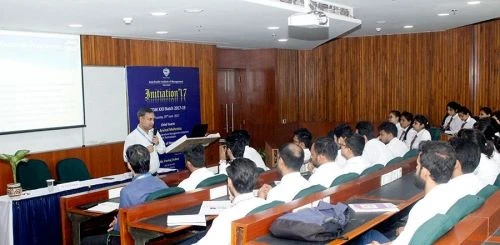
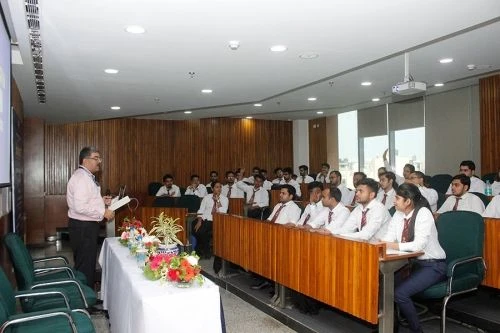
AIM’s campus is a double-edged sword. On one hand, it’s a single, modern, multi-story building in the heart of Delhi’s institutional area in Jasola. The infrastructure is professionally maintained—classrooms are air-conditioned with smart boards, the library (dubbed ‘The Athenaeum’) is a three-floor haven with over 50,000 books and digital databases, and the IT labs are well-equipped. It feels corporate. For some, that’s a plus.
On the other hand, the campus is about one acre. There’s no sprawling lawn, no sports field on-site. The hostel is a separate building roughly half a kilometer away. This gives the college a somewhat confined, ‘school-like’ atmosphere that some students find limiting. Sports are limited to indoor games like table tennis; outdoor activities are organized at nearby public complexes. The Wi-Fi is campus-wide but described by students as ‘average’.
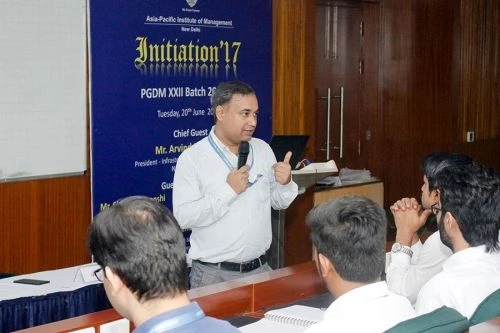
The location, however, is arguably AIM’s biggest tangible asset. Jasola Vihar is well-connected by the Delhi Metro (Jasola Vihar Shaheen Bagh and Jasola Apollo stations are within a 20-25 minute walk) and is a short drive from corporate hubs in Okhla and Noida. This makes attending guest lectures, networking events, and even interviewing for off-campus jobs significantly easier than for colleges stuck in the outskirts.
Synthesizing years of feedback from Shiksha, CollegeDunia, Quora, and Reddit paints a consistent picture. The positives are repeated: “The location in South Delhi is unbeatable for connectivity.” “The building and library are top-notch and feel professional.” “Some faculty members are genuinely helpful and teach through real cases.” The international pathway programs also get nods from those who participated.
The negatives are just as consistent, and they’re weighty. The most serious is the ongoing confusion and concern over AIU (Association of Indian Universities) equivalence. The institute’s website mentions it, but numerous student reviews from 2024-2025 explicitly state the PGDM lacks AIU recognition. This matters immensely if you plan to apply for government jobs or pursue a PhD in India later. You must verify the current status directly with official sources before enrolling.
The second major gripe is the placement disparity. Reviews are filled with comments like, “Don’t believe the 35 LPA ads; most of us got between 4.5 and 6 LPA.” There’s a palpable sense of marketing overreach that leaves some students feeling short-changed. Finally, the small campus and what some describe as a rigid, ‘money-minded’ administrative approach regarding fees and attendance are frequent points of friction.
So, who is AIM for? It’s a practical choice for a student with a CAT/XAT percentile in the 70s or 80s who prioritizes being in Delhi over a potentially more immersive (but remote) campus. If your goal is to get a business degree, leverage Delhi’s networking opportunities, and land a decent starting job in marketing, sales, or BFSI operations, AIM can serve that purpose. The infrastructure is good, and the location is a genuine career enabler. The scholarship discounts for high scorers make the fee more palatable.
Who should look elsewhere? If AIU equivalence for government jobs is non-negotiable for you, look until you get absolute written confirmation. If you’re dreaming of a classic, residential B-school life with a vibrant campus culture, the single-building setup will disappoint. And if your expectation is to walk into the high-paying roles advertised, you may face a reality check. Compared to direct competitors like NDIM, which often gets cited for more consistent placement outcomes, AIM trades some of that stability for its location and modern facilities. It’s not a dream school, but for the right candidate with managed expectations, it can be a functional launchpad.
For the most current data, always cross-check details on the official Asia Pacific Institute of Management website and the AICTE portal.
In this preview: 3 photos · 0 videos
While the institute is approved by the AICTE, its equivalence status with the Association of Indian Universities (AIU) is currently unclear or contested. Students who plan to pursue government jobs after their PGDM should verify the latest AIU list directly before applying.
The official placement report cites an average package of ₹8.75 LPA. However, based on student feedback, a more realistic average is considered to be in the range of ₹6-7 LPA, with the median package being closer to ₹4.5 LPA.
AIM is frequently compared to institutes like JIMS Rohini and NDIM. In these comparisons, AIM is often praised for its infrastructure and location. NDIM, on the other hand, is commonly cited for having more consistent placement records.
No, the institute does not have a hostel within its main academic campus. The student hostel is located approximately 500 meters away from the main academic building.
The International MBA can be a good option for students seeking a foreign degree at a relatively lower cost. However, prospective students must carefully factor in the high cost of living for the second year of the program, which is typically spent in countries like Germany or Russia.
Share what future students should know about AIM.
Student voices are not rewritten by colleges. We remove spam and abuse.
Wider admission question? Community PulseWhat should future students know?
Tell us which course you're considering. We'll help you work out the next step.
Get instant Partner access after mobile verification. Your public edits are reviewed before they go live.
Claim this college Naukri.com
 Nestle India
 Newgen
 Oppo
Oppo Oyo Rooms
 Panasonic India
 Policy Bazaar
 Protiviti Consulting Pvt. Ltd.
 Royal Bank of Scotland
 S&P Global
 SBI Card
 SBI Life Insurance
 Schneider Electric
 South Indian Bank
 Tata Consultancy Services
 Tata Teleservices
 Tech Mahindra
 UNICHARM
 Vedanta
 VIP
VIP Vodafone
 Wipro
Wipro XL Dynamics
 Zomato
90 named recruiters in the recorded data. Company names are deduplicated.
 Auditorium
 Bank & ATM
 Cafeteria
 Campus Security
 Campus Shuttle
 Campus Wi-Fi
 Computer Labs
 Gym
Gym Hostel
 Medical
 Science Labs
 Smart Classrooms
 Sports Complex
 Study Library