Loading Admission Guardian content
Loading Admission Guardian content

Provisional score based on available data. It may change as more information is verified.
Selected ranking categories, with the recorded year beside each result. Open all records for the complete history.
5 published records · Lower numeric ranks are stronger
TOI
B.Tech
#1012021
Find a program, read its fee details and explore the admission requirements.
Summary of the programs shown below. First-year fee. Check the note beside each amount for inclusions and exclusions.
| Course | Stream | Fees |
|---|---|---|
| Master of Computer Applications [M.C.A] | Computer Applications | 27000 |
| Master of Business Administration [MBA] | Management | 27000 |
| Bachelor of Technology [B.Tech] | Engineering | 48600 |
| Master of Technology [M.Tech] | Engineering | 58500 |
| Diploma in Engineering (Polytechnic) | Engineering |
All accepted exams
Eligibility: Graduation
Specializations
All accepted exams
Eligibility: Graduation with 50% + APICET
Specializations
All accepted exams
Eligibility: 10+2 with 45% + AP EAMCET
Specializations
All accepted exams
Eligibility: Pass in Graduation + GATE
Specializations
All accepted exams
3 exams with cutoff data available - showing recent entries
 Face
Face Hindustan Copper Limited (HCL)
 IBM
IBM Infosys
 Qspiders
 Sutherland
 Vee Technologies
Audisankara College of Engineering and Technology (ASCET) in Gudur is a study in contrasts. It’s an autonomous, NAAC A+ accredited institution that punches above its weight in terms of academic rigor and placement support for IT branches, yet it’s often described by students as having a school-like atmosphere with strict discipline. If you’re looking for a solid, no-frills engineering education in Andhra Pradesh with a direct shot at campus placements with major IT services firms, ASCET is a serious contender. But if your idea of college includes a lot of personal freedom, you might find the rules stifling. The data shows a clear hierarchy: CSE and ECE students generally have a positive experience with good outcomes, while those in core branches like Civil and Mechanical often feel like an afterthought.
ASCET runs on the autonomy it gained back in 2012, which means it designs its own curriculum under the JNTUA umbrella. They use a Choice Based Credit System (CBCS) and the current R20/R23 regulations. The academic culture is described as structured, with a strong emphasis on syllabus completion. Faculty get mixed but generally positive reviews for being approachable, especially when it comes to project guidance. With around 525 faculty across the group and about 40-50 PhD holders, the student-teacher ratio isn't bad.
The B.Tech program is the main draw, with an annual intake of over 1,200. Computer Science is the undisputed king here, with 180 seats for the regular program and another 240-300 seats split between specializations in Artificial Intelligence, Data Science, and AI & ML. Electronics and Communication Engineering (ECE) is the other major player with 180 seats. Core branches like Civil and Mechanical have smaller intakes of 30-60 seats each, which tells you something about demand and focus.
Beyond engineering, they offer MBA and MCA programs, admitted through AP ICET. There's also M.Tech in areas like VLSI and Power Electronics. Recently, they’ve started BBA, BCA, and B.Pharm programs under the broader Audisankara University banner, but the engineering college remains the core identity. The grading is on a 10-point CGPA scale, and you need 40% in your end-semester exams to pass a theory subject.
This is where you need to read between the lines. The college's official placement claim sits around 75-80%. Talk to students, and that number feels optimistic for the entire college. For CSE and ECE, a 60-70% placement rate for on-campus offers seems more realistic. For Civil and Mechanical? It's significantly lower. The placement cell is active with training—they start Campus Recruitment Training (CRT) in the third year—but their success is heavily skewed towards IT services.
The package figures follow a similar pattern. The management might quote a highest package of ₹30 LPA. The verifiable, student-reported high is closer to ₹10-12 LPA, typically from a company like Amazon AWS or Samsung. The median package, as per data submitted to bodies like NIRF, is around ₹4.23 LPA. The average package most graduates talk about falls in the ₹3.5 to ₹4.5 LPA range. That's a standard starting point for IT services roles in the region.
Recruiters are a who's who of mass IT recruiters: TCS, Wipro, Infosys, Cognizant, HCL, and Tech Mahindra are regulars. You’ll also see names like Accenture, IBM, and Capgemini. For internships, the college has a mandatory policy, often fulfilled through platforms like Rinex or local startups with modest stipends. The bottom line? If you're in CSE or ECE and you engage with the CRT, you have a very good chance of landing an IT job. If you're in a core branch hoping for a core job, you'll likely be relying on your own off-campus efforts.
The tuition fee for B.Tech under the state convenor quota (70% of seats) is ₹61,100 per year. Over four years, that's roughly ₹2.44 lakhs, which is relatively affordable for a private engineering college. Management quota seats (30% of seats) are a different story, costing between ₹1.5 to ₹2.5 lakhs per year, with CSE at the top end.
Living expenses are a major part of the budget. Hostel and mess fees together run from ₹60,000 to ₹75,000 annually. The breakdown is about ₹24,000-₹30,000 for the hostel room and ₹36,000-₹42,000 for food. Add in exam fees (around ₹1,500 per semester), a library deposit, and possibly transport, and the total annual cost for an out-of-town student can easily cross ₹1.4 lakhs. There's no prominent mention of extensive college-funded scholarships on review platforms, though state and national schemes likely apply.
Admissions are routed through the Andhra Pradesh state entrance exams. For B.Tech, it's all about your AP EAPCET rank. For lateral entry into the second year, you need an AP ECET rank. MBA and MCA admissions require an AP ICET score, and M.Tech looks at GATE or AP PGECET.
The cutoffs give you a clear picture of branch popularity. For the 2024 general category first round:
The selection process follows the state's 70:30 split: 70% of seats (Category A) are filled via state counseling based on your entrance rank, and 30% (Category B) are management quota. The application window typically opens in March, aligned with the state exam schedule. It's a straightforward, centralized process.
The campus is spread over a claimed 25.9 acres, though the main academic block feels smaller. It's described as green and reasonably pleasant. The infrastructure highlight is undoubtedly the central library. It's automated, has a digital section, and holds over 50,000 volumes. Students call it the best place on campus for serious study or GATE prep.
Academic labs, especially for Mechanical and Civil, are noted as being well-equipped with functional heavy machinery—a point of pride compared to some colleges. Wi-Fi is available but limited to specific zones like the library and labs; it's reportedly unreliable in hostels.
Now, the hostels. This is a major point of divergence. The girls' hostel is inside the campus and gets good marks for safety and cleanliness. The boys' hostel is located outside the campus and is a frequent source of complaints in reviews—think maintenance issues and poor ventilation. The canteen provides "homely" food, but it's crowded and hygiene is just okay. The college runs a large transport fleet of 40+ buses for day scholars.
Synthesizing hundreds of reviews from platforms like Shiksha and CollegeDunia, a consistent narrative emerges.
The good stuff first. Students repeatedly praise the supportive faculty, particularly in CSE and ECE, who are willing to help with projects and job applications. The autonomous status is seen as a big plus, allowing for a more flexible academic calendar than non-autonomous JNTUA colleges. The placement training (CRT) is valued, and the library and campus greenery are major assets.
But the negatives are just as consistent. The single most common phrase you'll read is that the discipline is "like a school." Mobile phones are restricted in class, attendance is strictly enforced at 75%, and parents get calls for shortages. Hostel food, especially in the boys' blocks, is a major grievance, described as repetitive and low quality. There's a palpable placement disparity between IT and core branches. And a segment of students views the management as overly focused on collecting fines for minor infractions.
One typical review sums it up: "If you want a degree with decent placement and don't mind school-like strictness, join ASCET. If you want 'freedom,' look elsewhere."
ASCET Gudur is a specific kind of college for a specific kind of student. It's worth serious consideration if you are an AP EAPCET rank holder between 40,000 and 85,000 aiming for CSE or ECE, and your primary goal is to secure a stable IT services job after graduation. The NAAC A+ grade, autonomous curriculum, and focused placement training provide a legitimate, structured path to that outcome at a reasonable cost. However, think twice if you value a liberal campus life, are entering a core engineering branch like Mechanical or Civil with hopes of core placements, or are highly sensitive to strict disciplinary rules. The college delivers on its core academic promise, but the trade-off in freedom and comfort is real. For the right student with the right expectations, it's a solid choice in the region.
For the latest official information, always refer to the college website and the official NIRF data.
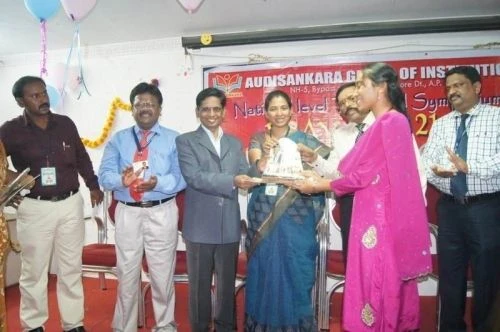
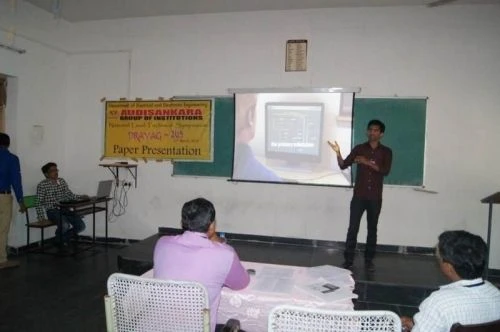
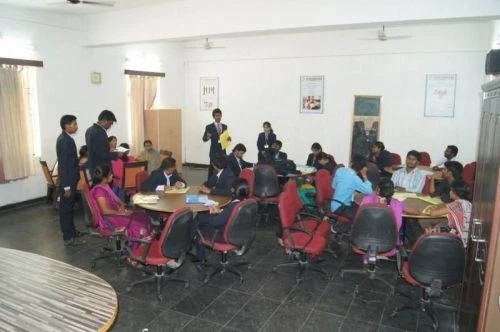
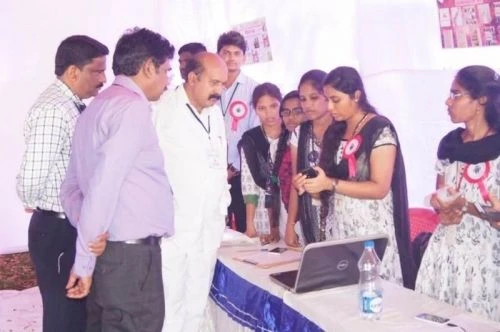
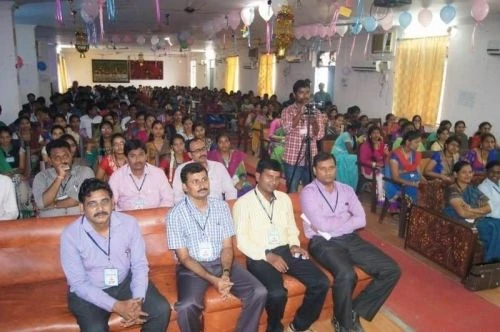
In this preview: 5 photos · 0 videos
Yes, the Computer Science and Engineering (CSE) branch is considered the best at Audisankara College (ASCET). It is noted for having the highest placement rates among all branches and features dedicated AI/ML laboratories to support specialized learning.
While the college has cited a figure of ₹30 LPA for 2024, the consistently achieved high package for placements at ASCET Gudur is typically in the range of ₹10 to 12 LPA. Top recruiters offering these packages include major companies like Amazon and Samsung.
No, staying in the hostel is not mandatory for students. Many students, particularly those from Nellore and nearby towns, opt to commute using the college's bus facility instead.
Placement opportunities for core branches like Mechanical and Civil Engineering are more limited at ASCET. Most students from these branches ultimately secure positions in IT companies through the campus recruitment training (CRT) process.
Audisankara College of Engineering and Technology (ASCET) in Gudur is an autonomous college affiliated with JNTUA (Jawaharlal Nehru Technological University Anantapur). Separately, the management has established "Audisankara University," which offers a wider array of courses in fields like Pharmacy and Law.
Share what future students should know about ASCET.
Student voices are not rewritten by colleges. We remove spam and abuse.
Wider admission question? Community PulseWhat should future students know?
Tell us which course you're considering. We'll help you work out the next step.
Get instant Partner access after mobile verification. Your public edits are reviewed before they go live.
Claim this college
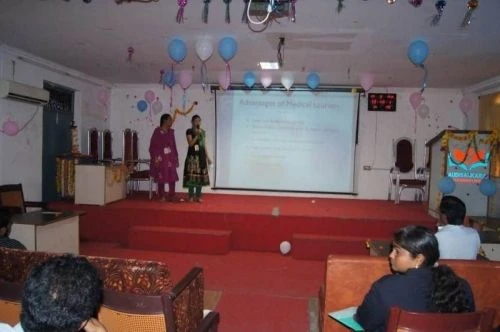
 Auditorium
 Cafeteria
 Computer Labs
 Hostel
 Medical
 Science Labs
 Sports Complex
 Study Library